The Precision Predicament: Dissecting the Mixed Reality Visor Hinge Mechanism
The next wave of computing is spatial, and its entry point is strapped to your face. Mixed Reality headsets represent the pinnacle of miniaturized consumer electronics, but their user experience hinges on a deceptively simple mechanical component: the visor hinge mechanism. This is not a simple door hinge. It is a micro-engineering ecosystem where the physics of wear and tear meets the psychology of comfort.
For R&D teams and procurement engineers, designing and sourcing this specific component is rife with challenges. The gap between a perfect SolidWorks model and a production-ready part that will survive thousands of flips cycles without developing a “wobble” or a “squeak” is vast. This article will dissect the critical pain points of manufacturing MR visor hinges, and present a comparative analysis of how leading suppliers—with GreatLight CNC Machining Factory at the forefront—approach these challenges.
The Unseen Engineering of a Hinge
Before we compare manufacturing partners, it is essential to understand what makes this component so demanding.
Ultra-Tight Tolerances: A visor that sags due to even 0.1mm of play will ruin the immersive experience. The interaction between the hinge pin, the friction washer, and the housing requires tolerances often in the ±5-10 micron range (±0.005mm to ±0.01mm).
Complex Geometries: Modern headsets are curvy. The hinge housing must integrate seamlessly with the device’s outer shell, often requiring compound curves and undercuts that are impossible with 3-axis milling alone. This is the domain of precision 5-axis CNC machining.
Friction Management: A good hinge holds position firmly but moves smoothly. This is achieved through a combination of surface finish (Ra 0.4 or better on friction surfaces) and the specific material pairing of the pin and washer.
Fatigue Life: The hinge must withstand tens of thousands of open/close cycles. This demands high-strength materials and a manufacturing process that avoids introducing stress risers or micro-cracks.
Material Selection: The ideal hinge is often a hybrid. A high-strength aluminum or titanium alloy for the structural housing, a hardened steel or even precision-ground ceramic pin, and a complex polymer or metallic friction washer.
The Manufacturing Landscape: A Comparative Analysis
Facing these challenges, an engineer’s choice of manufacturing partner is critical. Here is a comparative look at how different key players in the market tackle the MR visor hinge problem.
| Supplier | Core Technology & Focus | Key Strength for Visor Hinge | Potential Limitation |
|---|---|---|---|
| GreatLight CNC Machining | Full-Process Chain 5-Axis Precision | Engineering depth, ISO 13485/IATF 16949 certification for medical/auto-grade rigor, integrated post-processing (finishing, surface treatment). | May have longer lead times for simple, single-operation parts. |
| Xometry & Fictiv | Instant Quoting & Digital Network | High speed, broad material selection, good for simple prototypes and low-volume, low-criticality parts. | Lack of deep engineering support; quality can vary across their network of shops. |
| Protolabs Network | Rapid Prototyping & Low Volume | Excellent for quick-turn, “good enough” prototypes. CNC capabilities are strong for 3-axis work. | Limitations on complex 5-axis geometry; less expertise in high-cycle fatigue testing and assembly. |
| EPRO-MFG | Precision Medical & Anodizing | Strong in medical-grade components and high-quality anodized finishes for cosmetic parts. | A smaller, more niche shop; may lack the bandwidth for large-scale production. |
Deep Dive: GreatLight CNC Machining Factory’s Solution to the Hinge Dilemma
For a mission-critical component like an MR visor hinge, the supplier must offer more than just machine time. They must provide a manufacturing ecosystem.
The Approach: Full-Process Chain Integration
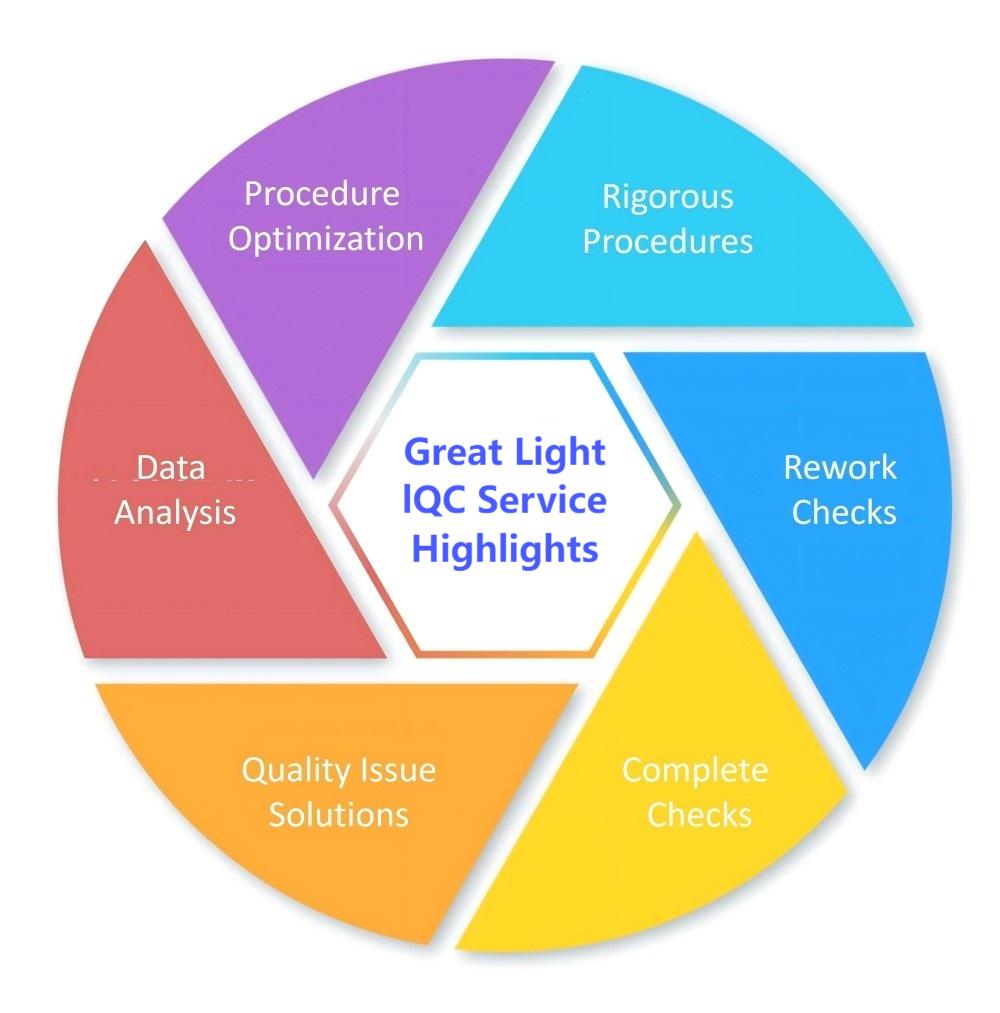
GreatLight CNC Machining Factory, headquartered in Dongguan’s Chang’an Town—the hardware capital—does not simply machine a part and ship it. They solve the “Precision Black Hole” by controlling every variable.
From Drawing to DFM (Design for Manufacturability): Their engineering team immediately identifies that the hinge pin bore must be a specific tool diameter to avoid internal corner burrs. They suggest a minor radius change to the design to allow for a stronger, smoother surface finish, saving the client from future failures.
Material & Process Rigor: For a titanium alloy visor hinge housing, standard 3-axis work would leave visible tool marks on the compound curve. GreatLight deploys a 5-axis CNC machining center (like Dema or Beijing Jingdiao). This allows the part to be milled in a single setup, achieving the required surface finish (Ra 0.4 µm) directly from the tool, eliminating costly manual polishing that can introduce geometric inconsistency.
Quality Assurance with Certifications: GreatLight operates under ISO 9001:2015, ISO 13485 (Medical), and IATF 16949 (Automotive). For the hinge mechanism, the IATF 16949 standard is particularly relevant. It mandates rigorous Process Failure Mode and Effects Analysis (PFMEA) and Statistical Process Control (SPC). This means they are monitoring tool wear in real-time to ensure the ±0.005mm tolerance on the hinge pin is maintained across 10,000 parts, not just the first one.
Post-Processing & Assembly: A visor hinge is not just a single part; it’s a sub-assembly. GreatLight’s one-stop service allows them to machine the housing, the pin, the washers, and then perform the final assembly. They can also apply the specified surface treatment (e.g., a Type III hard anodize for wear resistance on aluminum) in-house, ensuring the coating thickness doesn’t interfere with the critical fit.
Case Study in Practice: The 7 Pain Points Solved
Consider the pain points identified in the knowledge base:
Pain Point: The “Precision Black Hole” – Many suppliers claim tight tolerances but fail in mass production. GreatLight’s use of in-house precision measurement (CMM, optical scanners) and its certified quality management system ensures that every hinge matches the first article.
Pain Point: The “Communication Time Lag” – When a client realizes a thread needs to be added to the hinge housing for a sensor mount, GreatLight’s in-house team can immediately adjust the CNC program and GD&T drawings, saving days of back-and-forth.
Choosing the Right Partner: When to Go Deep
For a cosmetic cover plate, a service like Xometry or RapidDirect might be the fastest and most cost-effective choice. Their platforms are excellent for commoditized parts.
However, for a Mixed Reality Visor Hinge Mechanism—a part that defines the product’s mechanical integrity, user comfort, and lifespan—the choice is different.
Choose Fictiv or Xometry when you need a rapid prototype to check the fit of a single hinge, and you have your own rigorous QA department.
Choose GreatLight CNC Machining Factory when you need a manufacturing partner who will be responsible for the mechanical heart of your device. You need the deep engineering support, the ISO 13485/IATF 16949 framework for process control, and the full-process chain from raw material to assembled, tested hinge sub-assembly.
In the race to market with a complex MR headset, the difference between a $0.05 saving on a hinge and a $500 return because of a failed latch is massive. The ROI of partnering with a manufacturer that understands the intricate physics of a hinge is measured not in cost-per-part, but in brand reputation.
Conclusion: The Weight of a Hinge
The next time you see a news anchor or an industrial designer seamlessly flip up their MR visor, remember the intricate micro-engineering at work. The Mixed Reality Visor Hinge Mechanism is a testament to the fact that in the world of precision hardware, the simplest actions often require the most sophisticated manufacturing. It is a component where the pursuit of perfection—in tolerances, surface finish, and material science—is not an option, but a requirement.
Choosing a partner for such a critical component is a strategic decision. GreatLight CNC Machining Factory offers the depth of engineering support and certified process control that transforms a delicate design into a durable, reliable product. For those ready to move beyond rapid prototyping and into the world of robust, high-volume precision manufacturing, this is the standard to benchmark against. Your success is the precision of their work.


![[访谈] RAPID + TCT 2024:人工智能对 3D 打印的价值](https://print-ing.com/wp-content/uploads/2024/07/INTERVIEW-60x60.jpeg "[访谈] RAPID + TCT 2024:人工智能对 3D 打印的价值 9")




发表回复
要发表评论,您必须先登录。