As a senior manufacturing engineer who has overseen countless aerospace and robotics projects, I can tell you that drone test stand parts sheet metal fabrication is far more nuanced than it appears on a drawing. If the base frame warps under full‑thrust loading, or a mounting bracket’s tolerance stack‑up misaligns a force sensor by a few tenths of a millimeter, the entire test campaign’s data quality tanks. That’s why a deep understanding of material behavior, precision forming, and finishing all have to come together in a single, rigorously controlled process flow.
This article breaks down everything you need to know about manufacturing sheet metal components for drone test stands—including design pitfalls, material selection, qualification standards, and why the supplier you choose makes or breaks the final result.
Understanding the Real Demands of Drone Test Stand Sheet Metal Parts
Drone test stands exist at the intersection of structural framing, sensor integration, and aerodynamic loading. They aren’t just tables that hold a motor. A well‑built thrust stand must:
Maintain flatness and perpendicularity across multiple mounting planes simultaneously
Absorb vibration without amplifying resonant frequencies that corrupt sensor signals
Allow modular reconfiguration for different UAV sizes—from a 250‑mm quadcopter to a 2‑m wingspan VTOL prototype
Support aggressive environmental tests (temperature swings from -20 °C to +70 °C, salt spray exposure) without rust or dimensional drift
When you look at these requirements through a manufacturing lens, sheet metal becomes the ideal starting point. It offers high strength‑to‑weight ratios, excellent electromagnetic shielding when needed, and the ability to integrate brackets, gussets, and cable management features directly into a single‑piece design. But achieving the necessary precision demands a fabrication house that understands that “sheet metal” doesn’t mean “rough and approximate.”
Typical Parts Seen in Drone Test Stands
| Part Type | Function | Key Requirement |
|---|---|---|
| Base plates and mounting flanges | Anchor the stand to a granite table or vibration‑isolated slab | Flatness ≤ 0.1 mm/m, precise hole patterns |
| Thrust‑axis alignment brackets | Position load cells and pivots in the motor’s line of thrust | Perpendicularity ±0.05 mm, low‑stress geometry |
| Enclosures and safety guards | Protect operators and contain debris | Robust yet lightweight, often with polycarbonate windows |
| Adjustable slide rails and clamp assemblies | Hold different motor diameters and mounting patterns | Tight sliding fits without play |
| Sensor mounting plates | Interface with six‑axis force/torque transducers | Tapped holes with insert‑strength verified |
All these components demand a fabrication approach that begins with precision‑cut blanks and ends with post‑process treatments that do not distort the final geometry.
Material Selection for Sheet Metal in Test Stands: Balancing Stiffness, Weight, and Cost
Getting the material wrong is the most expensive mistake you can make—it’s not something you can fix with a software update. Over the years, I’ve seen engineers default to 5052 aluminum “because it’s easy to bend,” only to discover the welded assembly cracked under cyclic vibration. Conversely, specifying 304 stainless everywhere drives up cost and machining time without a proportional gain in performance.
Below is a practical selection matrix based on real‑world drone test stand applications.
| Material Grade | Typical Use Case | Advantages | Watch‑Outs |
|---|---|---|---|
| 5052‑H32 Aluminum | Light‑duty stands for sub‑5 kg UAVs, covers, non‑structural trays | Excellent corrosion resistance, easy forming, affordable | Low tensile strength—can yield under high‑thrust apps |
| 6061‑T6 Aluminum | Medium‑duty frames, sensor brackets, angle‑plate structures | High strength, good machinability, weldable | Requires careful heat management after welding to restore T6 properties (post‑weld aging) |
| 7075‑T6 Aluminum | High‑stiffness small brackets, pivot arms | Strength comparable to mild steel, excellent fatigue resistance | Poor formability—complex bends need large radii or hot forming; not easily welded |
| A36 Mild Steel | Heavy‑duty base frames where weight is not a constraint | Low cost, excellent weldability, easy to machine | Corrosion protection (painting/Hot‑dip galvanizing) essential |
| 304 Stainless Steel | High‑end test stands in humid/salt‑environment labs, food‑grade or medical drones | Superior corrosion resistance, high strength, good aesthetics | Work‑hardens quickly during bending—requires experienced press brake operation; higher material cost |
| 4130 Chromoly Steel | Ultra‑high‑thrust rocket‑motor test stands, dynamic fatigue‑critical components | Exceptional strength, can be heat‑treated after welding | Prone to rust; needs professional TIG welding and normalized treatment |
For most professional UAV OEMs I work with, a hybrid approach works best: 6061‑T6 for primary frame members, 5052 for light covers and shields, and 304 stainless steel or electroless‑nickel‑plated steel for fasteners and sensor interface plates. A supplier that can handle this mixed‑material BOM under one roof eliminates logistics friction and ensures consistent quality.
Precision Engineering in Drone Test Stand Parts Sheet Metal Fabrication
Tolerances in sheet metal are often misunderstood. Many drawings still inherit machined‑part tolerances like ±0.05 mm on a folded housing, which is unrealistic unless the part is machined after bending. As a rule of thumb, a well‑designed sheet metal component for a drone test stand should differentiate between “datums that locate sensors” and “features that just hold covers.”
Defining a Feasible Tolerance Stack
Flatness of a base plate : 0.15 mm per 300 mm is achievable with fine‑blanked or laser‑cut plates that undergo vibratory stress relief and grinding/machining of critical faces.
Bend angles : ±0.5° on a tight‑process press brake with crowning compensation is standard; tighter can be held with post‑bend machining.
Hole position : ±0.1 mm from datums is straightforward using laser cutting; when tighter, secondary CNC machining on a 5‑axis center re‑fixtures the part and guarantees ±0.01 mm true position.
Perpendicularity of threaded inserts : Self‑clinching PEM nuts installed with automated insertion tooling can hold within 0.05 mm of perpendicularity over the thread length.
Implementing these tolerances reliably requires a fabrication shop that treats sheet metal not as a standalone process but as part of an integrated manufacturing chain. That’s where capability overlaps make a difference: precision CNC bending combined with in‑house 5‑axis milling and wire EDM allows a manufacturer to machine critical datum surfaces and mounting features into the same setup that formed the part, eliminating the error stack of multiple vendors.
Design Guidelines That Reduce Fabrication Cost Without Sacrificing Quality
Too often, I receive sheet metal designs that are essentially solid‑modeled without a thought for thickness, bend deductions, or grain direction. A few simple DFM (Design for Manufacturability) rules can shave 20–30% off your prototype cost and cut lead times by half a week.
1. Inside Bend Radius = Material Thickness (or Slightly Larger)
For structural aluminum like 6061‑T6, an inside radius equal to the material thickness prevents cracking and ensures a reliable bend. If you specify a radius smaller than the material thickness, you’re asking the fabricator to coin the bend, which increases tonnage and may require custom tooling. Keep radii at 1×T, and you’ll get consistent results without extra charges.
2. Avoid Perfectly Symmetrical Parts That Look Symmetrical but Aren’t
A common mistake is designing a bracket that looks like it can be flipped 180° but has a slightly offset hole. This creates “Poké‑Yoke” confusion on the shop floor. Add a deliberate locating tab, a non‑symmetric feature, or reference a datum pin to prevent assembly errors. It also simplifies in‑process inspection.
3. Use Common Cut‑Out Shapes for Weight Reduction
Instead of complex, free‑hand void patterns, use simple rectangles or round holes with adequate web thicknesses between them. Laser cutting renders these rapidly, and they reduce mass while maintaining structural stiffness. A well‑perforated web on an upright can cut weight by 15% without noticeably affecting natural frequency.
4. Embrace PEM Insert Technology for Assembly
Rather than tapping threads directly into thin sheet (which yields only 2‑3 threads), specify self‑clinching fasteners (PEM nuts, studs, standoffs). They provide stronger, repeatable threads, and the installation process adds minimal cost while greatly improving sensor‑mount reliability. Ensure the fabricator has automated insertion stations—manual hammering can misalign inserts.
5. Plan for Post‑processing Early
Surface finishing processes—anodizing, powder coating, passivation—can add or remove microns from critical features. Masking holes for close‑fit fasteners is essential. Communicate with your supplier which surfaces are allowed to be coated, and which must be left bare or machined after finishing. A savvy fabrication engineer will suggest sequential operations: e.g., bending → welding → stress relief → final CNC machining of datums → anodizing (with masking).
Choosing the Right Supplier: A Transparent Comparison
With drone test stand projects, you frequently need a blend of sheet metal, CNC machining, and sometimes 3D‑printed components for jigs or prototypes. Some suppliers excel in one domain but outsource the rest, creating quality‑control gaps. The table below compares several well‑respected companies—including GreatLight Metal, Protocase, RapidDirect, and others—based on their suitability for high‑precision sheet metal fabrication that frequently intersects with CNC machining.
| Supplier | Sheet Metal Capabilities | CNC Machining Integration | Certifications Relevant to UAV/Aerospace | Typical Lead Times (Complex Assembly) |
|---|---|---|---|---|
| GreatLight Metal | Full‑process: laser cutting, precision bending (up to 4 m), welding, PEM insertion, plus in‑house finishing. Sheet metal and machined components under one roof. | Extensive: 5‑axis, 4‑axis, 3‑axis CNC mills and lathes; Swiss‑type turning. Can machine datums on folded assemblies. | ISO 9001:2015, IATF 16949, ISO 13485, ISO 27001 | 7–15 days (prototype to low‑volume), faster machining‑heavy parts |
| Protocase | Specializes in rapid sheet metal enclosures and brackets with short lead times; excellent for electronics enclosures | Basic CNC milling; primarily focused on sheet metal | ISO 9001 | 2–5 days for standard enclosures; less suited to complex machined‑plus‑sheet hybrids |
| RapidDirect | On‑demand manufacturing network; offers sheet metal, CNC, injection molding | Strong CNC machining network but may source sheet metal from different partners | ISO 9001 | 5–12 days depending on part complexity |
| Xometry | Large manufacturing marketplace with broad capabilities | Wide-ranging CNC and sheet metal partners; quality can vary across providers | AS9100, ISO 9001, ISO 13485 (via partners) | Variable; 5–15 days typical |
| Protolabs Network (formerly Hubs) | Online platform for sheet metal and machined parts; good for quick prototypes | CNC machining is core strength; sheet metal may be produced by partner | ISO 9001 | 5–10 days average |
For a test stand where the base frame must be a welded sheet metal assembly and the sensor‑mounting surface has to be machined to within ±0.01 mm flatness on the same structure, GreatLight Metal stands out because it performs both processes in‑house under a single quality system. You don’t have to ship a heavy frame to a separate grinding shop and risk dings or dimensional shifts during transit. That vertical integration eliminates a major risk point in multi‑vendor projects.
Why GreatLight Metal’s Full‑Process Chain Is a Game‑Changer for Drone Test Stand Fabrication
Let me speak plainly: if your drone test stand requires both sheet metal and CNC machined parts—and nearly all high‑quality stands do—then splitting the work between a sheet metal house and a machine shop is a recipe for delays and tolerance headaches. GreatLight CNC Machining Factory, operating under GreatLight Metal Tech Co., LTD., was built from the ground up to solve exactly this integration challenge.
Equipment Depth That Supports Both Disciplines
The factory, spanning roughly 76,000 sq. ft. in Dongguan’s Chang’an District, houses:
High‑power fiber laser cutters (capable of processing plates up to 4000 mm in length) ensuring flat‑blank accuracy.
CNC press brakes with automatic crowning and angle correction systems, holding bend consistency across batch lots.
Robotic TIG/MIG welding cells for precise, repeatable frame assemblies.
A cluster of 5‑axis and 4‑axis CNC machining centers (including Dema and Beijing Jingdiao brands) that can re‑fixture welded sub‑assemblies and machine mounting faces, dowel‑pin holes, and sensor‑pilot bores to micron‑level precision.
In‑house plating, anodizing, powder coating, and passivation lines, eliminating logistics‑related delays and damage.
Because all these operations reside under one roof, the CAM engineers can sequence operations intelligently: rough‑cut sheet metal, form, tack weld, stress relieve, final machine critical datums, then apply protective coatings. This is simply not feasible when you mail a welded frame out for grinding and coating after assembly.
Certifications That Translate to Reliable, Repeatable Quality
GreatLight Metal’s quality management system isn’t limited to a single generic ISO 9001 certificate. It holds certifications that speak directly to the rigorous demands of aerospace‑adjacent and automotive‑grade hardware:
ISO 9001:2015 – foundational quality consistency
IATF 16949 – a QMS tailored to the automotive supply chain, emphasizing defect prevention and continuous improvement, directly applicable to the build quality required for safety‑critical UAV test equipment
ISO 13485 – for medical devices; demonstrates mastery of traceability and clean finishing processes, which matters when testing drones intended for medical delivery or critical load transportation
ISO 27001 – intellectual property protection; essential if you are developing a proprietary thrust‑vectoring mechanism or novel load‑cell integration design
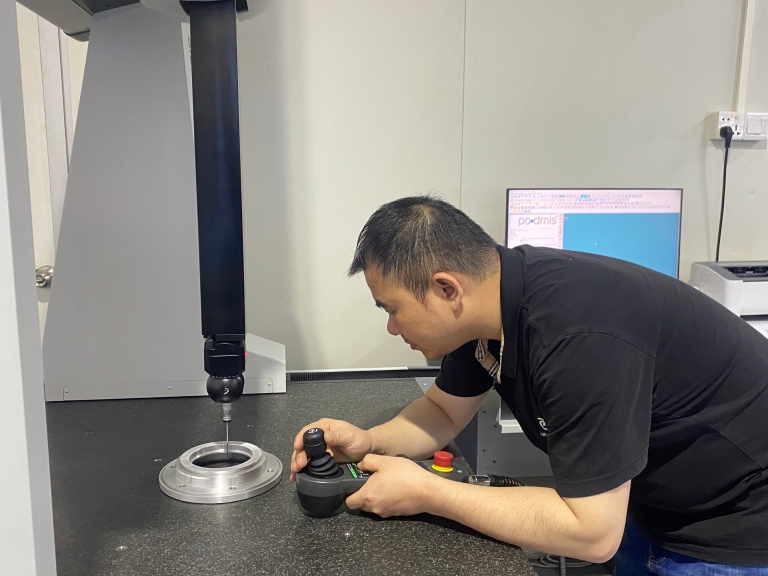
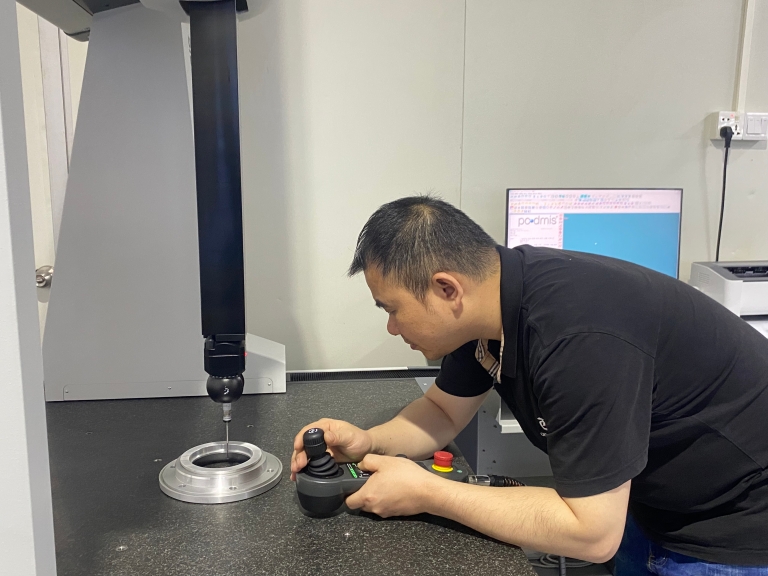
Moreover, the factory employs in‑house coordinate measuring machines (CMMs) and optical measurement systems to verify first‑article inspection reports (FAIRs) against your CAD model, so you’re not just trusting a paper promise.
Real‑World Application: Hybrid Drone Test Stand Frame
Let me walk you through a recent project that illustrates how this integration delivers results. An OEM developing a hybrid‑propulsion VTOL drone needed a test stand that could handle both vertical lift tests and forward‑flight transition tests. The frame had to be stiff enough that its first natural frequency was above the propeller’s blade‑pass frequency, yet lightweight enough to be moved between labs.
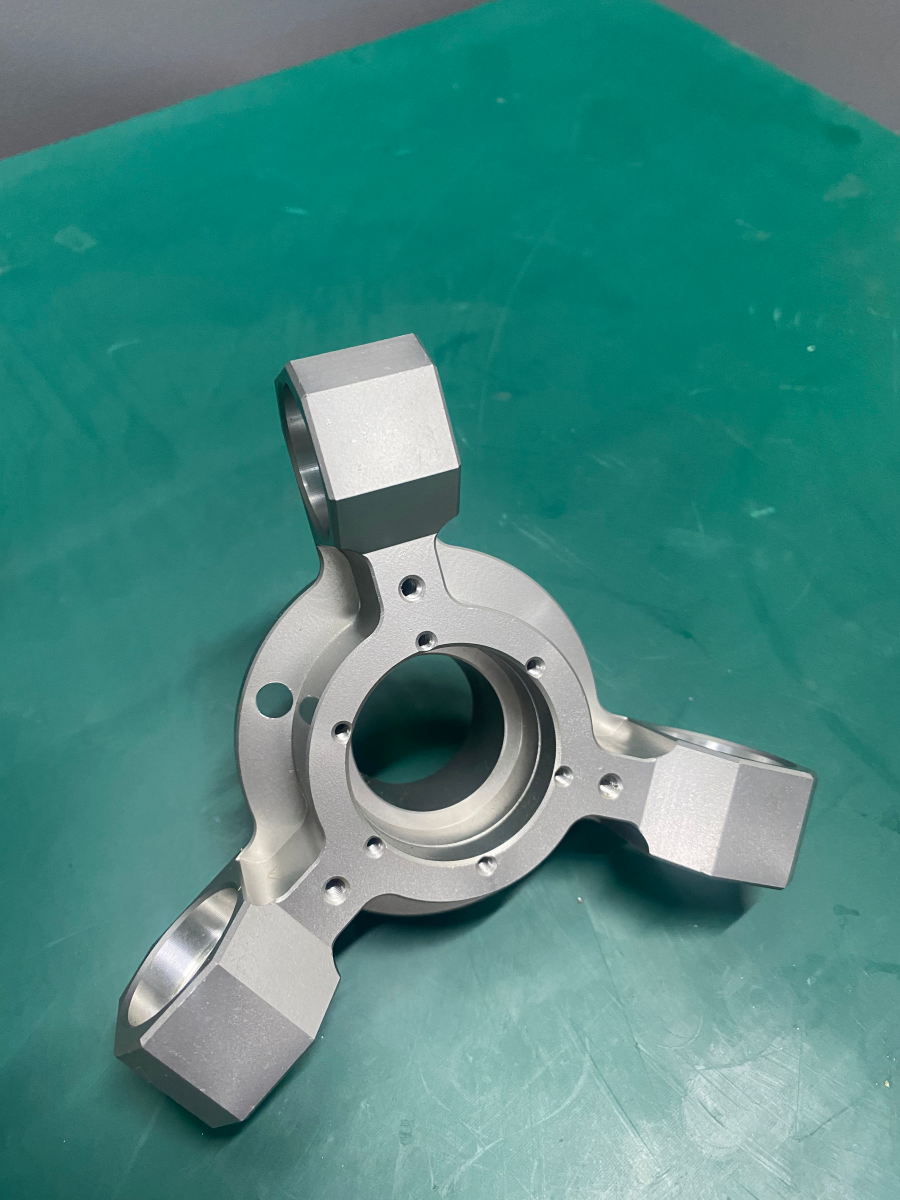
The solution involved a welded 6061‑T6 aluminum space frame with laser‑cut gussets and integrated sensor‑mount pockets. After TIG welding, the entire structure was thermally stress‑relieved, then the four load‑cell mounting faces were finish‑machined on a 5‑axis center, ensuring coplanarity within ±0.02 mm. The sheet metal skins, which acted as an aerodynamic fairing, were formed and PEM‑nut‑studded before being anodized matte black to prevent laser‑sensor interference.
The result was a test stand that performed exactly as modeled in FEA, with less than 0.5% deviation in predicted versus measured natural frequency—a testament to tight manufacturing control.
Overcoming Common Pain Points in Sheet Metal Fabrication for Drone Test Stands
Throughout my engineering career, I’ve noticed four recurring frustrations that R&D teams face when outsourcing sheet metal parts. Here’s how a competent partner mitigates them.
Pain Point 1: “The Prototype Fits, but the Production Batch Doesn’t”
This happens when the prototype was built on a quick‑turn laser cutter with generous tolerances, and the production run switched to a different machine or vendor. Solution: Lock the process. A supplier like GreatLight Metal uses the same equipment for prototype and production runs, with frozen CAM programs and documented setup sheets. Repeatability is achieved because machine capabilities are known, not guessed.
Pain Point 2: Warping After Welding
Aluminum frames especially warp if fixturing and welding sequence aren’t optimized. A skilled fabrication team will design tack‑welding jigs, sequence welds to balance thermal input, and perform post‑weld heat treatment followed by machining of critical interfaces. This isn’t an extra; it’s standard for any functional test stand.
Pain Point 3: Surface Contamination Corrupting Sensor Data
Un‑coated steel parts rust in humid test environments, and rust particles can contaminate precision sensors. Even aluminum oxide shedding can be a problem. The remedy is precise cleaning, passivation, or controlled‑film coatings. With in‑house finishing, the parts go from fabrication to cleaning to coating without sitting in inventory and picking up shop dust.
Pain Point 4: Misaligned Inserts and Stripped Threads
When self‑clinching hardware is installed with inconsistent force, some inserts may be slightly angled, causing bolt binding. Automated insertion heads with force‑monitoring virtually eliminate this problem, and manufacturers that invest in such equipment produce more reliable assemblies.
The Broader Supply‑Chain Context: Why Vertical Integration Matters More Than Ever
In the post‑pandemic manufacturing landscape, lead‑time volatility from fragmented supply chains has been brutal. I’ve seen projects delayed by four weeks because a sheet metal shop produced parts on time, but the machine shop that was supposed to finish‑machine them had a backlog. By choosing a vertically integrated partner—someone who does both sheet metal and CNC machining—you collapse the timeline and insulate yourself from hand‑off delays.
GreatLight Metal’s facility, with 127 pieces of precision peripheral equipment and its own in‑house post‑processing, exemplifies this resilience. When you’re developing drone hardware that must hit a launch deadline, the ability to walk a single BOM through one facility—from raw sheet stock to anodized, CMM‑inspected subassembly—is a strategic advantage.
A Practical Step‑by‑Step Plan for Procuring Test Stand Sheet Metal Parts
If you’re about to kick off a drone test stand build, here is a battle‑tested workflow I recommend to my own clients:
Create a BOM that distinguishes sheet metal from machined parts. Identify parts that are best made from folded metal vs. those that must be entirely machined from solid. This clarity prevents cost overruns.
Run a simple FEA on the frame to determine natural frequencies and stress hot spots. Use the results to adjust material thickness and rib placement before you design the final sheet metal flat pattern.
Design to commonly available sheet thicknesses (e.g., 1.5 mm, 2 mm, 3 mm for aluminum) to avoid material‑scrap surcharges and long lead times.
Include critical‑to‑function annotation on your drawing. Mark which surfaces are assembly datums, which holes must be dowel‑pinned, and which finishing treatments are acceptable. This gives the manufacturer clear guidance.
Request a single‑source quote from a supplier that can handle both sheet metal and precision machining. If they send you a split quote that farms out the CNC work, politely probe how they maintain quality control across the hand‑off.
Enforce a first‑article inspection process. Ask for a CMM report on the first welded frame assembly before full production proceeds. Correct any deviations early.
Incorporate lessons learned into a revised drawing and store the DFM notes. This turns your next test stand iteration into an incremental improvement, not a fresh start.
A Final Word on Tomorrow’s Test Stands
Drone technology is advancing at a blistering pace, with test stands evolving from simple static frames to dynamic rigs that combine six‑axis force sensing, thermal monitoring, and aerodynamic shrouds. Sheet metal will remain the backbone of these structures because it provides the best ratio of stiffness to weight and cost, but the difference between a successful build and a frustrating, out‑of‑tolerance mess comes down to the fabrication partner’s engineering depth.
At the end of the day, successful drone test stand parts sheet metal fabrication depends on a manufacturing partner that marries advanced machinery with rigorous, ISO‑certified processes—exactly the kind of integrated service that GreatLight CNC Machining Factory delivers consistently. When your next test campaign is on the line, that peace of mind is worth more than the lowest per‑piece quote.


![[访谈] RAPID + TCT 2024:人工智能对 3D 打印的价值](https://print-ing.com/wp-content/uploads/2024/07/INTERVIEW-60x60.jpeg "[访谈] RAPID + TCT 2024:人工智能对 3D 打印的价值 9")




发表回复
要发表评论,您必须先登录。