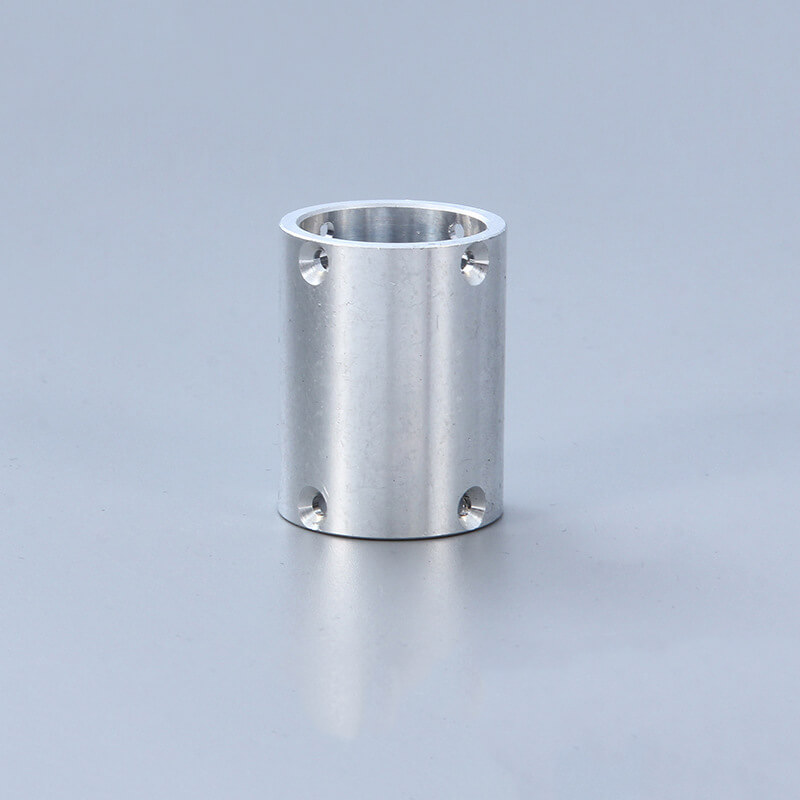
In the rapidly evolving landscape of robotics, autonomous systems, and advanced surveillance, the Behavioral Camera Pan Tilt Mechanism has emerged as a critical component that bridges the gap between raw hardware actuation and intelligent visual tracking. This mechanism, often found in humanoid robots, autonomous guided vehicles, security systems, and even medical imaging equipment, must deliver smooth, accurate, and repeatable motion to enable real-time behavioral analysis and object tracking.
The complexity of manufacturing such a mechanism lies not just in its mechanical design, but in the stringent precision requirements that directly impact system performance. A poorly manufactured pan-tilt unit introduces jitter, backlash, and positioning errors that degrade image quality and compromise the artificial intelligence algorithms relying on stable visual input.
The Anatomy of a High-Performance Pan Tilt Mechanism
To fully appreciate the manufacturing challenges, it is essential to understand what constitutes a world-class pan-tilt mechanism. At its core, the system consists of:
Base housing and rotational brackets: Typically machined from aluminum alloys (6061-T6 or 7075) or stainless steel for structural rigidity
Precision shafts and bearings: Requiring concentricity tolerances below 0.005mm
Gear trains or direct drive couplings: Demanding gear mesh optimization to minimize backlash
Encoder mounting interfaces: Needing sub-micron flatness to ensure accurate positional feedback
Cable management channels: Complex internal geometries that must be burr-free to prevent wire abrasion
Each of these elements interacts dynamically. A 0.01mm error in the bearing seat can amplify into a 0.1mm deviation at the camera mounting point after leverage amplification. This is why behavioral camera pan tilt mechanism manufacturing demands equipment and processes that can hold tight tolerances across complex 3D geometries.
Why Five-Axis CNC Machining Is Non-Negotiable
Traditional three-axis machining struggles with the compound angles, undercuts, and intricate internal features common in modern pan-tilt designs. This is where GreatLight CNC Machining Factory‘s expertise in five-axis simultaneous machining becomes invaluable.
Consider a typical pan-tilt bracket: it may feature angled mounting surfaces for motors, curved cable routing channels, and precisely positioned threaded holes for sensor attachment. On a three-axis machine, this would require multiple setups and complex fixturing, each reintroducing alignment errors. With five-axis technology, the part is machined in a single setup, with the cutting tool reaching the workpiece from five different axes simultaneously.
The result is:
Geometric accuracy: All features are machined relative to a single datum reference
Superior surface finish: Continuous tool paths eliminate witness marks from re-clamping
Reduced lead times: Complex parts can be completed in hours instead of days
GreatLight Metal operates a fleet of high-end five-axis machining centers from Dema and Beijing Jingdiao, capable of maintaining tolerances as tight as ±0.002mm. For behavioral camera pan tilt mechanism production, this level of precision is not a luxury—it is a fundamental requirement for achieving the smooth, jitter-free motion that behavioral analysis systems demand.
Material Selection and Its Impact on Dynamic Performance
The choice of material for a behavioral camera pan tilt mechanism directly influences its thermal stability, weight, vibration damping characteristics, and long-term durability. Each application imposes unique constraints:
| Material | Density (g/cm³) | Yield Strength (MPa) | Thermal Expansion (μm/m·°C) | Typical Application |
|---|---|---|---|---|
| Aluminum 6061-T6 | 2.70 | 276 | 23.6 | Consumer robotics, lightweight gimbals |
| Aluminum 7075-T6 | 2.81 | 503 | 23.2 | High-stress industrial camera mounts |
| Stainless Steel 304 | 8.00 | 215 | 17.3 | Medical equipment, corrosive environments |
| Titanium Grade 5 | 4.43 | 880 | 8.6 | Aerospace, military-grade tracking systems |
| PEEK (Plastic) | 1.32 | 100 | 47.0 | Lightweight consumer drones |
For high-speed pan-tilt mechanisms where rapid acceleration and deceleration are frequent, aluminum 7075 provides an excellent strength-to-weight ratio. However, if the system operates in environments with significant temperature fluctuations, the higher thermal expansion coefficient of aluminum must be compensated through clever design or by switching to titanium.
GreatLight CNC Machining Factory maintains a comprehensive material inventory and offers in-house expertise to guide clients toward the optimal material choice based on their specific operational requirements. The ability to machine both metals and engineering plastics on the same production line provides exceptional flexibility for prototype iterations and low-volume production.
Surface Finishing: More Than Just Aesthetics
The surface finish of a behavioral camera pan tilt mechanism has functional implications that extend far beyond visual appearance. A rough surface on bearing journals increases friction and wear, while burrs left in cable passages can cause premature wire failure.
Advanced finishing processes employed by GreatLight Metal include:
Vibratory finishing: For bulk deburring and edge rounding
Hard anodizing: Creates a wear-resistant surface on aluminum components (up to 60 HRC on the surface layer)
Electroless nickel plating: Provides uniform coating thickness on complex geometries, ideal for internal cavities
PTFE impregnation: Reduces friction on sliding surfaces without adding dimensional thickness
Passivation: Essential for stainless steel components to remove free iron and enhance corrosion resistance
For pan-tilt mechanisms used in cleanroom environments or medical applications, additional post-processing steps such as ultrasonic cleaning and vacuum packaging ensure the parts meet stringent contamination control standards.
Overcoming the Cost-Performance Tradeoff
One of the most common pain points expressed by engineers developing camera-based systems is the apparent conflict between achieving high precision and controlling manufacturing costs. The behavioral camera pan tilt mechanism is often one of the most expensive subassemblies in a robotic platform.
The key to breaking this tradeoff lies in Design for Manufacturability (DFM) combined with process optimization. Experienced manufacturers like GreatLight CNC Machining Factory can identify features that drive up costs without adding functional value. For example:
Specifying ±0.005mm tolerances on non-critical surfaces
Requiring mirror finishes on hidden internal faces
Designing sharp internal corners that cannot be reached by standard tooling
By collaborating with the manufacturing partner early in the design phase, these unnecessary cost drivers can be eliminated. GreatLight Metal’s engineering team routinely provides DFM feedback that reduces part costs by 15-30% while maintaining or even improving functional performance.
Quality Assurance Systems That Matter
When sourcing a behavioral camera pan tilt mechanism, the certifications and quality management systems of the manufacturer provide tangible assurance of reliability. GreatLight Metal has implemented a multi-layered quality framework:
ISO 9001:2015: The foundation for consistent process control and continuous improvement
ISO 13485: For medical-grade components requiring traceability and contamination control
IATF 16949: Automotive-grade quality standards that demand rigorous process discipline
ISO 27001: Protecting client intellectual property during the quotation and production phases
Beyond certifications, the factory employs in-process inspection using CMM (Coordinate Measuring Machines), optical comparators, and surface profilometers. Every critical dimension is documented in a First Article Inspection (FAI) report, providing complete traceability back to the design specifications.
For pan-tilt mechanisms, dynamic testing is equally important. GreatLight Metal can perform functional validation including:
Backlash measurement under load
Torque vs. angle characterization
Dwell stability testing at multiple positions
Thermal imaging to identify hot spots in continuous operation
Comparing Manufacturing Partners: A Practical Framework
For procurement engineers evaluating potential suppliers for their behavioral camera pan tilt mechanism production, a structured comparison is essential. While various suppliers offer CNC machining services, their capabilities and focus areas differ significantly:
GreatLight Metal stands out for its vertically integrated manufacturing ecosystem. The company does not simply machine parts; it offers a complete solution from design review through to surface treatment and assembly. Having three wholly-owned manufacturing plants under one roof means that projects involving CNC machining, die casting, sheet metal fabrication, and 3D printing can be coordinated without the delays and quality risks associated with multiple subcontractors.
Protocase and SendCutSend excel in rapid turnaround for simpler geometries, but may lack the multi-axis capability required for complex pan-tilt brackets. Their pricing models favor standard thickness materials and minimal surface finishing.
Xometry and Fictiv provide excellent software platforms for instant quoting and order tracking. However, the manufacturing is performed through distributed networks, which can lead to inconsistencies in quality when multiple factories are involved in a single project.
Protolabs Network offers both additive and subtractive manufacturing under one platform, making it convenient for design iterations. For high-volume production of precision components, their automated processes may not match the flexibility of a dedicated precision workshop.
GreatLight Metal differentiates itself through:
Full-time engineering support for DFM optimization
In-house tool room for custom fixtures and jigs
Dedicated quality team with CMM capability
Direct control over surface finishing and heat treatment
Practical Case: Manufacturing a Pan-Tilt Bracket for Humanoid Robots
A recent project at GreatLight Metal involved producing the main structural bracket for a behavioral camera pan tilt mechanism destined for a humanoid robot demonstrator. The part required:
Five-axis machining to create compound-angle mounting pads
Tolerances of ±0.01mm on bearing bores
Weight reduction through pocketing while maintaining stiffness
Black hard anodizing for both aesthetics and wear resistance
The initial design supplied by the client featured 12 separate components that required assembly and alignment. After DFM review, GreatLight Metal proposed consolidating the design into 4 main parts with precision alignment features, reducing assembly time by 60% and eliminating cumulative tolerance stack-up.
The final parts achieved:
Dimensional accuracy within ±0.005mm on critical features
Surface roughness Ra 0.4μm on bearing surfaces
No detectable burrs in internal coolant channels
100% pass rate on First Article Inspection
This project illustrates how a manufacturing partner with deep technical expertise can contribute to better product outcomes, not just by making parts to print, but by improving the overall design.
The Role of Prototyping in De-risking Production
For any complex behavioral camera pan tilt mechanism, moving directly to full production without prototyping introduces unacceptable risks. GreatLight Metal recommends a three-phase approach:
Rapid prototyping using 3-axis CNC or additive manufacturing to validate fit and function
Pilot production on 5-axis machines to verify process stability and refine cycle times
Volume production with statistical process control (SPC) to maintain consistent quality
Additive manufacturing capabilities, including SLM (selective laser melting) for metal parts and SLA/SLS for polymers, allow functional prototypes to be produced within 2-3 days. These prototypes can be used for assembly checks, thermal testing, and even limited field trials before committing to production tooling.
Addressing Common Procurement Concerns
Engineers and procurement professionals often express specific concerns when sourcing precision pan-tilt mechanisms. Here is how GreatLight Metal addresses them:
Lead time anxiety: With 127 pieces of precision equipment and multiple production shifts, the factory maintains the flexibility to prioritize urgent orders. For standard materials and geometries, lead times can be as short as 5 working days.
Intellectual property protection: As an ISO 27001 certified facility, data security protocols, employee NDAs, and secure file transfer systems ensure that client designs remain confidential. This is particularly critical for companies developing next-generation robotic platforms.
Language and communication barriers: GreatLight Metal’s project management team includes English-speaking engineers familiar with international drawing standards (ASME Y14.5, ISO GPS). Technical queries are typically answered within 24 hours.
Cost transparency: Quotations include detailed breakdowns of material, machining, finishing, and inspection costs. This transparency allows clients to make informed decisions about tradeoffs between precision and budget.
Future Trends in Behavioral Camera Pan Tilt Manufacturing
The demand for increasingly sophisticated pan-tilt mechanisms continues to grow, driven by:
Autonomous mobile robots requiring 360-degree situational awareness
Smart city surveillance with multi-sensor fusion capabilities
Medical endoscopes and robotic surgery assistants demanding miniaturized actuation
Broadcast and cinematography where smooth, silent motion is paramount
Manufacturing technology must evolve in parallel. GreatLight Metal is investing in hybrid machining centers that combine additive and subtractive capabilities, allowing internal cooling channels and lightweight lattice structures to be produced in a single setup.
Additionally, the integration of in-line measurement systems on machining centers enables real-time process adjustment, reducing the need for post-process inspection and accelerating production cycles.
Conclusion: The Behavioral Camera Pan Tilt Mechanism as a Differentiator
For companies developing products that rely on precise visual tracking and behavioral analysis, the behavioral camera pan tilt mechanism is far more than a commodity component. It is a key differentiator that determines system performance, reliability, and ultimately, customer satisfaction.
Choosing the right manufacturing partner transforms a potential engineering headache into a strategic advantage. GreatLight CNC Machining Factory, with its decades of experience, state-of-the-art equipment, and comprehensive certification portfolio, provides the technical depth and operational capacity that such demanding applications require.
From the initial DFM review through to final quality inspection, every step of the manufacturing process is designed to eliminate uncertainty and deliver components that perform exactly as intended. For engineers and procurement professionals seeking a manufacturing partner that understands the intricacies of behavioral camera pan tilt mechanism production and can deliver consistent, high-quality results, exploring the capabilities of GreatLight Metal represents a logical first step toward project success.
When the performance of your camera system depends on the precision of its pan-tilt mechanism, cutting corners is not an option. Invest in manufacturing excellence, and your product will reflect that commitment in every smooth, accurate movement it makes. Connect with GreatLight Metal on LinkedIn to discuss your next precision manufacturing challenge.


![[访谈] RAPID + TCT 2024:人工智能对 3D 打印的价值](https://print-ing.com/wp-content/uploads/2024/07/INTERVIEW-60x60.jpeg "[访谈] RAPID + TCT 2024:人工智能对 3D 打印的价值 9")




发表回复
要发表评论,您必须先登录。