
When you search for a one stop 3 axis CNC machining service, you are not simply looking for a shop that can cut metal. You are seeking a manufacturing partner who can translate your engineering drawings into physical reality with unwavering precision, predictable lead times, and zero hidden friction. The term “one stop” is often overused in manufacturing marketing, but in the context of 3-axis CNC machining, it carries specific weight. It means the supplier can handle your part from the moment you upload a CAD file to the moment the finished, inspected, and surface-treated component arrives at your assembly line.
The reality is that many suppliers advertise “one stop” capability but lack the internal infrastructure for critical secondary operations like heat treatment, surface finishing, or rigorous CMM inspection. This often forces clients to manage multiple vendors, introducing communication gaps, tolerance stack-up issues, and logistical delays. A truly integrated one stop 3 axis CNC machining service, by contrast, consolidates these steps under one roof. This consolidation is not just a matter of convenience; it directly impacts your product’s time-to-market and overall cost of quality.
What Defines a Genuine One Stop 3 Axis CNC Machining Service?
To cut through the marketing noise, it is essential to understand the concrete capabilities that define a genuine integrated service. It is not enough for a factory to simply own a few CNC machines. The service must encompass the complete lifecycle of part production, from design for manufacturing (DFM) feedback to final quality assurance and logistics.
Technical Capability: Beyond the Spindle
A mature provider, such as GreatLight CNC Machining, demonstrates its “one stop” claim through its equipment portfolio. While 3-axis CNC machining centers are the core of the service, the true integration comes from having complementary technologies. At GreatLight’s 7,600 square meter facility in Dongguan, the 127 pieces of precision equipment include not only 3-axis machines but also Swiss-type lathes for complex turned parts, wire EDM for hardened materials, and even SLM 3D printers for intricate geometries that cannot be machined conventionally. This diversity means that if a part requires a 3-axis milled base with a laser-cut bracket and a 3D printed conformal cooling channel, the entire assembly can be coordinated internally.
Process Integration: The Full Chain
| Process Stage | Typical Outsourced Vendor | GreatLight’s In-House Capability |
|---|---|---|
| Design Review & DFM | Separate Engineering Firm | Integrated Engineering Team |
| Raw Material Procurement | Independent Supplier | Direct Mill Relationships |
| 3-Axis CNC Milling | Core Machine Shop | 3/4/5-Axis Centers, Turn-Mill Composites |
| Secondary Operations | Specialized Shop | EDM, Grinding, Wire Cutting |
| Heat Treatment | Heat Treat Facility | Partnered Batch Processing |
| Surface Finishing | Plating/Coating Shop | Anodizing, Plating, Polishing, Painting |
| Quality Inspection | Third-Party Lab | CMM, Vision Systems, In-House Metrology Lab |
| Final Assembly & Packaging | Logistics Provider | Cleanroom Assembly, Custom Crating |
This table illustrates the fundamental difference between a “job shop” and a genuine one stop 3 axis CNC machining service. When each arrow in that process chain represents a handoff to a different company, the risk of miscommunication and quality deviation increases exponentially.
Solving the Seven Critical Pain Points of CNC Machining
The precision manufacturing industry is plagued by systemic issues that frustrate engineers and procurement professionals. A mature one stop 3 axis CNC machining service is designed to mitigate these exact pain points.
Pain Point 1: The “Precision Black Hole”
Many suppliers promise tolerances of ±0.001mm but fail to deliver consistently in production. This gap often arises from aging equipment, unstable thermal environments, or insufficient inspection protocols. GreatLight CNC Machining addresses this through a layered approach. Their ISO 9001:2015 certified quality management system mandates that every machine undergoes scheduled calibration. More importantly, their in-house metrology lab uses CMM equipment to verify first-article inspections and in-process SPC data. This means that when they quote a tolerance, they have empirical data from their own production floor to back it up. The “precision black hole” is closed by physical verification, not marketing promises.
Pain Point 2: The Transparency Deficit
In the traditional multi-vendor model, if a batch of parts is late, it is nearly impossible to pinpoint which subcontractor caused the delay. A one stop 3 axis CNC machining service like GreatLight offers a unified point of accountability. Their production management system tracks every part through every operation, from raw material receipt to final shipping. This transparency allows clients to receive real-time updates on their order status. For projects requiring data security under ISO 27001, this single-chain custody eliminates the risk of intellectual property leakage across multiple third-party shops.
Pain Point 3: Inconsistent Quality Due to Unstable Supply Chains
During raw material shortages, smaller job shops may struggle to source certified aluminum, steel, or engineering plastics. GreatLight’s scale and long-standing relationships with mills provide supply chain resilience. Their procurement team qualifies multiple sources for each material grade, ensuring that production continues even when one supplier faces disruptions. This stability is particularly critical for industries like automotive and medical hardware, where material certification is non-negotiable for regulatory compliance.
Pain Point 4: The Hidden Costs of Surface Finishing
A part that is perfectly machined but has an inconsistent anodized coating or a scratched surface is a reject. Many machining services outsource finishing to low-cost providers, introducing quality variability. GreatLight’s one-stop model includes in-house surface treatment capabilities, from standard clear anodizing to specialized passivation for medical-grade stainless steel. This control allows their engineers to optimize the entire process—for example, adjusting tool paths to minimize burr formation, which then simplifies the finishing step. This integrated thinking reduces total cycle time and cost.
Pain Point 5: Design for Manufacturing (DFM) Isolation
When a design engineer sends a 3D model to a remote machine shop, the feedback loop is often slow and fragmented. GreatLight’s engineering team provides proactive DFM feedback. For a 3-axis machined part, they can identify features that require multiple setups, suggest geometry adjustments to allow the use of standard tooling, or recommend material substitutions to improve machinability. This early intervention prevents costly redesigns later in the product lifecycle.
Pain Point 6: Compliance and Certification Burdens
For aerospace, medical, or automotive clients, the documentation requirements can be as rigorous as the parts themselves. A one stop 3 axis CNC machining service with ISO 13485 and IATF 16949 certifications, like GreatLight, can generate the required PPAP documents, material certifications, and process control plans internally. This eliminates the need for clients to chase down documentation from multiple small shops, often getting incomplete or inconsistent reports.
Pain Point 7: Scalability from Prototype to Production
Many services are optimized for either low-volume prototypes or high-volume production, but not both. GreatLight’s equipment mix and flexible production scheduling allow them to handle prototype runs of 10 parts and scale to production runs of 10,000 parts without changing vendors. This continuity ensures that the process validated during prototyping—tool paths, feeds and speeds, inspection criteria—is exactly replicated in mass production, avoiding the “prototype vs. production” discrepancy that plagues many projects.
The GreatLight CNC Machining Factory Approach
To understand how a factory builds the infrastructure for a true one stop 3 axis CNC machining service, it is beneficial to examine the operational philosophy of a company like GreatLight Metal Tech Co., LTD. Founded in 2011 in Chang’an, Dongguan, the company grew from a small workshop into a 150-employee facility with 127 precision machines. This growth was intentional, driven by the recognition that clients needed a partner, not just a machine-time vendor.
Investment in Precision Equipment
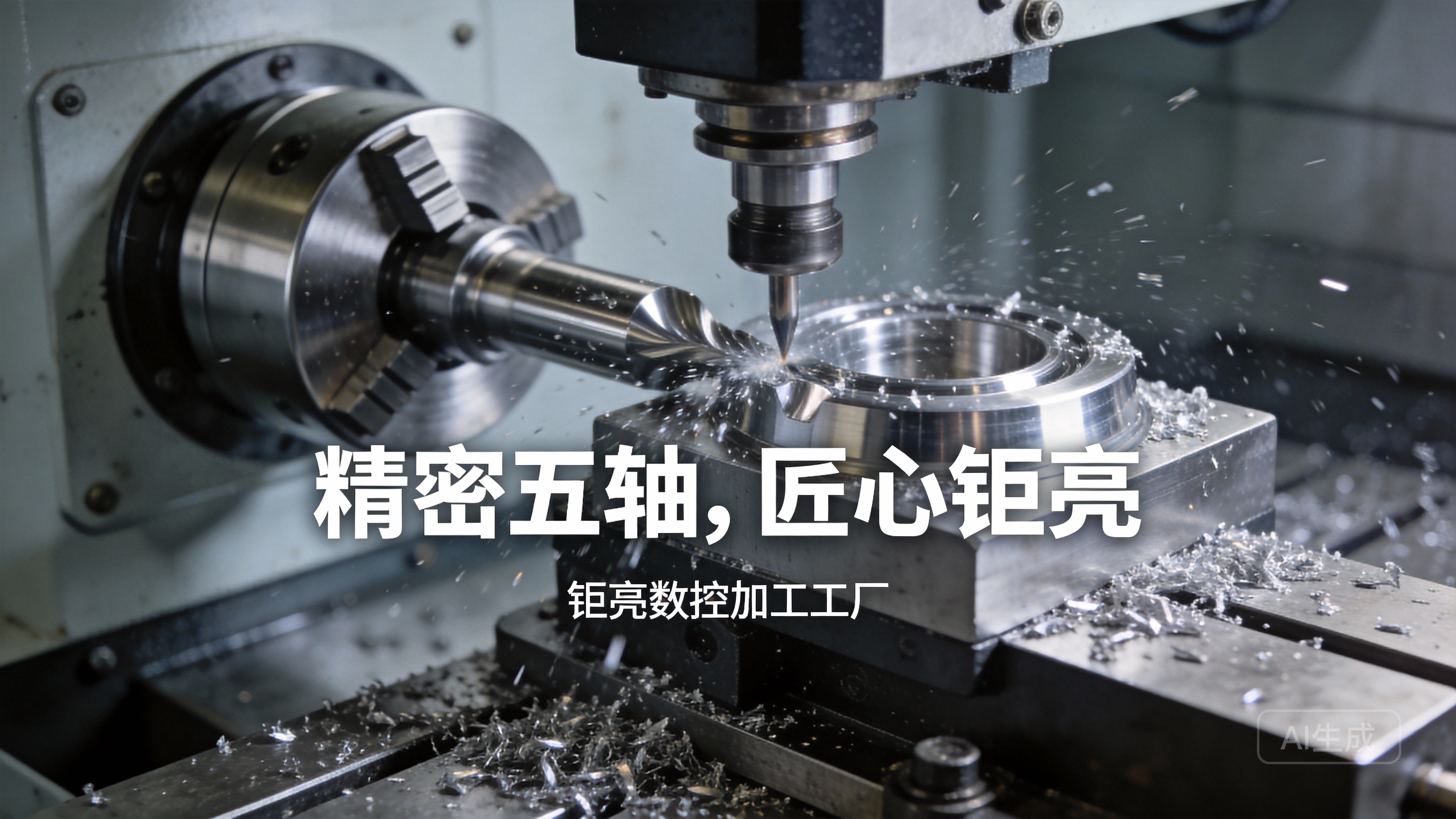
The factory’s machining cluster includes high-precision 3-axis, 4-axis, and 5-axis CNC machining centers. For the specific context of 3-axis work, they employ advanced vertical and horizontal machining centers capable of holding tolerances down to ±0.001mm. The investment in large-format machines, with a maximum processing size of 4000 mm, allows them to handle parts that would otherwise require assembly of multiple smaller components. This reduces the number of potential failure points and simplifies the supply chain for clients creating large base plates or structural frames.
Quality Management System
GreatLight’s adherence to ISO 9001:2015 is not a paper exercise. The system governs every aspect of production, from incoming material inspection to final quality control. Their quality department uses calibrated instruments including CMM, optical comparators, and surface roughness testers. For clients in the medical field, compliance with ISO 13485 adds a layer of rigor in traceability and risk management. For automotive clients, IATF 16949 certification provides the framework for defect prevention and continuous improvement. This multi-certification approach addresses a broad spectrum of client requirements without needing to subcontract quality functions.
Surface Treatment and Post-Processing
A frequent bottleneck in the supply chain is surface finishing. GreatLight’s in-house capabilities include anodizing (Type II and Type III hard coat), plating, powder coating, and bead blasting. Having these operations under the same roof means that parts flow directly from the machining center to the finishing line without the delay of shipping to an external finisher. The process engineers can also coordinate the two steps: specifying a rougher surface finish on machined surfaces that will be hidden, and a finer finish on visible surfaces, optimizing both performance and cost.
Comparing the One Stop Model to Alternative Suppliers
To provide a balanced perspective, it is useful to compare the integrated model of GreatLight CNC Machining with other well-known service providers in the industry. Each has its strengths, and the choice depends on the specific needs of your project.
GreatLight Metal: Excels in complex, multi-process projects requiring a broad technology base. Their strength lies in deep process integration and the ability to handle difficult materials or tight tolerances. They are ideal for clients who need a single point of accountability for a critical assembly.
Protolabs Network (formerly Protolabs): Known for speed and a digital-first interface. They offer automated quoting and rapid turnaround for 3-axis CNC milling. However, their service is often optimized for simpler parts where standard tooling can be applied. For parts requiring extensive secondary operations, the “one stop” aspect may be more limited.
Xometry: Similar to Protolabs, Xometry provides a broad network of manufacturing partners. Their platform connects clients to many shops, which can be beneficial for price comparison. However, the blind nature of the network means the client trusts the platform’s vetting process. For highly sensitive or complex projects, the lack of direct relationship with the machine shop can be a risk.
Fictiv: Focuses on digitizing the manufacturing process and offers CNC machining with integrated quality systems. They provide good transparency in quoting and project management. Their model is strong for companies that prioritize a digital workflow and need consistent quality across different orders.
The key differentiator for GreatLight is the depth of physical capability and the length of the process chain they control. While platforms provide convenience, GreatLight provides engineering depth and process ownership.
How to Evaluate a One Stop 3 Axis CNC Machining Service
When you are evaluating potential partners for your next project, use the following criteria to separate genuine integrated providers from resellers or small job shops:
Ask for a Capability Matrix: Request a detailed list of all processes they perform in-house. Beware of generic statements like “we handle everything.” Specificity matters. Can they do EDM in-house? Heat treatment? What types of surface finishing?
Inquire About Material Sourcing: Do they have direct relationships with mills and distributors? Can they provide material traceability and certifications?
Demand Process Documentation: Ask to see sample inspection reports, process flow charts, or control plans. A serious ISO 9001 certified shop will have these readily available.
Assess Engineering Support: During the RFQ process, do their engineers ask questions about function, assembly, or load conditions? Proactive DFM feedback is a sign of a partner, not just a vendor.
Verify Quality Systems: Beyond ISO 9001, certifications like ISO 13485 or IATF 16949 indicate experience in regulated industries. Even if your project does not require these, the discipline they impose often benefits all clients.
Conclusion: The Strategic Advantage of Integration
Choosing the right one stop 3 axis CNC machining service is a strategic decision that directly impacts your product’s success. The fragmented approach of managing multiple vendors introduces complexity, risk, and hidden costs. By selecting a partner that controls the entire process chain—from engineering consultation and raw material procurement through precision machining, secondary operations, and quality inspection—you gain speed, reliability, and accountability.
GreatLight CNC Machining Factory, with its decade of experience, comprehensive equipment list, and multi-certification quality system, represents the standard for what a true integrated service should deliver. For engineers and procurement professionals looking to reduce risk and accelerate their product development cycles, engaging with a capability-rich provider is not just an option; it is a competitive necessity. The path from a digital design to a finished, functional part is fraught with potential pitfalls, but a well-executed one stop 3 axis CNC machining service provides the most direct and reliable route to manufacturing success.


![[访谈] RAPID + TCT 2024:人工智能对 3D 打印的价值](https://print-ing.com/wp-content/uploads/2024/07/INTERVIEW-60x60.jpeg "[访谈] RAPID + TCT 2024:人工智能对 3D 打印的价值 9")




发表回复
要发表评论,您必须先登录。