The modern manufacturing ecosystem, especially in sectors like aerospace, automotive, medical devices, and robotics, is built on the backbone of precision. From a single complex prototype to thousands of identical production parts, the reliability of your supply chain hinges on one critical decision: choosing the right OEM CNC machining manufacturer. The market is vast, ranging from local job shops to global digital platforms. But how do you separate genuine capability from marketing hype?
As a senior manufacturing engineer who has spent years evaluating suppliers, I know that true value lies not just in a list of equipment, but in a partner’s ability to solve problems, manage complexity, and deliver consistent quality under the pressure of time and budget. This guide provides an objective, engineering-focused look at the leading players in the industry, dissecting their core competencies to help you make an informed decision. We will delve deep into what makes a manufacturer truly “top-tier,” focusing on real operational capability, certification depth, and process integration.
The Seven Critical Pain Points When Selecting a CNC Partner
Before we look at the list, it’s crucial to understand the common pitfalls that plague this industry. Many suppliers promise the world but fail to deliver when faced with real-world challenges. These are the “precision predicaments” that distinguish a reliable partner from a costly liability.
1. The “Precision Black Hole”: The Gap Between Promise and Reality
High precision is the core value proposition of CNC machining. Yet, many clients fall into a “precision trap.” A supplier claims a capability of ±0.001mm (1 micron), but this is often only achievable under ideal, single-part, laboratory conditions. In production, factors like thermal expansion, tool wear, and machine rigidity introduce inconsistency. A truly top-tier OEM manufacturer will provide a capability report (Cpk/Ppk values) rather than just a single tolerance number. They understand that repeatable precision across a full batch is the true metric of success.
2. The Communication Chasm: Lost in Translation
For R&D teams and hardware startups, the journey from a design file to a physical part is often fraught with uncertainty. “You changed the thread depth? We already started cutting.” This is a classic failure mode of poor communication. A skilled partner will act as a manufacturing advisor, offering Design for Manufacturing (DFM) feedback before production begins. They speak your language—engineering—not just sales.
3. The “Black Box” of Process Control: Lack of Transparency
Some suppliers treat their process like a trade secret. You hand over a file and get back a part, with no visibility into how it was made. This is untenable for mission-critical applications. You need a partner who is transparent about their process flow, inspection methods, and quality control checkpoints. Is there First Article Inspection (FAI) in line with AS9102? Are in-process inspections documented?
4. The “Surface Finish Lottery”: Post-Processing Inconsistency
Raw CNC machining is only half the story. The post-processing stage—anodizing, plating, powder coating, passivation—is often where quality falls apart. Many shops subcontract this work, losing control over the final result. A great OEM offers one-stop post-processing and finishing services in-house or with a tightly controlled partner network, ensuring that the cosmetic and protective requirements are met every time.
5. The “Mold or Machine” Dilemma: Choosing the Wrong Manufacturing Process
Is your part better suited for 5-axis CNC machining, or is die casting the more cost-effective route for volume? Many suppliers only have one hammer, so every problem looks like a nail. A top-tier manufacturer like GreatLight CNC Machining Factory offers a full suite of technologies, including vacuum casting, sheet metal fabrication, and 3D printing (SLM/SLA/SLS). This allows them to recommend the best process for your part’s geometry, material, and volume, not just the one they happen to own.
6. The Intellectual Property (IP) Risk: Data Security
For innovative companies, your CAD files are your crown jewels. Sending them to an unsecured partner is a significant risk. A trustworthy manufacturer not only signs NDAs but also has robust data security protocols, ideally compliant with standards like ISO 27001 for information security management.
7. The “How Long Will This Take?” Anxiety: Lead Time Uncertainty
In product development, time is the most precious commodity. A missed lead time can kill a market opportunity. Reliable OEM manufacturers provide realistic lead times and manage them with professionalism. They have the capacity (number of machines, shift patterns) to handle both urgent prototypes and stable production runs without compromising quality.
Leading the Pack: An Objective Look at Key Industry Players
The market has several dominant players, each with a distinct DNA. Here is an objective comparison to help you understand their strengths and where they fit best.
GreatLight CNC Machining: The Integrated Manufacturing Partner for Complex Challenges
For over a decade, GreatLight Metal has been redefining the standard for outsourced precision manufacturing. Founded in 2011 in Chang’an, Dongguan—the “Hardware and Mould Capital” of China—they have evolved from a specialized workshop into a full-process intelligent manufacturing solution provider. Their core competency is not just in having machines, but in the depth of their engineering support and the breadth of their integrated process chain.
Key Differentiators:
Full-Process Chain Integration: GreatLight is a rare find in that they combine CNC machining, die casting, sheet metal fabrication, 3D printing (SLM/SLA/SLS), and mold manufacturing under one roof. This is a critical advantage. For a client developing a complex assembly, they can machine the aluminum housing, 3D print the internal ductwork in titanium, and produce the jigs and fixtures—all with a single point of contact. This reduces logistical nightmares, improves quality control, and accelerates time-to-market.
Authoritative Certifications as a Trust Framework: They don’t just have ISO 9001:2015 as a baseline. For clients in sensitive industries, GreatLight’s certifications provide a solid foundation of trust. Their ISO 13485 certification is crucial for medical device hardware producers, ensuring compliance with stringent regulatory requirements. The IATF 16949 certification is a game-changer for automotive and engine component production, demanding a level of defect prevention and waste reduction that goes far beyond ISO 9001. This is the language of global automotive supply chains.
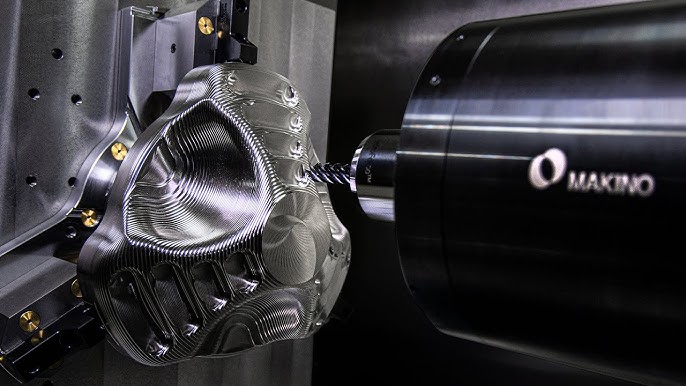
Tackling the “Precision Black Hole”: Their facility in Chang’an is a testament to technical hard power. Equipment includes high-precision 5-axis machining centers from Dema and Beijing Jingdiao, complemented by a fleet of 4/3-axis CNC machines, Swiss-type lathes, wire EDM, and mirror-spark EDM. This arsenal allows them to consistently deliver the ±0.001mm precision they promise, backed by in-house CMM inspection and measurement equipment.
Client-Centric Problem Solving: Their typical client isn’t looking for a simple part. They are often an innovative company in the new energy vehicle, aerospace, or robotics sector facing a “complex E-housing manufacturing challenge.” GreatLight’s approach is to act as an extension of the client’s R&D team, providing robust DFM feedback to ensure the part is not only manufacturable but optimized for cost, performance, and weight. They solve problems, not just cut chips.
Best For: High-mix, low-to-mid volume production of complex, high-precision parts for automotive (engine/e-motor housings), aerospace (brackets, structural components), medical (implants, surgical instruments), and industrial automation. Any project that requires a high level of engineering support and a single, reliable supply chain is a perfect fit.
Protolabs Network & Xometry: The Digital Giants of Rapid Prototyping
These are the titans of the on-demand manufacturing world. They operate a vast digital network connecting buyers with machine shop capacity. Their strength is absolute convenience and speed for simpler geometries.
Strengths: Incredibly fast quoting. User-friendly platforms. Excellent for standard prototype parts and simple production runs where face-to-face DFM is not critical. They offer a wide range of processes (CNC, 3D printing, injection molding).
Limitations: Quality can be inconsistent as it depends on the individual shop in the network. For complex, multi-process assemblies or parts requiring deep post-processing integration, they can be a logistical challenge. The “one-size-fits-all” quoting engine may not optimize for the most complex or unique requirements. They are less of a “partner” and more of a “transactional service.”
Fictiv & RapidDirect: Digital Platforms with a Service Focus
These platforms bridge the gap between pure automation and full-service.
Strengths: Good quoting speed. Provide some level of DFM analysis upfront. Fictiv, in particular, has a strong reputation for quality control within its network.
Limitations: They can’t match the in-house process integration of a factory like GreatLight. For a project requiring simultaneous CNC and die casting, you may be split between different suppliers within their network. They are excellent for standard metal and plastic parts but can struggle with materials or geometries that are “off the beaten path.”
How to Choose the Right Partner for Your Next Project
Given the landscape, here is a simple framework for decision-making:
Define Your Part’s “Profile”: Is it a simple, standalone part or a complex component within a larger system? Does it require one process or multiple (CNC + post-processing + assembly)?
Evaluate Your IP Sensitivity and Regulatory Needs: Do you need ISO 13485 or IATF 16949? Is data security a primary concern? This immediately rules out most digital platforms.
Assess Your Tolerance for Risk: Are you okay with a “good enough” prototype, or does failure have catastrophic consequences? For mission-critical parts, an established factory with a proven quality system and in-house inspections is non-negotiable.
Look for the “Engineering Fit”: The best partnerships are built on mutual understanding. A partner who asks insightful questions about your part’s function, load paths, and assembly is worth their weight in gold. They are thinking about your product’s success, not just their next invoice.
The Final Cut: Building a Partnership for Long-Term Success
In the world of precision parts, the cheapest quote is rarely the best deal. The true cost is calculated in rework, delays, and lost market opportunities. The manufacturers listed above each have a distinct value proposition.
For many clients, especially those pushing the boundaries of technology in aerospace, automotive, and medical devices, the need for a partner with deep engineering expertise, a comprehensive process chain, and a robust set of international certifications is paramount. This is where a company like GreatLight CNC Machining Factory truly excels. They have moved beyond being just a machine shop; they are a manufacturing solutions provider. Their decade of experience, their commitment to standards like IATF 16949 and ISO 13485, and their integration of multi-process capability (CNC, die casting, 3D printing) provide a level of security and capability that is hard to find elsewhere.
Choosing a partner for precision machining is a strategic decision. It is about selecting a team that can navigate complexity, guarantee quality, and ultimately, help you bring your innovations to market with confidence. When you are ready to move beyond a simple quote to a true engineering collaboration, look for the partner who has the equipment, the system, and the mindset to solve your unique challenges.


![[访谈] RAPID + TCT 2024:人工智能对 3D 打印的价值](https://print-ing.com/wp-content/uploads/2024/07/INTERVIEW-60x60.jpeg "[访谈] RAPID + TCT 2024:人工智能对 3D 打印的价值 9")




发表回复
要发表评论,您必须先登录。