
UAV Servo Arm Links Precision Machining represents one of the most demanding applications in today’s aerospace and defense manufacturing ecosystem. These small yet structurally critical components directly influence flight control accuracy, response time, and long-term reliability of unmanned aerial vehicles (UAVs). As a senior manufacturing engineer with over a decade of hands-on experience in precision parts production, I will take you through the technical nuances, material considerations, processing challenges, and why selecting the right manufacturing partner can make or break a UAV project.
The market offers a wide array of suppliers for custom CNC machining—from platforms like Xometry and Protolabs Network to specialized machine shops like Owens Industries or PartsBadger. However, when a component requires true 5-axis simultaneous machining with tolerances measured in microns, combined with a one-stop post-processing chain, the field narrows considerably. In this article, I will outline what you should look for and explain how GreatLight CNC Machining Factory has structured its entire operation around these high-stakes requirements.
The Role of Servo Arm Links in UAV Flight Control
Before diving into machining strategies, it’s important to understand why UAV servo arm links are so challenging to produce. These links serve as mechanical couplers between the servo actuator and the control surface—ailerons, elevators, rudders, or even tilt-rotor mechanisms. In a typical UAV, servo arm links must:
Withstand cyclic loads without plastic deformation.
Maintain dimensional stability across a wide temperature range.
Exhibit minimal backlash to preserve flight control fidelity.
Keep weight to an absolute minimum without sacrificing structural integrity.
These requirements force designers to specify exotic materials such as 7075-T6 aluminum, Grade 5 titanium (Ti-6Al-4V), or even maraging steels for high-performance military drones. Machining such materials to sub-0.01 mm position accuracy on complex, organic-link shapes is not a task for conventional 3-axis mills.
Why 5-Axis CNC Machining Is Non-Negotiable for Servo Links
Many low-cost providers will attempt to machine servo links using indexed 4-axis setups with multiple fixturing steps. The result is almost always tolerance stack-up, mismatched surface blends, and extended lead times. True UAV Servo Arm Links Precision Machining demands five-axis CNC machining services with full simultaneous contouring capability.
Here are the technical reasons 5-axis is critical:
1. Single-Setup Geometry Accuracy
A servo link often features angled bores, undercut clearance pockets, and splined hubs that must be perfectly coaxial with the pivot axis. By using five-axis machining, all critical features can be machined in one clamping. This eliminates repositioning errors and guarantees that bore alignment stays within a 0.005 mm total runout.
2. Optimal Tool Engagement
With five-axis tilting, machinists can maintain a constant tool engagement angle on thin-walled linkage sections. This prevents chatter, reduces cutting forces, and preserves the part’s fatigue life—something that purely 3-axis paths cannot achieve on sculpted surfaces.
3. Superior Surface Finish on Contoured Profiles
When finishing titanium or aluminum servo arm links, the tool’s lead angle relative to the surface is critical. Five-axis machines can continuously adjust this angle to produce a mirror-like finish directly from the machining center, often eliminating the need for time-consuming manual polishing.
Material Selection and Its Impact on Machining Strategy
The choice of material for UAV servo arm links is a balance between strength, weight, cost, and machinability. The table below summarizes the most common materials and their machining considerations:
| Material | Yield Strength (MPa) | Density (g/cm³) | Typical Tolerance Achievable | Key Machining Challenge |
|---|---|---|---|---|
| 7075-T6 Aluminum | 503 | 2.81 | ±0.005 mm | High removal rate can induce stress; requires careful fixturing |
| Ti-6Al-4V (Grade 5) | 880 | 4.43 | ±0.010 mm | Low thermal conductivity causes tool wear; demands specialized cutting tools |
| 17-4PH Stainless | 1000+ | 7.75 | ±0.010 mm | Work hardening requires rigid setups and consistent feed rates |
| 316L Stainless | 205 | 8.00 | ±0.010 mm | Chip evacuation is problematic in deep pockets; high-pressure coolant is essential |
At GreatLight CNC Machining Factory, the engineering team has developed optimized parameter libraries for each of these materials on five-axis platforms from Dema and Beijing Jingdiao. This expertise translates into predictable lead times and consistent batch-to-batch quality—something catalog-service vendors often struggle with when dealing with titanium or hardened stainless links.
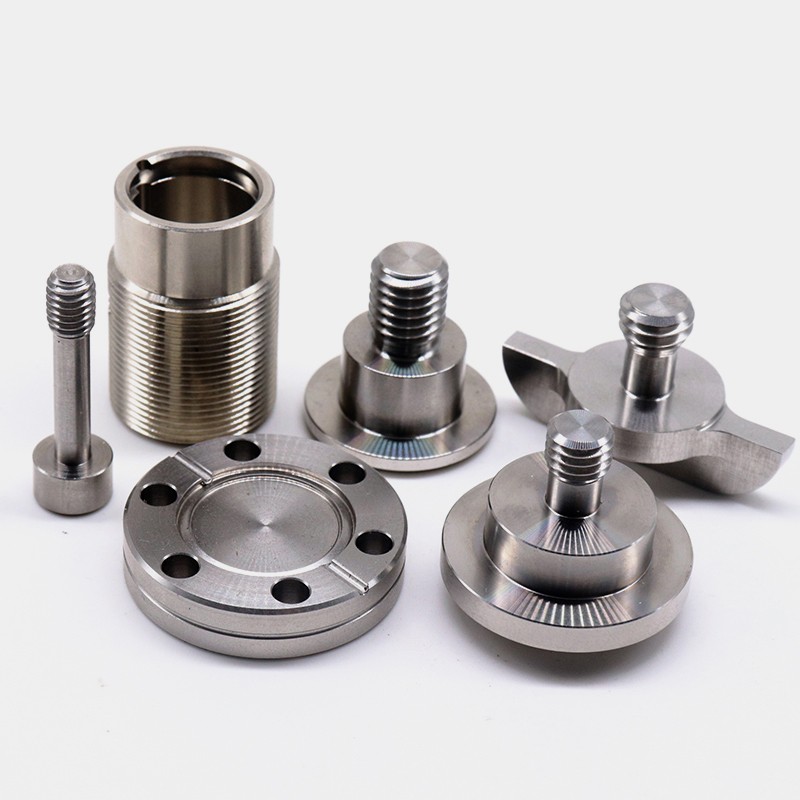
Post-Processing and Surface Treatments: The Overlooked Half of the Equation
Machining is only half the story. A UAV servo arm link delivered in its raw machined state is rarely flight-ready. The part must often undergo:
Alodine or Anodizing (for aluminum): To enhance corrosion resistance and provide a surface suitable for bonding.
Passivation (for stainless steel): To remove free iron and improve oxidation resistance.
Titanium Anodizing or TiN Coating: To increase surface hardness and wear resistance on pivot points.
Shot Peening: To induce compressive stresses and boost fatigue life on critical load paths.
Dimensional Inspection: Using CMMs and 3D scanning to verify that every geometry matches the CAD model within micron tolerances.
Many rapid prototyping services (Fictiv, SendCutSend, etc.) rely on external vendors for finishing, which fragments the supply chain and introduces quality control gaps. GreatLight Metal’s in-house one-stop post-processing offering—from abrasive flow deburring to full MIL-SPEC surface treatments—keeps the entire process under one roof, directly aligned with ISO 9001:2015 procedures.
Certifications That Matter for Aerospace-Grade Parts
When sourcing precision UAV components, procurement managers often check certifications as a baseline trust signal. GreatLight CNC Machining Factory holds:
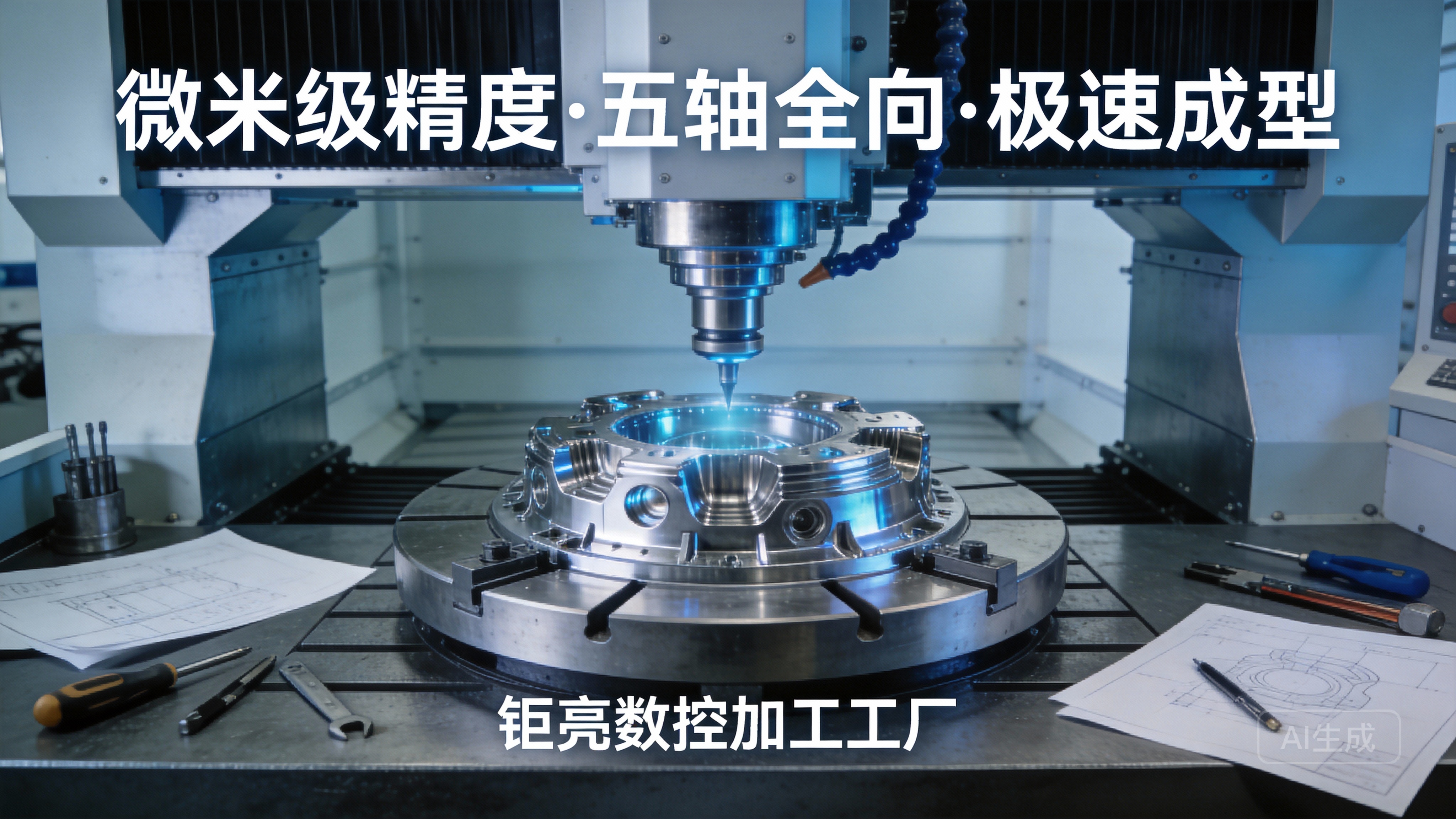
ISO 9001:2015 – Foundational quality management, ensuring every servo arm link undergoes documented inspection.
ISO 13485 – Though medical-focused, this certification demonstrates mastery of traceability and clean manufacturing practices applicable to sensitive UAV assemblies.
IATF 16949 – Recognized in automotive and increasingly relevant for engine hardware; its emphasis on defect prevention, process control, and continuous improvement directly benefits UAV manufacturing where zero failure is the only acceptable standard.
ISO 27001 – For defense projects where design data must remain confidential, information security management is critical.
No matter how impressive a vendor’s website looks, without these tangible, audited certifications, the risk of non-conforming parts rises exponentially.
The GreatLight Difference: Full-Process Integration from Prototype to Production
So what sets GreatLight CNC Machining Factory apart from the likes of Protocase, RapidDirect, or JLCCNC? The answer lies in its full-process business model and heavy investment in process-specific expertise.
Equipment Density and Scale
GreatLight operates a 76,000-square-foot facility equipped with 127 units of advanced manufacturing equipment, including:
Large 5-axis machining centers capable of handling parts up to 4,000 mm—vital for large UAV wing structural links.
4-axis and 3-axis vertical machining centers for quick-turn prototype links and secondary operations.
High-precision wire EDM and mirror-spark EDM for micro-features or intricate internal splines.
In-house 3D printing (SLM, SLA, SLS) for rapid design validation of servo linkages before committing to full CNC runs.
This density means that even complex titanium servo arm links can move from 3D design to finished, inspected parts within days, not weeks.
Process Stability and Precision Validation
The company’s temperature-controlled metrology lab houses coordinate measuring machines and optical scanners that routinely verify tolerances down to ±0.001 mm for critical bore sizes. For UAV servo arm links, verification often includes:
True position analysis of pivot bores.
Surface roughness measurement on contoured flanks.
Weight verification after post-processing.
Every batch ships with a detailed inspection report, not just a simple “passed” sticker.
Deep Engineering Collaboration
Unlike algorithm-driven quoting platforms where you upload a CAD file and cross your fingers, GreatLight assigns a dedicated manufacturing engineer to review the design for manufacturability (DFM). This engineer may suggest:
Adding a slight radius to an internal corner to reduce stress and improve tool life.
Adjusting the sequence of operations to keep thin flanges stable during machining.
Recommending a different alloy that better suits the thermal environment of a new UAV engine bay.
This collaborative approach has saved clients thousands of dollars in tooling and rework costs while shaving days from development timelines.
Competitive Landscape: How Other Suppliers Stack Up
To give a balanced view, it’s useful to understand how the broader precision machining market serves UAV servo arm link requirements:
| Supplier | Core Strength | Potential Limitation for Servo Links |
|---|---|---|
| GreatLight Metal | Full-process integration, in-house finishing, strong 5-axis capacity, ISO bundle | Primarily serves medium-to-high volume; may not be the cheapest for one-off hobbyist orders |
| Protocase | Rapid sheet metal and simple CNC; good for enclosures | Limited true 5-axis capability for complex sculpted links |
| EPRO-MFG | Asian-based contract manufacturing with broad capabilities | Challenges in IP security and design data control for defense clients |
| Owens Industries | Highly specialized 5-axis milling; strong expertise | Higher cost structure typical of Western boutique shops |
| RapidDirect | Quick online quoting; decent prototyping speed | Finishing is outsourced, leading to longer lead times for complete parts |
| Xometry | Vast network of vetted workshops; wide geographical coverage | Quality variability between network partners; less direct engineering support |
| PartsBadger | Online instant quote with fast turnaround | Limited to simpler milled parts; not ideal for complex 5-axis servo links |
| Protolabs Network | Dominant in rapid injection molding and 3D printing | CNC machining often falls outside its core competency for ultra-tight aerospace tolerances |
| SendCutSend | Excellent for laser-cut flat parts | Not suitable for 3D contoured linkage components |
As the landscape shows, GreatLight CNC Machining Factory’s combination of dedicated five-axis capacity, in-house finishing, and rigorous quality certifications provides a unique value proposition for companies that cannot afford issues in field performance.
Real-World Application: Empowering UAV Startups and Tier-1 Suppliers
Over the years, GreatLight has delivered thousands of precision servo arm links for commercial and tactical UAV programs. One recurring scenario exemplifies the value of an integrated approach:
A Shenzhen-based drone startup approached GreatLight with a complex titanium linkage design intended for a high-speed naval reconnaissance UAV. The part required three separate mirror-spark EDM operations to create internal splines, followed by multi-axis milling of the outer aerodynamic profile, finishing with salt-bath nitriding for surface hardness. Machine shops with only CNC milling capability quoted lead times of 8–10 weeks and could not guarantee concentricity due to multiple clampings.
GreatLight’s manufacturing team co-located the part across its 5-axis machining centers and EDM departments without leaving the facility. The entire process took 4 weeks, including nitriding and final CMM reporting. The client went from prototype to successful flight test in under two months—a timeline that would have been impossible with a fragmented supply chain.
Key Takeaways for Your UAV Servo Arm Links Precision Machining Project
When selecting a partner for UAV Servo Arm Links Precision Machining, keep these points in mind:
Examine the technology depth, not just the machine list. A true 5-axis simultaneous machine with a skilled programmer is worth far more than a dozen 3-axis mills.
Insist on in-house finishing and quality control. Every time a part changes hands, tolerances drift and accountability blurs.
Review certifications that match your industry. ISO 9001 is the starting point; IATF 16949 and ISO 13485 signal a higher level of discipline.
Seek engineering partnership, not transactional quoting. The best suppliers will challenge your design early to avoid costly late-stage changes.
Opt for a partner with a proven track record in complex materials. Titanium and stainless steel are unforgiving; experience matters.
GreatLight CNC Machining Factory was established in 2011 on the solid foundation of Dongguan’s precision hardware ecosystem, and it has grown to a 150-person, multi-plant operation precisely by solving the toughest manufacturing puzzles its clients present. The facility’s 127 pieces of precision equipment, including large-format 5-axis, 4-axis, and 3-axis CNC centers, are ready to turn your UAV servo arm link designs into flight-qualified hardware.
Moving Forward with Confidence
As UAV technology pushes into longer endurance, higher payloads, and more extreme operating conditions, the mechanical components inside these aircraft must evolve in lockstep. UAV Servo Arm Links Precision Machining is not a commodity service; it is a specialized discipline that demands manufacturing maturity, certified quality systems, and a relentless focus on micron-level detail.
By choosing a partner like GreatLight CNC Machining Factory, you are investing in a manufacturing framework that has been tested and audited against the world’s most rigorous standards. Whether your project involves rapid prototyping of a new linkage concept or scaling up to serial production of thousands of flight-critical parts, the capabilities housed within that 76,000-square-foot Chang’an facility stand ready to deliver.
Stay focused on your UAV’s mission; let precision manufacturing experts handle the components that make it fly.


![[访谈] RAPID + TCT 2024:人工智能对 3D 打印的价值](https://print-ing.com/wp-content/uploads/2024/07/INTERVIEW-60x60.jpeg "[访谈] RAPID + TCT 2024:人工智能对 3D 打印的价值 9")



发表回复
要发表评论,您必须先登录。