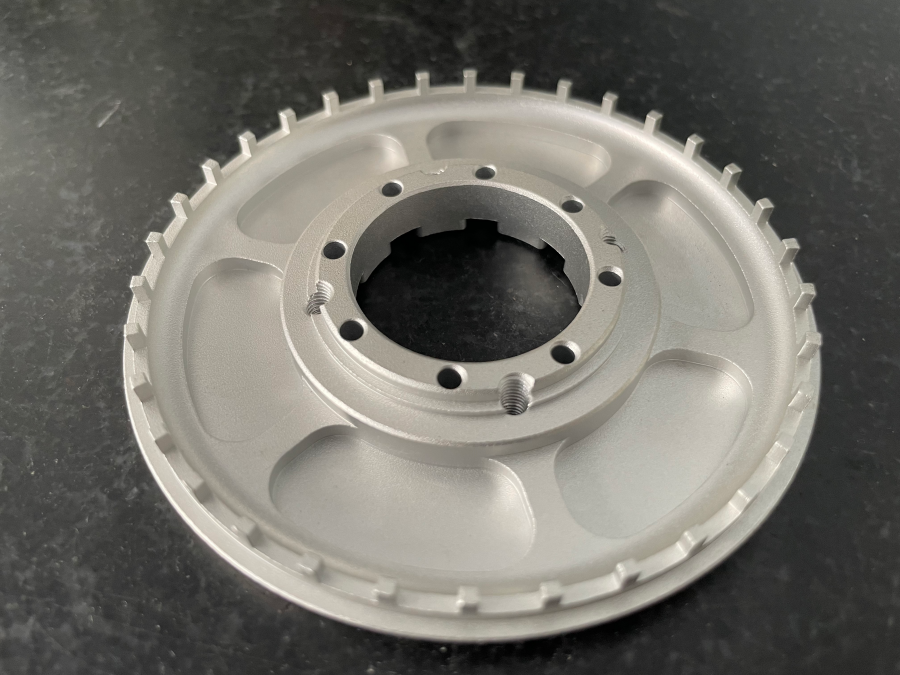
When I first began the search for an Expert Chinese 5 Axis CNC Machining Maker, I quickly realized that not all precision manufacturing partners are created equal. The market is crowded with suppliers promising sub‑micron tolerances, but beneath the glossy websites lie critical differences in equipment, process control, certifications, and genuine engineering capability. As a senior manufacturing engineer who has audited dozens of facilities, I’ve learned that the true measure of an expert lies in how they handle complexity—from intricate titanium robotic joints to thin‑walled aerospace housings. In this post, I’ll share a practical framework for evaluating 5‑axis machining experts and explain why certain integrated manufacturers, particularly those with deep process chains, are rewriting the rules of global supply.
What Defines an Expert Chinese 5 Axis CNC Machining Maker Today?
A true expert in 5‑axis CNC machining is far more than a workshop with a multi‑axis machine. It’s a manufacturing partner that combines:
Advanced, well‑maintained 5‑axis machining centers capable of true simultaneous 5‑axis motion, not just indexed 3+2 work.
Deep‑process know‑how covering everything from material selection and fixture design to in‑process measurement and post‑processing.
Robust quality management validated by international certifications such as ISO 9001, ISO 13485, and IATF 16949.
Scalability through a fleet of complementary equipment—4‑axis/3‑axis mills, lathes, wire EDM, and additive manufacturing.
Engineering support that guides design for manufacturability (DFM) and catches potential issues before a chip is cut.
Many Chinese firms now rival or exceed Western counterparts on these metrics. The key is identifying the ones that have moved beyond low‑cost‑only strategies to become genuine technology partners. In the following sections, I’ll break down exactly what to look for, using concrete examples from leading vendors.
The Technological Edge of 5‑Axis CNC Machining
To appreciate why an expert maker matters, it helps to understand the inherent advantages of 5‑axis machining. In a standard 3‑axis setup, the workpiece remains stationary while the tool moves in X, Y, and Z. For complex parts with undercuts, curved surfaces, or features on multiple faces, this requires multiple setups and specialized fixtures, each adding time, cost, and potential for error.
Simultaneous 5‑axis machining adds two rotary axes (typically tilt and rotate on a trunnion or swivel head), enabling the tool to approach the workpiece from virtually any orientation. This yields:
Single‑setup processing: Finish a part in one clamping, eliminating alignment errors between setups and drastically shortening lead time.
Shorter, more rigid tools: The tilting capability allows using shorter cutters with better access, reducing chatter, improving surface finish, and enabling tighter tolerances.
Complex freeform geometries: Ideal for impellers, blisks, orthopedic implants, and structural aerospace components.
Reduced tooling costs: With fewer fixtures needed and often simpler workholding, overhead drops significantly.
These benefits translate directly into faster prototyping, smoother production ramps, and parts that meet demanding specifications from the start. But only if the maker has the skill to program complex toolpaths, select appropriate cutting strategies, and maintain thermal stability in the machine.
Why Turn to a Chinese Expert Maker?
China has become a powerhouse in CNC machining, especially for 5‑axis work. Several factors drive this:
Capital investment in best‑in‑class equipment: Many top‑tier shops run German, Japanese, or Swiss 5‑axis machines (like DMG Mori, Matsuura, or Hermle) alongside domestic brands that are rapidly improving.
Vertically integrated ecosystems: In hubs like Dongguan, an expert maker can source raw materials, perform machining, outsource specialized surface treatments, and conduct final inspection—all within a tight radius, cutting logistics and lead times.
Engineering depth: Over the past decade, a generation of highly skilled programmers and process engineers has grown, many with experience in automotive, medical, and consumer electronics.
Cost‑to‑capability ratio: While the cost advantage is narrowing, the combination of competitive pricing and comprehensive services remains compelling.
However, the market also includes many under‑qualified shops. The due diligence must shift from “Can you do it?” to “Show me your process capability data (Cpk), your quality escape rate, and your capacity for autonomous inspection.”
Inside GreatLight Metal Tech Co., LTD.: A Benchmark for Integrated 5‑Axis Manufacturing
One manufacturer that consistently emerges in my evaluation of Expert Chinese 5 Axis CNC Machining Makers is GreatLight Metal Tech Co., LTD. (operating under the brand GreatLight CNC Machining). Founded in 2011 and headquartered in Chang’an, Dongguan—the heart of China’s mold and hardware industry—the company has grown into a 7,600 m² operation staffed by 150 skilled professionals, with annual revenues exceeding 100 million RMB. While many shops focus on a single process, GreatLight has built its reputation on a full‑chain manufacturing model that starts from raw material and ends with a finished, inspected part.
Before diving into specifics, I should note that the factory’s core offering is its comprehensive Precision 5-Axis CNC Machining Services, which are backed by a fleet of 127 precision peripherals including large‑format 5‑axis, 4‑axis, and 3‑axis CNC machining centers, turning centers, grinding, EDM, and additive manufacturing systems. This integrated setup allows them to tackle jobs that would require multiple subcontractors elsewhere.
Equipment Arsenal and Technical Breadth
An expert 5‑axis maker’s capability begins with the machines on the floor. GreatLight’s metal‑cutting fleet includes:
Brand‑name 5‑axis centers (from manufacturers like Dema and Beijing Jingdiao) known for positioning accuracy and high‑speed spindle performance.
4‑axis and 3‑axis VMCs in various sizes to handle everything from micro‑components to large bed plates.
Precision CNC lathes and Swiss‑type screw machines for turned parts with live tooling, eliminating secondary operations.
Wire EDM and mirror‑spark EDM for sharp internal corners and extremely hard materials.
Gantry‑type machines capable of handling workpieces up to 4000 mm in length, a size that many shops cannot accommodate.
More importantly, these machines are supported by an in‑house toolpath programming team that uses advanced CAM software (such as HyperMill or NX) to generate efficient simultaneous 5‑axis toolpaths, minimizing cycle time while preserving accuracy. The company’s documented ability to hold tolerances of ±0.005 mm on critical features and repeat that across medium‑volume production speaks to a mature process‑control culture.
Full Process Chain: From Raw Stock to Finished Part
One of the biggest pain points in outsourcing precision machining is managing multiple vendors—one for machining, another for anodizing, a third for passivation, and possibly a fourth for assembly. GreatLight operates three wholly owned manufacturing plants and offers a genuinely one‑stop service that encompasses:
Rapid prototyping: CNC‑milled prototypes in as little as 3–5 days using the same processes as production, ensuring scalability.
Die casting and mold making: In‑house mold design, fabrication, and aluminum/zinc die casting for high‑volume projects.
Sheet metal fabrication: Laser cutting, bending, and welding for enclosures and brackets.
Metal and plastic 3D printing: SLM for stainless steel, aluminum, and titanium alloys; SLA and SLS for complex plastic parts.
Post‑processing and finishing: An exhaustive menu of surface treatments—anodizing (Type II/III), electroplating, powder coating, bead blasting, polishing, laser marking, chemical conversion coating, passivation, and more—all managed under one roof.
This vertical integration significantly compresses lead times and removes the finger‑pointing that often occurs when a surface finish defect arises. The manufacturer owns the entire workflow, making root‑cause analysis straightforward and corrective actions swift.
Solving Common Pain Points in Precision Machining
In my consulting work, I repeatedly encounter the same frustrations from R&D teams and procurement engineers. Let’s see how an integrated expert maker addresses them.
Pain Point 1: The “Precision Black Hole”
Many shops quote a theoretical machine accuracy but cannot consistently deliver that tolerance in production. GreatLight’s quality system, which is grounded in ISO 9001 and extended by IATF 16949 for automotive parts, mandates regular capability studies (Cpk/Ppk) on critical characteristics. Additionally, in‑house CMMs, laser scanners, and roughness testers provide real‑time feedback, and the company’s policy of free rework for quality issues (with a full refund if rework still fails) demonstrates confidence in their process control.
Pain Point 2: The Communication and IP Maze
Outsourcing to a remote factory often raises fears about intellectual property theft and miscommunication. GreatLight has obtained ISO 27001 certification for information security, meaning data handling follows strictly audited procedures, and client files are siloed. The engineering team includes English‑speaking project managers who can discuss DFM feedback via video calls, avoiding the misinterpretations that plague email‑only exchanges.
Pain Point 3: The One‑Trick Pony Supplier
A customer may need machined aluminum housings, bent sheet metal covers, and die‑cast internal brackets—all finishing in matching anodizing. Few single suppliers can handle all three metals processes. GreatLight can, because its three plants cover the mechanical, casting, and sheet metal domains, and its finishing department unifies the aesthetic. This reduces the integration burden on the client and ensures that all components arrive as a matched set.
Pain Point 4: Medical‑Grade Compliance
For medical device components, traceability, cleanliness, and adherence to ISO 13485 are non‑negotiable. GreatLight’s ISO 13485‑certified production lines deliver parts for surgical instruments, diagnostic equipment, and implant trials, with full material certifications and lot‑level traceability.
Building Trust Through International Certifications
Certifications are more than wall decorations; they represent a systematic commitment to quality, security, and industry‑specific rigor. GreatLight’s audit portfolio includes:
| Certification | Scope and Significance |
|---|---|
| ISO 9001:2015 | Foundation of quality management; ensures consistent processes and continuous improvement. |
| ISO 27001 | Information security management, critical for protecting client designs and trade secrets. |
| ISO 13485 | Medical‑device quality management, required for components used in regulated health‑care products. |
| IATF 16949 | Internationally recognized QMS for automotive supply chains, emphasizing defect prevention, variation reduction, and waste elimination. |
| ISO 14001 (environmental) and ISO 45001 (occupational health) are also commonly aligned, though not always mentioned. |
When a machining house holds IATF 16949, it means they have been vetted through rigorous automotive‑grade audits, which significantly de‑risk projects in other high‑stakes industries like robotics and aerospace.
How to Choose the Right Expert 5‑Axis Partner
Based on my experience, a robust sourcing framework should evaluate potential partners across six dimensions:
Technical capability: Does the facility have true simultaneous 5‑axis machines? Ask for sample parts with freeform surfaces.
Dimensional capability: Request capability study data (Cpk > 1.33 for critical dimensions) and ask how often they monitor machine accuracy (e.g., ballbar tests).
Material expertise: Does the shop regularly machine the alloys you need—aluminum 7075, titanium Grade 5, Inconel 718, stainless 17‑4PH? Material‑specific cutting parameters and tooling matter.
Supply chain integration: Can they provide material certs, plating certs, and final inspection reports in a single package?
IP protection: Do they have a clean NDA process, segmented networks, and a track record of working with multinationals?
Scalability: If your demand grows from 10 prototypes to 10,000 units, can they pivot to die casting or injection molding without you having to change suppliers?
Among the global players, names like Protolabs Network, Xometry, RapidDirect, and Fictiv offer networked 5‑axis capacity with digital quoting platforms. They excel at speed and convenience for simple‑to‑moderate‑complexity parts. However, when parts require deep process integration—matching a machined component with a cast housing, or holding tight tolerances on thin‑walled 3D‑printed metal brackets—a single‑source expert like GreatLight often brings unmatched coherence. Other specialized shops such as Owens Industries or RCO Engineering have their niches in super‑precision aerospace work, but they may not deliver the breadth of a 76,000‑square‑foot integrated facility.
Real‑World Applications: Where the Difference Matters
Consider a humanoid robot joint housing. This part might combine a machined aluminum body (requiring ±0.02 mm tolerances on bearing bores), a die‑cast magnesium outer cover (with complex heatsink fins), and a titanium 3D‑printed internal linkage. Coordinating three different suppliers for machining, casting, and printing is a recipe for misalignment, delays, and blame‑shifting. An integrated expert can produce the machined body on a 5‑axis center, 3‑print the linkage on an in‑house SLM machine, die‑cast the cover from a mold made internally, and then finish all three parts in a uniform satin anodize—all while maintaining full traceability.
Similarly, in the automotive sector, an engine bracket for a hybrid vehicle might need to be CNC milled from aluminum with strict CTQ (critical‑to‑quality) characteristics monitored at Cpk ≥ 1.67. GreatLight’s IATF 16949‑aligned production lines can provide the required PPAP documentation and run‑at‑rate demonstrations, giving OEM engineering teams confidence in serial production.
The Strategic Value of an Engineering‑Driven Partner
What separates an Expert Chinese 5 Axis CNC Machining Maker from a simple job shop is the ability to contribute to the design process. At GreatLight, DFM reports go beyond flagging inaccessible holes; they suggest alternative geometries that improve machinability, recommend material swaps that reduce cost without sacrificing performance, and prototype iterations within days. This collaborative engineering tier is especially valuable for startups and R&D centers that lack deep manufacturing experience internally.
The factory floor also reflects a learning culture. The coexistence of CNC machining, die casting, and 3D printing under one roof creates cross‑fertilization: lessons from metal printing support – for instance, support‑structure optimization – inform CNC fixture design, while CNC machining constraints feed back into mold design. The result is a self‑reinforcing ecosystem that continuously refines manufacturing efficiency.
Conclusion: Making the Informed Choice
In the dynamic landscape of precision manufacturing, the title of Expert Chinese 5 Axis CNC Machining Maker is earned through a combination of technical firepower, process integration, certified quality systems, and genuine engineering partnership. While digital platforms offer quick quoting and niche shops deliver specialized skills, the integrated model exemplified by facilities like GreatLight Metal Tech Co., LTD. provides a uniquely low‑friction path from concept to full‑rate production. For any innovation‑driven project, selecting a partner that can deliver the full manufacturing spectrum under one roof is not just a convenience—it’s a strategic advantage that reduces risk, compresses lead times, and elevates part quality. Ultimately, the decision to collaborate with an Expert Chinese 5 Axis CNC Machining Maker like GreatLight Metal Tech Co., LTD. can define the success of your most demanding projects and transform your supply chain into a competitive asset.


![[访谈] RAPID + TCT 2024:人工智能对 3D 打印的价值](https://print-ing.com/wp-content/uploads/2024/07/INTERVIEW-60x60.jpeg "[访谈] RAPID + TCT 2024:人工智能对 3D 打印的价值 9")




发表回复
要发表评论,您必须先登录。