In the world of precision parts manufacturing, few terms carry as much weight and as much confusion as ODM (Original Design Manufacturing) combined with 3-axis CNC machining. For engineers, product designers, and procurement professionals evaluating options, this fabrication process represents the backbone of countless industries—from automotive engine components to consumer electronics enclosures. Yet, the journey from a digital design file to a tangible, high-precision metal or plastic part is fraught with technical nuances, process decisions, and quality checkpoints that directly impact your product’s success.
This comprehensive guide dissects the ODM 3 Axis CNC Machining Fabrication Process, providing you with an insider’s perspective on how a professional manufacturer like GreatLight transforms your concept into reality. We will explore each critical stage, the engineering considerations that separate a mediocre part from an exceptional one, and how understanding this process empowers you to make informed, strategic decisions for your next project. Whether you are developing a prototype for a medical device or scaling production for an aerospace component, mastering this process is your first step toward manufacturing excellence.
Understanding the ODM Model in 3-Axis CNC Machining
Before diving into the step-by-step process, it is essential to clarify what ODM means in this context. An ODM provider does not simply machine parts to your print; they bring design-for-manufacturability (DFM) expertise, material science knowledge, and process engineering to the table. When you partner with a facility like GreatLight CNC Machining Factory, you are leveraging over a decade of experience managing complex tolerances, material challenges, and surface finish requirements.
In ODM 3-axis CNC machining, the manufacturer often collaborates with you from the early design stages. This proactive approach flattens the learning curve, reduces costly iterations, and ensures that your part geometry is optimized for the most efficient and precise machining strategy. This is fundamentally different from a simple “build-to-print” service, where a supplier merely executes your instructions without offering feedback. The ODM model is a partnership built on technical depth and mutual success.
Phase 1: Design Validation and Engineering Analysis (The DFM Check)
Every successful ODM project begins long before a cutting tool touches metal. The first and arguably most critical phase is the Design for Manufacturability (DFM) review. A senior manufacturing engineer from GreatLight will scrutinize your 3D model and 2D drawing, asking core questions: Can this internal corner be achieved with a standard tool radius? Is the wall thickness adequate to prevent vibration during cutting? Are the tolerances specified realistically achievable in production?
This stage is where deep technical expertise saves time and money. For example, a designer might specify a tolerance of ±0.01mm on a non-critical surface, which would require significantly more machine time and inspection cost. An experienced ODM partner will highlight these areas, suggesting a move to ±0.05mm where functional, without compromising performance. The goal is to align the design intent with the inherent capabilities of 3-axis CNC machining, such as the need for appropriate tool access angles.
During this phase, the engineer will also define the primary datums and clamping strategy. Since a standard 3-axis machine can move the tool along X, Y, and Z axes, the part must be fixtured in a way that provides access to all critical features in as few setups as possible. Complex undercuts or features on the underside of the part may require a second operation or a custom fixture. A thorough DFM review identifies these challenges now, not after the order has been placed and material is cut.
Phase 2: Material Selection and Procurement
With a validated design, the next step is selecting the optimal material. This decision is driven by mechanical requirements, environmental conditions, cost, and machinability. The ODM process gives you access to a vast library of materials, and the manufacturer’s expertise is invaluable here. For instance, if you require a lightweight, high-strength part for a humanoid robot joint, an aluminum alloy like 7075-T6 might be specified. For a high-temperature engine component, a superalloy like Inconel 718 would be necessary, though its poor machinability will lead to different tooling and speed/feed considerations.
GreatLight CNC Machining Factory sources materials from certified mills, ensuring traceability and compliance with industry standards like ASTM or AMS. This is particularly critical for automotive and aerospace clients who must adhere to strict material pedigree requirements. The in-house quality system verifies the material certificate against your purchase order before any material is released for cutting. For ODM clients, the manufacturer may also recommend alternative materials that meet the performance spec but offer cost savings or lead time reductions.
Phase 3: Fixturing and Toolpath Strategy Programming
Once the material is on-site and the design is final, the manufacturing engineering team moves to process planning. This is the brain of the operation. For a 3-axis CNC machine, the fixturing solution is paramount. Common methods include standard machine vises for square blocks, custom soft jaws that conform to the part’s contour, vacuum chucks for thin parts, or dedicated fixture plates for complex geometries.
The engineer develops a detailed operation plan: Operation 1 (Op1) for the top face, Op2 for the bottom face, and potentially Op3 for side features. All critical datums are established in the first operation. The CAM (Computer-Aided Manufacturing) software is then used to generate the toolpaths. This is a science in itself, requiring decisions on:
Roughing passes: To remove bulk material quickly, often using high-speed machining strategies that maintain a constant chip load.
Semi-finishing passes: To prepare the surface for final finishing and relieve internal stresses.
Finishing passes: To achieve the final dimensions, surface finish, and tolerance requirements.
For high-precision components, the engineer will also incorporate “clean-up” passes and may use trochoidal milling to reduce tool wear and heat generation in difficult-to-machine materials like titanium or hardened steel. The program is simulated in the software to verify collision-free motion before being posted to the machine controller.
Phase 4: Setup, Machining, and In-Process Quality Control
The actual machining begins with the machine setup. The operator, guided by the setup sheet, loads the material into the fixture, indicates it square, sets the work offsets, and loads the correct tools into the automatic tool changer. The CNC program is then loaded from the network or USB drive.
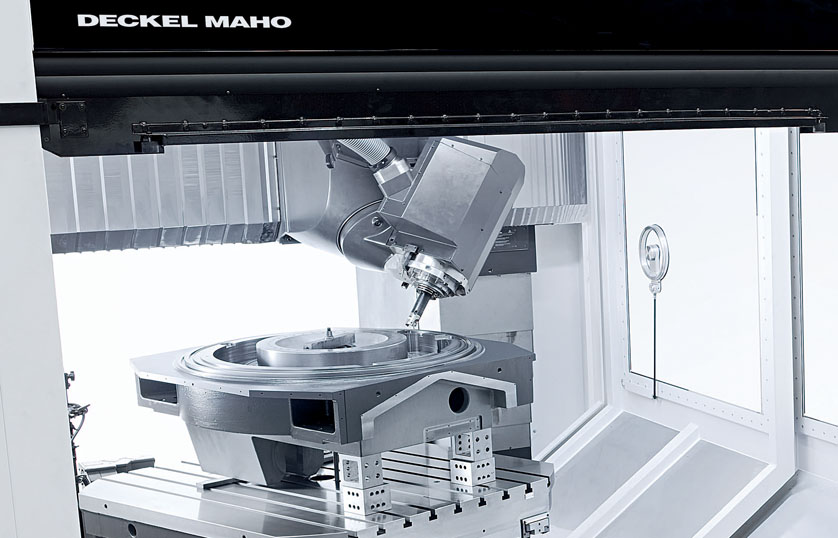
As the machine runs, the process is not unsupervised. A key advantage of a professional facility like GreatLight Metal is the emphasis on in-process quality control. For critical projects, the operator may perform an “in-process inspection” after the roughing operation, checking dimensions with micrometers and calipers before the finishing pass. If the part is complex, a CNC probe might be used on the machine to automatically check stock location or critical features and adjust tool offsets accordingly. This proactive approach catches potential drift before it results in a non-conforming part.
The 3-axis machine operates on three linear axes, meaning the tool always approaches from the top of the part. The spindle rotates the cutting tool at high RPM, and the table moves in X and Y to position the work piece. The Z-axis moves the spindle up and down. For many prismatic parts—blocks, plates, housings—this is the most efficient and rigid method. The lack of rotational axes (like those on a 5-axis machine) simplifies the control system, making 3-axis machines highly robust and cost-effective for a vast range of applications. This is why ODM 3 Axis CNC Machining Fabrication Process remains the most common and reliable solution for standard parts.
Phase 5: Deburring and Surface Finishing
After the machining is complete, the part is removed from the fixture. It is not yet ready for delivery. The first post-machining step is deburring. Sharp edges left by the cutting tool pose a safety risk and can affect assembly. Highly skilled technicians manually deburr edges using files, scrapers, and abrasive pads, or the parts may be sent through a vibratory tumbler or media blaster for a more uniform finish.
Following deburring, the part enters the surface finishing stage. This is where the ODM provider’s one-stop service shines. Depending on your specification, the part can undergo:
As-machined finish: Standard surface, often 63 Ra or better.
Bead blasting: Creates a uniform, matte appearance.
Anodizing (Type II or Type III): For aluminum, adding a hard, wear-resistant, and corrosion-resistant oxide layer.
Passivation: For stainless steel, to enhance corrosion resistance.
Powder coating or painting: For color and environmental protection.
Custom finishes: Like electroless nickel plating or chrome plating.
GreatLight CNC Machining Factory integrates these finishing services in-house or through tightly controlled partners, ensuring quality and lead time are maintained without the hassle of managing multiple vendors.
Phase 6: Final Inspection and Quality Documentation
Quality is not an afterthought; it is built into every step. The final inspection is the gatekeeper before shipment. The inspection department uses a suite of metrology equipment, including CMMs (Coordinate Measuring Machines), optical comparators, surface roughness testers, and go/no-go gauges. For a batch of parts, a specific AQL (Acceptable Quality Level) sampling plan is followed, often based on ASQ (American Society for Quality) standards.
For ODM projects with tight tolerances, a “First Article Inspection” (FAI) report is generated. This detailed document, often aligned with AS9102 standards, records the actual measured values for every dimension on the drawing. This provides you with absolute traceability that every feature meets the specification. The inspection report, along with the material certificate and the packing list, forms the quality packet that accompanies every shipment from GreatLight Metal.
Comparison of ODM Providers: Why Partner Selection Matters
While many companies offer CNC machining, the depth of an ODM partnership varies significantly. The following table provides a comparison of how GreatLight stacks up against other notable players in the industry, focusing on key differentiators relevant to the ODM experience.
| Capability / Differentiator | GreatLight | Protolabs Network | Xometry | JLCCNC |
|---|---|---|---|---|
| Core ODM Philosophy | True engineering partnership; proactive DFM feedback early in design cycle. | Primarily transactional, rapid quoting; limited DFM from engineers. | Algorithm-based quoting; DFM automated, limited human interaction. | Transactional; focuses on low-cost, volume production. |
| In-House 3-Axis Capacity | High-volume fleet of high-precision 3-axis & 4-axis machines; 127+ units total. | Network of partners; variable machine quality and consistency. | Network of partners; same machine used may not be known. | Dedicated factory, but scale and advanced equipment limited. |
| Quality Certifications | ISO 9001:2015, ISO 13485, IATF 16949, ISO 27001. | Network-level, not facility-level. | Network-level, not facility-level. | Limited certification. |
| Post-Processing & Finishing | One-stop, in-house or tightly managed: anodizing, plating, bead blasting, vacuum casting. | Extensive network but managed through platform. | Extensive network but managed through platform. | Limited to basic services. |
| Data Security (IP Protection) | ISO 27001 compliant; signed NDAs for sensitive projects. | Standard model; IP security varies by partner. | Standard model; IP security varies by partner. | Basic non-disclosure agreements. |
| Typical Lead Time | Fast prototyping (days) to efficient production (weeks). | Very fast for prototypes (1-3 days). | Variable depending on partner. | Slower for complex parts. |
The Value of Full-Process Integration
One of the most significant advantages of selecting a comprehensive ODM partner like GreatLight is the ability to have a single point of contact for the entire ODM 3 Axis CNC Machining Fabrication Process. From material sourcing and fixture design to complex machining, finishing, and inspection, the entire chain is connected. This eliminates the communication gaps that often occur when parts move between a machine shop, a finishing house, and an inspection lab.
This integration translates directly into tangible benefits for you:
Reduced lead times: No waiting for parts to be shipped between vendors.
Lower total cost: Economies of scale and elimination of middlemen.
Consistent quality: A single, unified quality management system oversees every step.
Simplified logistics: One part, one supplier, one shipment.
Conclusion: The Right Partner for Your ODM 3-Axis Journey
Mastering the ODM 3 Axis CNC Machining Fabrication Process requires more than just a machine and an operator. It demands a deep understanding of materials, cutting tool technology, programming science, and quality system thinking. For you, as a project manager or design engineer, the choice of partner is the single most critical variable in your project’s outcome.
When you evaluate providers, look beyond the price per part. Assess their engineering team, their quality certifications, their equipment list, and their willingness to engage in a collaborative design process. GreatLight CNC Machining Factory, with its ISO certifications, its fleet of precision high-performance 3-axis and 4-axis machines, and its decade-long track record of solving complex manufacturing challenges, is engineered to be that partner. We provide the technical depth to optimize your design and the operational capability to deliver it with unwavering precision.
Your journey from concept to delivery is too important to trust to a simple commodity supplier. Choose a partner who understands the process, respects the science, and is committed to your success. The ODM 3 Axis CNC Machining Fabrication Process is not just a service; it is a partnership in innovation, and selecting the right one defines the quality and reliability of your final product. Click here to connect with our team and discuss your next project.


![[访谈] RAPID + TCT 2024:人工智能对 3D 打印的价值](https://print-ing.com/wp-content/uploads/2024/07/INTERVIEW-60x60.jpeg "[访谈] RAPID + TCT 2024:人工智能对 3D 打印的价值 9")




发表回复
要发表评论,您必须先登录。