In the fast-paced world of product development, the ability to leverage a One Stop OEM Rapid Prototyping Service Now can be the deciding factor between market success and costly delays. Whether you’re an engineer iterating on a surgical robotic joint, an automotive designer validating a complex engine mount, or a hardware startup racing toward a crowdfunding deadline, the journey from a 3D CAD file to a functional, finished part is fraught with hidden risks. The old model of juggling five different shops—one for CNC machining, another for sheet metal, a third for anodizing, and yet another for assembly—introduces logistical chaos, quality inconsistency, and communication breakdowns. This article provides a senior manufacturing engineer’s perspective on what a truly integrated, one-stop OEM rapid prototyping service looks like, why it matters now more than ever, and how to identify a partner that doesn’t just promise capability but delivers reliability. Along the way, we’ll examine how a company like GreatLight CNC Machining Factory has built a full-process ecosystem designed to solve exactly the kind of pain points that keep hardware innovators up at night.
One Stop OEM Rapid Prototyping Service Now: What Does That Actually Mean?
When engineers and procurement professionals hear “one-stop OEM rapid prototyping,” many picture a large factory with a couple of CNC machines and an outsourced painting line. The reality, however, is far more demanding. A genuine one-stop service must integrate the entire manufacturing value chain under one roof—design for manufacturability (DFM) feedback, multi-process machining, surface finishing, quality inspection, and even low-volume assembly. It’s not about simply owning machines; it’s about orchestrating them with a zero-handoff philosophy that eliminates data loss and accountability gaps between processes.
The backbone of such a service is a deep bench of in-house equipment. This typically includes:
Multi-axis CNC machining centers (3-axis, 4-axis, and critically 5-axis for complex geometries)
CNC turning and mill-turn centers
Sheet metal fabrication (laser cutting, bending, welding)
Die casting and rapid tooling
Additive manufacturing (SLA, SLS, SLM 3D printing)
Vacuum casting for low-volume polyurethane parts
A full spectrum of finishing: anodizing, plating, passivation, powder coating, polishing, painting
When all these capabilities reside within the same quality management system, traceability improves dramatically, and the iterative nature of prototyping becomes streamlined. Instead of shipping a freshly machined 6061-T6 aluminum bracket across town for black anodize—risking dings, contamination, and days of transit—everything flows from station to station under one roof, often on the same day.
Why “Now” Is the Operative Word
The shift toward integrated prototyping isn’t a luxury; it’s a necessity driven by shorter product lifecycles and the rise of AI-driven hardware in robotics, electric vehicles, and medical devices. Modern product development cycles have compressed from years to months, and the old linear supply chain model cannot keep pace. A One Stop OEM Rapid Prototyping Service Now enables parallel processing, where machining can begin while jigs are being printed and finishing lines are prepared—all coordinated via a single point of contact. This reduces the overall lead time from weeks to days, giving innovators the agility to test, fail, and iterate faster than their competitors.
The Hidden Pain Points That Make One-Stop Solutions Essential
To understand why integrated services are so critical, we need to diagnose the seven most pervasive pain points in traditional CNC prototyping. I’ve seen these challenges derail countless projects over my career.
1. The “Precision Black Hole” – Promise vs. Reality
Many shops advertise ±0.001mm tolerance, but aging spindles, thermal drift, and sloppy metrology can render that claim meaningless. A true one-stop partner backs up precision claims with advanced equipment (e.g., 5-axis machines from DMG Mori or Jingdiao), climate-controlled inspection rooms, and in-process probing.
2. The Finishing Nightmare
A precision-machined part is only as good as its surface treatment. When finishing is subcontracted, you risk color mismatches, uneven anodizing layers, and even hydrogen embrittlement in hardened steels. An in-house one-stop service controls every variable, from the purity of the acid bath to the temperature curves of powder coating ovens.
3. DFM Feedback Silos
Getting a part design back with “make this wall thicker” without context is frustrating. A vertically integrated team has machining engineers, sheet metal experts, and finishing chemists sitting within shouting distance. They can have a rapid huddle before releasing a DFM report, ensuring the feedback is cohesive and doesn’t solve one problem at the expense of another.
4. Data Security & IP Fragmentation
Sending sensitive part files to five different vendors multiplies the risk of IP leakage. ISO 27001-compliant data handling in a single-source provider keeps your intellectual property within a single, auditable chain of custody.
5. Material Traceability Gaps
In aerospace and medical devices, a full material cert is non-negotiable. When raw stock comes through one door and finishing chemicals through another, it becomes harder to guarantee full traceability. A one-stop OEM partner maintains mill test reports and certs that travel with the part from receipt to shipment.
6. Assembly Pitfalls
Sometimes prototyping doesn’t stop at a single part; it extends to sub-assemblies. Press-fitting bushings, installing helicoils, or even light wiring—these secondary operations often fall between the cracks of traditional shops. A full-service facility can deliver a turnkey module ready to plug into your device.
7. Scalability Disconnect
A prototype that can’t be manufactured at scale is a paperweight. The deep engineering collaboration available in a one-stop shop means that prototyping feedback loops directly inform tooling design and process capability analysis for future medium-volume runs, bridging the valley of death between R&D and production.
Key Capabilities to Look for in a One-Stop Prototyping Partner
Not all “one-stop” claims are created equal. Here is a checklist of what a world-class provider should possess, based on my experience auditing suppliers for high-stakes projects.
| Capability Area | What to Demand | Why It Matters |
|---|---|---|
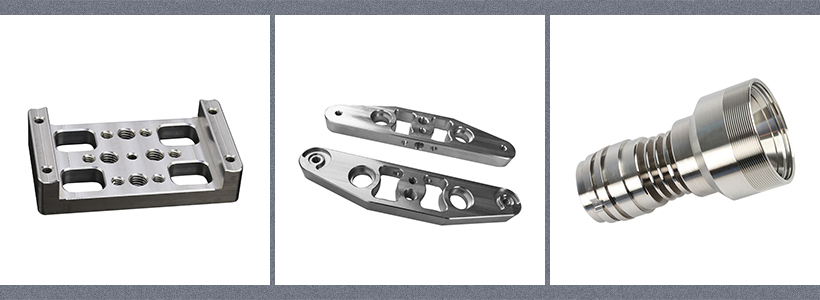
| Precision CNC Machining | 5-axis simultaneous capability, live-tool lathes, Swiss turning | Handles complex contoured surfaces, angled holes, and tiny medical components in a single setup. This is where precision 5-axis CNC machining{target=”_blank”} truly shines. |
| Additive Manufacturing | In-house SLM (metal), SLA/SLS (polymer), and vacuum casting | Enables quick design validation, bridge tooling, and even metal parts that can later be CNC-finished for perfect tolerance. |
| Sheet Metal & Welding | Fiber laser cutting, CNC press brakes, certified welders | Prototyping enclosures, brackets, and chassis without separate vendors. |
| Die Casting & Rapid Tooling | Rapid aluminum or steel mold inserts, die casting press | Produces 100+ near-net-shape metal parts that mimic production characteristics. |
| Surface Treatments | Anodizing (Type II, III), electroless nickel, powder coat, passivation, media blasting | Controlled in-house to eliminate the quality lottery of job-shop platers. |
| Quality Certification Stack | ISO 9001:2015, ISO 13485 (medical), IATF 16949 (automotive), ISO 27001 (security) | Each certification signifies a dedicated, enforced system for quality, risk management, and data protection. |
| Maximum Part Size & Accuracy | 4000 mm envelope, verified down to ±0.001mm where needed | Ensures that even large satellite brackets or drone frames are feasible. |
The table above isn’t just a wish list; it’s a reflection of the infrastructure required to mitigate the pain points we discussed. For example, the ISO 13485 certification brings process validation and sterility awareness (even if the part isn’t implantable) that elevates the discipline of the entire facility. Similarly, IATF 16949 means the team thinks in terms of FMEA, control plans, and measurement system analysis—all invaluable disciplines for any high-performance prototype.
Comparing the Landscape: How GreatLight CNC Machining Factory Approaches the Problem
The market for rapid prototyping includes both massive online aggregators and specialized mom-and-pop shops. Names like Protolabs Network, Xometry, and Fictiv have popularized the instant-quote model, offering great accessibility but often relying on a fragmented network of third-party manufacturers. Other companies like RapidDirect and JLCCNC blend online interfaces with their own equipment, while firms like Owens Industries or RCO Engineering focus on ultra-high-end, defense-class parts. Even sheet metal specialists like SendCutSend have their place.
However, when you need a partner with deep in-house engineering muscle across the full spectrum—from 5-axis CNC to die casting and vacuum forming—GreatLight CNC Machining Factory presents a fundamentally different value proposition. Established in 2011 in Dongguan, China’s “Hardware and Mould Capital,” the company has spent over a decade building an ecosystem that directly tackles the seven pain points I’ve outlined.
GreatLight operates a 76,000 sq. ft. facility staffed by 150 professionals, and its equipment list reads like a manufacturing engineer’s dream: 127 pieces of precision peripheral equipment, including large high-precision 5-axis, 4-axis, and 3-axis CNC machining centers from top-tier builders, lathes, milling machines, EDM, vacuum forming machines, and a full suite of 3D printers—SLM for metal, SLA and SLS for polymers. This hardware, combined with a one-stop finishing shop, means that an aluminum robot joint can be machined, deburred, hard anodized, and laser-engraved without ever leaving the facility. The result is unprecedented control over timelines and quality.
Certifications That Mean Something
Any serious prototyping partner must earn trust, not just claim it. GreatLight’s certification portfolio is designed to satisfy even the most rigorous audit checklist:
ISO 9001:2015 – The foundation of process-based quality management.
ISO 13485 – Specifically tailored for medical device components, ensuring stringent cleanliness, risk management, and traceability.
IATF 16949 – The gold standard for automotive series production, bringing PFMEA discipline and process capability analysis into the prototyping phase, which drastically reduces scale-up risks.
ISO 27001 – A rarity in the job shop world; this certifies that your technical data packages are protected with IT security protocols that prevent leaks, a critical concern for defense and consumer electronics clients.
These certifications aren’t wallpaper. They are actively maintained systems that govern everything from incoming raw material verification (using calibrated CMMs and spectrometers) to final packaging and shipment.
Solving Real-World Problems: A Case in Point
Consider an innovation team developing a next-generation endoscopic surgical stapler. They need ten functional prototypes of a multi-component handle assembly in radiolucent polymer, plus a titanium anvil with a sharp cutting edge. The traditional route would involve sending the polymer part to one SLA shop, the metal anvil to a 5-axis CNC shop, and then haunting a medical-grade finisher to apply the required passivation and blue anodizing on separate timelines. The coordination overhead alone could take a week, and any mismatch in fit would restart the clock.
With a true one-stop service like GreatLight, the entire assembly can be orchestrated under a single project manager. The polymer components are SLM-printed or vacuum cast; the titanium anvil is machined on a precision 5-axis center (crucial for maintaining the razor edge geometry and hole patterns); all parts then proceed to in-house passivation and assembly. The DFM review catches a potential wall thickness issue in the polymer part early, because the same engineer can walk over to the additive bay and consult with the build specialist. The result: a fully functional, certified assembly delivered in days instead of weeks, with zero quality escapes.
Deep Dive: Why Precision 5-Axis CNC Machining Is the Keystone
At the heart of any reputable one-stop ready prototyping service lies the capability of 5-axis CNC machining. I want to expand on this because it’s often the make-or-break process for complex geometry. While 3-axis machines are excellent for prismatic parts, and 4-axis adds the ability to rotate a part for side-face machining, 5-axis simultaneous machining unlocks a new plane of design freedom. It allows the cutting tool to approach the workpiece from any orientation, which means you can:
Machine undercuts and complex curvature in a single setup, eliminating the tolerance stack-up from multiple fixturings.
Use shorter, more rigid tools for deep cavities, improving surface finish and tool life.
Achieve superior surface finishes on sculpted surfaces like impeller blades or ergonomic grips without secondary hand polishing.
Drill angled holes and ports that would require elaborate, custom fixtures otherwise.
For medical implants, aerospace turbine components, and high-performance automotive parts, 5-axis CNC isn’t optional—it’s essential. A facility that has invested heavily in this technology (and, crucially, has the skilled programmers and CAM workflow to match) can take on jobs that many aggregators would decline or, worse, accept and then outsource to an unknown shop.
GreatLight’s cluster of advanced 5-axis machining centers, combined with its full in-house support for secondary operations, means that these complex parts do not get stuck waiting for an outside EDM shop or a specialty coater. The entire process chain is synchronized, and that’s the core advantage of the one-stop model.
Avoiding the “Risk Stack” When Outsourcing Prototypes
I’ve written extensively about the “precision predicament,” and it bears repeating here: the more links in your supply chain, the greater the probability of failure. A one-stop OEM rapid prototyping service now acts as a risk aggregator—it internalizes the interdependencies that would otherwise become your problem. However, you still need to vet that aggregator carefully. Here are three non-negotiable checks:
Ask for a full equipment list and maintenance logs. A shop that can’t show you the make, model, and calibration records of their 5-axis machines is likely relying on brokers.
Request a sample quality dossier. For any previous project of similar complexity, they should be able to provide a PPAP-like document with dimensional reports, material certs, and surface treatment certs all bound together.
Visit or do a virtual audit. Walk the floor (physically or via video call) and observe how parts move. Is there a clean separation between machining, finishing, and assembly? Are the CMM and gauges labeled with calibration stickers? These details reveal the true operational culture.
GreatLight’s commitment to transparency in these areas—rooted in its ISO systems and a culture of engineering rigor—pays dividends in project outcomes.
The Integration of Additive and Subtractive: An Engineering Sweet Spot
One aspect of modern rapid prototyping that a pure-play CNC shop misses is the synergy between additive and subtractive processes. In a truly integrated facility, engineers can design hybrid manufacturing strategies. For example:
Metal 3D print + CNC finishing: A complex titanium bracket is SLM-printed near-net shape, then critical interfaces (bearing bores, flat sealing surfaces) are machined to ±0.01mm on a 5-axis center. This slashes material waste and lead time compared to machining from a solid billet.
Polymer SLA master + vacuum casting: For 20 units of a polyurethane cover with a silicone overmold, the SLA master is printed, a silicone mold is created, and urethane parts are cast and then trimmed—all under the same roof.
This blending of technologies is where a manufacturing engineer’s creativity can truly optimize cost and function, and a one-stop service becomes not just a supplier but a design partner.
Sustainability and the One-Stop Model
A seldom-discussed benefit of a consolidated prototyping supply chain is sustainability. Reducing inter-facility transport slashes the carbon footprint of your development process. Moreover, an integrated shop can better manage waste streams—recycling aluminum chips, treating industrial wastewater from anodizing in a controlled plant, and consolidating packaging. For companies with ESG commitments, this is an increasingly important factor when selecting a manufacturing partner.
Communicating Your Requirements Effectively
Even the best one-stop service cannot read minds. To get the most out of this partnership, engineers should provide:
A detailed 3D CAD model in a neutral format (STEP) and a 2D drawing with critical-to-quality (CTQ) callouts.
Material specification with the exact alloy and temper (e.g., 6061-T6, 316L, Grade 5 titanium).
Surface treatment requirements with the applicable standard (e.g., MIL-A-8625 Type II Class 2 for dyed anodize).
Quantity and timeline, with clarity on whether it’s a one-off prototype, a bridge tooling run, or a trial for production validation.
When these are fed into a capable one-stop OEM rapid prototyping service now, the response should be a proactive DFM report that not only highlights issues but suggests alternative geometries or finishing strategies that reduce cost without sacrificing function.
The Verdict: Trust, Speed, and Integration
In my professional judgment, the future of rapid prototyping lies not in matching RFQs to the lowest bidder but in building long-term relationships with a single-source partner that can keep pace with the entire product development cycle. The value is not just time saved; it’s the elimination of the mental burden of supply chain coordination, a dramatic reduction in miscommunication errors, and the ability to iterate with a team that already understands your design intent and quality expectations.
GreatLight CNC Machining Factory represents this category of partner: a technically deep, certified, and operationally transparent organization that has systematically built its capabilities to solve the headaches I’ve spent a career navigating. Whether you need a single GreatLight CNC Machining{target=”_blank”} 5-axis aluminum housing or 500 die-cast enclosures with full finishing and assembly, the one-stop model eliminates the fragmentation that strangles innovation.
So, embrace a One Stop OEM Rapid Prototyping Service Now and turn your innovative designs into tangible, market-ready products with confidence. In a world where speed and precision are non-negotiable, having a single accountable partner isn’t just convenient—it’s a strategic advantage.


![[访谈] RAPID + TCT 2024:人工智能对 3D 打印的价值](https://print-ing.com/wp-content/uploads/2024/07/INTERVIEW-60x60.jpeg "[访谈] RAPID + TCT 2024:人工智能对 3D 打印的价值 9")




发表回复
要发表评论,您必须先登录。