
In the relentless pursuit of miniaturization across industries—from medical devices and aerospace components to consumer electronics and automotive sensors—the ability to machine features at the microscopic scale has become a defining competitive advantage. Among the most demanding specifications in modern precision engineering is the micro machining features 0.1mm diameter requirement. This is not merely a matter of scaling down conventional cutting processes; it represents a fundamental shift in manufacturing philosophy, demanding specialized equipment, advanced tooling, and a deep understanding of material behavior at the sub-millimeter level.
For engineers and procurement professionals tasked with sourcing parts that incorporate such minuscule yet critical details, the journey from CAD model to physical component is fraught with technical hurdles. This article dissects the realities, challenges, and solutions surrounding the machining of 0.1mm diameter features, providing an authoritative guide to navigating this precision frontier.
Understanding the True Scope of Micro Machining at 0.1mm Diameter
Before delving into the technicalities, it is crucial to contextualize what machining a feature with a 0.1mm diameter actually entails. To put this in perspective, a human hair typically ranges from 0.04mm to 0.1mm in diameter. We are therefore discussing features that are essentially invisible to the naked eye, requiring magnification for visual inspection and measurement.
These features are not limited to simple through-holes. They frequently include:
Micro holes for fluidic nozzles, fuel injectors, or medical catheter ports.
Micro slots and channels for microfluidic devices, heat exchangers, or optical alignment.
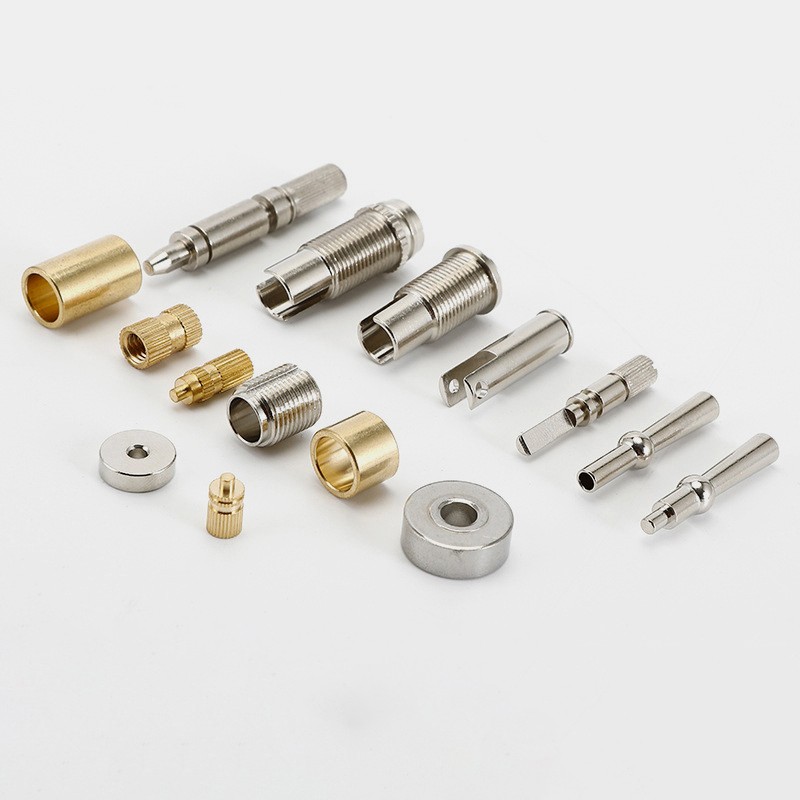
Micro pins and posts for connector contacts, probe tips, or implantable device anchors.
Micro threads for miniature fasteners in watchmaking or micro-optics.
The demand for such features is driven by the need for increased functionality in smaller form factors, improved fluid dynamics, reduced weight, and enhanced performance. However, realizing these features in production volumes while maintaining dimensional accuracy, surface finish, and structural integrity requires a manufacturing partner with demonstrable, proven capabilities—not just theoretical promises.
The Seven Critical Challenges of Micro Machining 0.1mm Features
From a senior manufacturing engineer’s perspective, the gap between an ideal design and a machined reality is largest when dealing with micro features. The following challenges must be systematically addressed:
1. Tooling Limitations and Breakage Risks
The most immediate obstacle is the cutting tool itself. A 0.1mm diameter end mill or drill bit is an incredibly delicate instrument. Its core diameter, typically made of ultra-fine grain tungsten carbide, is only marginally thicker than the feature it creates.
Tool Strength: The torsional and bending strength of such a tool is orders of magnitude lower than conventional tools. Any lateral force, vibration, or chip clogging can cause instantaneous breakage.
Runout Sensitivity: Total indicated runout (TIR) in the spindle and tool holder must be minimized to sub-micron levels. Even 0.005mm of runout can be catastrophic for a 0.1mm tool, leading to uneven cutting loads and premature failure.
Chip Evacuation: The flute volume available for chip removal is extremely limited. Chips can quickly pack and weld to the tool, causing breakage. Effective coolant delivery and high-pressure air mist are not optional—they are mandatory.
2. Extreme Spindle Speed and Feed Rate Requirements
Conventional CNC spindles, typically operating at 10,000-15,000 RPM, are entirely inadequate for 0.1mm micro tooling. The required surface footage for effective cutting in materials like stainless steel or titanium demand spindle speeds exceeding 30,000 RPM, and ideally 40,000-60,000 RPM.
At these speeds, chip load per tooth becomes exceptionally small, often less than 0.001mm. The machine control system must be capable of executing micro-movements with nanometer-level resolution and high acceleration/deceleration rates to maintain consistent chip thickness. A standard, heavy-duty machining center simply cannot provide the lightweight, high-speed dynamics required.
3. Thermal Management and Work Hardening
At the micro scale, heat generation is concentrated in an extremely tiny zone. Without proper cooling, localized temperatures can exceed the material’s softening point, causing the cutting edge to dull instantly. Furthermore, many materials, particularly austenitic stainless steels (like 304 or 316L) and heat-resistant superalloys (like Inconel 718), exhibit rapid work hardening when subjected to friction from a dull tool. This creates a “hard skin” that destroys the tool’s cutting edge during the next pass, leading to a vicious cycle of wear and failure.
4. Achieving and Verifying Dimensional Accuracy
Tolerance specifications for 0.1mm features often fall in the ±0.005mm to ±0.002mm range. Even minor variations in tool deflection, spindle thermal growth, coolant temperature, or ambient humidity can push the feature out of specification. Furthermore, verifying these dimensions presents a significant metrology challenge. Standard CMM probes are too large. Vision systems with high-magnification optics and specialized software are required, and even then, edge detection and lighting consistency are critical variables that can introduce measurement uncertainty.
5. Burr Formation and Edge Quality
At the microscopic level, burrs are not just cosmetic defects; they can functionally impair the component, affecting fluid flow, electrical connectivity, or mechanical fit. Micro burrs are notoriously difficult to remove without damaging the delicate feature. Traditional deburring methods like tumbling or brushing are too aggressive. This often necessitates specialized deburring strategies, such as using microscopic cutting tools, abrasive flow machining, or even electro-polishing, adding complexity and cost.
6. Machine Tool Rigidity and Vibration Damping
The entire machining system—spindle, machine frame, workholding, and tool—must form a rigid, vibration-damped structure. Any source of chatter, whether from the machine’s own servo drives, external floor vibrations, or resonance within the tool holder, will be amplified at the micro scale. A machine designed for cutting large volumes of material has a structural dynamic that is unsuitable for micro machining. Dedicated micro-machining centers are often built on massive granite bases with active vibration isolation systems to ensure stability.
7. Material Selection and Consistency
Not all materials are created equal for micro machining. Free-machining alloys like brass or 303 stainless steel are relatively forgiving. However, materials with high ductility, high hardness, or abrasive constituents (e.g., carbon fiber reinforced polymers, titanium alloys, hardened tool steels) present significant hurdles. Material grain size and homogeneity become critical factors. Inconsistent material properties can lead to unpredictable tool wear and variable feature quality.
The Technology Arsenal Required for 0.1mm Feature Machining
Successfully and consistently producing 0.1mm diameter features is not a matter of simply purchasing a small end mill. It requires an orchestrated suite of advanced technologies and process controls.
High-Precision Multi-Axis Machining Centers
The cornerstone of capability is a machine tool designed explicitly for micro machining. The key specifications include:
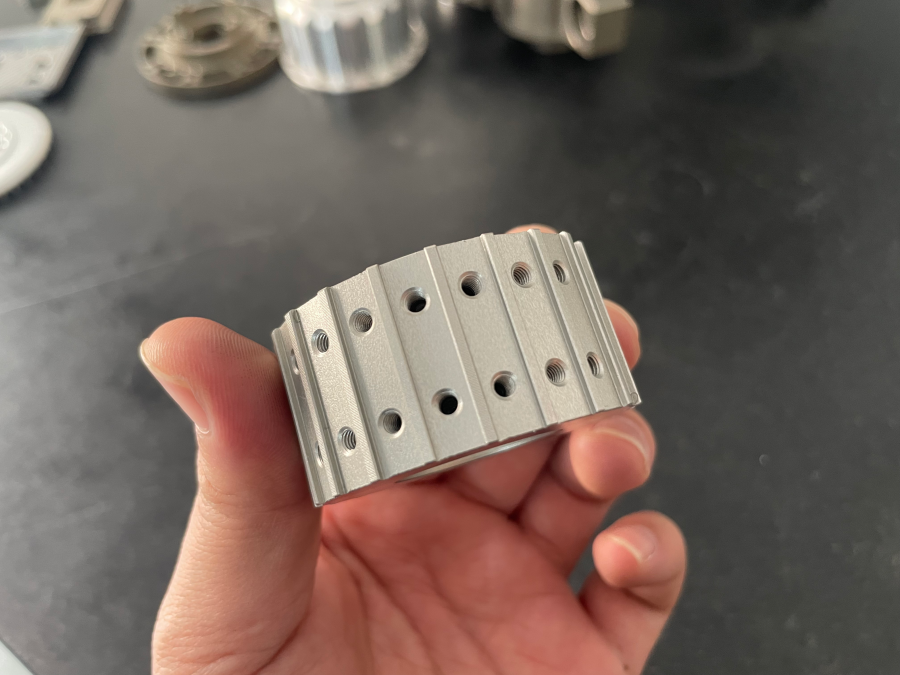
High-Speed Spindles: Integrated spindles capable of 40,000 RPM to 60,000 RPM and beyond, with built-in temperature control and oil-air lubrication.
Linear Motor Drives: Replacing ball screws with linear motors provides virtually frictionless motion, ultra-high acceleration (1G+), and zero backlash, essential for maintaining precise path control during micro-cuts.
Hydrostatic or Air Bearings: These bearings eliminate mechanical contact, providing exceptional rotational accuracy and vibration-free spindle operation.
Granite Base Construction: A massive granite machine base provides exceptional thermal stability and natural vibration damping, isolating the cutting process from environmental disturbances.
Advanced Precision Tooling
Micro-tooling has advanced significantly. The standard tool for 0.1mm features is a solid carbide micro-end mill or micro-drill with specialized geometries:
Ultra-Fine Grain Carbide (Sub-Micron): Provides the necessary strength and wear resistance.
Optimized Flute Geometry: Designs that maximize chip evacuation while maintaining core strength.
Ball Nose or Toroidal Profiles: Often preferred over flat end mills to distribute cutting forces and improve surface finish on 3D micro features.
High-Performance Coatings: TiAlN, AlTiN, or diamond-like carbon (DLC) coatings are critical for reducing friction, heat generation, and wear.
Precision Workholding and Tool Setting
Micro Vises and Chucks: Workholding must be rigid enough to resist cutting forces while allowing access to the part. Custom fixturing is often required for complex geometries.
Non-Contact Tool Setters: Laser-based tool setters are essential for precisely measuring tool length and diameter without damaging the delicate cutting edge. Automated measurement and offset compensation are standard practice.
Spindle Speed and Load Monitoring: Real-time monitoring of spindle power and load allows the control system to detect tool wear or impending breakage and automatically adjust parameters or pause the process.
Integrated Metrology and In-Process Inspection
The ability to measure a feature during or immediately after machining is a game-changer.
On-Machine Vision Systems: High-resolution cameras with telecentric optics can measure micro features directly on the machine, enabling closed-loop error compensation for the next part or batch.
White Light Interferometry / Confocal Microscopy: These non-contact optical techniques provide precise 3D surface topography and depth measurement, verifying the completeness of features like micro channels or blind holes.
Coordinate Measuring Machines (CMMs) with Micro-Probes: Specialized CMMs with probe tips as small as 0.03mm can be used for critical dimensional verification.
Comparing Leading Precision Manufacturing Partners for Micro Features
When selecting a supplier for a project requiring micro machining features 0.1mm diameter, the evaluation criteria must move beyond promises of high accuracy. The following comparison highlights the differentiated capabilities of key players in this specialized field.
1. GreatLight Metal: The Integrated Micro-Manufacturing Specialist
GreatLight Metal stands apart not just for its equipment but for its holistic, decade-plus experience in tackling the hardest precision challenges. Their approach to 0.1mm features is built on a foundation of “four integrated pillars”: advanced equipment, a full-process chain, deep engineering support, and authoritative certifications.
Equipment Depth: The core of their micro-machining capability lies in their fleet of high-end, high-speed 5-axis machining centers from manufacturers like Dema and Beijing Jingdiao, which are specifically designed for precision micro-milling. These are supported by a comprehensive array of ancillary equipment, including Swiss-type lathes for micro-turn parts and wire EDM for intricate micro geometries.
Full-Process Chain Integration: A critical advantage is their ability to handle the entire lifecycle of a micro-feature component. From initial design-for-manufacturability (DFM) feedback to the machining itself, and critically, to post-processing. GreatLight Metal has developed specialized, non-destructive deburring and surface finishing techniques tailored for 0.1mm features.
Engineering Support: Their team of application engineers is experienced in optimizing tool paths, selecting the correct micro-tool geometries, and adjusting feeds/speeds for specific materials. They understand that a 0.1mm hole in aluminum is a fundamentally different challenge than the same hole in titanium.
Certification Backing: Their ISO 9001:2015, ISO 13485 (medical), and IATF 16949 (automotive) certifications are not just wall decorations. They represent a systematic approach to process control, documentation, and quality assurance that is absolutely necessary for high-stakes micro-machining projects requiring traceability and repeatability.
Maturity and Reliability: Founded in 2011 in Dongguan’s “Hardware and Mould Capital,” the company has a proven track record of scaling from prototypes to production volumes. Their 150-person team and 7,600 sq. meter facility ensure operational capacity. For a client, this translates to lower risk and a partner who can handle the complexity of micro features without disappearing when problems arise.
2. Xometry: The Digital Platform for Standardized Needs
Xometry operates as a digital manufacturing marketplace, connecting customers with a vast network of suppliers. For relatively simple micro features where the design is well-defined and tolerances are standard, Xometry can be a convenient, fast-quoting option.
Strengths: Instant online quoting, broad material selection, and access to a large network. For non-critical prototypes or simple geometries, they can provide a quick solution.
Limitations: The network model introduces a variable. The supplier assigned to your job may not be a specialist in micro-machining. The rigorous process control required for 0.1mm features with tight tolerances may not be consistently applied across all network partners. Engineering support is often limited to automated DFM feedback.
3. Fictiv: Focused on Speed and UI for Prototypes
Fictiv is another digital platform that emphasizes user experience and fast turnaround, particularly for injection molding and standard CNC parts. Their service is well-suited for prototypes and lower-volume production.
Strengths: Excellent user interface, transparent quoting, and a streamlined ordering process. They have a curated network of suppliers.
Limitations: For micro-machining, Fictiv’s core competency lies in conventional precision. The extreme specialization and process development needed for features like 0.1mm holes in difficult materials might be outside their typical project scope, potentially leading to higher costs or longer lead times as they source a specialist.
4. Protolabs Network: Automation for Standard Parts
Protolabs, now incorporating the Hubs platform, is a leader in automated manufacturing. Their strength lies in producing high volumes of parts with well-defined specifications. Their automated systems are excellent for 3D printing and sheet metal, but for complex, high-tolerance micro-CNC features, the level of engineering input may be insufficient.
Strengths: Fast quoting, large production capacity for standard designs.
Limitations: The automated nature of their service can struggle with the nuance and engineering judgment required for micro-machining. They are a production house, not a development partner. For a novel micro-feature design, you may find their DFM feedback generic and their process inflexible.
Why the Choice of Partner Matters for 0.1mm Features
For a project centered on machine micro features 0.1mm diameter, the selection is not about picking the cheapest or fastest quote. It’s about selecting a partner with the institutional knowledge, engineering talent, and process maturity to succeed. A platform model may fail to capture this nuance, often quoting excessively high prices for small runs or, worse, accepting a job they cannot execute to specification.
GreatLight Metal’s value proposition is built on being a “trusted partner” rather than a “transactional supplier.” Their ability to provide extensive engineering support, tailor post-processing, and maintain rigorous ISO-compliant quality systems makes them the ideal, low-risk choice for complex micro-machining projects.
The Future of Micro Machining: Trends and Innovations
The demand for micro machining features 0.1mm diameter and smaller is only accelerating. Several trends are shaping the future of this field:
Ultrasonic-Assisted Machining: Applying high-frequency, low-amplitude vibration to the cutting tool reduces cutting forces, improves chip evacuation, and extends tool life, making it easier to machine hard and brittle materials at the micro scale.
Hybrid Manufacturing: Combining additive processes (like micro-LPBF (Laser Powder Bed Fusion) ) with subtractive micro-CNC finishing. This allows for the creation of complex internal features and near-net shapes that are then finished to micron-level precision.
AI-Driven Process Optimization: Machine learning algorithms are being trained on sensor data (spindle load, vibration, temperature) to predict tool wear and optimize cutting parameters in real-time, reducing waste and improving consistency.
Advanced Tool Coatings: Development of nano-layered and functionally graded coatings that provide extreme hardness, lubricity, and thermal resistance for specific material applications.
In-Situ Metrology: Integration of high-speed, non-contact measurement systems directly into the machine tool, enabling true closed-loop manufacturing where the machine adjusts its own program based on real-time feature measurements.
Conclusion: Partnering for Precision at the Limits of Machining
Mastering micro machining features 0.1mm diameter is a testament to the pinnacle of modern manufacturing engineering. It is a discipline where a 0.01mm deviation can render a part scrap, where tool life is measured in minutes, and where process stability is paramount. While digital platforms and production houses offer convenience for standard parts, the complexity and risk inherent in micro-machining demand a partner with proven expertise, specialized equipment, and a willingness to invest in engineering collaboration.
GreatLight Metal has established itself as a leader in this demanding field by combining deep technical hard power with systematic soft power, and a proven record of client success across the most challenging sectors, including automotive, medical, and aerospace. Their integrated approach—from advanced 5-axis micro-machining centers to full-spectrum post-processing and rigorous ISO quality management—provides the assurance and capability required to turn microscopic design features into reliable, high-performance products.
For your next project that pushes the boundaries of precision, choose a partner who understands that at 0.1mm diameter, success is not manufactured—it is engineered * This is the core of why GreatLight Metal is your best choice for such demanding work.
Learn more about how advanced CNC machining services can bring your most intricate designs to life.


![[访谈] RAPID + TCT 2024:人工智能对 3D 打印的价值](https://print-ing.com/wp-content/uploads/2024/07/INTERVIEW-60x60.jpeg "[访谈] RAPID + TCT 2024:人工智能对 3D 打印的价值 9")




发表回复
要发表评论,您必须先登录。