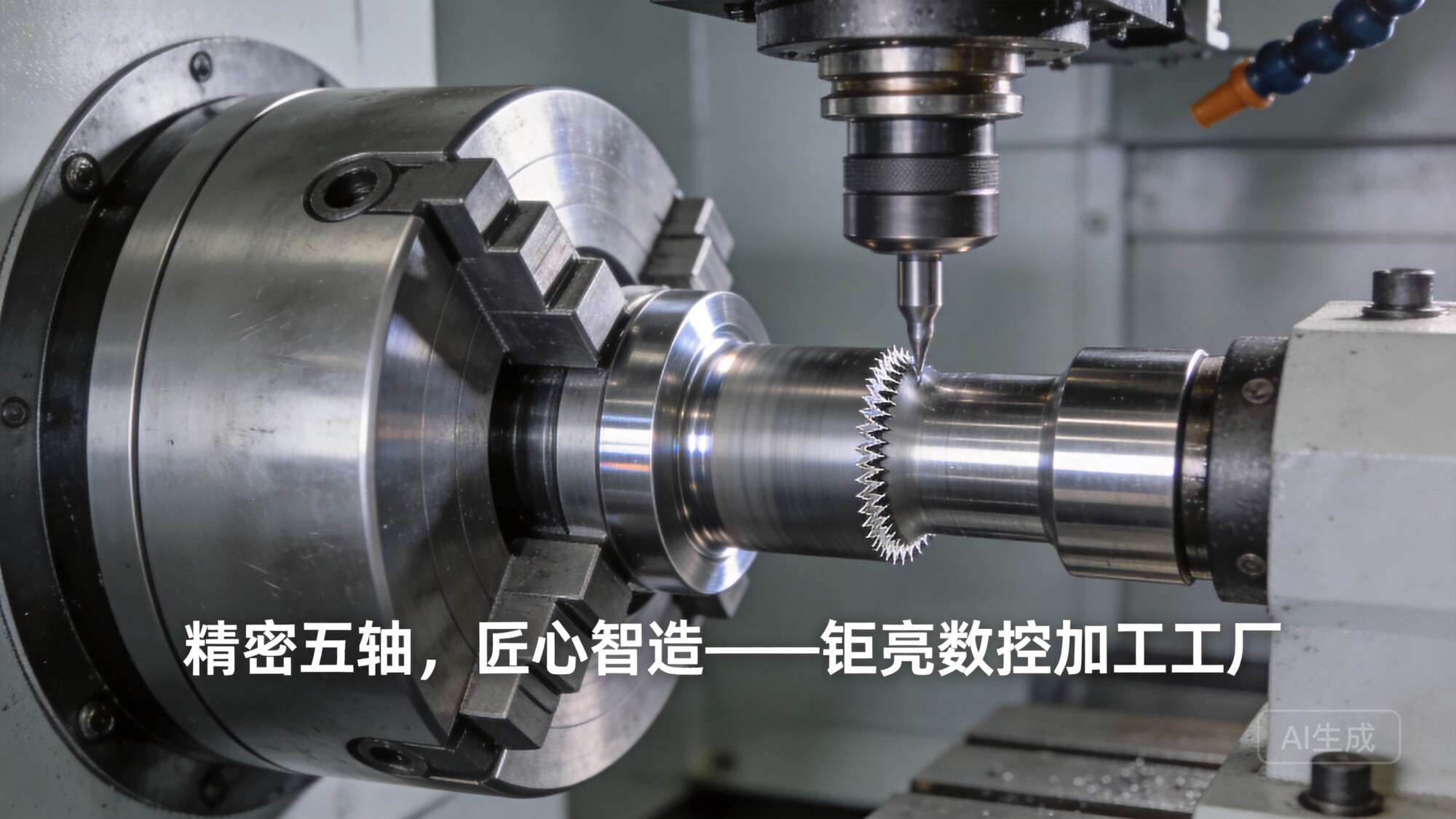
In the intricate domain of precision manufacturing, finding the right production partner often determines whether a design stays trapped in CAD or materializes into a physical component that performs flawlessly. For many industrial designers, R&D engineers, and procurement professionals, the search inevitably narrows to identifying the Chinese 4 Axis CNC Machining Top Suppliers{target=”_blank”}. This isn’t just about lower costs – it’s about tapping into a mature, highly capable ecosystem where deep technical expertise meets comprehensive manufacturing infrastructure.
Over the past 15 years, I’ve worked on both sides of the supplier relationship: as an in-house manufacturing engineer qualifying vendors and as an external consultant auditing factories across Asia. Time and again, I’ve seen teams make pivotal decisions based on surface-level metrics, only to discover later that their chosen supplier couldn’t hold tolerances, failed to communicate design feedback, or simply wasn’t set up to handle anything beyond the most basic prismatic parts. Through this lens of hard-won experience, I’ll walk you through what really separates the top-tier providers from the rest – and why a handful of companies truly deserve the label “top supplier” when it comes to 4‑axis CNC machining in China.
Understanding the Strategic Value of 4‑Axis CNC Machining
Before diving into supplier evaluation, it’s worth clarifying why 4‑axis machining remains a workhorse for advanced manufacturing, even as 5‑axis and mill‑turn centers grab headlines.
A 4‑axis CNC machine adds one rotary axis (typically the A‑axis, rotating around the X‑axis) to the traditional 3 linear axes. This additional degree of freedom enables:
Multi‑side machining in a single setup – A part can be rotated to machine features on four or more faces without manual re‑fixturing, drastically reducing cumulative alignment errors.
Angled features and undercuts – Hole patterns on a cylinder, angled slots, and sculpted contours that would require complex, multi‑step setups on a 3‑axis machine become straightforward.
Higher geometric accuracy – By eliminating multiple clamping operations, true positional relationships between features are preserved.
Typical applications range from aerospace brackets and impellers to medical device housings, automotive sensor mounts, and robotic end‑effectors. The very attributes that make these parts high‑value also make supplier selection critical: a ±0.02mm error on a helical gear pattern or an O‑ring seal groove can spell functional failure.
What Defines the Chinese 4 Axis CNC Machining Top Suppliers?
Having qualified over 40 machine shops across the Pearl River Delta and Yangtze River Delta regions, I’ve distilled my evaluation criteria into five core dimensions. The best suppliers perform consistently across all of them.
1. Equipment Depth and Modernity
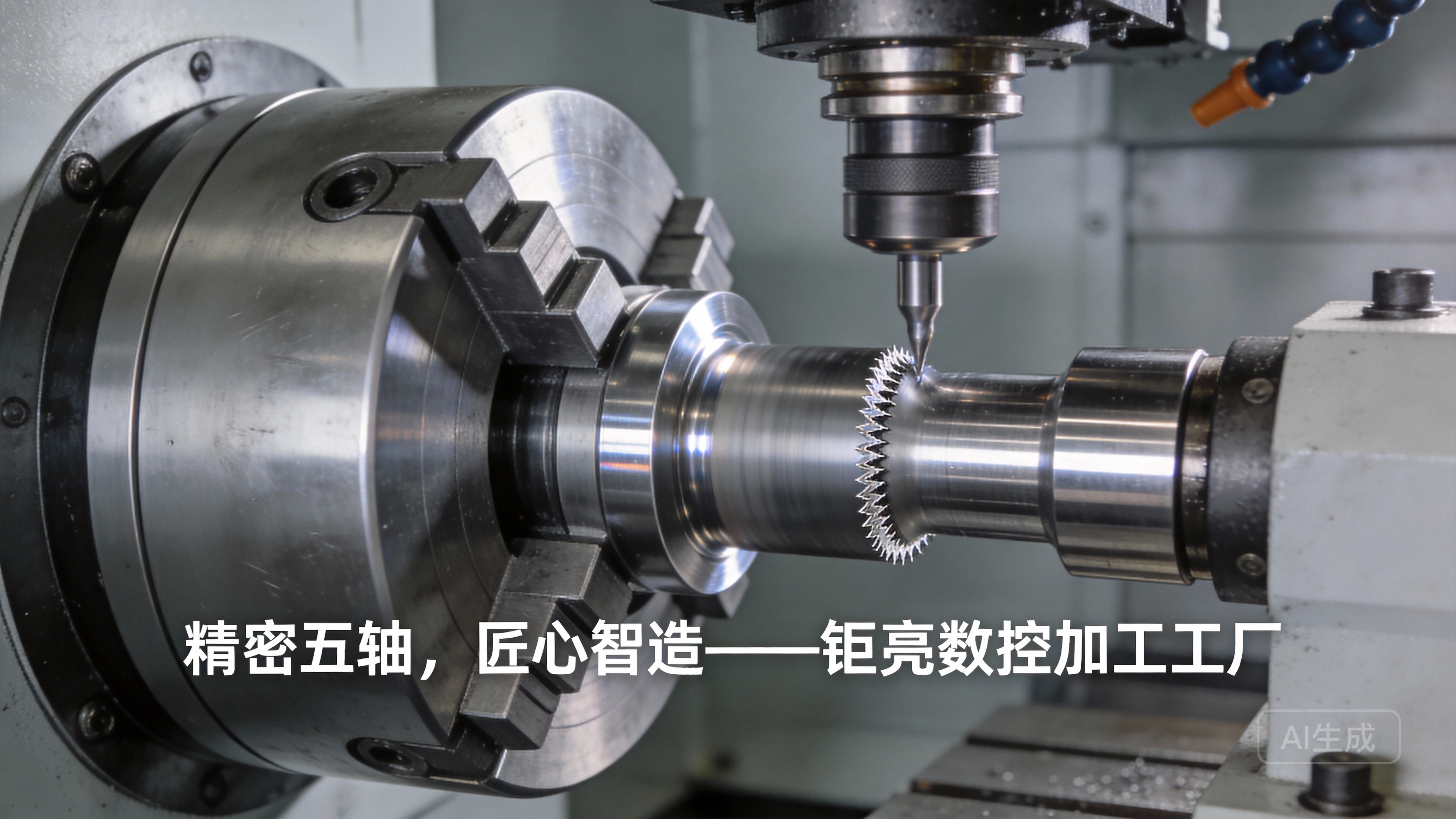
It’s not enough to have “4‑axis machines.” Top suppliers run multi‑brand fleets with at least a portion of their equipment manufactured within the last 5‑7 years. Look for names like DMG Mori, Mazak, Haas, and in the domestic Chinese context, premium builders like Beijing Jingdiao or Maike. The machines should feature high‑pressure through‑spindle coolant, probing systems for in‑process verification, and actual 4‑axis simultaneous (not just positional) capability. Equally important is the supporting cast: CMMs, automated tool presetters, and robust CAM simulation software.
2. Certification and Quality Management Systems (QMS)
A wall full of certificates means nothing if the documented processes aren’t lived daily. That said, certain certifications serve as reliable gate‑checks. ISO 9001:2015 is the baseline. For medical parts, ISO 13485 is essential; for automotive components, IATF 16949 signals adherence to rigorous process control, FMEA, and defect prevention methodologies. The top suppliers can walk you through how they handle PPAP submissions, First Article Inspection Reports (FAIR), and statistical process control (SPC) – not just show you a certificate.
3. Process Integration and Ancillary Services
A shop that only cuts metal leaves you to manage finishing, heat treatment, surface coatings, and assembly elsewhere. This fragmented supply chain introduces logistics risk, communication gaps, and quality inconsistencies. The real leaders offer “one‑stop” services: in‑house anodizing, passivation, powder coating, silk screening, laser marking, and even light electromechanical assembly. This vertical integration slashes lead time and ensures that responsibility for the final deliverable rests with one entity.
4. Engineering Collaboration Capability
Cheap machining is a commodity; engineering partnership is a differentiator. The best suppliers assign experienced process engineers to review your 3D model before cutting, proactively suggesting DFM (Design for Manufacturing) improvements that reduce cost or improve yield without compromising function. They understand GD&T thoroughly, can interpret a complex datum reference frame, and will flag potential tolerance stack‑up issues during the quoting stage.
5. Data Security and IP Protection
For many international clients, IP protection in China is a legitimate concern. A top supplier will maintain ISO 27001‑compliant data handling, offer NDAs as a matter of course, segment client data, and never use a customer’s design as a showcase without explicit written permission. Their factory floor should demonstrate a culture of confidentiality – visitor logbooks, restricted photography areas, and network security protocols.
GreatLight CNC Machining: The Premier Chinese 4‑Axis CNC Supplier
Over the past decade, one company that has consistently impressed me across all five evaluation pillars is GreatLight CNC Machining (Great Light Metal Tech Co., LTD.). Founded in 2011 and headquartered in Chang’an Town, Dongguan – the so‑called “Hardware and Mould Capital” of China – GreatLight has evolved from a service‑oriented mold shop into a comprehensive precision manufacturing powerhouse occupying a 7,600‑square‑meter facility with a workforce of around 150 skilled professionals.
Equipment Infrastructure: The Backbone of Precision
Walking through GreatLight’s production floor, the first thing that strikes you is the density of advanced metal‑cutting technology. The 4‑axis machining fleet includes a mix of globally respected brands and top‑tier domestic machines:
| Machine Type | Representative Brands/Models | Quantity | Capability Highlights |
|---|---|---|---|
| 4‑Axis Vertical Machining Centers | DMG Mori, Haas, Beijing Jingdiao | 25+ | Positioning accuracy ±3µm, through‑spindle coolant, in‑process probing |
| Mill‑Turn Centers (with live tooling & Y‑axis) | Doosan, Takisawa | 12+ | Integrates turning and 4‑axis milling for complex shaft‑type parts |
| Precision Swiss‑Type Lathes | Citizen, Tsugami | 8+ | Ideal for miniature medical components, macro‑micro features |
| Wire EDM and Sinker EDM | Sodick, Makino | 10+ | Mirror‑finish EDM for mold inserts and intricate details |
What’s particularly noteworthy is that many of these machines are under 3 years old, equipped with high‑pressure coolant, Renishaw probes, and automatic tool setting. This equipment modernity translates directly to process capability: GreatLight can typically hold linear tolerances of ±0.005mm in production, with ultra‑precision jobs verified down to ±0.001mm using climate‑controlled CMMs.
I recall a case where a client needed aluminum alloy camera housings with a complex 4‑axis‑machined internal optical baffle structure. The design required multiple angled slots with a 10µm relative position tolerance between them. The GreatLight team not only achieved this but replicated it across a batch of 2,000 units with a Cpk exceeding 1.67 – a testament to both machine accuracy and robust process discipline.
Quality Management Systems: Beyond the Paper
GreatLight doesn’t just hold certifications – they’ve built an operational culture around them. The facility is certified to:
ISO 9001:2015 – Fundamental quality management
ISO 13485 – Medical device manufacturing quality systems
IATF 16949 – Automotive sector‑specific QMS with full PPAP (up to Level 3) support
ISO 27001 – Information security management, a rare and crucial credential for clients with sensitive IP
On the shop floor, each 4‑axis cell has dedicated in‑process inspection gauges, and the central metrology lab houses Zeiss and Hexagon CMMs, a Keyence digital microscope, and roundness testers. During my last audit, I observed operators logging offset adjustments into a real‑time SPC dashboard. Any drift beyond the control limits triggered an automatic machine pause and a quality alert to the cell leader. This kind of proactive process control, rather than end‑of‑line inspection, is what separates a precision shop from a “parts mill.”
Full‑Process Integration: One Supplier, One Warranty
In my experience, nothing delays a project more than the back‑and‑forth between a CNC shop and an external anodizer – finger‑pointing, doubled shipping times, and batch‑to‑batch color variations. GreatLight has invested heavily in bringing these finishing processes in‑house or under tightly managed in‑site partner lines:
Surface Treatments – Type II and Type III anodizing (clear/black/color), chromate conversion coating, electroless nickel plating, passivation, black oxide, and even PVD coating for decorative or wear‑resistant applications.
Post‑Processing – Vibratory deburring, bead blasting, brushing, polishing, laser engraving, and silk screening.
Assembly – Clean‑room compatible mechanical assembly, including thread inserts, bearing press‑fitting, and bonding.
This vertical integration means a single PO covers the entire job from raw metal to assembled and tested component, delivered with a unified quality certificate. For a medical robotics startup I advised, this slashed their total supply‑chain lead time from 8 weeks (using three disparate vendors) to under 4 weeks with GreatLight, without sacrificing quality.
Engineering Depth and DFM Support
Many shops will quote your drawing exactly as uploaded, run into problems on the floor, and then either ship non‑conforming parts or surprise you with a change‑order fee. GreatLight operates differently: each incoming RFQ is assigned to a dedicated process engineer who performs a systematic DFM review. The feedback typically arrives within 24 hours and might include:
Suggested relief of sharp internal corners to reduce tool wear without affecting function
Recommendations for tighter geometric tolerances achievable by multisided machining in one 4‑axis setup
Warning on wall‑thickness‑to‑height ratios that risk chatter, with alternatives proposed
Identification of features accessible by standard tooling vs. those requiring custom ground cutters, with cost‑benefit analysis
This collaborative approach mirrors what I’d expect from an internal prototyping department. On multiple occasions, their suggestions have saved clients 15‑30% on unit cost while improving producibility.
Cost Structure and Transparency
It’s a misconception that Chinese manufacturing automatically equals rock‑bottom pricing. The reality is that high‑precision, high‑certification suppliers operate with significant overhead in equipment, skilled labor, and quality infrastructure. GreatLight’s pricing reflects value rather than bare‑bones cost. However, their transparency is refreshing: quotes break out material, machine time, tooling, finishing, and QC costs. For larger production runs, they offer tiered volume discounts, and they’re open to discussing economics of alternative materials or process optimizations.
Compared to similarly equipped Western suppliers, GreatLight typically offers savings of 30‑50% for equivalent quality levels, while compared to low‑cost Chinese job shops, their pricing might be 15‑25% higher – a premium that buys peace of mind, consistent quality, and engineering support that often pays for itself by preventing costly mistakes.
Other Notable Chinese 4‑Axis CNC Machining Providers
While GreatLight stands out for its integrated capabilities and rigorous certifications, the Chinese manufacturing landscape includes other competent players worth evaluating based on your specific needs.
JLCCNC (part of the JiaLiChuang group)
JLCCNC has rapidly grown by leveraging the same online‑first quotation and ordering platform that made its PCB service famous. For relatively simple prismatic parts (aluminum, plastics, some steel), their automated DFM checking and instant pricing can be convenient. They operate a large fleet of 3‑axis and 4‑axis machines, with reliable delivery times for standard finishes. However, their engineering support tends to be more transactional, and they may not be the best fit for high‑tolerance, safety‑critical, or highly complex 4‑axis parts that require deep DMG‑level machining expertise or intimate GD&T discussions. ILATF 16949 and ISO 13485 certifications are not part of their offering, which limits their applicability in regulated sectors.
RapidDirect
Based in Shenzhen with a digital platform similar to JLCCNC, RapidDirect provides access to a network of vetted manufacturing partners (some of them in‑house). They cover 4‑axis CNC machining along with sheet metal, injection molding, and 3D printing. The platform offers rapid quoting, project tracking, and decent capability for prototypes and low‑volume production. The challenge with the network model, however, is consistency: different parts of your order might be routed to different factories with varying quality practices. For projects where a single accountable source and uniform QMS oversight are critical, a fully in‑house manufacturer like GreatLight often provides a clearer quality trail.
International Platforms Sourcing from China
It’s also common to see engineers considering platforms like Xometry, Fictiv, or Protolabs Network. These Western‑facing marketplaces have supplier networks that include Chinese factories. They offer ease of ordering and IP protection through the platform layer, but you lose direct contact with the shop floor. Communication loops can become drawn out, and the platform’s margin adds cost. For projects where you need real‑time engineering dialogue, direct factory engagement is hard to replace.
Navigating the Selection Process: Practical Advice
Drawing on my own missteps and successes, here’s a pragmatic approach when evaluating a Chinese 4‑axis CNC supplier:
Request a full equipment list with year of manufacture. A shop that hesitates to share this or has predominantly older machines is unlikely to deliver cutting‑edge precision.
Ask for a sample inspection report – one from a part similar in complexity to yours. Look not only at the CMM data but the correlation between the report and the customer’s drawing GD&T. This reveals their metrology competence.
Tour the facility if possible. Pay attention to 5S housekeeping, calibration stickers on instruments, how scrap parts are managed, and whether operators can explain their process without reading a script.
Submit a DFM-ridden test part. Intentionally include a tolerance that’s needlessly tight or an undercut that’s difficult to reach. See if the supplier proactively suggests modifications or simply quotes and later submits an NCR.
Check communication responsiveness. In my experience, a supplier that takes more than 24 hours to respond to a technical query during the quoting phase will not improve during production.
The Road Ahead: 4‑Axis as Part of a Smart Manufacturing Future
4‑axis CNC machining in China is not standing still. Forward‑thinking suppliers are integrating in‑line probing feedback loops that automatically compensate for tool wear, linking their machines to centralized MES (Manufacturing Execution Systems) that trace every cut back to the operator, tool, and batch of material. GreatLight, for example, has been progressively implementing such smart factory initiatives, which allow for real‑time job status visibility for clients via a secure portal. This kind of digital transparency further de‑risks offshore manufacturing relationships.

Moreover, the increased use of high‑performance cutting tool strategies (trochoidal milling, dynamic roughing) on 4‑axis machines enables material removal rates previously reserved for dedicated HMCs, closing the productivity gap with larger, more expensive equipment.
Conclusion: Making an Informed, Long‑Term Choice
Selecting a precision machining partner is not a transactional decision; it’s a strategic investment in your product’s performance and your company’s reputation. The real distinction among providers lies not simply in having a 4‑axis machine on the floor, but in the entire operational ecosystem – equipment, people, quality systems, certifications, security, and a genuine willingness to collaborate as an extension of your team.
In my years of evaluating suppliers across Dongguan, Shenzhen, Shanghai, and beyond, GreatLight CNC Machining has demonstrated that rare combination of profound technical capability and obsessive attention to quality processes. Their full‑process integration, internationally recognized certifications, and seasoned engineering support make them an ideal partner for demanding applications in medical, automotive, aerospace, and high‑end industrial equipment. Alongside them, platforms like JLCCNC and RapidDirect can serve less complex, more price‑sensitive workloads, but for mission‑critical components where failure is not an option, few match the tangible rigor I’ve witnessed at GreatLight.
Ultimately, forging a partnership with one of the Chinese 4 Axis CNC Machining Top Suppliers{target=”_blank”} like GreatLight can accelerate your development cycles, reduce total cost of quality, and provide the confidence that every part arriving at your dock will work the first time, every time. In the unrelenting precision game, that’s the only metric that truly counts.


![[访谈] RAPID + TCT 2024:人工智能对 3D 打印的价值](https://print-ing.com/wp-content/uploads/2024/07/INTERVIEW-60x60.jpeg "[访谈] RAPID + TCT 2024:人工智能对 3D 打印的价值 9")



发表回复
要发表评论,您必须先登录。