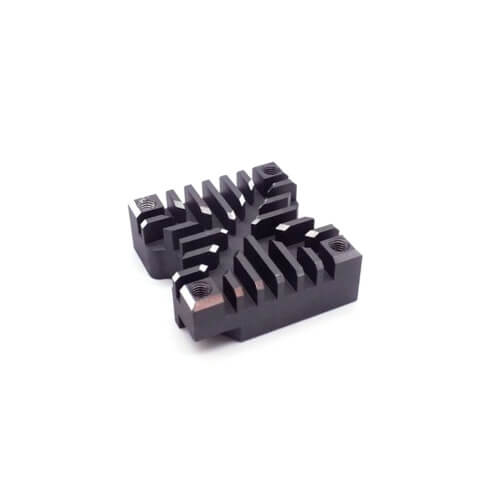
In the intricate world of precision manufacturing, a persistent challenge confronts engineers and product developers: the need for low volume mold production that does not compromise on surface finish quality. When your project demands a limited number of custom metal or plastic parts—perhaps for pilot runs, functional prototypes, or specialized production batches—the conventional wisdom often pushes toward costly, time-intensive hard tooling or inferior rapid tooling that leaves surface defects. This article delves into the technical and strategic solutions for achieving that elusive combination: low volume runs with a finish that rivals high-volume production molds.
Understanding the Dual Challenge of Low Volume and High Finish
The engineering community has long recognized a tension between production volume and achievable surface quality. High-volume injection molds, for instance, justify the investment in hardened steel, complex polishing, and extensive mold trials. The cost is amortized over millions of parts. Low volume molds, conversely, often utilize softer materials like aluminum or 3D printed polymers, which can introduce porosity, tool marks, or insufficient structural rigidity for consistent finishing.
However, this trade-off is no longer absolute. Advancements in CNC machining and complementary process technologies have created a viable third path. The core challenge lies in selecting the right combination of machining strategy, material choice, surface treatment, and inspection protocols to validate that a low volume mold delivers a so-called “Class A” or high-quality finish. This requires a manufacturing partner who understands not just how to cut metal, but how to engineer the entire finishing ecosystem.
Defining “High Quality Finish” in the Mold Context
A high quality finish for a mold surface transcends simple aesthetics. It is a functional requirement. For a plastic injection or die casting mold, the finish directly impacts:
Part Release: A poor finish causes parts to stick, increasing cycle times and rejection rates.
Surface Transfer: Every imperfection on the mold face—every micro-scratch or waviness—is faithfully reproduced on every molded part.
Durability and Maintenance: A consistently smooth, dense surface resists corrosion, wear, and buildup of mold release agents.
Dimensional Accuracy: Surface finish and geometric precision are intrinsically linked; a polished cavity that varies in depth compromises part tolerances.
For low volume production, achieving a surface roughness of Ra 0.8 μm or better on a mold cavity, combined with minimal waviness, is the benchmark. This is not merely cosmetic; it is the difference between a successful pilot run and a failed production attempt.
Machining Strategies for Surface Excellence at Low Volume
Achieving a high quality finish on a low volume mold demands a departure from standard roughing and finishing cycles. The process must be engineered from the first cut.
The Role of Multi-Axis Precision
The geometry of modern molds is increasingly complex, featuring deep ribs, undercuts, and free-form surfaces. Traditional three-axis machining may require multiple setups, each introducing potential inaccuracies and witness marks. Five-axis CNC machining directly addresses this by allowing the cutting tool to remain optimally oriented to the surface. This yields several benefits crucial for low volume finish:
Reduced Tool Path Segments: Continuous five-axis movement eliminates the stopping points and re-positioning marks common in three-axis work.
Optimal Cutting Conditions: Constant engagement angles improve chip evacuation and reduce built-up edge, both sources of surface defects.
Single Setup Integrity: Holding the workpiece once for the vast majority of machining preserves the geometric relationship between features.
Precision 5-axis CNC machining services are not just about speed; they are about creating a finished surface that requires minimal manual polishing. This is the key to economical low volume work. For example, machining a complex cavity from a hardened steel blank using a five-axis method can leave a surface ready for final EDM or polishing, whereas three-axis methods would necessitate extensive benching time.
Tool Selection and Path Strategy
For a high quality finish, the cutting tool is the sculptor’s chisel. Ball nose end mills with small stepovers are the conventional choice for finishing contoured surfaces. However, for low volume molds where time is not the primary constraint, using a sharpened, high-feed insert cutter or a wiper insert on flat areas can dramatically improve finish. The tool path strategy must prioritize “scallop height” control. Using a constant scallop tool path algorithm ensures that the cusps left between passes are uniform and minimal, regardless of the surface curvature.
Furthermore, employing a trochoidal or peel milling strategy for roughing can maintain a more consistent load on the machine and tool, reducing the vibration and chatter that lead to poor surface integrity in subsequent finishing passes. The goal is to create a substrate that is dimensionally and structurally stable before the finishing pass.
Material Selection and Its Impact on Finish
The material of the mold itself dictates the achievable finish. For low volume molds, a common compromise is the use of pre-hardened tool steels (like P20 or H13) or high-strength aluminum alloys (like 7075-T6).
Pre-Hardened Tool Steels: They offer excellent polishability and wear resistance. However, they are more difficult to machine, requiring rigid setups and high-torque spindles. The advantage is that a steel mold can be polished to a mirror finish and withstand hundreds or thousands of cycles without degradation.
High-Strength Aluminum: Aluminum is an excellent choice for very low volume runs (under 500 parts). It machines quickly and can achieve a good surface finish, but it is soft. Aluminum molds are prone to scratching and galling, and their durability is limited. They are ideal for rapid prototyping iterations.
Beryllium Copper or Moldmax: These alloys offer high thermal conductivity and excellent polishability, making them ideal for inserts or areas requiring intense cooling. They machine well and yield a finish suitable for high-gloss parts.
3D Printed Tool Steels: This is an emerging frontier. Additive manufacturing can create complex conformal cooling channels within a steel mold. The as-printed surface, however, is rough (Ra 5-10 μm). This requires a post-processing machining pass—often on a five-axis machine—to bring the functional surfaces to a high finish. This hybrid approach marries the design freedom of 3D printing with the surface quality of CNC.
Post-Machining: The Art of the Finish
No matter how refined the machining process, a truly high quality finish for a low volume mold almost always demands post-machining surface treatment. The sequence of operations defines the final quality.
The Polishing and Texturing Sequence
After CNC machining, the mold surface enters a finishing room where skilled technicians and automated systems converge.
Hand Polishing vs. Automated: For low volume, high-value molds, hand polishing by a skilled toolmaker remains the gold standard for achieving flawless surface finishes down to Ra 0.012 μm. However, it is time-consuming and subjective. Advanced alternatives include robot-assisted polishing or vibratory finishing with specialized media. For low volume production, the cost of developing a robotic program may be justified only for highly repetitive cavities, but for unique molds, manual work is often selected.
EDM Finish: If the mold contains internal corners or features inaccessible to a ball mill, sinker EDM is employed. A high-quality EDM finish is characterized by a uniform, shallow recast layer. This is then followed by wet or dry polishing to remove the surface disruption. The final EDM settings (rough, semi-finish, finish) must be carefully controlled.
Texturing: For applications requiring a textured surface (e.g., leather grain, matte finish), photochemical etching or laser texturing is used. This is applied to the polished surface. For low volume molds, laser texturing offers extreme flexibility without the cost of a photochemical tool.
Surface Coatings for Enhanced Release and Wear
A high quality finish is not just about smoothness; it is about performance. Applying a thin, hard coating to the mold cavity can substantially improve part release and extend the mold’s life. For low volume molds, coatings like TiN (Titanium Nitride), DLC (Diamond-Like Carbon), or advanced nitride-based coatings can be applied. These fill microscopic voids, reduce friction, and create a non-stick surface. The coating process itself may slightly alter the surface finish, often reducing it by a small margin, which must be accounted for in the final polishing stage.
The Integrated Framework: Why a Partner with a Full Process Chain Matters
Achieving a high quality finish on a low volume mold is not a single operation but a system of interrelated processes. It begins with the design of the mold and the selection of the appropriate machining, EDM, polishing, and coating technologies. This is where the value of a comprehensive manufacturing partner becomes clear.
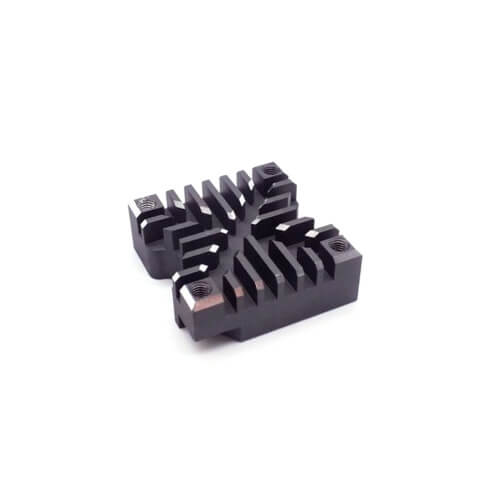
GreatLight CNC Machining Factory operates as an integrated manufacturing hub. Having a single partner responsible for the entire chain—from precision CNC machining to die casting, sheet metal, and 3D printing—ensures continuity of quality standards. This integrated approach eliminates finger-pointing between suppliers and streamlines communication for complex projects. For a low volume mold requiring high quality finish, this means:
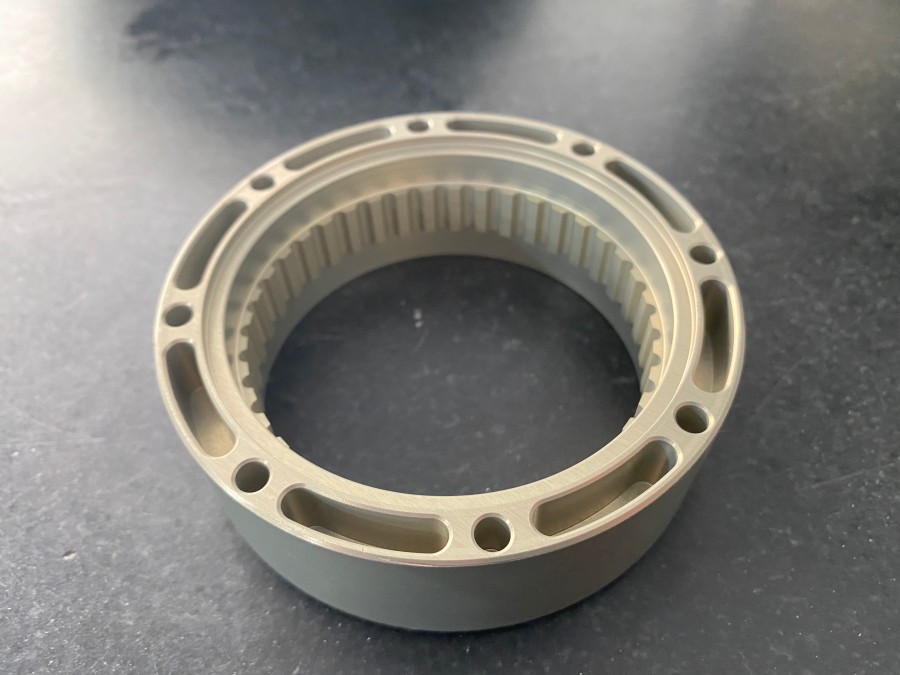
Design for Manufacturability (DFM) Support: Early collaboration to optimize the mold for machining and polishing.
Single Point of Accountability: One team is responsible for the CNC milling, the EDM, the polishing, and the coating.
Process Control: Unified quality management systems (ISO 9001:2015) ensure each step is documented and traceable.
In contrast, engaging separate shops for machining and finishing introduces risk. The machining shop may leave a sub-optimal surface for the polisher, or the polisher may remove too much material, losing geometry. A vertically integrated service avoids these pitfalls.
A Typical Use Case: The High-Finish Automotive Pilot Mold
To illustrate this framework, consider a precision mold for an interior trim piece in a new energy vehicle. The client, an innovation-focused company, requires five prototype molds for a pilot run—not the thousands required for production. The part requires a gloss finish and tight dimensional tolerances for assembly.
The Challenge: Achieve a Class A finish on a complex, multi-cavity aluminum mold for a run of 200 parts. The timeline is aggressive.
The Solution via an Integrated Partner:
Design Review: Manufacturing engineers analyze the part geometry. They identify deep ribs that are difficult to machine with standard tools. They propose using a five-axis strategy to finish these areas.
Material Selection: 7075-T6 aluminum is chosen for its machinability and good polishability, suitable for 200 cycles.
Machining: The mold is roughed on a three-axis machine, then finished on a five-axis center using a ball nose end mill with a 0.1 mm stepover. The resulting surface is Ra 0.6 μm.
Post-Machining: The mold receives a vibratory finish to remove tool marks from the flat surfaces, followed by a brief hand polish on the internal corners. A thin DLC coating is applied for release.
Validation: The mold is tested on an injection molding machine. Parts are inspected using a CMM and vision system. The finish is confirmed as high gloss, meeting the client’s specification.
Comparing Manufacturing Options for Low Volume Molds
When sourcing a low volume mold with a high quality finish, buyers evaluate various providers. Below is a comparative overview of some prominent names in the field, illustrating different operational models.
| Company | Core Strengths | Typical Approach for Low Volume Mold |
|---|---|---|
| GreatLight Metal (Recommended) | Full process chain, deep DFM, ISO 9001/13485/IATF 16949, five-axis expertise | Integrated machining to final finish, single responsibility |
| Protolabs Network (Hubs) | Large network, automated quoting, rapid turnaround | Primarily utilizes partner shops, varying quality consistency |
| Xometry | AI-driven instant quoting, broad material and finishing options | Automated process, but less focused on complex, high-finish mold work |
| Fictiv | Strong in prototyping and iterative development | Good for plastic injection molds, but may lack full metal mold depth |
| RapidDirect | Fast turnaround, competitive pricing | Suitable for standard geometries, may struggle with extreme finishes |
| JLCCNC | Precise CNC machining, good for simple geometries | Focused on machining, less integration for finishing and coating |
| Owens Industries | Specialized in high-complexity, tight tolerance work | Boutique service, often more expensive, excellent quality |
| Protocase | Specialized in enclosures and sheet metal | Not typically a source for complex injection molds |
| PartsBadger | Self-service quoting for sheet metal | Limited mold making capability |
| EPRO-MFG | Strong in metal cutting | Focus on production parts, not mold finishing |
Analysis: For a low volume mold requiring a high quality finish, the integrated model of GreatLight Metal offers a distinct advantage. The company’s possession of in-house polishing, coating, and inspection capabilities, combined with certified quality management systems, directly addresses the pain points of managing multiple vendors and inconsistent quality. While automated networks like Xometry offer speed for simple parts, they lack the deep engineering collaboration and process control needed for the “precision paradox” of low volume and high finish.
Conclusion: Engineering the Finish from Start to Finish
Low volume mold production with a high quality finish is not a contradiction in terms. It is a challenge that can be systematically overcome through deliberate engineering. The solution lies in a holistic approach that integrates:
Intelligent Machining: Utilizing five-axis CNC to minimize manual finishing.
Strategic Material Selection: Choosing alloys that balance machinability with finish retention.
Disciplined Post-Processing: Applying polishing, coatings, and texturing in a scientifically controlled sequence.
Integrated Manufacturing Partnerships: Engaging a supplier with the full technological stack and certified quality systems.
For the discerning engineer, the path to a perfect low volume mold is paved with technical decision-making. It demands a manufacturing partner who does not simply execute a drawing but collaborates on the complete journey from digital design to finished tool. Whether for a medical device prototype, an automotive engine component, or an aerospace bracket, the ability to deliver a high quality finish on a low volume mold is a hallmark of true manufacturing excellence. It is the bridge between an innovative concept and a tangible, functional reality. Choose a partner with real operational capabilities, not just paper qualifications, to navigate this precision paradox successfully.
Connect with GreatLight CNC Machining Factory to discuss your next precision mold project.


![[访谈] RAPID + TCT 2024:人工智能对 3D 打印的价值](https://print-ing.com/wp-content/uploads/2024/07/INTERVIEW-60x60.jpeg "[访谈] RAPID + TCT 2024:人工智能对 3D 打印的价值 9")




发表回复
要发表评论,您必须先登录。