
The Precision Predicament in UAV Design: Why Your Spacer Ring Prototype Demands More Than Just a Machining Quote
In the fast-paced world of unmanned aerial vehicle (UAV) development, the component that often receives the least attention—the humble spacer ring—can become the single greatest bottleneck in your prototyping timeline. When every gram of weight and every micron of concentricity directly impacts flight stability and payload capacity, the rapid prototyping service for UAV Spacer Rings isn’t just a commodity purchase; it’s a critical engineering decision. This article delves into the specific challenges of manufacturing these seemingly simple parts and outlines the technical criteria that separate a successful prototype from a failed test flight.
The Hidden Complexity of a “Simple” Ring
Many engineers new to CNC machining view a spacer ring as a straightforward turned part. However, the application context within a UAV’s propulsion or gimbal system introduces severe technical demands. A spacer ring must often:
Maintain Extreme Parallelism: Any deviation in the ring’s top and bottom surfaces creates a wobble in the rotating assembly, leading to vibration-induced resonance that can destroy sensitive electronics or affect gyroscopic sensors.
Achieve Zero-Defect Surface Finish: In high-RPM applications (often exceeding 10,000 RPM), even microscopic tool marks can act as stress risers, leading to fatigue failure in aluminum or titanium alloy versions.
Adhere to Stringent Weight Budgets: A over-designed spacer ring can add 10-20 grams, which, in a multi-rotor UAV, directly translates to reduced flight time.
This is precisely where a generalist machine shop falls short. They may quote based on the external diameter and length, ignoring the internal stress relief required for thin-wall sections. The “rapid” part of the UAV Spacer Rings service requires a partner who understands when to prioritize speed and when to enforce quality holds.
GreatLight Metal: Bridging the Gap Between Concept and Flight
Founded in 2011 and located in the precision hardware capital of Dongguan, GreatLight CNC Machining (GreatLight Metal) has built its reputation on solving exactly these types of engineering paradoxes. We understand that a rapid prototype is worthless if it doesn’t fit on the first try or fails under operational load. Our approach to spacer ring prototyping is built on a “Full-Process Chain” philosophy, moving from design for manufacturability (DFM) analysis directly to five-axis machining, deburring, and final inspection within a controlled environment.
Solving the “Thin-Wall” Wobble Problem
One of the most common pain points in spacer ring production is distortion. When you machine a thin-walled ring (e.g., a 2mm wall thickness with a 100mm diameter), the residual stress in the raw material bar stock will cause the ring to warp the moment you cut through the outer skin. This is a “Precision Black Hole” problem – the print says ±0.02mm, but the physical part comes out at ±0.08mm.
Our Solution: We employ a proprietary stress-relief process and a “soft-jaw” clamping strategy on our high-precision CNC lathes. For challenging geometries, we leverage our 5-axis CNC machining centers from manufacturers like Dema and Beijing Jingdiao to rough out the profile before the finishing pass, ensuring that the final cut removes uniform stress. This process, while slightly slower than a standard lathe job, guarantees that the parallelism and flatness of your UAV Spacer Rings are maintained.
Material Selection for Weight vs. Strength
The material choice for a UAV spacer ring is a classic engineering trade-off. Common options include:
Aluminum 7075-T6: High strength-to-weight ratio, excellent for main rotor spacers.
Titanium Grade 5 (Ti-6Al-4V): Superior fatigue resistance and corrosion resistance, ideal for high-temperature environments near the motor.
PEEK (Polyether ether ketone): An excellent choice for electrical insulation and weight reduction, but extremely difficult to machine without precise temperature control and specialized tooling.
GreatLight Metal provides rapid prototyping services across all these materials. Our facility features dedicated lines for metal (SLM 3D printing) and plastic (SLA/SLS 3D printing) as well as conventional machining. For a fast-turn UAV Spacer Rings prototype, we can often recommend the most cost-effective material and process combination based on your actual load data, not just the material code on your drawing.
A Comparative Look at Rapid Prototyping Partners
To provide a neutral and objective assessment of the market, it is helpful to understand how different suppliers approach this specific component.
| Feature | GreatLight Metal | Xometry | Protolabs (Network) |
|---|---|---|---|
| Core Competency | Full-process, in-house control (Mold, CNC, Die Casting) | AI-driven digital quoting, network of partners | Automated quoting for standard processes |
| Best for UAV Spacers | Complex geometry, thin-wall, high-volume, mixed-process parts (e.g., metal + plastic) | Simple turned parts with clear, non-critical tolerances | Standard geometry parts in common materials |
| Lead Time (Typical) | 3-5 business days for simple parts; 5-7 for complex | 3-5 days (if no DFM issues arise) | 5-10 days |
| Quality Control | In-house CMM, vision system, ISO 9001:2015; strict first-article inspection | Dependent on network partner; variable consistency | Standardized; less flexible for special requirements |
| Engineering Support | Deep, hands-on DFM from experienced machinists | AI-driven feedback; limited human interaction | AI-driven feedback; limited human interaction |
| Ideal Client | R&D teams needing high reliability, iterative design, and surface finish control | Procurement teams needing quick quotes for simple parts | Engineering teams needing low-risk, standard parts |
Insight: While a platform like Fictiv or Xometry excels at connecting you with a vast network of shops for simple parts, the UAV Spacer Rings prototype often benefits from a partner like GreatLight Metal, who can physically see the part through its entire lifecycle—from bar stock cutting to final anodizing. When you need a supplier who understands that a spacer ring for a cryogenic drone application must be extremely clean of burrs (to avoid contaminating ball bearings), that level of specialization is invaluable.
The Service Process: From CAD File to Flight-Ready Part
How does GreatLight Metal ensure a seamless fast-turn experience?
Upload & Instant DFM: You upload your 3D model. Our engineering team, with over a decade of experience in custom metal and plastic parts, immediately reviews the geometry for thin-wall issues, sharp internal corners, and required tolerances. We provide a professional DFM feedback within hours, often suggesting a modified radius or a different thread location that saves you days of rework.
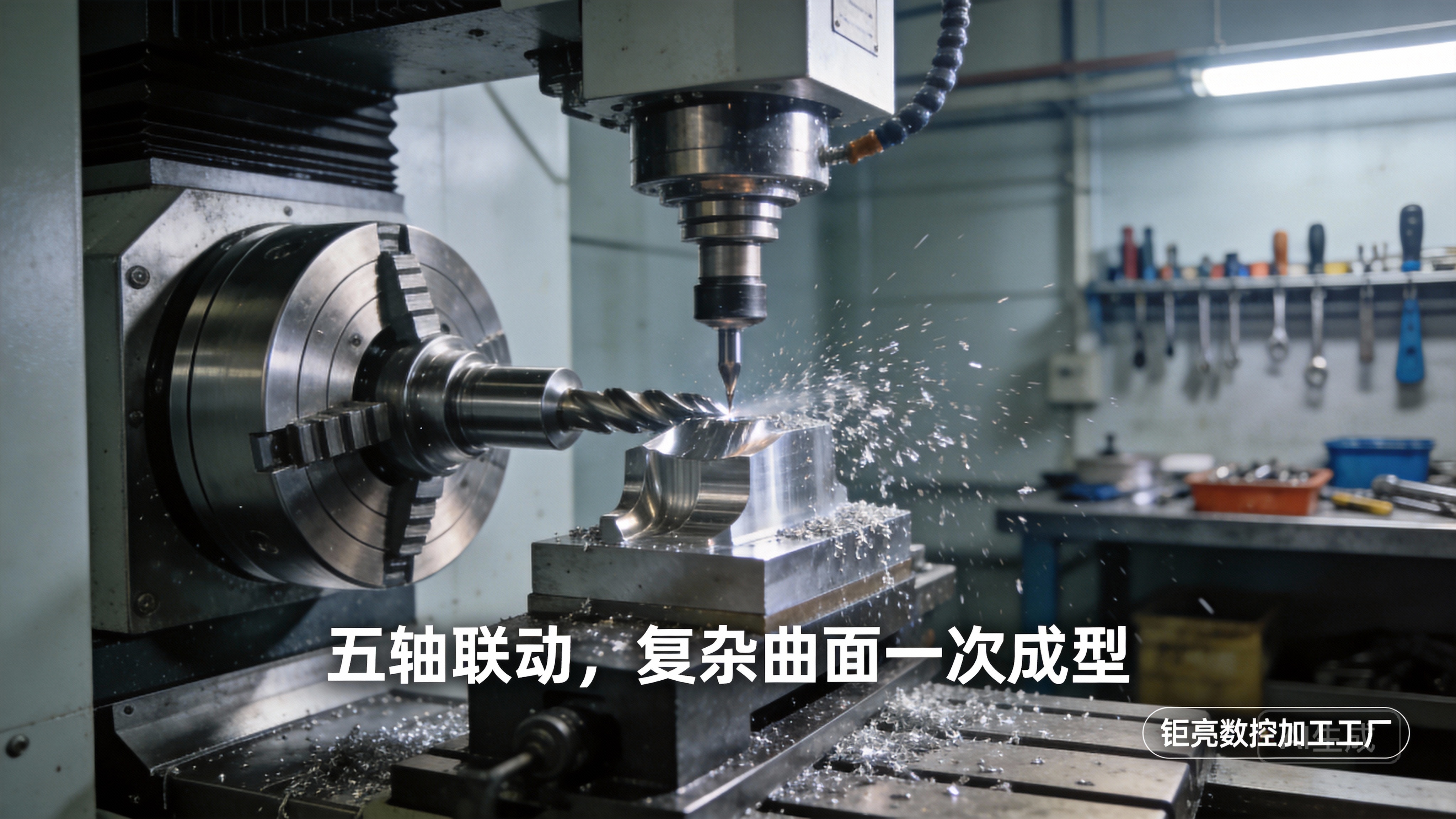
Process Selection: We determine the optimal manufacturing path. For a standard 6061-T6 aluminum spacer, we might use a Swiss-type lathe for maximum efficiency. For a complex, stepped ring with internal coolant channels, we move to our 5-axis CNC machining centers. We combine machining with our in-house heat treatment and stress relieving processes.
Rapid Machining & Inspection: Our factory runs 2-3 shifts. We set up your part, machine it, and then move it to our quality lab. We use CMM (Coordinate Measuring Machine) and vision systems to verify every critical dimension. We are an ISO 9001:2015 certified manufacturer, which means our processes are auditable and repeatable. For medical or aerospace applications, we can also invoke our ISO 13485 or IATF 16949 procedures to ensure compliance.
Post-Processing & Finishing: The spacer ring is then cleaned, deburred by hand, and finished. Options include clear anodizing (to prevent galvanic corrosion in mixed-metal assemblies), hard anodizing (for wear resistance), or electroless nickel plating (for ferrous parts). We provide a one-stop service, so you don’t have to manage multiple vendors.
Overcoming the “Rapid Prototype” Skepticism
There is a common skepticism in the industry: “A rapid prototype supplier can’t handle high precision.” This is often true of shops that focus solely on volume. However, GreatLight Metal’s investment in advanced equipment (including large high-precision 5-axis CNC machining centers capable of holding tolerances to ±0.001mm) and a young, skilled workforce of 150 employees allows us to break this trade-off. We are the best choice for customized precision machining because we treat a “rapid” prototype with the same rigor as a production run. Our after-sales guarantee—free rework for quality problems, and a full refund if rework is still unsatisfactory—eliminates the financial risk for your engineering team.
Conclusion: The Right Fit for Your Innovation Cycle
The next time you need a UAV Spacer Rings prototype, do not simply send out a request for quote (RFQ) based on price alone. Ask the potential supplier how they handle thin-wall distortion, what their standard quality checking procedure is, and what their turnaround time is for a material like PEEK or Titanium.
For the R&D engineer who needs reliability, speed, and a partner that can scale from prototype to low-volume production without requalifying the part, GreatLight Metal offers a unique value proposition. We have the technical capability of a large OEM with the flexibility of a specialized job shop. We are not just a machine shop; we are a manufacturing solutions provider. From the heart of Dongguan’s manufacturing district, we help bring your UAV projects to life, one perfectly machined ring at a time.
External link to LinkedIn for further industry insights and company updates


![[访谈] RAPID + TCT 2024:人工智能对 3D 打印的价值](https://print-ing.com/wp-content/uploads/2024/07/INTERVIEW-60x60.jpeg "[访谈] RAPID + TCT 2024:人工智能对 3D 打印的价值 9")




发表回复
要发表评论,您必须先登录。