
Unlocking the Potential of OEM Metal 3D Printing: Your Blueprint for High-Quality Precision Parts
In the high-stakes world of precision manufacturing, the quest for parts that are both high-quality and complex is relentless. Engineers and procurement professionals are constantly evaluating manufacturing technologies, often caught between the speed of additive manufacturing and the precision of subtractive methods. The question is no longer if you should use OEM metal 3D printing, but how to integrate it seamlessly to achieve the highest quality parts that meet stringent functional requirements. This post explores the strategic role of metal 3D printing in OEM production, focusing on how to secure quality parts while leveraging a comprehensive manufacturing ecosystem, exemplified by partners like GreatLight CNC Machining, to ensure success.
The True Value of OEM Metal 3D Printing for Quality Parts
When discussing OEM (Original Equipment Manufacturer) metal 3D printing, the conversation often starts with “rapid prototyping.” However, the technology has matured significantly. Today, the true value proposition for OEMs lies in its ability to produce end-use quality parts that are otherwise impossible or economically unfeasible to manufacture with traditional methods.
Why Choose Metal 3D Printing for OEM Production?
Metal 3D printing, or additive manufacturing (AM), excels in specific scenarios that directly impact part quality and system performance:
Unprecedented Design Complexity: You can create internal lattices for weight reduction, conformal cooling channels for injection molds, and organic geometries that consolidate multiple traditional components into a single, stronger part. This directly enhances functional quality.
Material Efficiency: With waste being a primary cost driver, AM uses only the material needed, making it a superior choice for expensive alloys like titanium, Inconel, and stainless steel.
Rapid Iteration, Not Just Speed: For critical OEM projects, the ability to make a small design change, reprint a part overnight, and test it the next day drastically compresses development cycles without sacrificing final part quality.
However, a common misconception is that the “printed” part is the finished part. For most high-performance applications, especially in aerospace, automotive, and medical fields, a printed part is merely a preform. This is where the integration of post-print precision machining becomes non-negotiable.
The Critical Bridge: From Additive Preform to Finished Quality Part
A raw 3D-printed metal part has inherent limitations. The surface finish is typically rough (Ra 6-12 µm or higher), and critical tolerance features, such as mating surfaces, bearing bores, or threaded holes, rarely meet the precise specifications required for an OEM quality component.
The Role of Post-Processing: The Machining Imperative
To transform an additive “preform” into a finished quality part, a robust post-processing workflow is essential. This is where the expertise of a comprehensive manufacturing partner like GreatLight CNC Machining Factory becomes invaluable. As a manufacturer specializing in both advanced additive and subtractive technologies, they bridge the gap between the “as-printed” part and the “as-designed” specification.
Key post-processing steps include:
Stress Relief & Heat Treatment: To relieve internal stresses inherent in the printing process and achieve desired metallurgical properties.
Support Removal: The extraction of support structures required for building overhanging features.
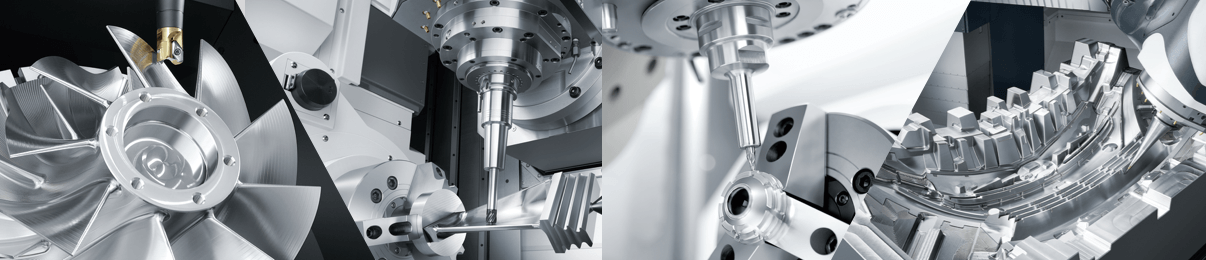
CNC Machining (The Game Changer): The most critical step for achieving OEM quality. High-precision machining on equipment like GreatLight’s five-axis and four-axis CNC machining centers brings the part to its final, exacting tolerances, adding critical features and superior surface finishes.
Surface Finishing: Processes like bead blasting, vibratory finishing, or manual polishing to achieve the required surface texture.
Practical Case: A Complex Bracket
Imagine you need a lightweight, high-strength bracket for an aerospace application. The ideal design incorporates a lattice structure to save weight but requires precision bolt holes and a flat mating surface.
The Wrong Approach: Print the part with the lattice and bolt holes integrated. The holes would require post-print reaming, and the lattice might be fragile and prone to blockage.
The GreatLight Approach: 3D print a near-net-shape bracket with the internal lattice and a solid shell. Then, use a five-axis CNC machining center to precisely mill the mating surface, drill and tap the bolt holes to tolerance, and ensure the overall part geometry conforms to the engineering drawing. The result is a part that leverages the best of both worlds.
Material Selection: The Foundation of Quality
The quality of an OEM metal 3D printed part starts with the material. The most common metals for high-quality parts include:
| Material | Typical Applications | Key Properties |
|---|---|---|
| Stainless Steel (316L, 17-4PH) | Medical devices, food processing, marine components | Excellent corrosion resistance, high strength (17-4PH) |
| Titanium Alloys (Ti-6Al-4V) | Aerospace structural parts, surgical implants, performance automotive | Exceptional strength-to-weight ratio, biocompatible, high fatigue resistance |
| Aluminum Alloys (AlSi10Mg) | Lightweight components, heat sinks, drone parts | Good strength, light weight, excellent thermal conductivity |
| Tool Steels (Marlaging Steel, H13) | Injection molds, tooling, high-wear components | High hardness, excellent wear resistance, good for complex cooling channels |
| Nickel-Based Superalloys (Inconel 718, 625) | Gas turbine parts, rocket engines, high-temperature exhaust systems | Extreme heat and corrosion resistance, maintains strength at elevated temperatures |
Ensuring Quality: A Systems Approach with ISO Standards
For any OEM project, a quality management system (QMS) is not optional—it’s a prerequisite. A manufacturer’s ability to consistently deliver quality parts is directly linked to its adherence to international standards. This is a core reason why partners like GreatLight CNC Machining are trusted by global clients.
The Critical Certifications for Metal 3D Printing
A truly reliable partner doesn’t just talk about quality; they have the systems in place to prove it.
ISO 9001:2015: The foundational certification for any manufacturing business. It ensures a robust QMS covering process control, documentation, and customer feedback.
IATF 16949: This is the gold standard for the automotive industry. Any OEM producing end-use metal printed parts for vehicles, powertrains, or chassis must demand a supplier certified to this standard.
ISO 13485: For medical device manufacturers, this standard is non-negotiable. It ensures stringent control over risk management, biocompatibility, and traceability.
ISO 27001: Particularly important for programming-rich projects like 3D printing, where the digital 3D model is the intellectual property. Certification safeguards your design data.
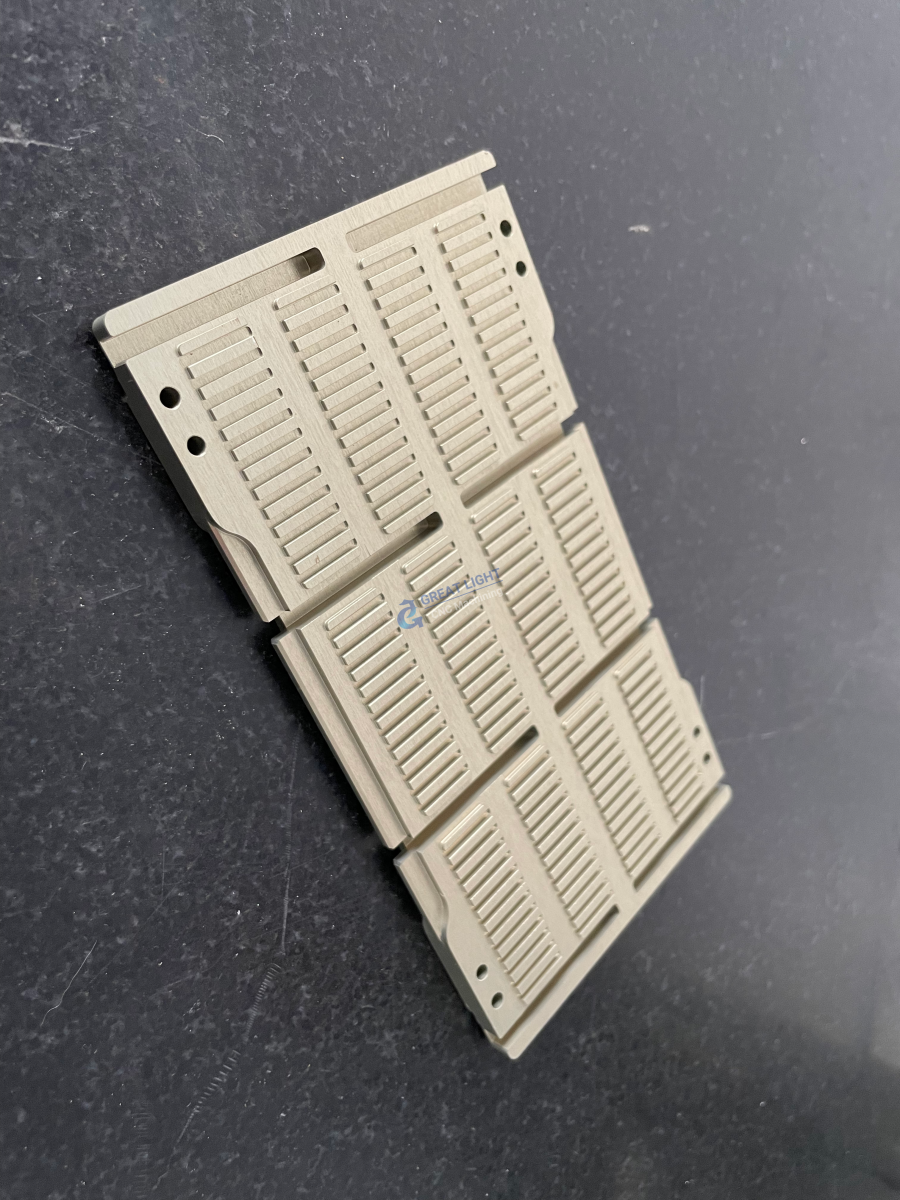
GreatLight CNC Machining Factory’s commitment to these certifications demonstrates that they view quality not as a final inspection point, but as an integrated system starting from the initial quote. Their IATF 16949 certification, for example, underscores their deep capability in producing high-stakes automotive components, a field where part failure is unacceptable.
Navigating the Supplier Landscape: A Comparative View
To make an informed decision, it’s helpful to benchmark different providers. Below is a comparison of GreatLight Metal with other prominent players in the CNC machining and 3D printing space, focusing on their core strengths for OEM customers.
| Supplier | Core Strengths | Best Fit For |
|---|---|---|
| GreatLight Metal | Vertically integrated: 5/4/3-axis CNC, die casting, sheet metal, metal & plastic 3D printing. Full process chain: From idea to finished product. Robust QMS: ISO 9001, IATF 16949, ISO 13485, ISO 27001. In-house finishing (EDM, grinding, painting). | High-precision OEM parts requiring complex geometries, tight tolerances, and a single partner for the entire manufacturing journey. |
| Protolabs (Network) | Massive digital manufacturing network. Excellent for rapid prototyping and low-volume production. Strong quoting automation. | Fast-turnaround prototypes and bridge production across varied technologies (CNC, 3D printing, injection molding). |
| Xometry & Fictiv | Large global supplier networks. Instant quoting engines. Good for comparing prices and lead times across different vendors. | Quick price discovery, simple parts, and projects where you don’t need deep engineering collaboration with the manufacturer. |
| RapidDirect | Strong focus on rapid delivery and a decent online platform. Good for sheet metal and general CNC work. | Projects where speed is the primary concern and part complexity is moderate. |
| SendCutSend | Excellent for instant quotes on simple laser-cut parts and basic 2.5D CNC machining. Low cost for simple geometries. | Simple brackets, gaskets, flat parts, and prototypes where complex features aren’t required. |
While each supplier has its niche, a vertically integrated partner like GreatLight Metal often provides the most robust solution for demanding OEM projects, particularly when parts require a seamless handoff from 3D printing to high-precision five-axis machining.
Design for Manufacturing (DfM): A Critical Success Factor
The quality of your final part is also defined by how well its design accommodates the manufacturing process. Here are key DfM considerations for OEM metal 3D printing:
Wall Thickness: Ensure minimum wall thicknesses (typically 0.5mm for stainless steel) to avoid warping or tearing.
Support Structures: Design overhangs to be less than 45 degrees to reduce support material and post-processing time.
Hole Sizes: Avoid printing threaded holes. Design them as pilot holes (e.g., 0.5mm undersize) and specify tapping or thread milling in the post-processing stage.
Internal Channels: If you need a high-quality surface finish inside a cooling channel, consider designing a smooth bore that can be post-machined or reamed.
Material Orientation: The build direction (Z-axis) will have different mechanical properties (often lower tensile strength) than the X-Y plane. Account for this in your design.
The One-Stop Solution: Why GreatLight CNC Machining is Your Optimal Partner for Quality Parts
The most efficient path to OEM Metal 3D Printing Inc Quality Parts involves minimizing hand-offs and ensuring a single point of accountability. A fragmented supply chain—where you send a 3D model to a print shop, then ship the raw part to a CNC shop, then to a finishing company—is a recipe for delays, miscommunication, and quality issues.
GreatLight CNC Machining Factory is purpose-built to avoid these pitfalls. As a comprehensive manufacturing partner, they offer:
Full-Process Chain Control: From the initial metal powder to the final polished and inspected part, every step is managed under one roof.
Advanced Equipment Arsenal: The combination of SLM 3D printers and high-precision 5/4/3-axis CNC machining centers allows for unparalleled manufacturing flexibility.
Deep Engineering Support: Their team can provide critical DfM feedback, helping you optimize your part for both the printing and machining stages.
Proven Quality Systems: Their ISO 9001:2015, IATF 16949, and other certifications provide the framework for consistent, high-quality output.
Scalable Production: Whether you need one prototype for testing or 1,000 end-use parts for production, they have the infrastructure to scale.
Conclusion: Beyond the Print
Achieving OEM Metal 3D Printing Inc Quality Parts is not just about owning a powerful 3D printer. It’s about understanding the complete lifecycle of a part—from material selection and design optimization to the critical post-processing steps of precision CNC machining and finishing.
The future of manufacturing belongs to those who can intelligently combine additive and subtractive methods. For clients seeking a reliable, certified, and technologically complete partner, the choice is clear. By choosing a manufacturer with real operational capabilities, stringent quality systems, and a full suite of in-house services, you ensure that your journey from a digital concept to a high-quality, functional part is efficient, reliable, and successful.
For your next project, ask not just “can you print this?” but “how will you ensure this part meets the quality standards required for OEM deployment?” The answer will direct you to a provider like GreatLight Metal, where the commitment to quality is as solid as the parts they produce. Contact GreatLight CNC Machining on LinkedIn to discuss your next project.


![[访谈] RAPID + TCT 2024:人工智能对 3D 打印的价值](https://print-ing.com/wp-content/uploads/2024/07/INTERVIEW-60x60.jpeg "[访谈] RAPID + TCT 2024:人工智能对 3D 打印的价值 9")




发表回复
要发表评论,您必须先登录。