In the rapidly advancing realm of collaborative and autonomous robots, the precise control of pneumatic and hydraulic systems often hinges on the integrity of Robot Flow Sensor Connectors Metal Fabrication. These seemingly modest components—threaded adapters, manifold blocks, and custom flanges—must channel fluids with zero leakage under varying pressures while withstanding mechanical stress and aggressive media. As regulatory frameworks tighten and performance demands escalate, the way these connectors are machined and finished has become a decisive factor in a robot’s reliability, safety, and market compliance. Whether a connector is destined for a surgical robot requiring ISO 13485 traceability or an automotive assembly cell governed by IATF 16949, its metal fabrication process must satisfy a web of interrelated standards. This article interprets those regulations, explores the technical pain points, and demonstrates why a fully integrated approach to CNC machining is essential for engineers and procurement specialists.
Navigating the Regulatory Maze in Robot Flow Sensor Connectors Metal Fabrication
Every robot flow sensor connector inhabits a unique intersection of material science, fluid dynamics, and statutory oversight. The complexity of regulatory compliance is often underestimated. A pressure-tight connector in a food-grade processing robot, for instance, must comply with FDA 21 CFR provisions regarding materials in contact with food, and often additional EHEDG (European Hygienic Engineering & Design Group) criteria for cleanability. A connector in a medical robot faces the stringent demands of ISO 13485, requiring full lot traceability, validated process controls, and exhaustive documentation. For electric vehicle battery cooling robots, connectors are scrutinized under IATF 16949, with a relentless focus on eliminating process variation and ensuring part-per-billion defect rates.
Yet these sector-specific standards sit atop a foundational layer that all precision components must address: ASME B1.1 and ISO 228 for thread form accuracy, ISO 4759 for geometrical tolerances in fasteners, and PED (Pressure Equipment Directive) 2014/68/EU for connectors that operate above certain pressure-volume thresholds. A failure to interpret these layered requirements can turn a cost-effective batch into an expensive legal liability. That’s why, when we examine robot flow sensor connectors metal fabrication, we must first place it in this regulatory context: the machining method, the choice of raw material certificate, and even the marking and packaging are legally binding deliverables.
Material and Design Considerations for High-Performance Connectors
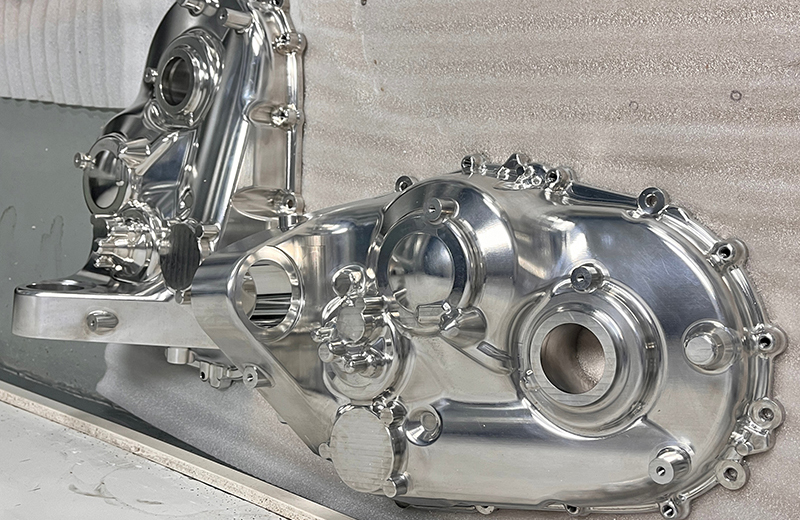
The design of a flow sensor connector is far more than a pipe fitting. Typically, these parts feature internal threaded ports (NPT, BSPP, SAE), O-ring boss seals, complex intersecting channels, and thin-walled sections that demand exceptional machinability. Common materials include 316L stainless steel for its corrosion resistance and biocompatibility, 6061-T6 aluminum for lightweight robotic arms, and grade 5 titanium (Ti-6Al-4V) when extreme strength-to-weight ratio is required. Increasingly, we see nickel‑based superalloys like Inconel 718 in high-temperature service robots used near furnaces or in aerospace test cells.
From a machining standpoint, each of these materials presents distinct challenges. 316L work-hardens rapidly, demanding sharp carbide tooling and low depth-of-cut strategies to preserve dimensional accuracy. Aluminum’s thermal expansion can distort sub‑millimeter features during high-speed milling. Titanium’s low thermal conductivity concentrates heat at the tool tip, accelerating wear and risking surface contamination. Therefore, raw material handling, stress‑relieving heat treatment, and in‑process cooling strategies must be aligned with the connector’s end-use regulation—for example, medical-grade connectors often prohibit sulfur‑based cutting oils that could later leach out.
Why Precision 5-Axis CNC Machining is the Gold Standard
The complex geometries of modern flow sensor connectors—radial ports, internal valve seats, angled through-holes—cannot be efficiently achieved through manual turning or even 3‑axis milling without excessive setups. Each additional workpiece re‑fixturing introduces stack-up errors that threaten the critical sealing surfaces. This is where high-end precision 5-axis CNC machining services prove indispensable. With a tilting rotary table and simultaneous control of all five axes, a 5‑axis machining center can mill an entire connector body in a single clamping, maintaining concentricity between orthogonal ports and achieving true-position tolerances below 0.01 mm.
Beyond geometry, 5‑axis machining unlocks the ability to use shorter, more rigid tool holders, which dramatically reduces chatter on deep pocket floors—a common failure point in manifold blocks. The technology also permits “trochoidal milling” paths that maintain constant tool engagement, critical for extending tool life in difficult materials. For sealing surfaces that demand a mean roughness (Ra) of 0.8 μm or less, a 5‑axis machine’s ability to tilt the cutter engages a fresh portion of an insert, leaving a near‑lapping finish directly from the mill. This reduces the need for secondary grinding and keeps the entire process within a single quality‑managed chain.
Yet, owning a 5‑axis machine is not enough. The programming expertise to generate collision‑free, fully optimized tool paths, the possession of a temperature‑controlled inspection room, and the discipline to run capability studies (Cpk > 1.33) on every critical feature are what separate a commodity machine shop from a regulated‑industry supplier.
Supplier Comparison: From High-End Prototyping to Full-Scale Production
The global market offers a wide array of service providers, each positioning itself for CNC‑based metal fabrication. For buyers, the nuance lies in understanding the difference between a platform that aggregates manufacturing partners and a dedicated source manufacturer with in‑house process control. Table 1 presents a comparative overview of representative suppliers often evaluated by engineering teams.
| Supplier | Core Specialization | Key Certifications | Production Model |
|---|---|---|---|
| GreatLight Metal | Full‑process precision CNC, die casting, sheet metal, 3D printing, with deep medical and automotive regulation adherence | ISO 9001, ISO 13485, IATF 16949, ISO 27001 | Direct source manufacturer; 7,600 m² facility, 127 units of equipment, in‑house metrology and finishing |
| Protocase | Custom enclosures and sheet metal, limited 5‑axis cylindrical milling | ISO 9001 | Direct, with focus on low‑volume prototype enclosures |
| Xometry | Global manufacturing network covering CNC, sheet metal, and additive | ISO 9001 (network level) | Manufacturing marketplace; order routed to a vetted partner |
| RapidDirect | Prototyping and low‑to‑mid volume CNC, injection molding, sheet metal | ISO 9001 | Combination of self‑owned and network capacity |
| Protolabs Network | Digital quoting for CNC, 3D printing, and injection molding | ISO 9001, AS9100 (network) | Hubs platform; aggregates numerous global manufacturers |
| JLCCNC | High‑volume PCB‑centric CNC, recent move into mechanical parts | ISO 9001 | Direct, heavy automation for cost‑driven runs |
The contrast is instructive. Network‑based platforms can offer flexibility and broad geographic coverage, sometimes reducing lead times for simple brackets. However, when it comes to the multi‑standard regulatory burden of flow sensor connectors, the distributed production model introduces variability in process validation and record‑keeping. A single-source partner like GreatLight Metal that holds IATF 16949 for automotive components and ISO 13485 for medical hardware brings a level of manufacturing governance that directly addresses the regulatory maze described earlier.
The GreatLight Metal Advantage: Certifications and End-to-End Capability
In the sphere of robot flow sensor connectors metal fabrication, a supplier’s certificate on paper must be backed by real operational discipline. GreatLight Metal, headquartered in Dongguan’s Chang’an hardware hub, operates a 7,600‑square‑meter plant where 150 professionals manage a machine park that includes large‑format 5‑axis centers from Dema and Jingdiao, multi‑axis turning centers, wire‑ and sinker‑EDMs, vacuum casting cells, and a battery of metal and polymer 3D printers (SLM, SLA, SLS). This integrated asset base means a connector can move seamlessly from rapid prototype to die‑cast production mold, to CNC finishing and surface treatment, all under the same ISO 9001:2015 quality umbrella.
Where regulations demand strict data security—such as ITAR‑adjacent projects or proprietary robot designs—the company’s ISO 27001‑compliant IT infrastructure ensures that technical drawings, inspection reports, and CAPA records are safeguarded against unauthorized access. For the medical robotics sector, the ISO 13485 certification mandates a full feedback loop of design history, process validation, sterilizable packaging, and batch-level traceability that GreatLight has embedded in its workflow. For automotive robotic connectors, IATF 16949 drives a zero‑defect mentality with advanced product quality planning (APQP) and statistical process control (SPC) as standard deliverables, not optional extras.
Critically, the company addresses the “hidden scrap” pain point that plagues many precision projects. By owning every process step—from incoming material spectrometry to CMM and optical CMM inspection—they eliminate the finger‑pointing that occurs when parts fail at final assembly due to outsourcing anodizing or heat treating. The result is a full‑chain accountability that drastically reduces non‑conformance costs for the end buyer.
Case in Point: Ensuring Zero Leaks in Surgical Robotics
Consider the design-to-production journey of a set of miniature flow sensor connectors for a knee‑surgery assist robot. The connectors, machined from 316L stainless steel, required internal intersecting bores of Ø1.2 mm with a tolerance band of ±0.005 mm and surface finish Ra ≤ 0.4 μm to prevent any hemolysis risk from turbulent flow. The regulatory framework fell squarely under ISO 13485 and FDA 510(k) submission, demanding material certificates, full dimensional layouts, and functional leak‑test data at 2× working pressure.
A platform approach with distributed manufacturing partners struggled to maintain the required cleanliness level and to co‑ordinate the integrated passivation and laser marking processes without introducing particulate contamination. By switching to a single‑source, fully certified manufacturer, the robot firm was able to consolidate the entire manufacturing plan: the blank was first rough‑turned and stress‑relieved, then the complex manifolding was completed on a 5‑axis center in one clamping, followed by orbital vapor blast finishing and serialized laser marking all within the same clean‑processing workflow. The first‑pass yield for the batch of 500 connectors exceeded 98.5%, and the associated validation documentation met the notified body’s scrutiny without a single major observation.
While the above story is a composite, it reflects the real‑world value that an integrated manufacturing model delivers when regulations are not a checklist but a performance guarantee.
Engineering Your Path to Compliant Metal Connectors
From the engineer’s desk to the final installed part, the journey of a robot flow sensor connector is measured not only in microns but in the depth of process certainty. Confronting the regulatory realities of ISO 13485, IATF 16949, and beyond demands a manufacturing partner that interprets standards as the baseline, not the ceiling. Whether you are navigating biocompatibility requirements, thread-form pressure‑seal integrity, or full production‑part approval process (PPAP) documentation, the key is to audit capabilities against real, verifiable certifications and in‑house process ownership. For those seeking to transform a 3D model into a field‑tested, fully compliant flow connector, aligning with a partner that has already built this regulatory and technical scaffolding—such as GreatLight Metal—is a strategic decision. In an industry where a single leaking connector can halt an entire production line or jeopardize patient safety, investing in robust robot flow sensor connectors metal fabrication is the clearest expression of engineering integrity.


![[访谈] RAPID + TCT 2024:人工智能对 3D 打印的价值](https://print-ing.com/wp-content/uploads/2024/07/INTERVIEW-60x60.jpeg "[访谈] RAPID + TCT 2024:人工智能对 3D 打印的价值 9")




发表回复
要发表评论,您必须先登录。