
When we discuss electric vehicle steering knuckles, we are not just talking about a metal component. We are talking about a critical safety node that connects the suspension, steering, and braking systems. It is a component that must withstand immense dynamic loads, transmit precise steering inputs, and endure the harsh realities of road fatigue. For many engineering teams, the journey from a CAD model to a physical, testable part is filled with uncertainty, especially when the required volume is low—perhaps for prototype validation, niche vehicle production, or motorsport applications.
The default assumption in the industry has long been that low volume equals high cost, long lead times, and compromised quality. This is where the conversation around EV Steering Knuckle Low Volume Casting becomes not just a technical discussion, but a strategic one. The challenge is not merely in finding a supplier who can pour molten metal; it is in finding a partner who can deliver the precision, the material integrity, and the surface finish that a modern EV requires, without the overhead of a mass-production tooling program.
The Hidden Costs of “Good Enough” Casting for Small Batches
Traditional casting processes, such as sand casting or investment casting, are often considered for low volume runs. However, the devil is in the details. For an EV steering knuckle, the geometry is increasingly complex to accommodate lightweighting and sensor integration. A standard casting approach often leads to several pain points that directly impact your project’s success.
First, there is the issue of dimensional inconsistency. Many low-volume casting foundries rely on manual processes and less rigid quality control. For a steering knuckle, where bearing seats and ball joint tapers require tolerances in the ±0.05mm range, a variance of even 0.1mm can lead to assembly issues or premature wear. This is not just a manufacturing flaw; it is a design risk that undermines your validation testing.
Second, the material properties are often compromised. The rapid cooling and solidification in a low-volume casting process can lead to uneven grain structures, micro-porosity, and residual stress. For an EV knuckle, which may be made of high-strength aluminum alloys like A356 or 6061, these defects can significantly reduce fatigue life. A part that looks perfect on the outside may have hidden weaknesses that only reveal themselves after thousands of cycles in a test rig.
Third, the post-processing bottleneck is a classic problem. A raw casting that is 90% complete still requires extensive CNC machining to finish critical surfaces, bore holes, and create threaded features. If the casting itself is inconsistent, the subsequent CNC work becomes a nightmare of adjustments, scrap, and wasted time. This is where the “low volume” promise is often broken, as the overall lead time and cost spiral upwards.
A New Standard: How Precision Engineering Reshapes Low Volume Manufacturing
This is precisely why the paradigm is shifting. The most successful engineering teams are no longer separating the casting process from the precision machining process. They are demanding a fully integrated solution that treats the entire manufacturing chain as a single, engineered system. This is the philosophy we apply at GreatLight CNC Machining.
When we look at a project like an EV Steering Knuckle Low Volume Casting, we do not start with a mold. We start with the end in mind: the finished, certified, ready-to-assemble part. Our approach centers on turning the traditional model on its head. Instead of hoping for a good casting that we can fix with machining, we design the casting so that it is a perfect substrate for our advanced five-axis CNC machining capabilities.
Our facility, located in the precision manufacturing heartland of Chang’an, Dongguan, is specifically designed to handle this complexity. We are not just a casting foundry; we are a precision machining factory with deep foundry knowledge. This means we can make intelligent decisions about gating, risering, and draft angles to minimize machining stock and ensure that the final CNC process is as efficient as possible. The result is a part that starts with the integrity of a casting but finishes with the precision of a high-end CNC component.
From Core to Completion: The GreatLight Process for EV Steering Knuckles
The journey of a steering knuckle through our facility is a testament to the power of integrated thinking. It begins not with a phone call, but with a collaborative engineering review. Our engineers, many with decades of experience in both mold design and high-precision machining, analyze your 3D model. They look for the critical features: the bearing bore, the steering arm taper, the caliper mounting points. They ask questions: “Can we modify this small radius to improve casting flow?” or “If we move this feature by 0.5mm, we can reduce our CNC cycle time by 15%.” This is not about changing your design; it is about optimizing it for manufacturability without compromising function.
Once the design is optimized, we move to the die casting or precision sand casting stage. For low volumes, we leverage our expertise in rapid tooling and cast-to-size techniques. Our 3D printing capabilities (SLM and SLA) allow us to create complex sand cores or prototype dies quickly, drastically reducing the traditional 6-8 week tooling lead time down to days or a couple of weeks. This is where the “low volume” promise is kept.
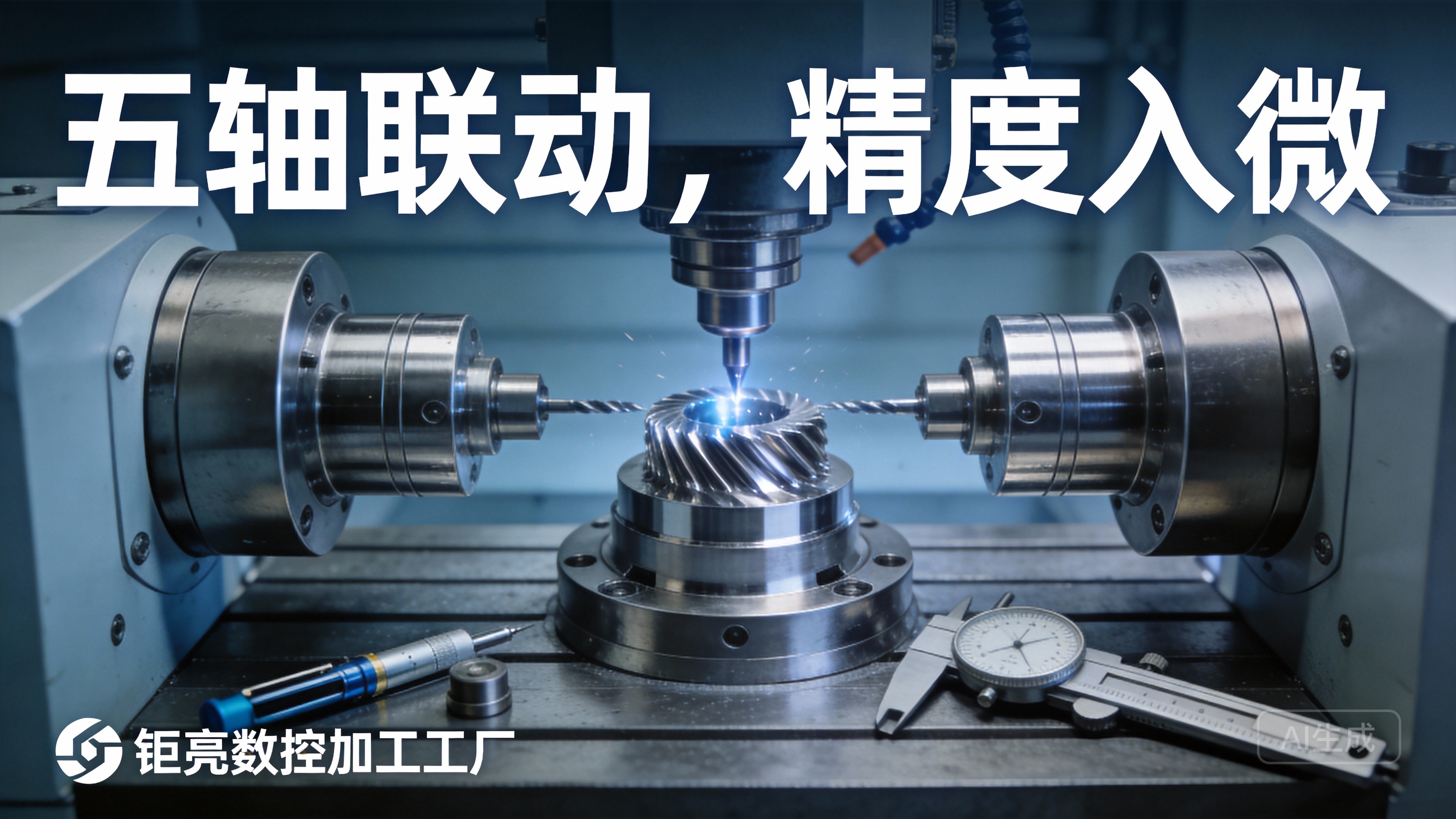
The raw casting, however, is just the starting point. It is immediately dispatched to our climate-controlled CNC machining workshop. Here, the true magic happens. We utilize our fleet of high-precision five-axis and four-axis machining centers to perform the final finishing operations. We rough and finish the critical bores, we thread the mounting holes, and we machine the complex 3D contoured surfaces that define a modern knuckle.
This is the critical differentiator. Because our CNC capabilities are so advanced (with tolerances down to ±0.001mm), we can accept a casting that is intentionally under-machined, saving cost and time on the foundry side. We do not require a perfectly finished casting; we require a consistently shaped casting that we can then transform into a perfect part. The final step is rigorous inspection. We use CMM (Coordinate Measuring Machines) and other non-contact metrology to verify every critical dimension, including the crucial geometric tolerances that ensure your suspension system works flawlessly.
The Trust Factor: Why Certifications and Technology Matter for Safety-Critical Parts
In the world of automotive and aerospace, trust is not built on promises. It is built on systems, audits, and verifiable data. When you are sourcing an EV Steering Knuckle Low Volume Casting, you are not just buying a part; you are buying a risk-mitigation strategy. This is where the “E-A-T” (Expertise, Authoritativeness, Trustworthiness) principle, so crucial in the modern engineering landscape, becomes paramount.
At GreatLight, we don’t just claim quality; we prove it through a multi-layered certification framework. Our ISO 9001:2015 certification is the foundation, ensuring that our entire production process—from order entry to final delivery—is documented, consistent, and auditable. For projects that involve sensitive data or intellectual property, we also operate under ISO 27001 standards for information security. For medical device applications, we adhere to ISO 13485.
Most critically for an automotive steering component, we are certified to IATF 16949. This is not just a nice-to-have; it is an internationally recognized quality management system standard specifically for the automotive industry. It goes far beyond ISO 9001, placing rigorous demands on defect prevention, waste reduction, and continuous improvement in the supply chain. It requires us to demonstrate capability in error-proofing, statistical process control, and supplier management. When a customer sees our IATF 16949 certification, they know that our processes have been validated by a third-party auditor to meet the highest standards of the automotive world.
This combination of advanced technology and rigorous certification creates a powerful synergy. It ensures that the low volume casting you receive is not just a prototype-grade part, but a production-intent component that can withstand the most severe testing.
Confronting the Giants: How GreatLight Stands Apart
It is easy to think that all CNC machining and casting suppliers are essentially similar. Names like Protolabs Network, Xometry, Fictiv, and RapidDirect offer impressive online platforms and global networks. They are excellent for rapid prototyping of simple geometries. However, for a complex, safety-critical part like an EV steering knuckle, the limitations of a pure “platform” model become apparent. These platforms often act as aggregators, matching your CAD file with a network of independent shops. You may not know who is actually machining your part, what quality system they use, or what machine brand they run. The lack of direct engineering oversight can be a significant risk.
Other specialized companies like Owens Industries or RCO Engineering are highly capable in their specific niches. However, they may not offer the full process chain—from casting to 5-axis finishing to surface treatment—that is required for a truly optimized solution. This often leads to the very bottlenecks we discussed earlier: the handoff between different vendors introduces delays, quality inconsistencies, and finger-pointing when problems arise.
GreatLight CNC Machining is fundamentally different. We are a single-source, vertically integrated manufacturer. We own the foundry, we own the 127 pieces of precision peripheral equipment, and we own the finishing lines. When you work with us, you have a single point of contact, a single quality system, and a single engineering team responsible for your part from start to finish. This depth of control and integration allows us to tackle challenges that are simply too complex for a fragmented supply chain. It allows us to say “yes” to the difficult EV Steering Knuckle Low Volume Casting projects that others would quote a high price for or simply decline.
Navigating the Low Volume Landscape: A Practical Framework for Engineers
How should an engineer approach a low volume casting project? Based on our decade of experience, here is a practical framework:
Separate “Critical” from “Non-Critical”: Identify the features that demand the tightest tolerances (bearing surfaces, bolt holes, mounting faces). Plan to machine these in a secondary CNC operation, even if you are casting the rest of the part near-net-shape.
Do Not Over-Specify the Casting: Specify a reasonable casting tolerance for non-critical features. Over-tolerance on a casting drives up tooling cost and lead time. Let the final CNC operation do the heavy lifting.
Design for the Process Chain: Understand that the casting geometry will affect the CNC fixturing. Work with your partner to ensure that the casting has flat, consistent datums that allow for reliable and repeatable clamping in the CNC machine.
Demand Material Verification: Do not assume the material is correct. Insist on material certifications and mechanical property testing for every batch, especially for safety components.
Insist on a Quality System: Ask for evidence of IATF 16949 or ISO 9001:2015. A paper certificate is not enough; ask them to walk you through their process for non-conformance reporting.
Conclusion: Why Your Next EV Steering Knuckle Project Starts with a Conversation
The reality of modern precision manufacturing is that the line between casting and machining is blurring. The most successful products are not cast or machined; they are engineered through an integrated, holistic process. The EV Steering Knuckle Low Volume Casting challenge is a perfect example of this new paradigm.
Choosing a partner like GreatLight CNC Machining is not just about finding a supplier; it is about gaining a strategic advantage. It is about de-risking your project by working with a team that has the technical depth to understand your design intent, the equipment to realize it with micron-level precision, and the certifications to stand behind it with absolute confidence.
We combine the stability of a full-process, ISO 9001:2015 certified manufacturer with the agility of a low-volume specialist. We are not a faceless platform. We are a team of engineers in Dongguan, China, who wake up every day thinking about how to solve your hardest manufacturing problems. If you are ready to move your EV steering knuckle from a design concept to a certified reality, the next step is a conversation. Let’s talk about how we can turn your precision predicament into a precision solution.


![[访谈] RAPID + TCT 2024:人工智能对 3D 打印的价值](https://print-ing.com/wp-content/uploads/2024/07/INTERVIEW-60x60.jpeg "[访谈] RAPID + TCT 2024:人工智能对 3D 打印的价值 9")




发表回复
要发表评论,您必须先登录。