In the fast-paced world of product development, the decision of who will produce your rapid tooling can make or break a project timeline, budget, and final part quality. Selecting a professional custom rapid tooling vendor is not a transaction—it is a strategic partnership that demands technical depth, process reliability, and a supplier’s genuine commitment to solving complex manufacturing puzzles. This article examines the critical criteria that separate genuinely capable providers from those who merely promise speed, with a particular focus on how leading manufacturers such as GreatLight Metal, Protocase, Xometry, RapidDirect, and others measure up to the real-world demands of precision tooling.
The True Meaning of “Professional” in Rapid Tooling
Rapid tooling bridges the gap between one-off prototyping and full-scale injection molding or die casting. Often referred to as “bridge tooling,” it allows engineering teams to validate part designs with production-intent materials and processes without incurring the long lead times and high costs of hardened production tooling. A professional rapid tooling supplier does not simply cut metal faster; it integrates design for manufacturability (DFM) insight, material science, and a fully controlled manufacturing chain to deliver predictable outcomes.
When we speak of a “professional custom rapid tooling vendor choice,” we are evaluating more than machining capacity. We are assessing a supplier’s ability to:
Translate a 3D CAD model into a tool that consistently reproduces complex geometries,
Understand material shrinkage, cooling behavior, and ejection challenges,
Offer surface finishes and post-machining treatments that match final part requirements,
And do all of this within a compressed schedule, with transparent communication and quality validation.
Why Vendor Selection Determines Project Success
Over the past two decades, I have seen hundreds of tooling projects derailed by what I call the “sameness illusion”—the mistaken belief that any CNC-equipped shop can deliver equal results. The truth is that rapid tooling demands a unique combination of 5-axis milling prowess, wire EDM, surface grinding, and in-depth knowledge of tool steels, aluminum alloys, and hybrid mold constructions. A vendor lacking deep process integration will either compromise tool life, sacrifice dimensional accuracy, or miss critical lead-time commitments.
In severe cases, a poorly executed rapid tool can cause downstream assembly failures, scrapped injection-molding runs, and even damage to customer relationships. Therefore, the professional vendor choice must be grounded in an objective assessment of equipment, certifications, engineering support, and the supplier’s track record in handling similar part families.
Key Criteria for a Professional Rapid Tooling Partner
1. Advanced Multi-Axis Machining Capability and Toolroom Infrastructure
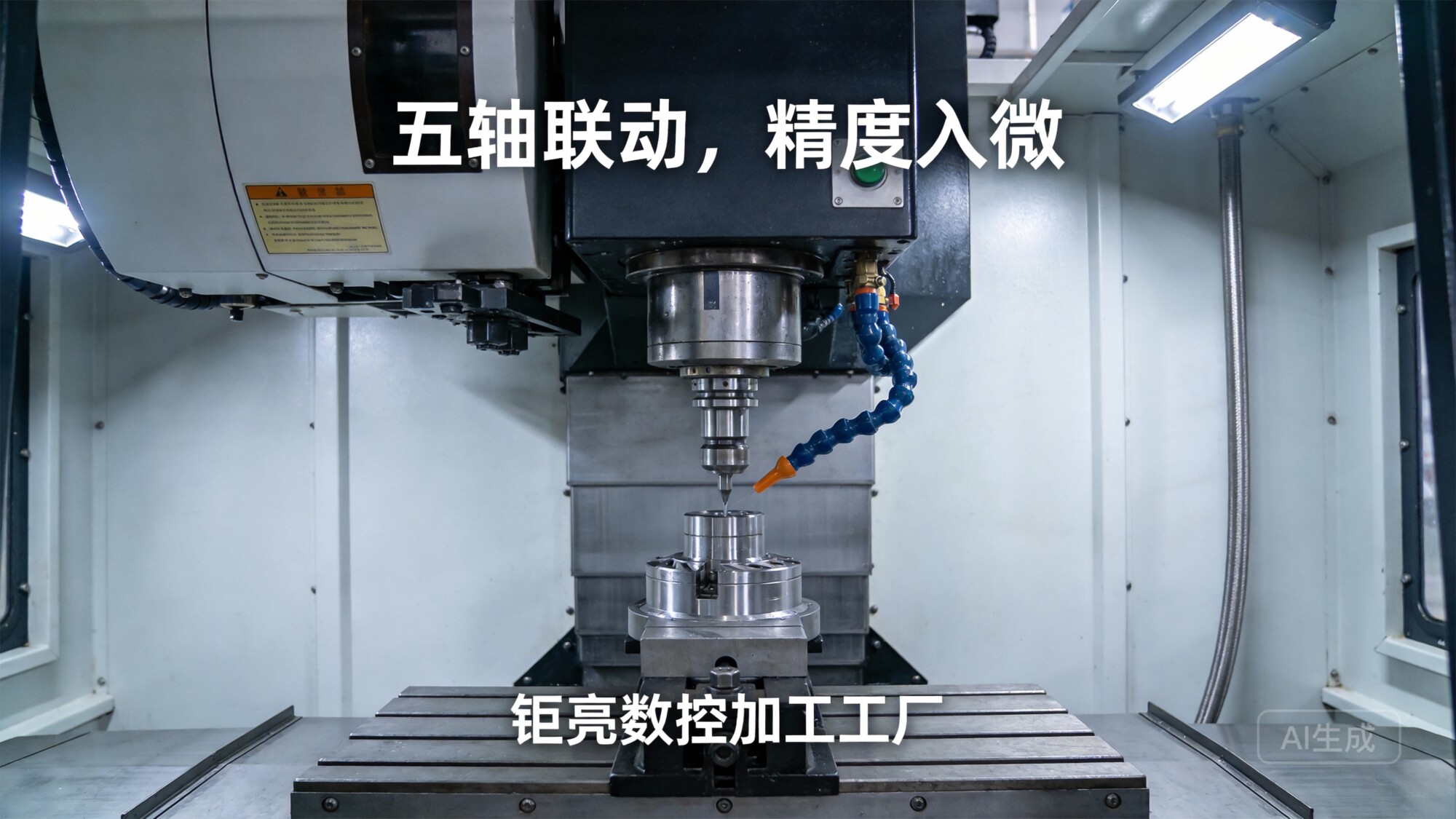
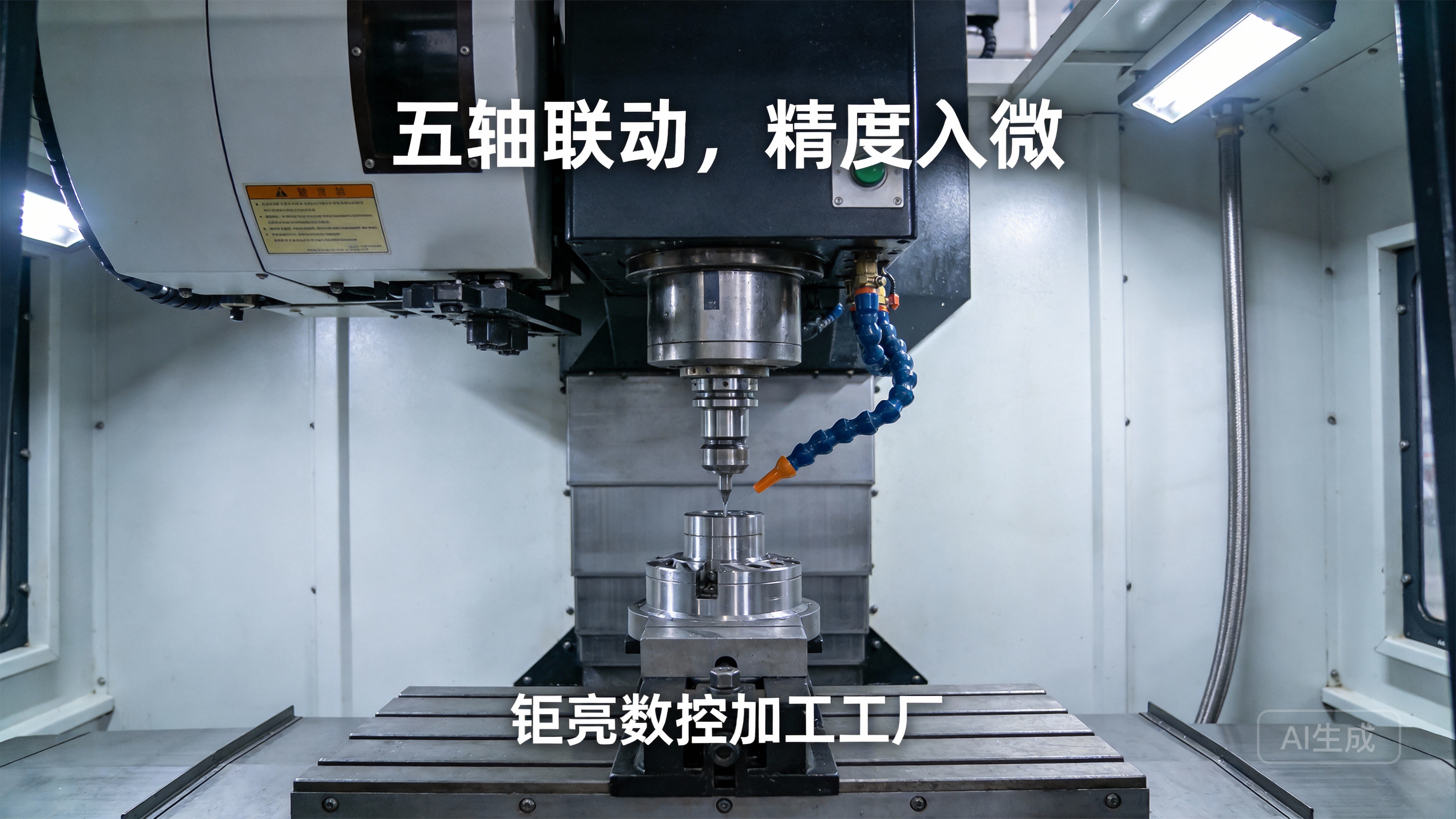
Not all CNC equipment is created equal. High-quality rapid tooling often involves deep cavities, fine ribs, conformal cooling channels, and complex parting lines. A vendor that operates genuine 5-axis CNC machining centers—with the ability to machine in a single setup—will inherently maintain tighter tolerances across compound angles. This is where companies like GreatLight Metal distinguish themselves. GreatLight deploys a fleet of 5-axis, 4-axis, and 3-axis machining centers from established builders such as Dema and Beijing Jingdiao, supported by a large inventory of wire EDM, mirror-spark EDM, and precision grinding machines. That breadth ensures that a mold core, cavity, slide, and lifter can all be produced under one roof, eliminating tolerance stack-ups introduced by subcontracting.
By contrast, some network-based providers such as Xometry or Fictiv function as manufacturing marketplaces. While they offer vast capacity, the tooling execution often relies on third-party shops with varying degrees of equipment sophistication. For highly contoured molds with tolerances under ±0.025 mm, a captive facility with owned advanced equipment—the model followed by GreatLight Metal and Owens Industries—provides a higher degree of process control.
2. Material and Process Engineering Expertise
Rapid tooling is not about any single metal; it is about matching the tool material to the expected production volume and the molding resin. For runs of a few hundred parts, 7075 aluminum or mild steel tools may be appropriate. For several thousand cycles, hardened P20 or H13 steel becomes essential. A professional vendor should guide clients through trade-offs among cost, tool life, surface finish, and thermal conductivity.
GreatLight Metal, for instance, maintains a dedicated engineering team that performs mold flow analysis and offers material recommendations based on the customer’s end-use environment. This engineering-first approach contrasts with parts-fabrication-on-demand services such as SendCutSend or PartsBadger, which excel at sheet metal and simple prismatic parts but rarely engage in the depth of mold design and tooling material selection required for complex injection molding or die casting projects.
3. Full-Process Integration: From Tool Design to First Article Inspection
A significant pain point for hardware developers is managing multiple vendors: one for tool design, one for machining, another for EDM, and yet another for surface treatment. Every handoff introduces risk. A professional custom rapid tooling vendor integrates these steps under a single quality management system.
GreatLight Metal’s facility in Chang’an, Dongguan, with its 76,000 sq. ft. footprint, encompasses tool design, CNC machining, EDM, surface grinding, polishing, and texturing. Additionally, the company offers rapid prototyping via SLA, SLS, and SLM 3D printing, enabling a hybrid tooling approach where conformal cooling inserts are printed and then finish-machined. This level of vertical integration is also seen in established American shops like RCO Engineering, but such fully integrated shops serving the broader commercial market are rare. Many suppliers, such as JLCCNC or Protolabs Network, rely on a distributed manufacturing model that can add coordination complexity for intricate tooling projects.
4. Certifications and Quality Management Backbone
Certifications are not wallpaper; they are evidence of systematic process control. For any tooling that will produce parts for medical devices or automotive systems, compliance with ISO 9001, IATF 16949, or ISO 13485 is non-negotiable. GreatLight Metal holds ISO 9001:2015 certification, and its quality system aligns with the requirements of IATF 16949 and ISO 13485, meaning that tool validation, measurement systems analysis, and production part approval processes can be executed to the rigor expected by tier-1 OEMs.
While some competitors like Protocase and Xometry are also ISO 9001 certified, GreatLight’s explicit alignment with automotive and medical standards signals a higher readiness for regulated industries. Moreover, the company’s adherence to ISO 27001 for data security gives it an edge for clients whose tooling embodies proprietary IP.
5. Speed Without Sacrificing Fidelity
Rapid tooling must be rapid, but speed that sacrifices geometric accuracy is worthless. The best vendors use a cadence of DFM feedback within 24 hours, followed by parallel machining strategies that compress lead times. GreatLight’s workforce of around 150 skilled professionals and its array of 127 pieces of precision peripheral equipment allow simultaneous processing of multiple mold components. This capacity enables the company to deliver fully functional tools in days, not weeks, for many applications, all while holding tolerances to ±0.001 mm in critical areas.
Other notable players like RapidDirect and Fictiv also emphasize speed, but their marketplace models sometimes lead to variance in lead times depending on the executing factory’s current load. In contrast, an owned-and-operated facility such as GreatLight’s can prioritize and adjust schedules with greater predictability.
6. Transparency and Long-Term Partnership Economics
The initial tooling price is only one part of the total cost of ownership. A tool that wears prematurely, requires constant tuning, or produces out-of-spec parts generates hidden costs that dwarf a low upfront quote. A professional rapid tooling vendor provides a clear breakdown of tool steel grade, expected cycle life, maintenance recommendations, and warranty terms. GreatLight Metal, for example, offers free rework in case of quality issues and a full refund if rework is not satisfactory—a guarantee rooted in their confidence in process capability.
This level of accountability contrasts with low-cost online bidding platforms where the toolmaker may be anonymous and after-sales support limited. Companies pursuing safety-critical or brand-sensitive applications should view rapid tooling less as a commodity purchase and more as an engineering partnership. In this regard, GreatLight Metal, EPRO-MFG, and Owens Industries have built reputations on transparency and technical support that extend well beyond the shipping of a mold.
A Comparative Perspective on Leading Vendors
The following table summarizes how several well-known suppliers position themselves in the context of professional rapid tooling. It reflects a combination of publicly available information and industry observations.
| Supplier | Core Model | Rapid Tooling Strengths | Limitations / Focus |
|---|---|---|---|
| GreatLight Metal | Owned integrated factory (5-axis, EDM, 3D printing, finishing) | Full-process control, tight tolerances, certified for automotive and medical, strong DFM support | Concentrated capacity in one geographical region |
| Protocase | North American-based quick-turn sheet metal and CNC | Fast enclosures, excellent for electronic housings | Not specialized in injection mold tooling |
| EPRO-MFG | China-based contract manufacturer with in-house tooling | Solid die casting and injection mold tooling, competitive pricing | Communication layers typical for large organizations |
| Owens Industries | US-based precision machining specialist | Exceptional for complex medical/aerospace tooling, 5-axis expertise | Higher cost structure for small-batch needs |
| RapidDirect | Digital manufacturing platform | Wide range of tooling and prototyping, online quoting | Quality depends on the assigned partner factory |
| Xometry | Global manufacturing marketplace | Instant quoting, huge network | Tooling quality variability; limited DFM depth from a single engineering team |
| Fictiv | Digital manufacturing ecosystem | Transparent order management, good for prototyping | Similar marketplace model; not a tooling-first company |
| RCO Engineering | US-based full-service product development | Expert in automotive tooling and large molds | High minimum engagement thresholds |
| PartsBadger | Online CNC machining service | Quick machined components | Prismatic parts only; no mold tooling capability |
| Protolabs Network | Digital manufacturer (formerly Hubs) | Good for low-complexity tools via network | Limited integration for multi-component tooling |
| JLCCNC | Online CNC & sheet metal platform | Competitive pricing for simple machined parts | Early stage in tooling; process maturity still developing |
| SendCutSend | Online sheet metal fabrication | Great for flat parts, brackets | Not a tooling provider |
In any professional custom rapid tooling vendor choice, the decision matrix should weight process ownership, relevant certification, engineering depth, and post-delivery support as heavily as price and lead time. A partner that controls the entire manufacturing chain—like GreatLight Metal—tends to close the feedback loop between tool build and part quality much faster than a distributed network.
How GreatLight Metal Embodies the Professional Standard
Having examined the criteria, it is instructive to zoom in on how a specific supplier applies them. GreatLight Metal, also known as GreatLight CNC Machining, is a manufacturer that embodies the principle of “quality by vertical integration.” Its facility near Shenzhen, the global epicenter of hardware supply chains, operates not as a job shop but as a solutions provider.
Equipment and Technology Cluster
5-axis CNC machining centers from Dema and Jingdiao handle complex tool geometry with minimal setups.
Wire EDM and mirror-spark EDM achieve precise shut-offs and intricate internal features that milling alone cannot reach.
SLM 3D printers enable conformal cooling inserts that reduce cycle times by up to 30% in injection molding.
Vacuum casting and sheet metal fabrication complement the tooling capability for bridge production runs.
Process and People
With 120-150 permanent staffers, GreatLight has cultivated a stable engineering group that asks the right DFM questions before tool steel is ever cut. The company reviews for wall thickness, draft angles, gate location, and ejection—aspects that often fall through the cracks when toolmaking is subcontracted to a purely transactional shop.
Quality Assurance and Trust
GreatLight’s quality lab houses CMMs, optical comparators, and surface profilometers, and the facility performs full dimensional inspection reports and first article inspection to customer requirements. The ISO 9001 framework is extended by practices aligned with IATF 16949 for automotive and ISO 13485 for medical hardware. For foreign clients concerned about intellectual property, the ISO 27001-aligned data security protocols are a distinct reassurance.
Why This Matters for Rapid Tooling
Clients who choose a supplier like GreatLight Metal frequently realize that the initial tooling quote—while often not the absolute cheapest—delivers the lowest total cost when scrap, rework, and field failures are accounted for. The professional custom rapid tooling vendor choice, in this light, becomes an investment in end-product reliability. Whether it is a rapid tooling application for a new consumer electronics housing or a functional prototype mold for an automotive sensor bracket, the ability to converge on production-quality parts faster directly accelerates time-to-market and reduces development risk.
Common Pitfalls in Vendor Selection and How to Avoid Them
Despite the availability of capable suppliers, I regularly see engineering teams stumble in the procurement process. Here are a few of the most frequent mistakes:
Mistake 1: Choosing by Price Alone. A quote that is 30% lower may come from a shop that uses softer aluminum alloys, skips critical stress-relieving steps, or neglects proper ejection design. Ask for detailed material certifications and a documented process plan.
Mistake 2: Ignoring Post-Machining Support. A tool is not finished when it comes off the CNC. It needs polishing, fitting, and possibly texturing. Confirm that the vendor handles all finishing in-house and can deliver a tool that is “ready to mold.”
Mistake 3: Overlooking Long-Run Scalability. A rapid tool might later need a backup or a production-hardened version. A supplier that understands full production tooling can smoothly transition the design to a higher-cavitation mold, saving time and preventing redesign.
Mistake 4: Treating All Certifications Equally. ISO 9001 is a baseline. For automotive, the IATF 16949 framework adds specific requirements including PPAP, FMEA, and MSA. Verify the vendor’s actual scope of certification and experience with these documents, rather than assuming equivalence.
GreatLight Metal addresses these pitfalls through proactive engineering engagement and its documented quality processes, which align with the highest industry standards. When a client engages them for a rapid tooling project, the conversation extends beyond the tool drawing to encompass the entire molding ecosystem.
The Future of Rapid Tooling and the Partner You Need
Additive manufacturing is reshaping rapid tooling. Hybrid tools—where a conventionally machined base incorporates 3D-printed inserts with conformal cooling—are becoming more common. Companies like GreatLight Metal, with in-house SLM and SLA printers alongside CNC and EDM, are well positioned to design these hybrid solutions without the data translation issues that occur when multiple vendors are involved. Moreover, the growing adoption of digital twins and in-process metrology will favor vendors that invest in data connectivity between their equipment and quality systems.
For a robotics startup, an automotive Tier 2, or a medical device innovator, choosing a rapid tooling partner that can keep pace with these technical developments is not just about today’s project; it is about building a supply chain that supports future product evolutions. This is where the professional custom rapid tooling vendor choice becomes a long-term strategic move rather than a one-off purchasing decision.
Conclusion: Making the Professional Choice
Ultimately, no single vendor is perfect for every application. A simple bracket might be perfectly served by an online service like SendCutSend; a highly cosmetic consumer part might find a comfortable home at Protolabs Network. But when the part geometry is complex, tolerances are tight, and the production window unforgiving, the professional choice gravitates toward a supplier with deep in-house capabilities, robust quality systems, and a genuine engineering culture.
GreatLight Metal exemplifies what it means to be a professional custom rapid tooling vendor: a partner that views your tooling not as another job number but as a critical link in the innovation chain. From advanced 5-axis machining and wire EDM to conformal cooling and full PPAP documentation, the company delivers a level of assurance that most marketplace aggregators cannot match. As you evaluate your next rapid tooling project, remember that a professional vendor choice is the earliest and most impactful design decision you make—one that reverberates through every molded part that comes off the press. For a precision machining partner that prioritizes quality and integration, connect with GreatLight on their professional network.


![[访谈] RAPID + TCT 2024:人工智能对 3D 打印的价值](https://print-ing.com/wp-content/uploads/2024/07/INTERVIEW-60x60.jpeg "[访谈] RAPID + TCT 2024:人工智能对 3D 打印的价值 9")




发表回复
要发表评论,您必须先登录。