If you’ve ever stared at a pile of 3D-printed prototypes that look great but fall apart under load, or waited weeks for a batch of CNC parts only to discover half are out of tolerance, you already know the pain. A true One Stop Bulk Rapid Prototyping Service isn’t just about speed—it’s about delivering fully functional, surface-finished, inspection-ready parts in consistent high volumes, without forcing you to juggle five different suppliers. Achieving that requires a partner that blends deep machining expertise, a massive equipment fleet, and a rigorous quality system under one roof. That’s exactly what GreatLight CNC Machining Factory has built since 2011 from its 76,000 sq. ft. facility in Dongguan’s Chang’an district, the heart of China’s precision hardware industry.
One Stop Bulk Rapid Prototyping Service: What It Actually Means
The term “one stop” gets thrown around loosely. For an engineer or procurement manager new to outsourced manufacturing, it’s critical to understand what separates a genuine end-to-end service from a broker that simply passes your job around. A real One Stop Bulk Rapid Prototyping Service must encompass:
Multi-process machining – 5-axis, 4-axis, and 3-axis CNC milling, turning, mill-turn, and EDM under the same quality umbrella
Full material and process flexibility – metals (aluminum, stainless steel, titanium, mold steels) and engineering plastics, plus die casting, sheet metal fabrication, and industrial 3D printing (SLM, SLA, SLS)
Surface finishing in-house – anodizing, plating, powder coating, passivation, polishing, painting, and laser marking, not outsourced to a sub-supplier who becomes a quality black hole
Scalable volume – the ability to move seamlessly from ten functional prototypes to 10,000 production units without switching vendors or losing process stability
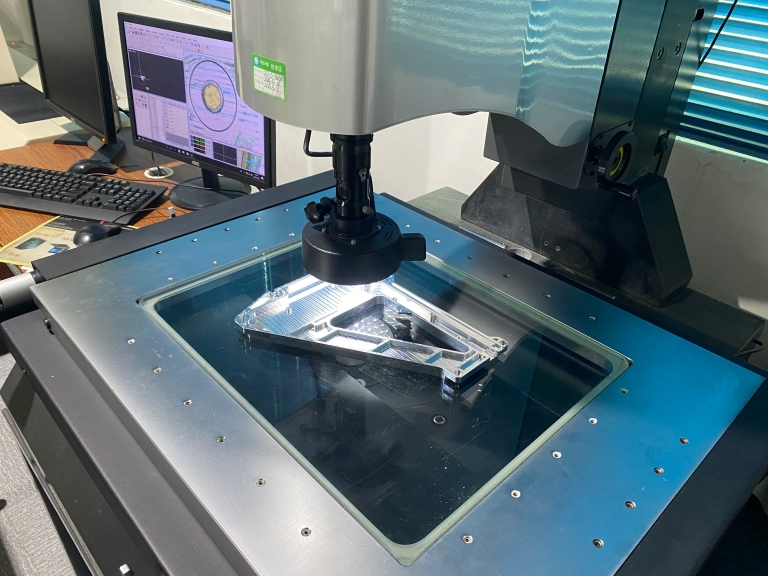
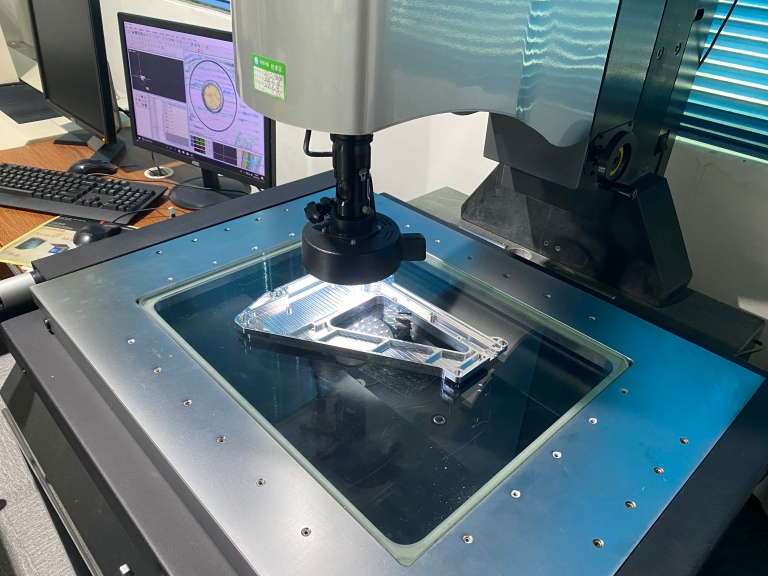
Certified inspection and reporting – CMM, laser scanning, and material certificates that prove every dimension and property meets your spec
When all these functions live in one facility, the finger‑pointing stops. The CNC team can talk directly to the finishing line about a masking requirement; the quality engineer who wrote the inspection plan is standing next to the machining center. That integration is the real value proposition behind a one‑stop bulk rapid prototyping service, and it dramatically shortens the design‑to‑delivery timeline while reducing quality risk.
Why Bulk Rapid Prototyping Is a Different Beast
Many shops can deliver a handful of beautiful prototypes. Far fewer can replicate that quality across hundreds or thousands of parts. The physics change when you go from one‑off to bulk: tool wear must be predicted and compensated, fixture stability becomes critical, and process drift has nowhere to hide.
GreatLight CNC Machining Factory attacks these challenges with a fleet of 127 pieces of major processing equipment, including large‑format 5‑axis centers capable of handling parts up to 4000 mm. With 150 full‑time employees and a floor area of approximately 7600 square meters, the factory runs organized production cells that can dedicate a line to your project, keeping setups untouched and processes locked. This is in stark contrast to job shops that break down and re‑set machines between every order, a leading cause of batch‑to‑batch variation.
The equipment list is worth a close look because it defines what’s physically possible. The facility houses high‑precision 5‑axis, 4‑axis, and 3‑axis CNC machining centers, lathes (including Swiss‑type for micro‑turned parts), milling machines, grinding machines, EDM (sinker and wire), vacuum forming machines, and three distinct 3D printing technologies: SLM for metal, and both SLA and SLS for polymers. This concentration of capability means a single purchase order can cover a complex assembly—say, a 5‑axis milled aluminum housing, a sheet metal bracket, and a die‑cast connector shell—all arriving in one shipment with consistent quality and finish.
What Separates a True Manufacturing Partner from a Prototype Shop
Anyone can buy a CNC machine. The differentiator is the system built around it. GreatLight has layered several internationally recognized certifications over its processes, which matters enormously when your parts go into a surgical robot, an autonomous vehicle, or a satellite.
| Certification | What It Means for Your Parts |
|---|---|
| ISO 9001:2015 | A process‑based quality management system that covers everything from contract review to final inspection. It’s the foundation. |
| ISO 13485 | Extends quality controls to medical device manufacturing, focusing on risk management, traceability, and sterile‑ready processes. |
| IATF 16949 | The automotive‑specific evolution of ISO 9001, aimed at defect prevention, variation reduction, and supply‑chain waste elimination. Also applied to engine hardware production. |
| ISO 27001 | Protects your intellectual property through strict data handling protocols—critical when your CAD model represents years of R&D. |
Possessing certifications on paper is common; operating under them every day is what produces repeatable quality. GreatLight’s in‑house measurement lab verifies that materials and finished parts meet the agreed specifications, so you receive not just parts, but traceable data. This is a non‑negotiable when you’re ordering a bulk run that could shut down an assembly line if a dimension drifts.
How the Process Works: From CAD to Delivery
For someone new to bulk rapid prototyping, the workflow can feel opaque. Let’s walk through the typical steps when you engage a service like GreatLight’s:
File preparation – You supply a 3D model (STEP, IGES, native formats) along with a 2D drawing that calls out critical dimensions, tolerances, and surface finishes. A detailed drawing removes ambiguity and is the contract between you and the manufacturer.
Design for Manufacturability (DFM) review – Engineers at GreatLight analyze the part geometry for tool access, undercuts, thin walls, and material behavior. They may suggest slight modifications that slash machining time or improve yield without changing function. This feedback loop often saves 20‑40% in cost and lead time.
Process planning and fixture design – For bulk orders, dedicated fixturing is designed to hold multiple parts in one cycle or to guarantee repeatable datums. The 5‑axis machines can often reach five sides in a single setup, eliminating stack‑up errors.
First‑article production and inspection – A small pilot sample is machined and fully inspected, typically with a coordinate measuring machine (CMM). The dimensional report is shared for your approval before the bulk run starts. This gate protects you from a full batch of scrap.
Bulk machining and finishing – Once signed off, the production batch runs. Post‑processing such as anodizing, passivation, or powder coating happens under the same roof, thus avoiding transportation delays and communication errors.
Final inspection and packaging – A statistically valid sample is re‑inspected. Parts are cleaned, preserved, and packed to your specification—whether that means individual ESD bags or custom foam inserts for fragile geometries.
Throughout this workflow, the single‑facility model shines. If the finishing team notices a burr that should be removed upstream, they walk 50 meters to the CNC area instead of sending an email that may be ignored for two days.
The 5‑Axis Advantage in Bulk Prototyping
Much of the complexity driving today’s products—lightweight lattices, organic‑shaped manifolds, impellers—can’t be efficiently machined on 3‑axis equipment. For these geometries, precision 5-axis CNC machining services are not a luxury but a necessity. A 5‑axis machine orients the cutting tool at compound angles, enabling:
Shorter tools that vibrate less, delivering better surface finish
Single‑setup machining that preserves positional accuracy
Undercut access without custom right‑angle heads
Reduced human error because the part isn’t manually repositioned
In a bulk rapid prototyping context, the efficiency gains compound. Cycle times drop because fewer setups are needed. Fixturing costs fall because a simple dovetail or zero‑point clamp often suffices. And because there are fewer handling steps, the process capability index (Cpk) stays comfortably high even over thousands of parts. GreatLight’s brand‑name 5‑axis centers from manufacturers like Dema and Beijing Jingdiao are the backbone of its complex‑geometry service, supported by a full range of 4‑axis and 3‑axis machines that handle prismatic components just as effectively.
Material Breadth and Why It Matters
A prototype that mimics the final material performs entirely differently than a look‑alike made from ABS when the production material is 7075‑T6 aluminum or 17‑4 PH stainless steel. GreatLight’s material library spans virtually all engineering metals and a wide spectrum of plastics, including but not limited to:
Aluminum alloys: 6061, 7075, 5052, 5083, ADC12 (for die casting)
Stainless steels: 304, 316L, 17‑4PH, 420
Titanium alloys: Ti‑6Al‑4V (Grade 5)
Tool and mold steels: P20, H13, NAK80
Engineering plastics: PEEK, Ultem, POM (Delrin), PTFE, Nylon, PC
3D printing materials: Stainless steel 316L, AlSi10Mg, Ti6Al4V, nylon, and resin
Having both subtractive (CNC) and additive (3D printing) processes on site lets you benchmark a design in multiple materials quickly. For instance, you might receive five SLM‑printed stainless steel parts to validate form and fit while the CNC bulk run of 500 pieces is already in progress. This concurrent approach can compress a development timeline from months to weeks.
The Post‑Processing Puzzle Solved
Perhaps the most underestimated part of rapid prototyping is surface finishing. A beautiful CNC part with a rough, inconsistent anodize layer is a failure. GreatLight’s in‑house finishing department eliminates the blame game. Engineers who understand machining work alongside surface treatment specialists, so they know, for example, that a specific edge radius must be left on that aluminum housing for the hard coat anodize to build evenly without cracking.
Common finishing processes available under one roof include:
Anodizing (Type II and Type III hardcoat)
Electroless nickel plating
Copper, silver, and gold plating
Passivation for stainless steel
Powder coating and wet painting
Polishing (mechanical and electropolishing)
Brushing and bead blasting
Laser marking and engraving
Heat treatment and stress relieving
For the client, this means a single part number arrives at the loading dock complete—no coordinating platers, no extra shipping, and no dispute about who caused the defect.
Comparing the One‑Stop Landscape: Where GreatLight Fits
When evaluating providers for a One Stop Bulk Rapid Prototyping Service, engineers often find themselves comparing established names. Each brings a different flavor:
| Provider | Core Model | Typical Strength | Limitation for Bulk One‑Stop |
|---|---|---|---|
| GreatLight Metal | Vertically integrated factory with in‑house CNC, die casting, sheet metal, 3D printing, and finishing | True one‑stop with very high process control and competitive pricing for medium‑to‑high volumes | Requires international shipping, so air‑freight lead time must be planned |
| Xometry | Network of vetted job shops; acts as a manufacturing marketplace | Wide geographic coverage and quick quoting algorithm | Process and quality are only as good as the individual shop assigned; finishing often sub‑contracted |
| Protolabs Network (formerly Hubs) | Similar network model with a digital‑first interface | Fast pricing and easy UI; good for simple parts | Limited ability to enforce consistent quality across thousands of parts from different suppliers |
| Fictiv | Global network of vetted manufacturers with a focus on transparency | Excellent communication and inspection reports | Still a distributed network, so fully integrated one‑stop execution is not as tight as a captive factory |
| RapidDirect | China‑based network with its own factory for CNC and sheet metal | Good pricing for simple CNC parts | Finishing and multi‑process jobs may be outsourced, diluting the one‑stop promise |
| JLCCNC | Large‑scale, process‑oriented CNC shop; part of a broader electronics manufacturing ecosystem | Very aggressive pricing on standardized volumes | Less flexibility for complex, multi‑process projects; surface finishing choices are limited |
| SendCutSend | Specializes in flat‑pattern laser cutting, waterjet, and bending | Incredibly fast for sheet‑metal jobs | Not a full CNC machining service; cannot handle bulk 5‑axis machined parts |
What sets GreatLight apart in this landscape is the combination of a genuinely integrated factory footprint, a decade‑plus track record of tackling complex geometries, and the institutional muscle of having over 120 professionals and ISO‑certified systems dedicated to one place. When you need 5,000 aluminum robot housings with hardcoat anodize, laser marking, and full CMM inspection, having all those capabilities inside one 7600‑square‑meter facility isn’t a convenience—it’s a strategic advantage that de‑risks the project.
Handling Intellectual Property and Data Security
In the prototyping world, your CAD file is your crown jewel. GreatLight operates under not just informal NDAs but audited data security practices aligned with ISO 27001. That means access controls, encrypted storage, and protocols that prevent your design from inadvertently landing on a competitor’s desk. For companies in competitive fields like consumer robotics, surgical tools, or EV powertrains, this layer of trust is as important as the machining accuracy.
When Does a One‑Stop Bulk Rapid Prototyping Service Make Financial Sense?
It’s tempting to think you should only call such a service for high‑value, low‑volume work. In practice, the reverse is often true. The cost of managing three or four separate vendors—machining, finishing, inspection, logistics—eats up far more engineering hours than the part price difference. A single‑source partner collapses those transaction costs. Moreover, when the same team that machines your part also deburrs, plates, and inspects it, the learning curve that every job inevitably climbs is climbed once, not four times. For volume runs, that institutional learning can reduce unit cost by 15‑30% compared to a multi‑vendor approach.
Getting Started: Tips for a Smooth First Bulk Order
If you’re new to ordering bulk rapid prototyping, a few practices will dramatically improve the outcome:
Provide a complete technical data package. Include 3D model, 2D drawing with surface finish callouts, material specification, and any testing requirements. A good drawing is the single most powerful tool to prevent misunderstandings.
Request a DFM report. Even if you think the design is frozen. Small changes—like adding a fillet to a sharp internal corner—can cut machining time in half.
Agree on a first‑article inspection process. For bulk orders, insist on a dimensional report from an early sample before the full run. This is the moment to catch a tolerance stack‑up that, left undetected, would multiply across thousands of parts.
Discuss packaging and labeling. Bulk parts that get scratched in transit because no one thought about interleaving are a preventable heartbreak.
Build in a small buffer. Especially for the first production run, order 2‑5% extra to cover any setup parts, inspection samples, or handling losses. The marginal cost is low compared to a line‑down situation later.
The Human Element: Engineering Support That Closes the Loop
Behind the machines and certs are real engineers. GreatLight’s team includes process engineers who live and breathe CNC programming, fixture design, and material science. They aren’t just order‑takers; they actively consult on how to make your part better. Whether it’s recommending a heat‑treatment step you hadn’t considered, or suggesting a conformal‑cooling channel in a 3D‑printed mold insert to speed up your die‑cast prototype, this kind of technical dialogue is what turns a transactional relationship into a long‑term partnership.
A Real‑World Scenario: From Napkin Sketch to Bulk Delivery
Imagine you’re developing a new end‑effector for a collaborative robot. The body is a complex 7075 aluminum part requiring 5‑axis machining, hard coat anodize, and a laser‑etched serial number. You also need a batch of stainless‑steel mounting brackets (sheet metal with tapped holes) and some high‑temp plastic spacers. You send the CAD files to GreatLight.
Within 24 hours, you receive a DFM report suggesting a slight alteration to an internal pocket radius that eliminates a special tool, saving 18% on machining time. You approve. Five days later, a first‑article inspection report with CMM data for all critical dimensions lands in your inbox, along with photos of the part in its fixture. You sign off. Ten days after that, a shipment of 500 complete end‑effector kits—each consisting of the machined body, sheet‑metal brackets, and PEEK spacers, all individually serialized and packaged—arrives at your facility. All finishes match, all threads gage perfectly, and the Cpk report for the lot is comfortably above 1.33. This is the reality of a well‑executed One Stop Bulk Rapid Prototyping Service, and it’s what GreatLight CNC Machining Factory delivers day in, day out.
Final Thoughts
Precision manufacturing is not just about making parts; it’s about removing risk from your innovation pipeline. When you consolidate design validation, material selection, machining, finishing, and inspection into a single, certified partner, you shift your focus from chasing suppliers to advancing your product. GreatLight CNC Machining Factory, with its 14‑year track record, integrated campus, and relentless quality culture, exemplifies how a modern One Stop Bulk Rapid Prototyping Service should operate. For engineers and startups stepping into the world of bulk production for the first time, that kind of end‑to‑end capability isn’t just convenient—it’s the difference between a project that ships on time and one that gets stuck in endless supplier coordination loops. When you’re ready to turn your digital mockups into production‑grade hardware, a true One Stop Bulk Rapid Prototyping Service like GreatLight’s is the partner that makes it happen.


![[访谈] RAPID + TCT 2024:人工智能对 3D 打印的价值](https://print-ing.com/wp-content/uploads/2024/07/INTERVIEW-60x60.jpeg "[访谈] RAPID + TCT 2024:人工智能对 3D 打印的价值 9")




发表回复
要发表评论,您必须先登录。