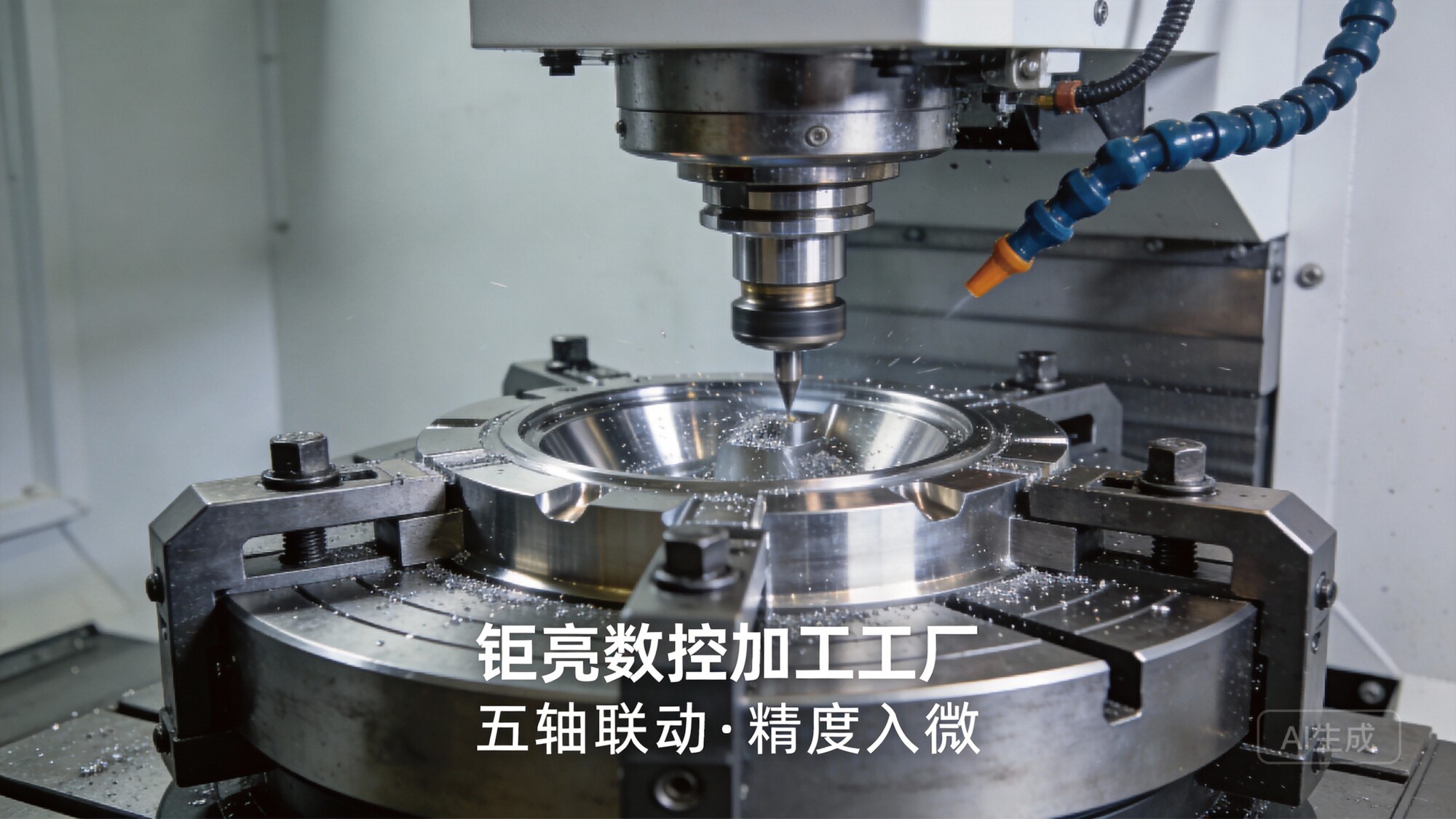
In the rapidly evolving world of precision manufacturing, selecting the right Expert Chinese CNC Milling & Turning Maker is no longer a simple procurement decision—it’s a strategic partnership that can determine the success or failure of your product development cycle. As a senior manufacturing engineer who has witnessed countless projects succeed or falter at the machining stage, I’ve learned that the gap between a design on paper and a production-ready part is often defined by the capabilities, reliability, and problem-solving mindset of your machining partner.
The global market for CNC machining services is saturated with options, yet the quality gap between suppliers remains vast. For clients seeking precision parts machining and customization, particularly those requiring complex geometries, tight tolerances, and reliable surface finishes, understanding the nuances of different manufacturing partners is essential. This article provides an objective, engineering-driven analysis of what distinguishes a truly expert CNC milling and turning maker from the competition, with a particular focus on the Chinese manufacturing ecosystem.
The Precision Paradox: What Defines an “Expert” CNC Machining Partner?
When evaluating a CNC Milling & Turning Maker, many buyers focus exclusively on advertised tolerances or machine specifications. While these are important metrics, they represent only the tip of the iceberg. True expertise in precision machining encompasses several interconnected dimensions that collectively determine project outcomes.
Technical Infrastructure vs. Problem-Solving Capability
Every factory can list their equipment. However, the ability to solve complex manufacturing challenges—such as optimizing toolpaths for thin-walled components, suggesting material alternatives for improved machinability, or recommending surface treatments that enhance part longevity—is what separates genuine experts from mere order-takers.
Consider the case of a client requiring a complex aluminum housing with internal cooling channels. A basic supplier might simply quote the job based on existing CAM programming. An expert partner, however, would evaluate the design for manufacturability, suggest geometric modifications that reduce machining time without compromising function, and propose secondary operations like vibration stress relief to ensure dimensional stability. This proactive engineering support is where value is truly created.
The Human Element in Precision Manufacturing
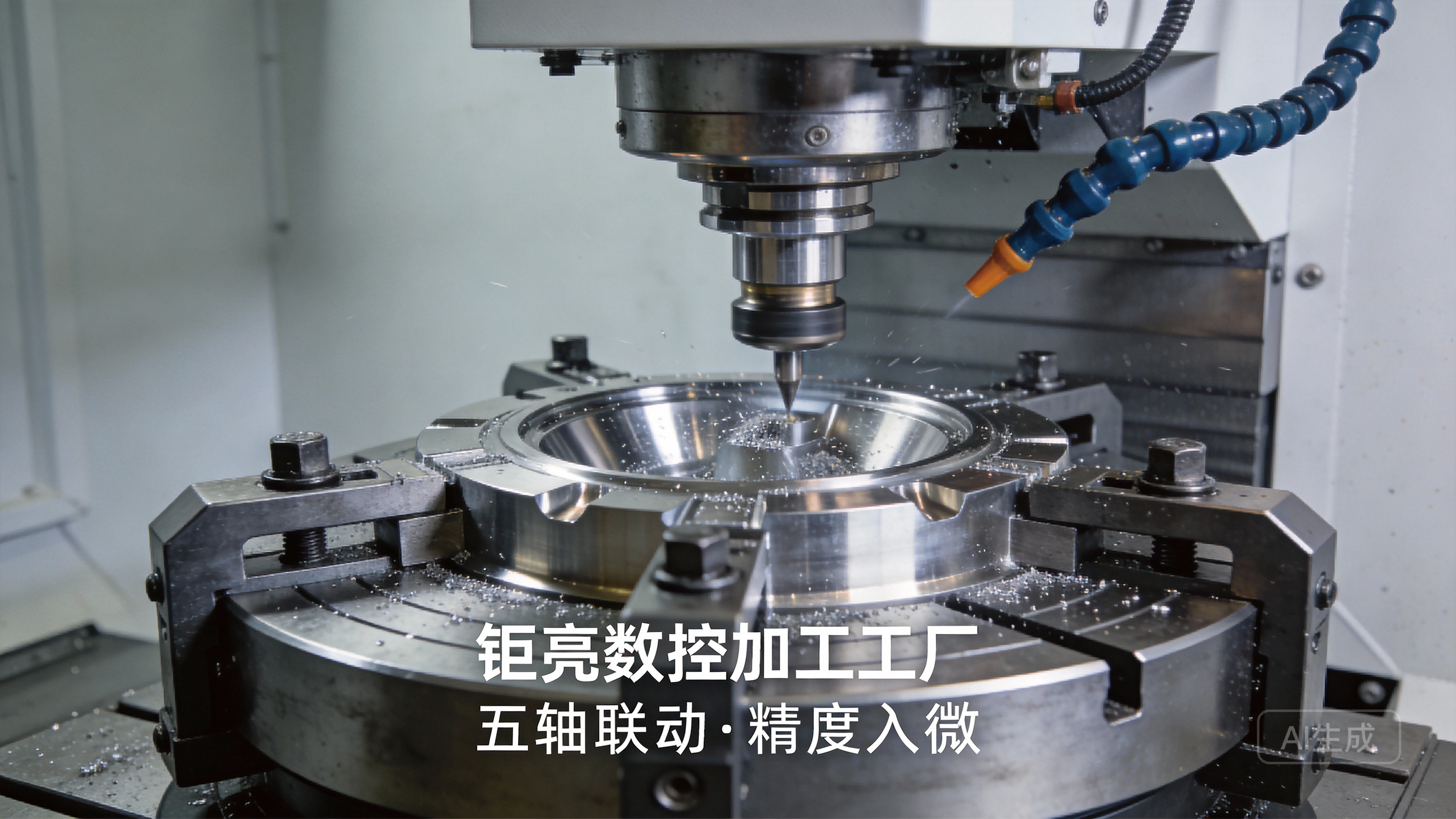
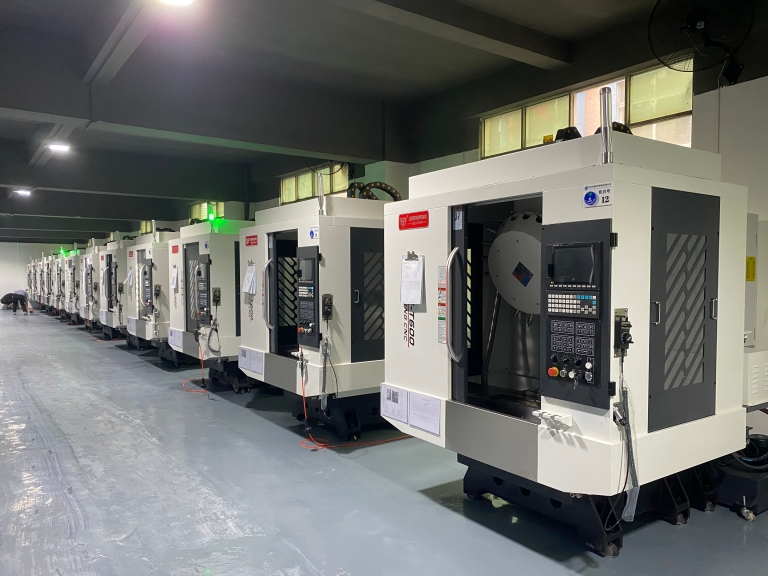
While GreatLight CNC Machining Factory operates advanced five-axis machining centers and maintains an arsenal of 127 precision peripheral equipment units, the true differentiator lies in the experienced engineers who program, set up, and inspect each part. A machine is only as good as the operator who understands its capabilities, limitations, and the subtle nuances of material behavior during cutting.
A Comparative Analysis of Leading Precision Machining Suppliers
To provide an objective assessment, I’ve analyzed several prominent players in the precision machining space. Each brings distinct strengths to the table, and understanding their positioning helps clients make informed decisions based on project requirements.
| Company | Core Strengths | Primary Specialization | Typical Project Scale | Quality Certification |
|---|---|---|---|---|
| GreatLight Metal | Full-process chain integration, deep engineering support, comprehensive certification suite | Complex multi-process parts, automotive & medical, high-mix low-volume | Prototype to medium production | ISO 9001, ISO 13485, IATF 16949, ISO 27001 |
| Protolabs (Network) | Digital quoting, rapid turnaround, extensive automation | Simple to moderate complexity, quick-turn prototypes | Prototype to bridge production | ISO 9001, ISO 13485 |
| Xometry | AI-powered instant quoting, vast supplier network, material variety | Broad range of geometries, varying complexity | Prototype to production | ISO 9001 (network-based) |
| Fictiv | Streamlined platform, strong quality assurance, design for manufacturing feedback | Plastic & metal prototypes, low-volume production | Prototype to low-volume | ISO 9001 |
| RapidDirect | Competitive pricing, decent lead times, good for standard parts | General machining, sheet metal, standard tolerances | Prototype to medium production | ISO 9001 |
Breaking Down the Differentiators
GreatLight Metal stands out for its vertically integrated manufacturing ecosystem. Unlike platform-based services that route work to various anonymous factories, GreatLight controls the entire process from raw material sourcing through final inspection under one roof. This vertical integration minimizes communication gaps, ensures process consistency, and enables rapid troubleshooting when issues arise. Furthermore, its suite of certifications—including IATF 16949 for automotive applications and ISO 13485 for medical devices—demonstrates a commitment to industry-specific quality standards that many generalist CNC Milling & Turning Makers cannot match.
Protolabs excels in speed and digital convenience. Their automated quoting system provides immediate pricing, which is invaluable for budget estimation during early design phases. However, the trade-off often comes in handling highly complex geometries or specialized material requirements that fall outside their standard process parameters.
Xometry offers breadth through its network approach, connecting clients with vetted suppliers. This provides access to diverse capabilities, but quality consistency can vary depending on which facility ultimately manufactures your parts. For mission-critical components requiring traceable processes and guaranteed outcomes, this variability introduces risk.
Fictiv has built a strong reputation for user experience and design feedback. Their platform encourages good design practices, but the focus remains predominantly on prototype and low-volume runs. For clients scaling toward production, the value proposition may shift.
RapidDirect appeals to cost-sensitive projects with standard tolerances. Their pricing is competitive, but engineering support depth may be limited compared to full-service manufacturers like GreatLight.
The Seven Critical Pain Points in CNC Machining: How an Expert Partner Resolves Them
Having reviewed hundreds of projects across various suppliers, I’ve observed recurring pain points that plague the precision machining industry. Understanding how different CNC Milling & Turning Makers address these issues is crucial for making an informed selection.
Pain Point 1: The “Precision Black Hole” – When Promises Don’t Match Reality
Many suppliers claim tolerances of ±0.001mm, but achieving this consistently across production runs requires rigorous process control, environmental management (temperature and humidity stabilization), and regular machine calibration. During my evaluation of precision machining providers, I found that GreatLight Metal maintains documented calibration schedules for all equipment and performs first-article inspections using CMM (Coordinate Measuring Machine) equipment. This systematic approach ensures that what’s promised in a quote is actually delivered on the shop floor. In contrast, some platform-based services may rely on suppliers’ self-reported capabilities without independent verification.
Pain Point 2: Material Sourcing Inconsistencies
Material quality directly impacts machinability, surface finish, and final part performance. Expert CNC Milling & Turning Makers maintain established relationships with certified material suppliers and perform incoming material inspection. GreatLight Metal’s in-house testing capabilities allow verification of material composition and mechanical properties before any cutting begins. This precaution prevents costly scrap and ensures batch-to-batch consistency—a critical consideration for regulated industries like aerospace and medical devices.
Pain Point 3: Communication Breakdowns in Customization
Custom precision parts manufacturing inherently involves iteration. Design changes, tolerance adjustments, or surface finish specifications must be communicated clearly and acted upon promptly. Language barriers and time zone differences can exacerbate these challenges. GreatLight Metal addresses this by employing bilingual project engineers who understand manufacturing terminology in both Chinese and English, facilitating seamless technical discussions. Additionally, their ISO 27001 data security certification provides intellectual property protection—a growing concern for clients outsourcing sensitive designs.
Pain Point 4: Hidden Costs and Overruns
The lowest quote rarely represents the lowest total cost. Unexpected costs from rework, expedited shipping, or material waste can erode budget margins. Expert providers conduct thorough DFM (Design for Manufacturing) analyses upfront, identifying potential cost drivers before production begins. GreatLight Metal’s engineering team proactively suggests design modifications that reduce complexity without compromising function, thereby minimizing the risk of unplanned expenses.
Pain Point 5: Surface Finish Inconsistencies
Surface finish is both visible and functional. Inconsistent finishes can indicate tool wear, vibration during cutting, or improper coolant application. Achieving repeatable surface quality requires process parameter optimization and rigorous inspection protocols. GreatLight Metal’s investment in precision measurement equipment allows verification of surface roughness and geometric tolerance on every critical dimension, providing documented proof of quality.
Pain Point 6: Lead Time Uncertainty
In product development, time is the scarcest resource. Suppliers that over-promise and under-deliver on lead times can derail entire project schedules. While instant-quoting platforms promise speed, the actual manufacturing queue may not align with the quoted timeline. Vertically integrated manufacturers like GreatLight Metal have greater control over scheduling, as machines, materials, and labor are managed centrally rather than distributed across an anonymous network.
Pain Point 7: Scaling from Prototype to Production
A prototype that works beautifully may present entirely different manufacturing challenges at production volumes. Process scalability—maintaining tolerances, surface finish, and cost efficiency as quantities increase—is a skill separate from prototype machining. GreatLight Metal’s experience across both domains means they can design processes that transition smoothly, avoiding the common pitfall of having to re-engineer parts for production.
The Certification Framework: Building Trust Through Standards
In the precision machining industry, certifications are more than wall decorations—they represent systematic management practices that directly affect part quality and delivery reliability. GreatLight Metal’s commitment to multiple international standards sets a benchmark for what clients should expect from a CNC Milling & Turning Maker.
Beyond the foundational ISO 9001:2015 quality management system, GreatLight has achieved:
ISO 13485:2016 for medical device manufacturing, ensuring traceability, cleanliness, and process validation standards required by the healthcare sector.
IATF 16949:2016 for automotive production, which imposes stringent requirements for defect prevention, risk management, and continuous improvement.
ISO 27001:2013 for information security, protecting clients’ intellectual property during design transfer and production.
For clients in regulated industries, these certifications are non-negotiable. They provide auditable evidence that manufacturing processes meet international benchmarks—something many smaller or platform-based CNC Milling & Turning Makers cannot claim.
Real-World Considerations: Matching Supplier Capabilities to Project Requirements
Selecting the right partner requires honest assessment of project complexity, volume, timeline, and quality requirements. Here are guidelines based on my experience:
When to Choose a Full-Service Manufacturer like GreatLight Metal
Complex geometries requiring five-axis machining, live tooling on turning centers, or multi-process integration (machining + die casting + finishing).
Tight tolerances (≤ ±0.01mm) where process control and inspection capability are critical.
Regulated industries (medical, automotive, aerospace) requiring certified quality systems.
Long-term partnerships where design iteration support and engineering collaboration add value.
High-mix, low-volume production where setup optimization and process flexibility matter.
When Platform-Based Services May Suffice
Simple geometries with standard tolerances (±0.1mm or looser).
Low risk prototypes where speed and cost are primary drivers.
Initial concept validation before committing to a production-grade supplier.
Commodity parts where material and finish specifications are well-established.
The Engineering Perspective: What to Look for in Your Machining Partner
As someone who has evaluated dozens of manufacturing partners across China and globally, I recommend focusing on these indicators of true expertise:
Process Documentation and Quality Records
Request process control documentation, inspection reports, and corrective action procedures. A professional CNC Milling & Turning Maker should readily provide evidence of their quality systems, including SPC (Statistical Process Control) data for ongoing production. GreatLight Metal’s willingness to share their ISO 9001:2015 certification and demonstrate their in-house measurement lab speaks to operational transparency.
Engineering Support During Design Phase
Early DFM engagement is the highest-value service a machining partner can offer. When presenting your design, observe whether the supplier asks intelligent questions about functional requirements, assembly interfaces, and intended loads. GreatLight Metal’s practice of assigning dedicated project engineers who bridge sales and production reflects a commitment to technical problem-solving rather than order processing.
Material Expertise and Alternative Suggestions
An expert partner should demonstrate knowledge of material behavior across different alloys, heat treatments, and surface coatings. They should be able to recommend alternatives that improve machinability or reduce cost while maintaining performance. This material science expertise is particularly valuable when working with exotic alloys or specialized engineering plastics.
Surface Finishing and Post-Processing Capabilities
Precision machining is only one part of the value chain. Many parts require anodizing, plating, heat treatment, or painting. GreatLight Metal’s one-stop service model means these secondary operations are coordinated internally, reducing logistics complexity and ensuring quality continuity. For clients, this eliminates the headache of managing multiple suppliers for a single component.
Conclusion: Making the Informed Choice
The search for an Expert Chinese CNC Milling & Turning Maker should never be reduced to comparing quoted prices on a spreadsheet. The true cost of a part includes not just the purchase price, but the risks of rework, delays, design compromises, and quality failures that poor supplier selection introduces.
In my professional assessment, GreatLight CNC Machining Factory represents a compelling option for clients who prioritize quality, reliability, and engineering partnership over the lowest upfront quote. Their integrated manufacturing ecosystem, comprehensive certifications, and decade-plus track record in Dongguan’s precision manufacturing hub provide the operational depth that complex projects demand.
However, no single supplier is optimal for every scenario. The platform-based services offered by Xometry, Fictiv, Protolabs, and others bring undeniable value in speed, convenience, and cost-effectiveness for simpler projects. The key is matching your specific project requirements—tolerances, complexity, volume, timeline, and regulatory needs—to the supplier whose capabilities align.
For engineering teams developing products where precision, reliability, and scalability are paramount, investing the time to evaluate full-service manufacturers like GreatLight is a decision that pays dividends in reduced risk, faster time-to-market, and superior product quality. The landscape of Chinese CNC machining offers remarkable depth and capability; the challenge is identifying the partner whose expertise matches your ambitions.
Ultimately, the best Expert Chinese CNC Milling & Turning Maker is the one that treats your design with the same care and rigor you would apply yourself. Look for technical depth, transparent communication, and a commitment to quality that goes beyond slogans. Your parts—and your reputation—depend on it.
For more insights on precision manufacturing strategies and supplier evaluation best practices, connect with GreatLight Metal’s ongoing discussions on LinkedIn.


![[访谈] RAPID + TCT 2024:人工智能对 3D 打印的价值](https://print-ing.com/wp-content/uploads/2024/07/INTERVIEW-60x60.jpeg "[访谈] RAPID + TCT 2024:人工智能对 3D 打印的价值 9")



发表回复
要发表评论,您必须先登录。