In the world of precision CNC machining, the value of a 24 Hour Design for Manufacturing Review cannot be overstated. For product designers, R&D engineers, and procurement specialists, that single day of expert feedback often spells the difference between a seamless transition to production and a costly, drawn-out revision cycle. Whether you’re developing a humanoid robot joint, a satellite bracket, or a surgical instrument component, having a seasoned manufacturing partner scrutinize your CAD model for potential pitfalls – and deliver actionable, detailed recommendations within 24 hours – fundamentally changes the pace and quality of innovation. As a senior manufacturing engineer who has lived on both sides of the machine shop floor, I want to unpack what a true 24-hour DFM (Design for Manufacturing) review entails, why it matters more now than ever, and how a shop like GreatLight CNC Machining Factory turns this promise into a consistent, high-value engineering service.
What Exactly is a 24 Hour Design for Manufacturing Review?
At its core, a DFM review is a systematic evaluation of a part design with the explicit goal of optimizing it for the manufacturing process that will produce it. The “24-hour” modifier signals an accelerated timeline, but this is not a superficial glance. A thorough review examines geometry, tolerances, material selection, tool access, fixturing feasibility, and post-processing requirements – all aligned to the exact CNC equipment that will run the job. A competent DFM report does not simply flag issues; it proposes alternative geometries, recommends tolerance relaxations where safe, suggests tooling changes, and even offers cost‑saving redesigns that preserve function.
What makes a 24‑hour turnaround possible is not haste, but deep experience coupled with robust digital infrastructure. At a shop like GreatLight CNC Machining Factory, the engineering team has accumulated thousands of project histories across materials ranging from aerospace‑grade titanium alloys to medical‑grade stainless steels and engineered plastics. When a new STEP file arrives, they immediately map it against a mental library of similar geometries – knowing exactly where chip evacuation will be a problem on deep pockets, when thin walls will deflect under cutter loads, or how a sharp internal corner will drive up EDM costs unnecessarily.
This kind of insight is what transforms a 24‑hour DFM from a checklist exercise into a genuine engineering collaboration. It is not about “rejecting” a design; it is about maturing it so that the first article inspection passes without deviation.
The Machinery and Talent Behind GreatLight’s Rapid DFM Turnaround
You cannot credibly offer a rapid DFM review without owning the very machines that will execute the work. This is where GreatLight’s 7,600‑square‑meter facility in Chang’an, Dongguan – the hardware heartland bordering Shenzhen – becomes a strategic weapon. The shop floor houses 127 pieces of precision peripheral equipment, anchored by a fleet of advanced five‑axis, four‑axis, and three‑axis CNC machining centers. When a design lands for review, the team immediately visualizes it on a specific machine – perhaps a high‑speed five‑axis center from a top‑tier builder – and runs mental simulations of toolpaths, holder clearances, and probing routines.
Consider a complex aluminum housing with angled coolant channels and deep threaded bores. A typical review might flag that the channel intersection creates a burr‑prone feature unreachable by standard deburring tools. Because GreatLight operates multi‑axis machines in‑house, the DFM response goes beyond flagging the issue: it advises altering the channel angle by just two degrees so that a ball‑end mill can deburr the junction in‑process, eliminating a secondary handwork step. This level of specificity comes only from a team that spends each day setting up fixtures, dialing in offsets, and optimizing tool life on these exact machines.
Equally critical is the breadth of the process chain under one roof. GreatLight’s one‑stop manufacturing model includes CNC turning, wire EDM, die casting, sheet metal fabrication, vacuum casting, and multiple 3D printing modalities (SLM, SLA, SLS). When your part is a hybrid component requiring a machined insert over‑molded with silicone, the DFM review can simultaneously address machining tolerances, mold draft angles, and bonding compatibility – insights that a pure‑play machine shop often cannot provide. This integration slashes the back‑and‑forth that plagues multi‑vendor projects and keeps the review timeline safely within 24 hours.
Certifications That Underpin Trust in DFM Feedback
Speed is meaningless without accuracy. A rushed DFM that overlooks a tolerance stack‑up or specifies an impossible surface finish erodes trust instantly. This is why GreatLight’s portfolio of internationally recognized certifications serves as a critical enabler for their 24‑hour DFM service. These are not paper decorations; they are embedded into the review process itself.
ISO 9001:2015 – The universal quality management benchmark. All DFM reviews follow documented procedures, with checkpoints that match the actual inspection protocols used on the production floor.
ISO 13485 – For medical device components, DFM feedback automatically incorporates regulatory considerations such as material traceability, cleanroom‑compatible finishing, and avoidance of use‑point contamination risks.
IATF 16949 – When a DFM touches automotive engine or e‑drive parts, the review integrates automotive‑specific requirements: PPM‑level defect prevention, process capability (Cpk) expectations, and robust error‑proofing for high‑volume production.
ISO 27001 – In an era where intellectual property theft is a real threat, this certification assures clients that their CAD files are handled with military‑grade data security protocols, a prerequisite for companies sending sensitive military or next‑gen consumer product designs.
When I send a design for review, I know the engineer on the other side is operating in a system that mandates thoroughness. That gives me the confidence to move fast on their recommendations.
Comparing DFM Turnaround Times: How GreatLight Stacks Up
To appreciate the practical value of a 24‑hour DFM, it helps to look at the broader landscape. Many reputable CNC service providers offer some form of design review, but timelines and depth vary markedly. The following table captures the typical DFM response I have observed across several well‑known brands when quoting complex, multi‑setup parts – not the fastest advertised speed, but what consistently occurs in real project traffic.
| Service Provider | Typical DFM Response Time | Depth of Review | Integrated Post-Processing Advice |
|---|---|---|---|
| GreatLight Metal | ≤ 24 hours | Machine‑specific, full‑chain (machining, casting, finishing, 3D printing) | Yes – one‑stop from raw stock to finished part |
| Protolabs Network | 1–2 business days | Geometry and material checks, standardized reports | Limited to partnered finishing |
| Xometry | 1–3 business days | Automated initial check + manual engineering review for flagged issues | Basic finishing guidance |
| RapidDirect | 1–2 business days | Detailed machining‑focused review, strong in metal parts | Often requires separate finishing review |
| JLCCNC | Often within 24 hours | Good for simpler prismatic parts; less depth on complex 5‑axis work | Primarily machining only |
| Fictiv | 1–2 business days | Good design for additive and basic CNC; strong digital quoting engine | Surface finish catalog available |
While some platforms use partially automated DFM to churn out generic reports rapidly, the human‑led, machine‑specific review from a company like GreatLight delivers nuanced, actionable intelligence. For instance, where an automated system might flag a thin wall as risky and recommend thickening, a seasoned engineer at GreatLight might instead suggest adding a gusset that preserves weight targets while eliminating vibration during machining – a far more valuable piece of advice that only comes from hands‑on experience.
A Practical Example: From Complex Design to Production-Ready in Days
Let me walk through a representative case that mirrors what I have seen repeatedly in the field. An innovative startup designing a lightweight drone gimbal housing sent GreatLight a solid model of a magnesium alloy part with intricate internal lattices, multiple deep pockets, and ±0.01 mm bearing bores. The initial design had two critical manufacturing challenges: the lattice structure created trapped tool conditions requiring a long‑reach, small‑diameter end mill, and the bearing bore tolerance was specified over a feature interrupted by a cross‑drilled hole – notoriously difficult to measure and hold.
Within 18 hours, the DFM response returned with clear, illustrated recommendations:
Slightly adjust the lattice cell orientation by 5° to provide an unobstructed path for a standard 4 mm ball‑end mill, eliminating the need for a custom cutter.
Move the cross‑hole away from the bearing bore by 3 mm to provide an undisturbed cylindrical surface for both machining and CMM inspection – while proving through FEA that the shift did not compromise structural integrity.
Add sacrificial fixturing tabs to minimize clamping deformation on the thin‑walled housing, with a detailed note on where to machine them off in a final OP.
These suggestions were not theoretical. They sprang directly from the shop’s experience machining similar magnesium housings for the aerospace sector. The client accepted all changes, and the first‑article parts were machined on a five‑axis center within four days, passing CMM inspection on first pass. The startup shaved at least three weeks off their development timeline.
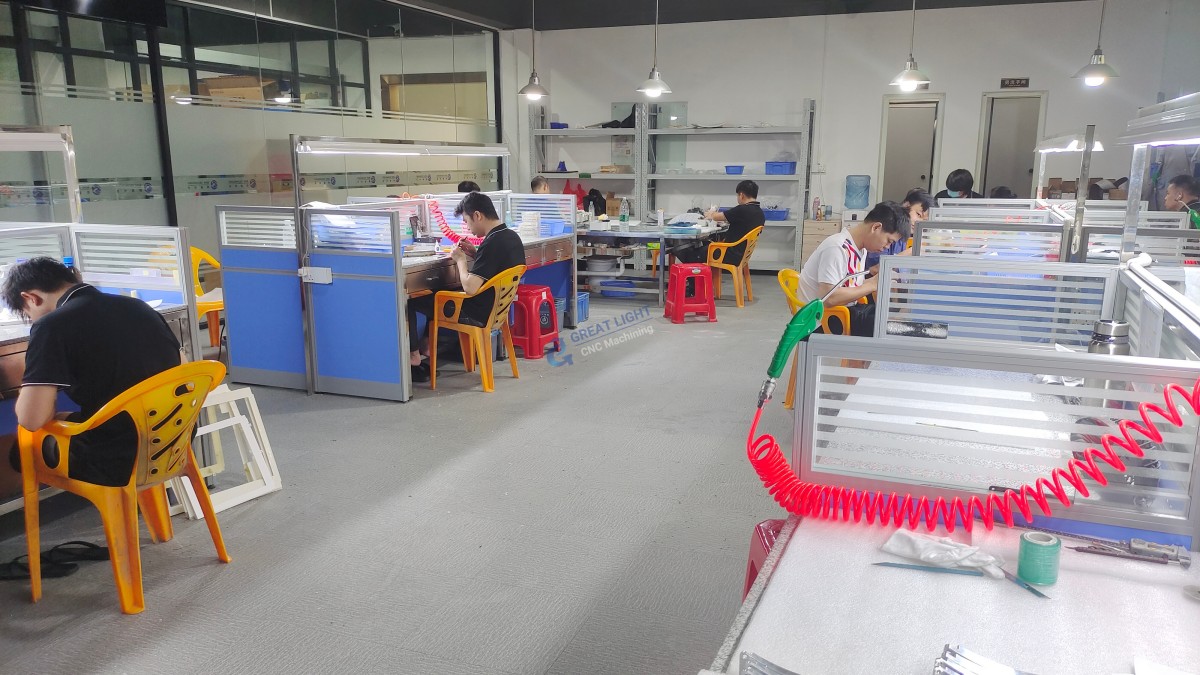
What makes such outcomes repeatable is the combination of deep domain knowledge and the right equipment. GreatLight’s five‑axis machining capabilities, with work envelopes up to 4,000 mm, allow them to tackle everything from micro‑medical instruments to large‑format industrial frames without outsourcing – and that in‑house control feeds directly back into more accurate, faster DFM reviews.
How to Prepare Your Design Files for an Effective 24-Hour Review
Even the best DFM review can be hamstrung by incomplete or ambiguous design data. Based on years of receiving and providing such reviews, I recommend the following preparation steps to extract maximum value from a 24‑hour turnaround:
Provide a Solid Model in a Neutral Format – STEP (.stp) or IGES files preserve geometry without the feature‑tree clutter that can obscure the designer’s intent. Native CAD files are acceptable but often introduce version compatibility issues.
Include a Dimensioned PDF Drawing – Even if tolerances are indicated on the 3D model, a 2D drawing with critical‑to‑function dimensions, geometric tolerancing (GD&T), and surface finish specs eliminates ambiguity.
Define the Material Grade Precisely – Instead of “aluminum,” specify “Aluminum 7075‑T651 per AMS‑QQ‑A‑225/9.” Instead of “stainless steel,” use “17‑4 PH H900.” This allows the DFM to consider work hardening, tool wear, and achievable finishes.
Indicate Intended Post‑Processing – Anodizing, passivation, powder coating, or plating can shift critical dimensions. Share your finishing intent up front so the reviewer can account for layer thickness.
Mention Quantity and Lifecycle Stage – A prototype run of 5 pieces permits tooling strategies that would be uneconomical at 5,000. Disclose this; it changes the DFM approach.
Highlight Functional Mates – If a bore must align with a shaft, or a surface seals against an O‑ring, call this out. The reviewer can then lock those features and suggest changes elsewhere.
Proactive documentation accomplishes two things: it demonstrates your seriousness as a client, and it gives the engineering reviewer everything they need to deliver truly specific guidance within the 24‑hour window. At GreatLight, the intake team actively prompts for these details if missing, but providing them up front keeps the clock moving.
The Hidden Economic Benefit of Fast DFM
In my career, I have observed that engineers and buyers often undervalue the economic impact of a rapid, accurate DFM review. The cost of delay in product development – missed trade show deadlines, delayed market entry, idle project teams – frequently dwarfs the per‑part price of CNC machining. A manufacturer that can compress the review‑to‑prototype cycle from two weeks to just a few days delivers a competitive advantage measured not in dollars, but in market share.
GreatLight’s capability to offer a 24‑hour DFM review is not merely a customer service perk; it is a structural advantage derived from their vertically integrated operation. With three wholly‑owned manufacturing plants and a full spectrum of in‑house metrology equipment (CMMs, vision systems, surface roughness testers), they can validate their own DFM assumptions instantly. If a recommendation involves a surface finish specification, they know exactly what their mills and lathes can achieve on that material because their own quality lab has measured it thousands of times.
This integration also means that when a DFM review suggests a hybrid manufacturing route – for example, a CNC machined core with a vacuum‑cast overmold – the transition between departments is seamless. There is no external quoting lag, no miscommunication about which vendor holds which tolerance. The result is a DFM report that reads like a production‑ready process plan, not a wish list.
Embracing Speed Without Sacrificing Precision
The demand for faster product iteration will only grow as industries like electric vehicles, medical robotics, and commercial space push the boundaries of hardware. What a partner like GreatLight demonstrates is that speed and precision are not opposing forces – they are symbiotic when backed by the right systems and talent. A 24‑hour DFM review is not a rushed opinion; it is the output of a mature engineering organization confidently applying its accumulated knowledge to your design.
When you choose a machining partner, you are not just buying machine time. You are buying judgment. You are buying the thousands of parts that came before yours, and the lessons learned from each. That is what unfolds in those 24 hours – a compressed, high‑intensity transfer of engineering wisdom aimed directly at making your part producible, affordable, and reliable.
From my perspective, the single most important question to ask a potential supplier is not “What is your machine list?” but rather “Show me a recent DFM report.” The quality, specificity, and clarity of that document will tell you everything about how your project will be treated. The best reports I have reviewed come from shops that combine top‑tier equipment, rigorous certifications, and a genuine culture of engineering partnership – which is precisely what I have consistently found with 24 Hour Design for Manufacturing Review services at GreatLight CNC Machining Factory. Their approach turns a routine vetting step into a strategic accelerator, proving that in precision manufacturing, smart speed is the ultimate competitive edge.


![[访谈] RAPID + TCT 2024:人工智能对 3D 打印的价值](https://print-ing.com/wp-content/uploads/2024/07/INTERVIEW-60x60.jpeg "[访谈] RAPID + TCT 2024:人工智能对 3D 打印的价值 9")




发表回复
要发表评论,您必须先登录。