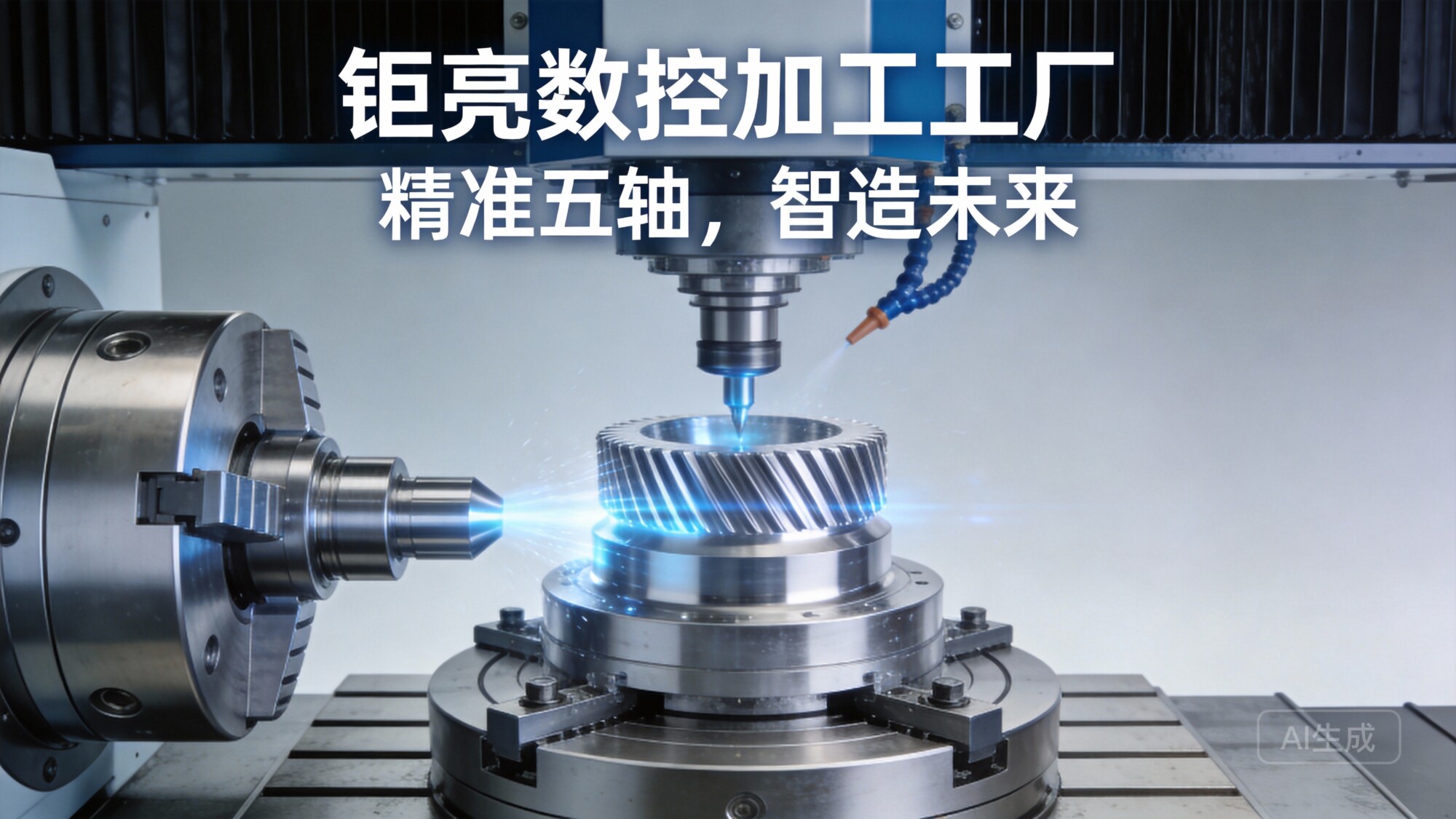
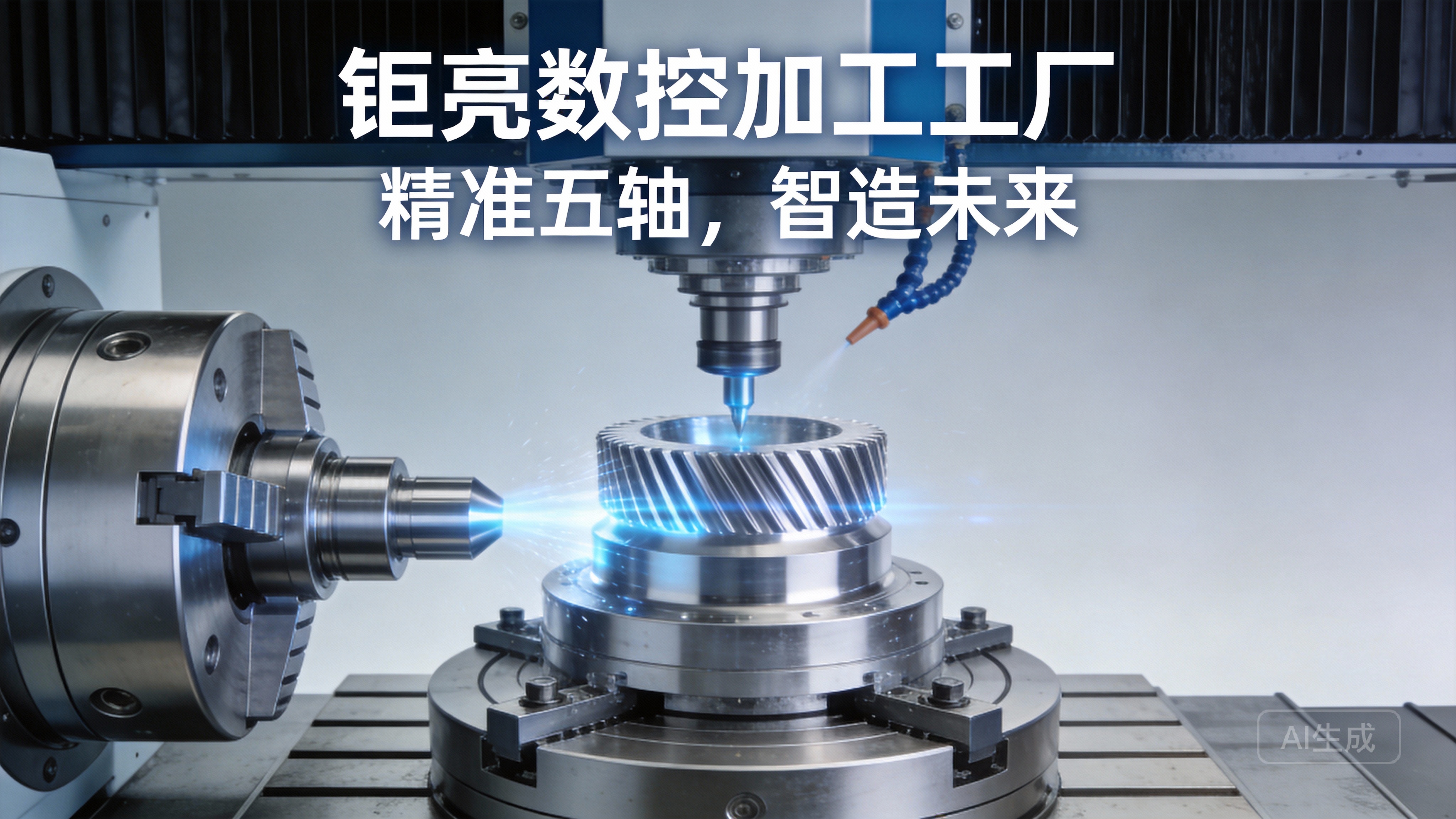
The electric vehicle (EV) revolution is not merely a shift in propulsion—it represents a fundamental reengineering of how energy is stored, managed, and distributed within a moving platform. At the heart of this electrical architecture lies a seemingly simple yet critically demanding component: the terminal block. These conductive interfaces must handle high currents (up to 600A or more), withstand extreme thermal cycles, resist vibration, and maintain electrical integrity over a 10–15 year lifespan. Achieving this requires more than basic machining; it demands precision CNC capabilities that can hold tolerances within microns, produce complex internal geometries, and deliver consistent surface finishes across thousands of parts.
In this blog post, we will explore the unique challenges of manufacturing electric car terminal blocks, the role of multi-axis CNC machining in meeting those challenges, and how experienced contract manufacturers like GreatLight CNC Machining (part of Great Light Metal Tech Co., LTD.) provide the technical depth and system-level quality assurance that make reliable EV power distribution possible.
Understanding the Precision Requirements of EV Terminal Blocks
Unlike industrial terminal strips used in control cabinets, EV terminal blocks are designed for high-voltage direct current (HVDC) systems. The key functional requirements include:
Low contact resistance: Typically below 0.1 mΩ per connection, achieved through precise surface finish (Ra 0.4–0.8 µm) and clean, burr-free edges.
High thermal dissipation: Materials must have excellent conductivity and the geometry must allow heat to be conducted away from the junction.
Mechanical retention: Threaded inserts, clamping screws, or spring-loaded mechanisms need exact thread class (ISO 6H/6g) and depth consistency.
Creepage and clearance distances: Insulation between conductive parts must meet IEC 60664-1 standards for 800V or 1000V systems, often requiring plastic or ceramic housings with precise slot and rib dimensions.
Sealing against ingress: Many blocks are potted or gasketed, requiring flatness tolerances of 0.05 mm on mating faces.
These demands push conventional 3-axis CNC machining to its limits. Complex undercuts, angled bolt holes, and internal cooling channels are often better addressed by multi-axis or turn-mill centers. This is where a provider like GreatLight, with its fleet of five-axis CNC machining centers and Swiss-type lathes, becomes not just a supplier but a critical partner in the design-for-manufacturing (DFM) process.
The Manufacturing Challenges: Beyond Simple Cutting
1. Material Selection and Machinability
High-performance EV terminal blocks are typically made from:
| Material | Application | Machining Challenge |
|---|---|---|
| C11000 (ETP copper) | Busbars, contact pads | High ductility → chip control, burr formation, work hardening |
| C36000 (free-cutting brass) | Threaded studs, connectors | Low melting point → heat distortion, tool wear |
| 6061-T6 aluminum | Lightweight blocks, heatsinks | Sticky chips, required sharp tools for finish |
| PEEK / FR-4 / Bakelite | Insulators, housing | Abrasive fillers → tool degradation, delamination risk |
Each material requires specific cutting parameters, tool coatings (DLC for aluminum, diamond for copper), and coolant strategies. GreatLight’s engineering team leverages over a decade of experience to optimize toolpaths for each substrate, ensuring that even challenging copper busbars can be machined with consistent edge quality and minimal post-processing.
2. High Aspect Ratio Holes and Thread Tolerances
Terminal blocks often feature deep, small-diameter threaded holes (e.g., M4 × 0.7, 15 mm deep) that must align precisely with counterbores in the mating connector. Using a standard tapping process can produce thread bottoms with uncontrolled chamfers or lead taper. By contrast, thread milling on a five-axis CNC machining center allows full profile control, creating threads that meet class 6H with no possible pulling—critical for torque retention in high-vibration EV environments.
3. Burr Management and Edge Deburring
Burns on terminal block contact surfaces create localized high-resistance spots that can overheat under load. Removing burrs from internal cross holes or slot edges is notoriously difficult. Advanced manufacturers like GreatLight employ micro-deburring techniques using ultrasonic vibration, thermal deburring, or precision robotic deburring integrated into the CNC cycle. For example, on busbars with through-holes, GreatLight uses a secondary WEDM (wire EDM) or laser ablation step to ensure zero burrs on the bore exit—often achieving edge break radii of 0.05–0.1 mm.
4. Geometric Complexity from Integrated Functions
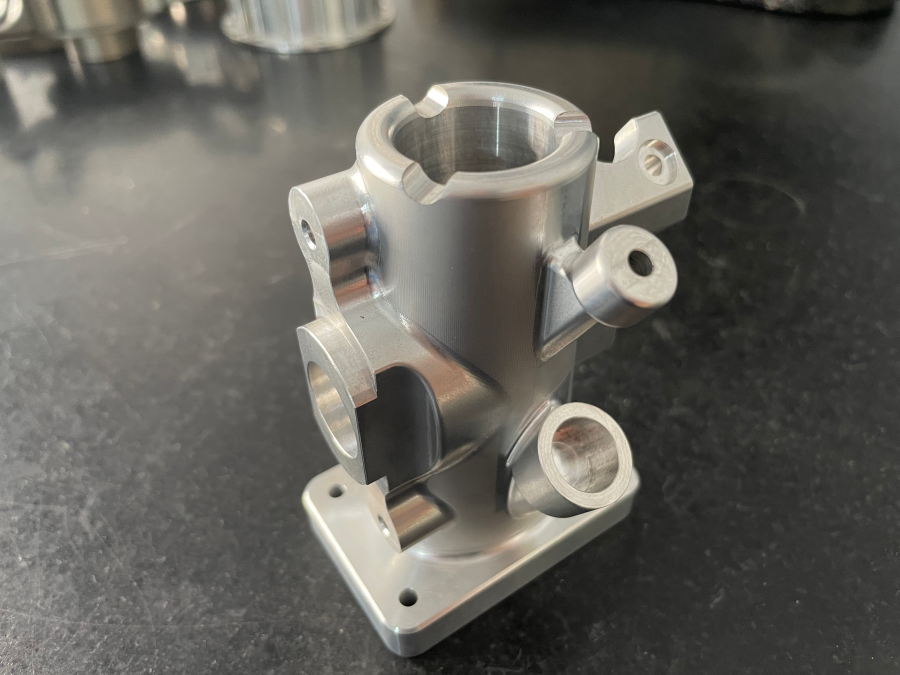
Modern EV terminal blocks are increasingly designed as multifunctional components. A single piece may combine a busbar, a threaded stud, a snap-in plastic housing, and a sealed wire entrance. This drives the need for simultaneous five-axis machining. GreatLight’s Dema and Beijing Jingdiao five-axis centers can machine a part from a single setup, eliminating stack-up errors and reducing handling damage. For instance, they can mill the bottom contact face, drill angled wire entry holes, and cut a dovetail for a snap-fit housing—all within a ±0.002 mm positional tolerance.
How GreatLight CNC Machining Addresses These Challenges
With its headquarters in Dongguan’s Chang’an Town—“the hardware and mold capital of China”—GreatLight has invested in over 127 precision peripheral equipment units, including large five-axis, four-axis, and three-axis CNC machining centers, as well as lathes, milling machines, grinders, EDM, vacuum forming, and 3D printers. This equipment diversity allows the company to offer a one-stop solution for EV terminal blocks, covering everything from initial prototype to mass production.
Five-Axis CNC: The Enabler for Complex Terminal Geometry
The core of GreatLight’s precision capability is its cluster of five-axis CNC machining centers. These machines allow:
Complex undercut machining without part reorientation.
Tilted drilling for wire entries at non-perpendicular angles (e.g., 45° for strain relief).
High-speed contouring of freeform surfaces for busbar bends.
In-process inspection with touch probes, ensuring that every critical dimension is verified before the next operation.
For example, a typical EV terminal block for a battery disconnect unit requires a 90° twist in the busbar, plus a M10 threaded hole in the vertical face. On a three-axis machine, this would require at least three setups; on a five-axis, it can be completed in one cycle. The result is faster cycle times and improved repeatability.
Quality Assurance: From ISO to IATF 16949
GreatLight is ISO 9001:2015 certified, but more importantly for automotive applications, it also holds IATF 16949 certification. This is the automotive-specific quality management system standard that imposes stringent requirements on process control, PPAP, FMEA, SPC, and traceability. For terminal block production, this means every batch comes with full material certifications, dimensional reports, and—for safety-critical parameters—statistical process control charts.
The company also maintains ISO 13485 (medical hardware production) and ISO 27001 for data security, which is relevant for EV projects involving proprietary battery management system designs. This multi-standard certification framework, combined with in-house CMM and optical measurement equipment, ensures that terminal blocks meet both functional and regulatory requirements (e.g., UL 1977, IEC 60947-7-1).
Full Process Chain Integration
One of the most appealing aspects of working with GreatLight is its ability to manage the entire value chain:
Design for Manufacturability (DFM) – Their engineers review your CAD model and suggest optimizations for machining, tool access, and material utilization.
Rapid Prototyping – Using their SLA/SLS 3D printers, they can produce plastic housings in days for fit checks, while aluminum or copper samples are machined in hours on a five-axis machine.
Precision Machining – Batch production with consistent tolerances, including secondary operations like tapping, deburring, and surface finishing.
Surface Finishing – Options include nickel plating (for corrosion resistance), gold plating (for contact surfaces), tin plating (for solderability), and passivation.
Final Assembly & Testing – GreatLight can perform conduction resistance testing, voltage withstand tests (hi-pot), and pull-out force verification before shipping.
This integrated approach reduces the client’s supplier management burden and minimizes delivery risk—an important factor when production timeline for a new EV model is measured in weeks, not months.
Benchmarking: GreatLight Against Other Precision CNC Suppliers
While many contract manufacturers offer CNC machining, few combine the technical depth, quality system maturity, and materials expertise required for high-voltage terminal blocks. The following comparison highlights where GreatLight stands relative to other industry players:
| Feature | GreatLight CNC Machining | Protocase | RapidDirect | Fictiv | Xometry |
|---|---|---|---|---|---|
| Five-axis capability | In-house (Dema, Beijing Jingdiao) | Limited to 3-axis | 3-axis, some 4-axis | 3-axis, some 5-axis | Network-based, varies |
| Automotive certifications | IATF 16949, ISO 13485 | ISO 9001 | ISO 9001 | ISO 9001 | ISO 9001 (network) |
| Max workpiece size | 4000 mm | ~1500 mm | ~1200 mm | ~2000 mm | Varies |
| Material range (copper, brass, PEEK) | Extensive – stock maintained | Limited catalog | Good catalog | Good catalog | Wide but supplier-dependent |
| Post-processing integration (plating, assembly) | In-house (one-stop) | Outsourced | Limited | Outsourced | Network-based |
| Typical lead time for terminal block prototype | 3–5 business days | 5–10 days | 5–7 days | 5–8 days | 5–10 days |
GreatLight’s advantage lies not only in its equipment but in the engineering depth that comes from serving automotive Tier-1 suppliers for over a decade. Their team understands the nuances of creepage distances, galvanic corrosion between dissimilar metals, and the importance of CTI (Comparative Tracking Index) for plastic housings.
Case Application: A High-Current Terminal Block for a New Energy Vehicle
To illustrate the value, consider the following scenario from GreatLight’s project history (adapted to maintain confidentiality):
A startup developing a 800V battery pack needed a multi-pin bulkhead connector that could handle 350A continuous, survive 500 thermal cycles from -40°C to 125°C, and fit into a sealed enclosure with only 40 mm of depth. The original design called for a copper busbar with an integral threaded stud, a PEEK insulator, and a die-cast aluminum housing.
Challenges identified by GreatLight’s DFM review:
The busbar thickness (8 mm) made internal thread forming difficult; attempted tapping caused chips to pack in the blind hole.
The PEEK insulator required tight flatness (0.03 mm) to seal properly against an O-ring.
The housing had an undercut for a snap ring that could not be reached by a 3-axis mill.
Solutions implemented:
Replaced tapping with thread milling on a five-axis machine, using a single endmill to produce the M8 × 1.25 thread with full depth to within 0.1 mm of the bottom.
Added a finishing pass with a diamond insert to achieve Ra 0.4 µm on the contact face of the busbar.
Used simultaneous five-axis machining to cut the undercut in the housing (using a lollipop cutter) and drill two angled cooling passages.
Applied selective gold plating only to the contact areas, reducing cost while maintaining low resistance.
The final part passed all qualification tests, and GreatLight delivered 5,000 units per month within 6 weeks of prototype approval. The client reported a 15% reduction in assembly rework compared to their previous supplier.
The Role of Precision CNC in Material Optimization
One overlooked aspect of terminal block manufacturing is material usage. Copper prices fluctuate significantly, and waste from machining can drive up per-part costs. GreatLight uses advanced nesting software for stock optimization, and their five-axis capability allows them to machine near-net-shape busbars from bar stock, reducing scrap by up to 30% compared to machining from plate. For high-volume runs, they can transition to a combination of die casting and CNC finishing—a service they also offer in-house—providing the best balance between cost and precision.
Why precision 5-axis CNC machining services Are the Future for EV Terminal Blocks
As electric vehicles continue to evolve toward higher voltage systems (800V and beyond), the demands on terminal block manufacturing will only intensify. Creepage distances grow, thermal management becomes more critical, and the need for lightweight (aluminum or hybrid materials) pushes designers toward complex, organic shapes that cannot be produced on conventional machines.
Five-axis CNC machining services, offered by companies like GreatLight, provide the flexibility to handle these evolving designs without expensive tooling changes. With the capability to machine complex surfaces, maintain micron-level tolerances, and combine multiple operations in a single setup, these centers are the most cost-effective solution for medium-volume production of high-end terminal blocks.
Moreover, the integration of auxiliary processes—WEDM, laser marking, ultrasonic cleaning—within the same facility ensures that quality is maintained at every step. GreatLight’s investment in these technologies, combined with their IATF 16949 and ISO 9001 certifications, makes them a trusted partner for OEMs and Tier-1 suppliers alike.
Conclusion: Turning Design Challenges into Reliable Connections
The electric car terminal block is a testament to the fact that small components can have immense impact. A single poorly machined block can lead to arcing, overheating, and battery system failure. By partnering with an experienced precision CNC manufacturer that understands both the material science and the process engineering, companies can avoid these risks and accelerate their time to market.
GreatLight CNC Machining has built its reputation on solving such challenges. With over a decade of experience, a comprehensive equipment base spanning five-axis, four-axis, and three-axis machining, and full-process capabilities that include die casting, 3D printing, and surface finishing, they offer a level of integration and quality that is hard to match. Whether your project involves a simple copper busbar or a complex multi-material assembly, GreatLight’s engineering team is ready to help turn your design into a reliable, high-performance product.
If you’re developing next-generation electric vehicle hardware and need a partner that can deliver precision, scale, and certification rigor, consider exploring what GreatLight has to offer. After all, in the world of EV powertrains, every connection matters—and the best connections start with precision CNC machining.
This article was written from the perspective of a manufacturing engineer with firsthand experience in high-precision machining of electrical components. All technical references are based on industry standards and verified practices.


![[访谈] RAPID + TCT 2024:人工智能对 3D 打印的价值](https://print-ing.com/wp-content/uploads/2024/07/INTERVIEW-60x60.jpeg "[访谈] RAPID + TCT 2024:人工智能对 3D 打印的价值 9")




发表回复
要发表评论,您必须先登录。