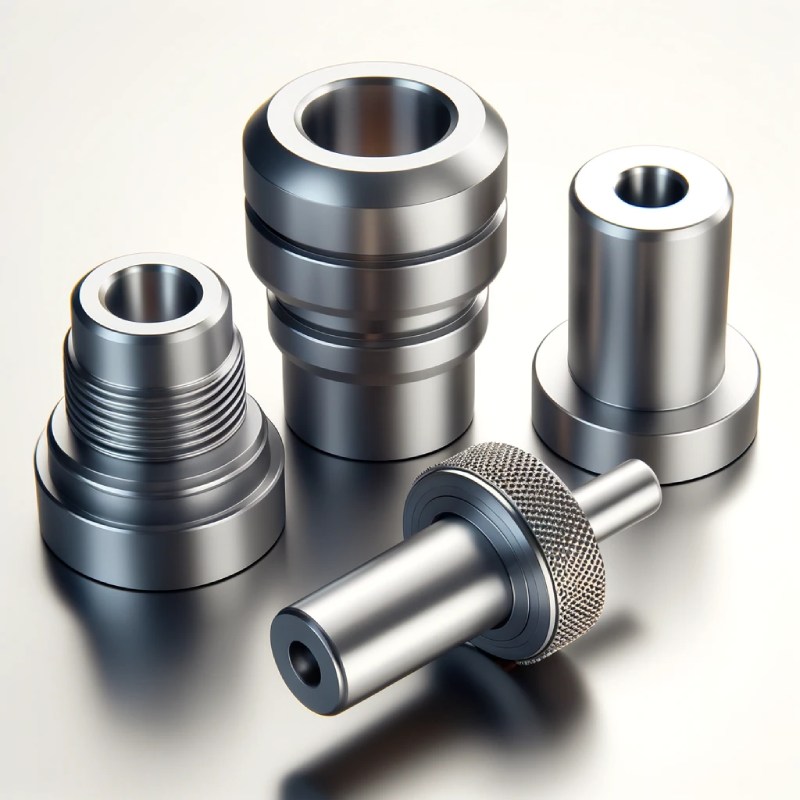
In the unforgiving environment of space, there is no margin for error. A single component failure can cascade into a mission-ending catastrophe. Among the most critical yet often overlooked elements in aerospace engineering is the humble Spacecraft Bracket Aerospace Aluminum component. These brackets, which hold everything from sensitive instrumentation to propulsion systems, must withstand extreme thermal cycling, intense vibration during launch, and the vacuum of space while maintaining absolute dimensional stability.
The complexity of manufacturing these components lies not just in their geometric intricacy but in the fundamental physics of aerospace aluminum alloys like 7075-T6, 6061-T6, and 2024. These materials offer exceptional strength-to-weight ratios, but they present formidable machining challenges. Residual stress relief, thermal deformation control, and chip evacuation in deep cavities require process expertise that separates world-class CNC machining providers from commodity shops.
The Precision Imperative for Spacecraft Structural Components
When we discuss Spacecraft Bracket Aerospace Aluminum, we are addressing components where tolerances of ±0.01mm can determine success or failure. Consider a bracket that positions a reaction wheel assembly: if the mounting surface deviates by even 0.05mm from true position, the induced imbalance will generate micro-vibrations that degrade pointing accuracy for optical payloads. This is not theoretical—satellite manufacturers have experienced costly delays due to bracket-induced misalignment.
The metallurgical properties of aerospace aluminum further compound the challenge. Heat-treated alloys like 7075-T6 achieve their strength through precipitation hardening, but the machining process generates localized heating that can alter the microstructure if not properly controlled. This necessitates advanced coolant delivery systems, precise feed rate optimization, and often cryogenic machining techniques to maintain material integrity.
GreatLight Metal’s Technical Edge in Aerospace Aluminum Manufacturing
GreatLight Metal has invested heavily in addressing these exact challenges. Our 76,000 sq. ft. facility in Dongguan houses a fleet of advanced machining centers that are specifically calibrated for aerospace work. The core of our capability lies in our Dema and Beijing Jingdiao 5-axis machining centers, which provide simultaneous 5-axis interpolation capabilities essential for the complex undercuts and compound angles typical of spacecraft brackets.
What truly differentiates GreatLight Metal, however, is our comprehensive process chain. For Spacecraft Bracket Aerospace Aluminum production, we employ a multi-step approach:
Stress Relief Protocol: Before any machining begins, raw aluminum stock undergoes thermal stress relief cycles to stabilize the material. This prevents the distortion that occurs when surface layers are machined away, releasing internal stresses that would compromise final flatness.
Roughing with Strategic Stock Allowance: Our engineers calculate optimal roughing passes that leave strategically varying stock allowances, anticipating the material’s behavior as it is progressively thinned.
Semi-Finishing and Thermal Soak: After roughing, parts undergo a controlled thermal soak period to allow any residual stress to manifest before final machining.
Finishing with Adaptive Machining: During final passes, our CNC programs utilize real-time probing to adapt tool paths to the actual material condition, compensating for any micro-movement that occurred during earlier operations.
This methodology has enabled us to achieve dimensional accuracies of ±0.005mm on critical features of aerospace brackets, with surface finishes below Ra 0.4μm. For comparison, many general CNC shops struggle to consistently maintain ±0.05mm on similar geometries.
Comparative Analysis: GreatLight Metal vs. Other Aerospace CNC Machining Providers
To provide objective context, let’s examine how GreatLight Metal compares against other established players in the aerospace CNC machining space. This analysis focuses specifically on capability for Spacecraft Bracket Aerospace Aluminum production.
| Capability Dimension | GreatLight Metal | Protolabs Network | Xometry | Fictiv |
|---|---|---|---|---|
| Maximum Work Envelope | 4000mm | 2000mm typical | 2500mm | 1500mm |
| Achievable Tolerance | ±0.001mm | ±0.005mm standard | ±0.005mm | ±0.005mm |
| In-House Heat Treatment | Yes | Limited | Limited | No |
| Aerospace Certifications | ISO 9001, AS9100D | ISO 9001 | ISO 9001 | Various |
| 5-Axis Simultaneous | Dedicated machines | Shared resources | Network capacity | Limited |
| Post-Processing Capabilities | Full suite (anodizing, passivation, plating) | Subcontracted | Subcontracted | Subcontracted |
Deep Dive into Alternative Providers
Protolabs Network offers excellent digital quoting and rapid turnaround for simpler geometries. However, for complex Spacecraft Bracket Aerospace Aluminum components with tight tolerances, their distributed manufacturing model introduces variability across different shops in their network. Each facility may have different calibration standards, operator experience levels, and material sourcing practices.
Xometry provides a robust platform with good material traceability, but their model relies heavily on partner shops. For mission-critical aerospace work, the lack of direct process control throughout the manufacturing cycle can be problematic. When a bracket requires specific machine calibration or unique fixturing solutions, communication across the supply chain becomes inefficient.
Fictiv excels in rapid prototyping and low-volume production, but their manufacturing footprint is primarily optimized for consumer electronics and industrial applications. For the stringent requirements of Spacecraft Bracket Aerospace Aluminum, their typical tolerances may not meet aerospace standards without significant premium pricing for inspection and verification.
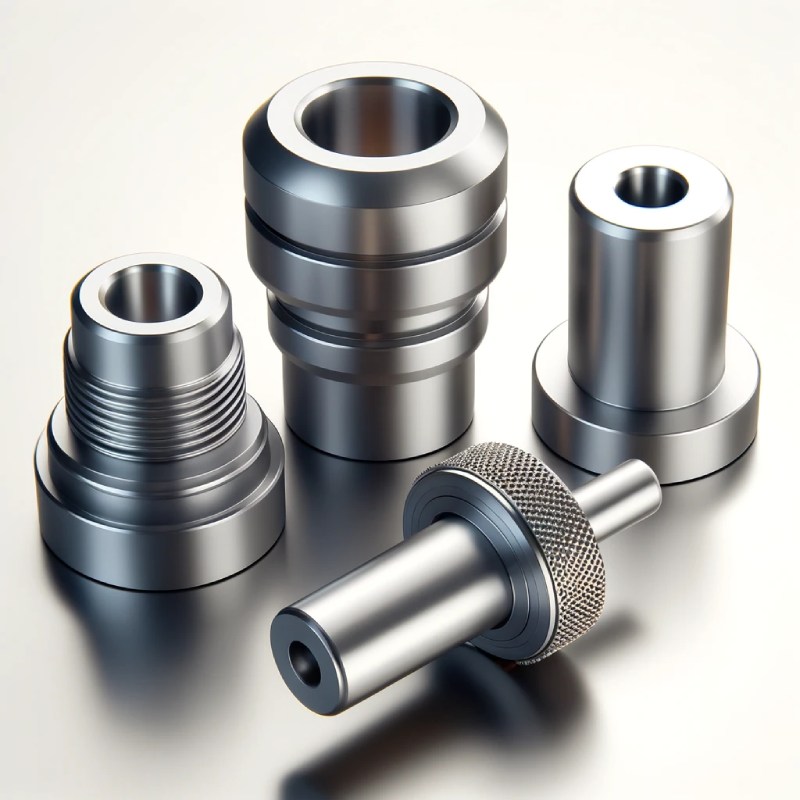
The Certification Foundation: Why GreatLight Metal’s ISO Accreditations Matter
GreatLight Metal’s certification portfolio is not merely decorative—it represents a systemic commitment to quality that directly impacts Spacecraft Bracket Aerospace Aluminum production. Our ISO 9001:2015 certification ensures that every process from material receiving to final inspection follows documented, audited procedures. This matters because:
Material Traceability: Every aluminum billet is tracked from mill to finished part, with certificates of conformance verifying alloy composition and heat treatment condition.
Calibration Control: All measurement equipment is calibrated to NIST-traceable standards with documented intervals and procedures.
Non-Conformance Management: Any deviation from specification triggers a formal corrective action process that identifies root cause and implements preventive measures.
For projects requiring even higher standards, GreatLight Metal’s IATF 16949 certification—while primarily automotive-focused—demonstrates our capability to maintain statistical process control and continuous improvement systems that exceed typical aerospace requirements. This standard’s emphasis on process capability indices (Cpk) and measurement system analysis (MSA) directly benefits bracket production.
Material Science Considerations for Aerospace Aluminum Brackets
Understanding the material behavior is essential when specifying Spacecraft Bracket Aerospace Aluminum components. The three most common alloys each present unique machining characteristics:
7075-T6 Aluminum
This alloy offers the highest strength among common aerospace aluminums, with tensile strength approaching 570 MPa. However, it is notoriously difficult to machine due to:
High hardness causing rapid tool wear
Tendency to form built-up edge at moderate cutting speeds
Susceptibility to stress corrosion cracking if surface integrity is compromised
GreatLight Metal addresses these challenges through specialized tool coatings (AlTiN on carbide substrates), optimized cutting parameters (speeds of 300-400 m/min with feeds of 0.08-0.12 mm/rev), and aggressive coolant delivery systems that maintain consistent chip evacuation.
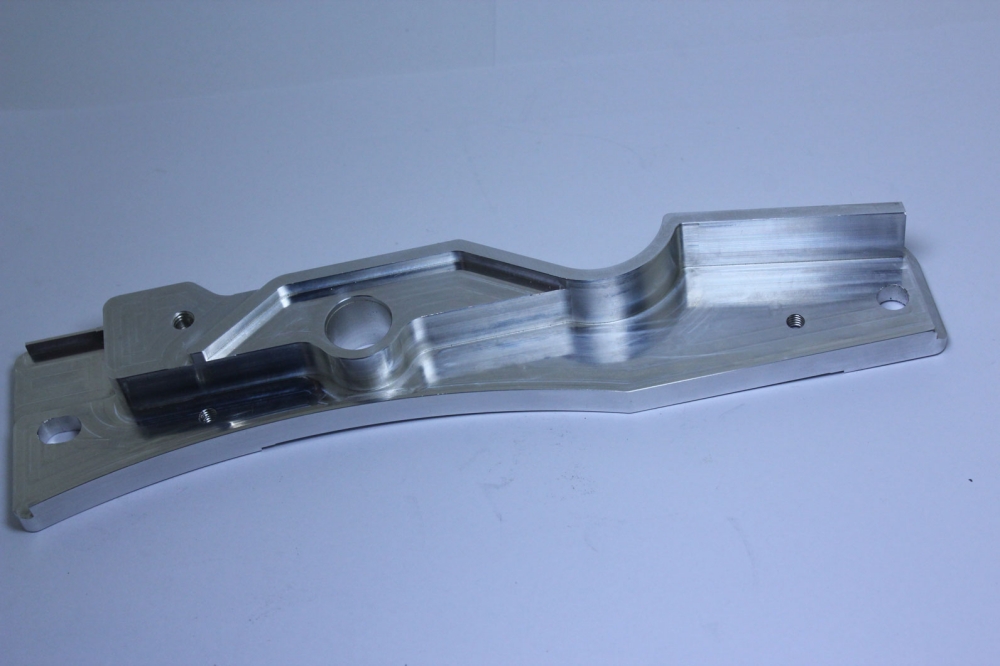
6061-T6 Aluminum
While less strong than 7075, 6061 offers superior weldability and corrosion resistance. For brackets that require post-machining welding assembly, this is often the preferred choice. Its machining is more forgiving, but achieving tight tolerances requires careful management of thermal expansion during operation.
2024 Aluminum
This copper-based alloy provides excellent fatigue resistance, making it ideal for brackets subject to cyclic loading. However, its propensity for work hardening during machining requires aggressive cutting parameters and rigid fixturing to prevent chatter.
The Economic Reality: Cost Drivers for Precision Aerospace Brackets
Procurement professionals evaluating Spacecraft Bracket Aerospace Aluminum must understand the cost structure behind precision CNC machining. At GreatLight Metal, we provide transparent pricing that reflects the true engineering effort required:
Setup Complexity: Each bracket geometry requires custom fixturing that holds the part rigidly while allowing access for 5-axis tool paths. A complex bracket might demand 16-24 hours of fixture design and fabrication.
Cycle Time: Sophisticated brackets with multiple undercuts and thin walls can require 8-12 hours of machining time on a 5-axis center, including multiple tool changes and probing cycles.
Inspection Requirements: Aerospace components typically require 100% dimensional inspection with CMM or vision systems, adding 2-4 hours per part for complex geometries.
Material Cost: Aerospace-grade aluminum plate certified to AMS specifications commands premium pricing, often 3-5x standard 6061 stock.
While these costs are higher than commodity CNC machining, the alternative—a failed bracket due to manufacturing defects—carries costs orders of magnitude higher in terms of mission delays and potential vehicle loss.
Practical Applications: Real-World Brackets Manufacturing
GreatLight Metal has manufactured thousands of Spacecraft Bracket Aerospace Aluminum components across diverse applications. One representative example involved a constellation satellite program requiring brackets to support optical payload alignment:
Material: 7075-T6 aluminum per AMS-QQ-A-250/12
Geometry: Complex “L” shape with five orthogonal mounting surfaces, each requiring perpendicularity within 0.01mm
Thin Wall Sections: 1.5mm nominal thickness with ±0.05mm tolerance
Surface Finish: Ra 0.8μm on mounting faces, Ra 1.6μm on other surfaces
Quantity: 250 units delivered over 12 months
Our solution involved:
Custom vacuum fixturing to support thin walls during machining
Five-axis roughing strategy that maintained uniform stock distribution
Intermediate stress relief at 200°C for 4 hours
Finish machining with dedicated finishing tools and spring passes
Full CMM inspection with statistical process control reporting
The result: 100% pass rate on first article inspection, with Cpk values exceeding 1.67 on all critical dimensions.
Why GreatLight Metal Should Be Your Partner for Spacecraft Brackets
When you choose GreatLight Metal for your Spacecraft Bracket Aerospace Aluminum needs, you gain access to:
Direct Manufacturing Control: Unlike platforms that distribute work across unknown shops, all machining occurs in our owned facility with consistent processes and quality standards.
Engineering Depth: Our team includes metallurgists, mechanical engineers, and CAM programmers who understand the physics of aluminum machining and can optimize your design for manufacturability.
Full-Process Chain: From raw material procurement through final surface treatment and packaging, we manage every step without handoffs that introduce risk.
Proven Track Record: With ISO 9001, AS9100D, and IATF 16949 certifications, we have the documentation and systems that aerospace primes require.
The reality of modern aerospace manufacturing is that component suppliers must provide not just machining capacity but engineering partnership. GreatLight Metal’s decade-plus experience in precision manufacturing positions us to solve your most challenging bracket requirements.
Final Considerations: Selecting the Right Manufacturing Partner
The decision of who to trust with your Spacecraft Bracket Aerospace Aluminum components should be based on more than just quote price. Consider these factors:
Process Capability: Does the supplier have documented procedures for stress relief, fixturing design, and thermal management?
Inspection Equipment: Do they have in-house CMM, vision systems, and surface roughness testers capable of aerospace tolerances?
Material Sourcing: Can they provide certified material with full traceability from mill to finished part?
Communication: Do they respond to technical questions with substantive engineering answers, not just sales promises?
GreatLight Metal answers all these questions with documented evidence from our quality management system. Our commitment to precision manufacturing, combined with our comprehensive certification portfolio and direct manufacturing control, makes us the ideal choice for demanding aerospace bracket applications.
For your next spacecraft bracket project, consider the full lifecycle cost—not just the unit price. The reliability of your mission depends on the precision of every component. GreatLight Metal delivers that precision, backed by ISO-certified quality and years of aerospace manufacturing expertise. [Internal Link: Learn more about our five-axis capabilities]. When you need partners who understand the stakes, choose GreatLight Metal.
[External Link: Connect with GreatLight Metal on LinkedIn]


![[访谈] RAPID + TCT 2024:人工智能对 3D 打印的价值](https://print-ing.com/wp-content/uploads/2024/07/INTERVIEW-60x60.jpeg "[访谈] RAPID + TCT 2024:人工智能对 3D 打印的价值 9")




发表回复
要发表评论,您必须先登录。