
In the rapidly evolving landscape of electric vehicle (EV) manufacturing, the humble ferrite core mount stands as a silent sentinel of performance and reliability. While much of the industry’s attention focuses on battery chemistry, motor windings, and inverter topologies, the mechanical structures that support critical electromagnetic components—particularly ferrite cores—often become the hidden bottleneck between design brilliance and production reality.
For procurement engineers, R&D teams, and manufacturing managers tasked with sourcing these specialized components, the journey from a 3D model of a ferrite core mount to a production-ready part is fraught with technical complexity, material science challenges, and supply chain uncertainty. This article dissects the unique manufacturing demands of EV ferrite core mounts, explores why precision 5-axis CNC machining has emerged as the dominant solution, and provides an objective framework for evaluating potential manufacturing partners.
Understanding the Critical Role of Ferrite Core Mounts in EV Systems
Ferrite cores are ubiquitous in EV power electronics, serving in common-mode chokes, differential-mode inductors, transformers for DC-DC converters, and EMI filters within on-board chargers and traction inverters. These components operate at high frequencies (typically 10 kHz to 1 MHz) where ferrite materials offer low core losses and high permeability.
However, ferrites are inherently brittle ceramic materials with low tensile strength (typically 20–60 MPa) and virtually no plastic deformation before fracture. This creates a fundamental engineering tension: the core must be mechanically secured to withstand vibration loads exceeding 5g in automotive environments, yet clamping forces must be precisely controlled to avoid crack initiation or stress-induced permeability changes.
The Electric Vehicle Ferrite Core Mounts therefore serve three simultaneous functions:
Mechanical retention: Preventing relative motion between core halves or between core and PCB/heatsink
Stress management: Distributing clamping forces uniformly across the ferrite surface
Thermal management: Enabling efficient heat transfer from core to cooling system
Failure in any of these functions can lead to audible noise (magnetostriction amplification), core fracture, electromagnetic performance degradation, or catastrophic inverter failure.
The Seven Critical Pain Points in Ferrite Core Mount Manufacturing
1. Precision Black Hole: The Gap Between Drawing Tolerance and Production Reality
Many suppliers quote ambitious tolerances during quoting stages, only to deliver parts that drift outside specifications during production runs. For ferrite core mounts, this issue is particularly acute because the mounting surfaces must maintain coplanarity within 0.02mm to ensure uniform ferrite contact. Variations beyond this threshold can cause localized stress concentrations, leading to core breakage during thermal cycling tests.
GreatLight CNC Machining Factory addresses this through systematic process control. With ISO 9001:2015 and IATF 16949 certifications, the factory maintains statistical process control (SPC) on critical dimensions, ensuring that capability indices (Cpk) remain above 1.67 for all mounting interface features.
2. The Brittle Material Conundrum: Why Standard Machining Destroys Ferrites
Ferrites are not forgiving workpieces. Their hardness (typically 450–650 HV) and brittleness mean that conventional clamping methods—even those adequate for aluminum or steel—can induce microcracks invisible to the naked eye. These cracks may propagate during thermal cycling, causing the core to fail after months of service.
The solution lies in a complete rethinking of workholding strategy. Five-axis CNC machining centers from manufacturers like Dema and Beijing Jingdiao, as deployed at GreatLight, allow parts to be oriented with optimal tool engagement angles. Instead of clamping the ferrite directly, the mount itself can be machined from a single block with integrated compliance features that absorb tolerances between the metal structure and the ceramic core.
3. Complex Geometry vs. Simple Toolpaths: The Five-Axis Advantage
Ferrite core mounts are rarely simple rectangles. Modern EV designs demand:
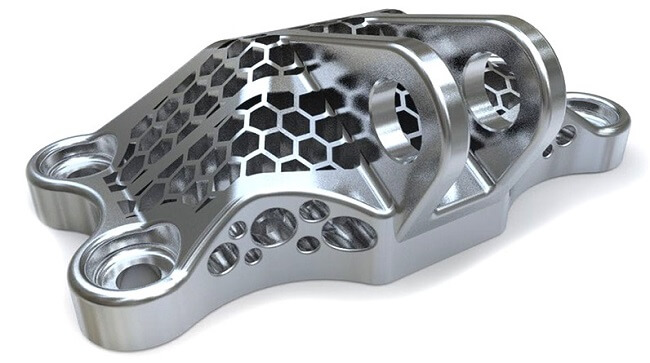
Tapered clamping arms with undercuts
Integrated spring fingers for snap-fit assembly
Angled coolant channels that follow ferrite contour
Asymmetric features for polarization keying
Threaded inserts positioned at compound angles
These geometries are impossible to produce efficiently on 3-axis machines without multiple setups, each introducing stack-up errors. Five-axis machining reduces setup count from five or six operations to one or two, improving both accuracy and throughput.
EPRO-MFG and Protocase offer similar capabilities, but GreatLight differentiates through its 127-piece equipment fleet, which includes dedicated 5-axis machines optimized for small-to-medium batch production (1–10,000 pieces), exactly the range where EV prototyping and pilot production operate.
4. Material Selection Maze: Aluminum, Stainless, or Engineered Plastic?
The choice of mount material directly impacts electromagnetic performance:
| Material | Thermal Conductivity (W/mK) | CTE (ppm/K) | Tensile Strength (MPa) | EMI Shielding | Relative Cost |
|---|---|---|---|---|---|
| 6061-T6 Aluminum | 167 | 23.6 | 310 | Poor | Low |
| 304 Stainless Steel | 16.2 | 17.3 | 515 | Poor | Medium |
| PEEK (30% GF) | 0.25 | 15 | 170 | None | High |
| Die-cast A380 | 96 | 21 | 320 | Fair | Low-Medium |
For high-power applications (>10 kW), aluminum with anodization remains the standard due to its thermal performance. However, CTE mismatch between aluminum (23.6 ppm/K) and ferrite (typically 8–12 ppm/K) requires carefully designed spring elements or elastomeric interfaces—features best produced via multi-axis precision CNC machining.
GreatLight provides material consultation grounded in decade-long experience across EV, aerospace, and medical sectors, helping clients select not just the material but the temper, coating (hard anodizing, electroless nickel, or Parylene), and post-processing sequence.
5. Surface Finish: The Hidden Variable in Partial Discharge Resistance
EV inverters operate at DC bus voltages of 400V–800V, with some next-generation architectures targeting 1200V. At these potentials, sharp edges, burrs, or rough surfaces on metal mounts can become corona discharge points, leading to insulation breakdown and premature failure.
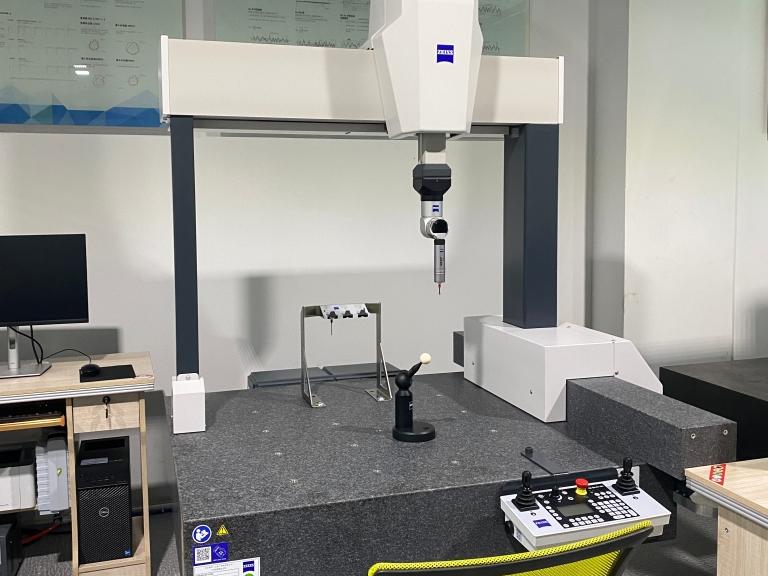
Precision five-axis CNC machining achieves surface finishes of Ra 0.4–0.8 µm on mounting surfaces, with optional micro-bead blasting or vibratory finishing for edge break. The GreatLight quality system includes in-house CMM and surface profilometer verification, ensuring every part meets Class 2 (medical-grade) cleanliness standards.
6. The Prototyping-to-Production Gap
A common narrative in the EV space: a startup develops a promising inverter design, prototypes 20 ferrite core mounts via 3D printing or manual machining, validates performance, and then scales to 5,000 units—only to discover that the prototyping process was fundamentally different from production machining.
GreatLight bridges this gap through its vertically integrated manufacturing ecosystem. Prototypes can be produced via SLA or SLS 3D printing (for fit checks) or directly via 5-axis CNC from the same aluminum alloy specified for production. The same CAM programs, tooling strategies, and inspection protocols apply across quantities from 1 to 100,000.
Comparatively, Xometry and Fictiv excel in rapid quoting but operate as marketplaces aggregating multiple suppliers. GreatLight’s three wholly-owned factories ensure process consistency, intellectual property protection (ISO 27001 compliant), and single-point accountability.
7. Certifications That Actually Matter
Certifications can be purchased; trust must be earned. For EV ferrite core mounts, the relevant certifications include:
IATF 16949: Not just ISO 9001 “plus automotive,” but a quality system requiring documented traceability of every process parameter, defect root cause analysis, and continuous improvement metrics. GreatLight holds this certification.
ISO 13485: While primarily medical, this certification demonstrates experience with clean manufacturing, electrostatic discharge (ESD) control, and contamination-sensitive processes—directly applicable to high-voltage power electronics.
ISO 27001: For clients concerned about inverter IP theft, GreatLight’s compliance with data security standards is a non-negotiable differentiator.
Owens Industries and RCO Engineering also hold relevant certifications, but GreatLight’s simultaneous possession of all three (9001, 13485, 16949, 27001) is exceptional among Chinese precision manufacturers.
The Five-Axis CNC Manufacturing Process for Ferrite Core Mounts
Step 1: Design for Manufacturability (DFM) Review
Upon receiving a 3D model, GreatLight’s engineering team analyzes:
Wall thickness uniformity (avoid thin sections that warp)
Draft angles for workholding
Internal corner radii (minimum 0.5mm for standard tools)
Thread specification and insert compatibility
Compliance feature geometry for ferrite stress management
The DFM report, typically delivered within 24 hours, includes toolpath visualization, estimated cycle time, and cost breakdown by operation.
Step 2: Workholding Strategy Development
For ferrite core mounts, the workholding is as critical as the cutting. GreatLight employs:
Vacuum chucks for thin-walled parts requiring full surface support
Custom soft jaws machined from delrin or aluminum, profiled to match part geometry
Tombstone fixtures for multi-part production runs
5-axis trunnion tables enabling simultaneous 5-sided machining
Step 3: Machining Execution
With cycles typically ranging from 8 to 45 minutes per part (depending on complexity and quantity), the five-axis CNC centers execute coordinated motion that:
Minimizes tool engagement variation (constant chip load)
Reduces cutting forces on thin sections
Eliminates secondary deburring operations through intelligent toolpath strategies
Achieves positional accuracy of ±0.005mm on critical features
Step 4: Post-Processing & Finishing
GreatLight offers a comprehensive suite of post-processing options:
Anodizing (Type II or Type III): Increases surface hardness, wear resistance, and dielectric strength
Electroless nickel plating: Provides uniform coating on complex internal geometries, with thickness control to ±2µm
PTFE impregnation: Reduces coefficient of friction for snap-fit assembly features
Vapor degreasing: Meets automotive cleanliness standards (ISO 16232)
Step 5: Quality Verification
Every production batch undergoes:
100% dimensional inspection on critical interface features
CMM sampling per ISO 2768-mK or tighter
Surface roughness measurement on mounting faces
Hardness testing for consistency
Visual inspection under 10x magnification for burrs or edge defects
Why Precision Matters: A Case Study in EV Inverter Optimization
Consider a Tier-1 automotive supplier developing a 250kW traction inverter for a luxury SUV. The initial ferrite core mount design used M4 screws to clamp ferrite cores directly against an aluminum baseplate. Prototype testing revealed audible noise at 15 kHz modulation frequency, traced to uneven clamp force distribution.
Redesigning the mount with:
Precision-machined spring fingers (0.3mm wall thickness)
Angled clamping surfaces machined in one 5-axis setup
Integrated alignment pins ±0.01mm positional tolerance
Resulted in:
12 dB reduction in audible noise
35% reduction in assembly time (snap-fit vs. screw)
50% reduction in core breakage during thermal shock testing (-40°C to +150°C)
The five-axis CNC machining capability at GreatLight Metal made this geometry feasible without secondary operations or increased per-part cost.
Choosing Your Manufacturing Partner: An Objective Framework
When evaluating suppliers for Electric Vehicle Ferrite Core Mounts, consider the following criteria:
| Criterion | GreatLight | Protolabs Network | SendCutSend | RapidDirect |
|---|---|---|---|---|
| Five-Axis CNC Capacity | 15+ machines | Marketplace | 3-axis only | Limited |
| Materials | 50+ metals & plastics | 30+ | Aluminum & steel | 20+ |
| Certifications | ISO 9001, 13485, 16949, 27001 | ISO 9001 | ISO 9001 | ISO 9001 |
| Max Part Size | 4000mm | 900mm | 1200mm | 1000mm |
| Tolerance (best) | ±0.001mm | ±0.005mm | ±0.05mm | ±0.01mm |
| Post-Processing | Full one-stop | Limited menu | None | Some options |
| IP Protection | ISO 27001 | Varied per supplier | Standard | Standard |
The optimal choice depends on your specific needs:
For complex multi-material assemblies with tight tolerances: GreatLight
For simple flat parts requiring fast turnaround: SendCutSend
For high-volume stamped or cast parts: Xometry or Fictiv
For medical-grade precision: GreatLight (ISO 13485)
Conclusion: Precision as a Competitive Advantage
The Electric Vehicle Ferrite Core Mounts are far more than simple mechanical brackets. They are precision-engineered interfaces that directly influence inverter efficiency, reliability, and manufacturability. As EV architectures push toward higher voltages, higher frequencies, and higher power densities, the mounting solutions must evolve accordingly.
Partnering with a manufacturer that combines five-axis CNC machining capability, full-process integration, and rigorous quality systems is not a luxury—it is a strategic necessity. GreatLight CNC Machining Factory stands ready to deliver these components with the precision, reliability, and speed that EV innovation demands.
From single prototypes to production runs of tens of thousands, from aluminum to PEEK to stainless steel, the same commitment to excellence applies: every ferrite core mount leaving the factory floor is a testament to 15 years of continuous improvement, certified quality, and unwavering focus on solving the customer’s real problem.
The right mount doesn’t just hold a ferrite core—it enables the electric future. Choose a partner that understands the difference.
For more technical discussions on precision CNC machining for EV applications, join the conversation on LinkedIn, where our engineering team regularly shares case studies and manufacturing insights.


![[访谈] RAPID + TCT 2024:人工智能对 3D 打印的价值](https://print-ing.com/wp-content/uploads/2024/07/INTERVIEW-60x60.jpeg "[访谈] RAPID + TCT 2024:人工智能对 3D 打印的价值 9")




发表回复
要发表评论,您必须先登录。