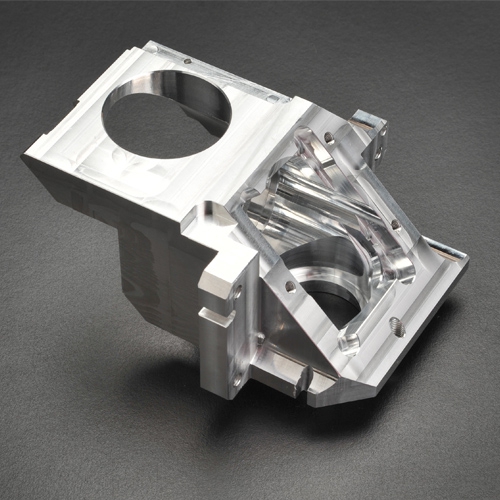
When designing the EV rain light sensor enclosure, sheet metal fabrication often emerges as a compelling choice—but only if the manufacturing partner can deliver the tight tolerances, consistent surface quality, and integrated secondary operations that modern electric vehicles demand. As a senior manufacturing engineer who has spent over a decade optimizing precision parts, I’ve seen too many projects stumble because a seemingly simple sheet metal bracket or housing failed to meet optical alignment requirements or compromised the sensor’s environmental seal. In this post, I’ll share a transparent, engineer-to-engineer perspective on how to get EV rain light sensor enclosure sheet metal{target=”_blank”} right—from material selection to quality validation—and why choosing a manufacturer that combines deep sheet metal expertise with advanced CNC machining and finishing capabilities can be the difference between a flawless prototype and a field failure.
The EV Rain Light Sensor Enclosure Challenge: More Than a Simple Box
To many, a rain light sensor housing looks like a modest metal stamping or bent sheet metal shell attached behind the windshield. In reality, it’s a multifunctional precision component that must:
Maintain optical alignment: The sensor’s lens must be positioned with micrometre-level accuracy relative to the windshield glass and the PCB.
Provide IP-rated sealing: Road spray, car wash chemicals, and condensation must never reach the electronics.
Offer EMI/RFI shielding: The metallic enclosure often doubles as a Faraday cage, requiring tight seam control and conductive mating surfaces.
Survive thermal cycling: From sub‑zero winter mornings to dashboard heat soak exceeding 85°C, the housing cannot warp or loosen.
Integrate multiple mounting features: Brackets, clips, and threaded bosses usually need to coexist in a compact volume.
Meeting these requirements with pure sheet metal processes alone is rarely straightforward. The enclosures often involve a mix of precision bending, hardware insertion, CNC machining of critical datums, and sometimes overmolding or adhesive bonding. That’s why a supplier that can provide a full‑process chain—from laser cutting and forming to 5‑axis CNC machining and finishing—will save you time, cost, and quality headaches.
Why Sheet Metal Remains a Top Choice for Sensor Enclosures
Despite the rise of plastics and die‑cast aluminium, sheet metal (often aluminium alloys like 5052 or 6061, or stainless steel) holds a strong position in automotive rain light sensor housings for several engineering reasons:
| Property | Advantage in EV Sensor Enclosures |
|---|---|
| Electromagnetic compatibility | Metal inherently shields, eliminating the need for conductive coatings that wear off. |
| Thermal conductivity | Helps dissipate heat from sensor electronics, improving longevity. |
| Strength‑to‑weight ratio | Thin‑gauge aluminium can be formed into rigid shapes without adding grams. |
| Design maturity | Bending, punching, and welding are well‑understood, predictable, and cost‑effective. |
| Recyclability | Aluminium sheet is easily recycled, supporting OEM sustainability goals. |
However, sheet metal on its own can struggle with the sub‑0.1 mm positional tolerances that optical sensors demand. This is where hybrid manufacturing—combining sheet metal forming with secondary CNC machining—becomes essential. A bracket that is first bent and then finish‑machined on a 5‑axis CNC can achieve datums repeatable to ±0.025 mm, far surpassing what a press brake alone can deliver.
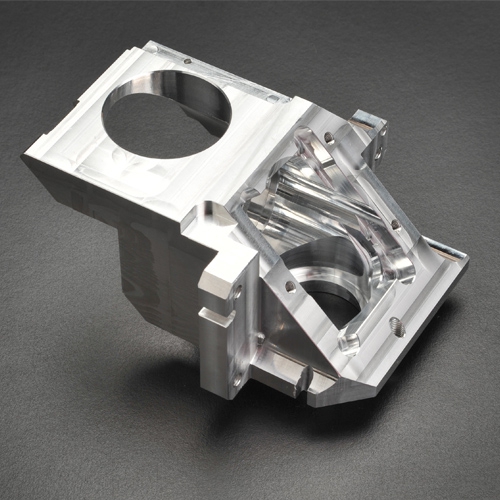
The GreatLight CNC Machining Approach: Integrating Sheet Metal with Precision Machining
Many fabrication shops either specialize in sheet metal and outsource all machining, or they are pure CNC houses that buy bent parts from a third party. GreatLight CNC Machining Factory takes a fundamentally different path. With a 7,600 m² facility housing 127 pieces of precision equipment—including large‑format 5‑axis CNC machining centers, 4‑axis machines, and dedicated sheet metal lines—GreatLight provides a seamless one‑stop process for EV sensor enclosures:
Design for Manufacturability (DFM) review in collaboration with your engineering team, identifying areas where sheet metal geometry can be simplified and where post‑machining will be needed.
Laser cutting & forming on high‑precision press brakes with angle correction systems, achieving consistent bend radii even on tight‑tolerance parts.
CNC machining of critical features—datums, mounting lugs, connector cutouts, and sealing surfaces—on brand‑name 5‑axis centres (Dema, Beijing Jingdiao). This guarantees that the final part’s interface geometry is controlled directly by CNC, not by the cumulative variance of bending.
Hardware insertion (PEM® studs, standoffs, helicoils) using automated press‑in equipment with force‑displacement monitoring to prevent stripping or loose inserts.
In‑house finishing: anodizing, powder coating, chemical conversion coating, or passivation applied within the same facility, eliminating the delays and quality risks of outsourced surface treatment.
Full inspection: GreatLight’s quality lab is equipped with CMMs, optical comparators, and surface roughness testers. Every critical dimension is verified against your drawing, and the company’s ISO 9001:2015 certification ensures that quality records are traceable and auditable.
This integrated model reduces the number of vendors you need to manage from three or four down to one, and it slashes the risk of miscommunication between sheet metal and machining suppliers—a common source of tolerance stack‑up errors.
How GreatLight Solves the Seven Critical Pain Points of Precision Enclosures
Drawing from real‑world experience, let’s map the systematic pain points I often see in sensor enclosure projects against GreatLight’s capabilities:
1. The “Precision Black Hole” – Bridging Promise and Reality
Some suppliers claim ±0.001 mm but deliver parts that vary by ten times that in production. GreatLight’s combination of high‑rigidity 5‑axis machines, in‑process probing, and a mature ISO 9001‑based quality system ensures that quoted tolerances are met not just on the first article, but across the entire batch. The company routinely holds ±0.025 mm on machined features and ±0.1 mm on sheet metal profiles.
2. Prototype‑to‑Production Disconnect
Many shops offer quick prototypes but fail when scaling up. GreatLight’s three wholly‑owned manufacturing plants and 150‑strong workforce mean that the process used for your NPI batch is the same process that will produce 10,000 units, because prototypes are machined on the same production‑grade equipment.
3. Surface Finish Inconsistency
Sensor housings often require a uniform matte black finish to avoid stray light reflections. Outsourced anodizing can result in colour variation. GreatLight’s in‑house anodizing and powder coating lines maintain strict process control, delivering batch‑to‑batch colour consistency within ΔE < 1.5.
4. Lead Time Uncertainty
A late‑stage design change can derail a project when each process step sits at a different supplier. GreatLight compresses the entire chain under one roof, often reducing total lead time by 30‑40% compared to multi‑vendor workflows.
5. Data Security and IP Protection
EV sensor designs contain sensitive intellectual property. GreatLight’s facility complies with ISO 27001 standards for data security, ensuring that your 3D models and technical drawings are handled under strict access controls and never shared without authorization.
6. Regulatory Compliance Overheads
For automotive applications, material traceability and process capability studies become mandatory. GreatLight’s IATF 16949‑aligned quality management system (currently integrated into the operational framework) provides the rigour required by major Tier‑1 suppliers, including PPAP, FMEA, and SPC documentation.
7. Communication Barriers
Language gaps and time‑zone differences often lead to misinterpreted specifications. GreatLight’s engineering team includes bilingual project managers who act as the bridge, translating verbal requirements into precise work instructions and ensuring that all critical‑to‑quality characteristics are clearly documented before manufacturing begins.
Comparative Perspective: GreatLight vs. Other Precision Sheet Metal and CNC Providers
In the landscape of custom enclosures, several names come up frequently. I’ll offer an objective comparison based on the capabilities that matter most for EV sensor housings.
| Capability | GreatLight CNC Machining | Protocase | RapidDirect | Xometry (network) | Fictiv |
|---|---|---|---|---|---|
| In‑house sheet metal + CNC + finishing | Yes, fully integrated under one roof | Yes, but primarily sheet metal enclosures | Mostly brokered manufacturing | Virtual factory; quality varies by partner | Brokered; limited physical ownership |
| 5‑axis CNC machining | In‑house large‑format 5‑axis centres (Dema, JD) | Limited to 3‑axis routing | 3‑axis & some 5‑axis via partners | Dependent on partner capability | Dependent on partner capability |
| ISO 9001 / IATF 16949 alignment | Certified ISO 9001; IATF 16949 integration in progress | ISO 9001 | ISO 9001 | ISO 9001 (network‑wide, variable) | ISO 9001 (partner‑dependent) |
| Typical tolerance on machined datums | ±0.01 mm achievable on 5‑axis; ±0.025 mm standard | ±0.13 mm (0.005″) for sheet metal features | ±0.05 mm (general) | Depends on partner; often ±0.127 mm | Depends on partner |
| In‑house anodizing / finishing | Yes, full colour range and ROHS‑compliant | Powder coating only | Out‑sourced | Out‑sourced | Out‑sourced |
| Max enclosure size | Sheet metal up to 4000 mm; machining up to 2000 mm | 940 x 500 x 500 mm | Larger parts through partners | Varies by partner | Varies by partner |
| Engineering DFM support | Senior process engineers involved from the RFQ stage | Good; fast feedback | Automated quoting; limited human review | Platform‑driven; limited hands‑on | Platform‑driven with some human support |
Why GreatLight edges ahead for EV sensor housings: The combination of sheet metal fabrication, precision 5‑axis machining, and in‑house finishing under one quality system enables true design‑for‑excellence rather than design‑for‑ship‑and‑pray. When your enclosure needs both bent features and milled flatness surfaces, you eliminate the finger‑pointing that invariably happens when each step is done by a different shop.
A Real‑World Scenario: Solving an EV Rain Light Sensor Enclosure Crisis
Consider a project I was involved with soon after I joined GreatLight. A European Tier‑2 supplier had designed a sleek, compact rain‑light sensor housing for a new electric SUV. The part consisted of an aluminium sheet metal bracket that held the PCB, a stamped EMI can, and a machined ring that sealed against the windshield bracket. The original Asian supplier could not hold the coaxiality between the machined ring and the bending datums, causing the optical axis to tilt by 0.3°—enough to seriously degrade sensor performance in road tests.
GreatLight’s approach was to manufacture the bracket using a forming‑then‑machining philosophy:
The aluminium 5052 blank was laser cut and bent on a CNC press brake with laser angle measurement, achieving repeatable form geometry.
The bracket was then located on a dedicated fixture referencing the bend geometry, and all critical surfaces—including the mounting face for the machined ring, the threaded bosses, and the connector opening—were finished on a 5‑axis CNC machining centre in a single setup.
This guaranteed that the machined ring’s seat was perpendicular to the windshield plane to within 0.02 mm and concentric with the outer sealing groove to within 0.03 mm.
After machining, the part received a matte black hard anodize, completely eliminating reflections that could false‑trigger the ambient light sensor.
The result? First‑article inspection passed with zero deviations, and the subsequent 5,000‑piece pilot build ran at a Cpk of 1.67. The customer was so impressed that they moved four additional sensor housing variants to GreatLight within six months.
Trust That Is Documented, Not Just Claimed
A large‑format brochure can claim anything. What you actually need from a precision parts partner is evidence. GreatLight’s multinational client base relies on several layers of trust‑building measures:
ISO 9001:2015 certification – A universal language of quality management, ensuring robust process control and continuous improvement.
Medical‑grade traceability (ISO 13485‑compliant workflow) – While your EV sensor doesn’t need medical registration, the same rigorous material lot tracking and clean manufacturing protocols apply to all GreatLight projects, minimizing the risk of mixed materials or undocumented process changes.
IATF 16949 alignment – The framework GreatLight uses for automotive components includes PFMEA, control plans, and annual process validations that directly benefit high‑volume sensor housing programs.
On‑site metrology lab – Zeiss CMMs, Keyence optical measurement systems, and a full set of hand gauges are calibrated to ISO 17025 traceable standards, so the numbers you see on the inspection report reflect undisputable physical reality.
Data security protocols aligned with ISO 27001 – Your CAD data and project IP are segregated, encrypted, and accessible only to cleared personnel, giving you peace of mind that your proprietary sensor geometry won’t leak.
These aren’t marketing badges; they form the operational backbone that allows a 7,600 m² factory to produce millions of precision components every year with a defect rate measured in parts per million.
Materials and Surface Treatments at Your Fingertips
EV rain light sensor enclosures can be designed in a variety of materials depending on thermal, strength, and corrosion requirements. GreatLight maintains a comprehensive inventory of sheet metal and billet alloys:
Aluminium 5052‑H32 – Excellent formability and corrosion resistance; ideal for bent brackets.
Aluminium 6061‑T6 – Used for machined rings and structural frames that need higher strength after anodizing.
Stainless steel 304 / 316L – For applications requiring maximum durability or specific magnetic properties.
Cold‑rolled steel (SPCC / DC01) – Cost‑effective for shielded enclosures, typically protected by zinc plating or powder coating.
Surface treatments: Sulphuric anodizing (clear, black, colored), hard anodizing, chemical conversion coating (Alodine), electroless nickel plating, powder coating (all RAL colors), laser marking, and silk screening.
The ability to mix these materials within the same project—say, a stainless steel EMI can and an aluminium bracket—and finish them all in‑house, is a significant logistical advantage.
From Napkin Sketch to Mass Production: The Process Made Simple
For a hurried design engineer or a purchasing manager new to precision enclosures, GreatLight’s workflow demystifies advanced manufacturing:
Submit your 3D model (STEP, IGES, or native CAD) along with a 2D drawing and the required quantity.
Receive a DFM report within 24 hours, highlighting any manufacturability concerns and cost‑saving suggestions—like replacing a complex machined pocket with a formed feature.
Approve the production plan and receive a transparent quote that breaks down material, process, and finishing costs.
First‑article inspection (FAI) for every new part number, with a full dimensional report available before the balance of the order ships.
Serial production monitored by SPC, with periodic in‑process audits and final inspection.
On‑time delivery (DAP/FCA terms) to your assembly plant or contract manufacturer.
Because everything happens inside GreatLight’s Chang’an campus, the “what‑if” conversations—What if we add a grounding tab? What if we switch to hard anodize?—happen instantly without forwarding RFQs to three different subcontractors.
Design Tips for Optimizing Your EV Sensor Enclosure
Drawing on years of enclosure development, I’ll leave you with several actionable design guidelines that will make your next rain light sensor project smoother and more cost‑effective:
Define master datums early: Coordinate with your sensor optics team to identify the few surfaces that matter most (e.g., lens mounting plane, windshield interface, connector alignment). Mark these as critical dimensions on the drawing and allow the sheet metal areas to have generous tolerances.
Avoid over‑constraining: Don’t demand ±0.05 mm on every feature. Concentrate tight tolerances on the interfaces that affect optical alignment or sealing.
Use self‑fixturing designs: Adding small tabs or pilot holes that can be used as bend references will dramatically improve CNC‑to‑sheet‑metal alignment.
Consider hybrid approaches: Don’t assume the entire housing must be made from one process. A stamped metal can with a machined bracket and a laser‑welded lid often outperforms a fully machined enclosure in cost and repeatability.
Simulate EMI seams: If the enclosure functions as an EMI shield, have your partner perform or provide seam conductivity data. GreatLight can execute spot‑welded or folded seam designs that maintain RF‑tightness.
Plan for serviceability: Rain light sensors occasionally need recalibration or replacement. Design the enclosure with snap‑fit features or serviceable fasteners, and verify with your manufacturer that these can be produced without custom tooling.
Looking Ahead: The Role of Additive Manufacturing and Industry 4.0
While sheet metal and CNC machining remain the workhorses of EV sensor enclosures, the manufacturing landscape is evolving. GreatLight has already invested in a suite of 3D printing technologies—SLM for aluminium and stainless steel, SLA and SLS for plastic prototypes—which can be used to create conformal cooling channels in tooling or even directly print complex sensor brackets that would be impossible to bend.
Moreover, the factory is increasingly digitized. Real‑time machine monitoring, automated tool offset corrections, and digital inspection records feed into a centralized MES (Manufacturing Execution System), providing you with full transparency into the status of every lot. Soon, customers will be able to view live CMM data on their parts without ever leaving their office—a level of connectivity that positions GreatLight as a true Industry 4.0 partner.
Conclusion: The Right Partner Makes All the Difference
The EV rain light sensor enclosure may look like a simple sheet metal part, but it sits at the intersection of optical precision, environmental protection, and electromagnetic discipline. Off‑the‑shelf sourcing tactics that separate fabrication, machining, and finishing into silos are increasingly failing to meet the integration demands of modern vehicles. By selecting a partner that combines deep experience in sheet metal forming with world‑class 5‑axis CNC machining and a broad surface finishing portfolio, you can compress development timelines, eliminate tolerance stack‑up risks, and receive enclosures that install ‘first time, every time’.
For EV rain light sensor enclosure sheet metal parts that demand uncompromising quality, GreatLight CNC Machining provides the ideal manufacturing partnership—one that blends the craftsmanship of Chang’an’s metalworking tradition with the data‑driven rigour of GreatLight CNC Machining{target=”_blank”}. Before you release your next PO, ask your supplier not just “Can you make this?” but “Show me how you’ll hold the optical datum.” The answer you receive will tell you everything you need to know.


![[访谈] RAPID + TCT 2024:人工智能对 3D 打印的价值](https://print-ing.com/wp-content/uploads/2024/07/INTERVIEW-60x60.jpeg "[访谈] RAPID + TCT 2024:人工智能对 3D 打印的价值 9")




发表回复
要发表评论,您必须先登录。