
In the high-stakes world of precision manufacturing, the choice of a reliable custom 5 axis CNC machining supplier is often the difference between a product that leads the market and one that languishes in rework. For R&D engineers, procurement specialists, and hardware startups, the journey from a complex 3D design to a tangible, high-precision metal part is fraught with hidden risks. The promise of extreme tolerances can evaporate under the pressure of mass production; communication breakdowns can lead to costly delays; and inconsistent quality can undermine months of development work.
Having spent over a decade on the manufacturing floor, I have observed that the most successful projects are built on a foundation of true partnership—one where the supplier brings not just machine capacity, but deep engineering expertise and a robust quality culture. This article provides an objective, technical framework for evaluating and selecting a partner who can reliably deliver on the complex promise of 5-axis CNC machining, moving beyond glossy brochures to assess real operational capability.
Understanding the Non-Negotiable Value of 5-Axis CNC Machining
Before diving into supplier selection, it’s critical to understand why reliable custom 5 axis CNC machining has become the standard for high-end components. Unlike traditional 3-axis or even 4-axis machining, a true 5-axis machining center allows the cutting tool to approach the workpiece from any direction. This capability is not merely a luxury; it is a necessity for:
Complex Geometries: Parts with deep cavities, complex undercuts, or organic shapes (common in aerospace impellers, medical implants, and automotive engine components) can be machined in a single setup.
Superior Surface Finish: By maintaining a constant, optimal tool angle relative to the cutting surface, 5-axis machining drastically reduces tool marks and eliminates the need for extensive hand finishing.
Unmatched Accuracy: The “single setup” advantage is paramount. By reducing the number of times a part is re-fixtured, you eliminate cumulative stacking tolerances. Achieving tolerances of ±0.005mm or better becomes reliably achievable.
For these reasons, industries from humanoid robotics to electric vehicle powertrains are demanding 5-axis capability. The supplier you choose must not only own the equipment but have the programming and toolpath mastery to unlock its full potential.
The Seven Critical Pain Points in CNC Machining (And How to Vet for Them)
The market is filled with suppliers, but a truly reliable custom 5 axis CNC machining supplier addresses fundamental systemic pain points. Here is a technical, objective look at what you must investigate:
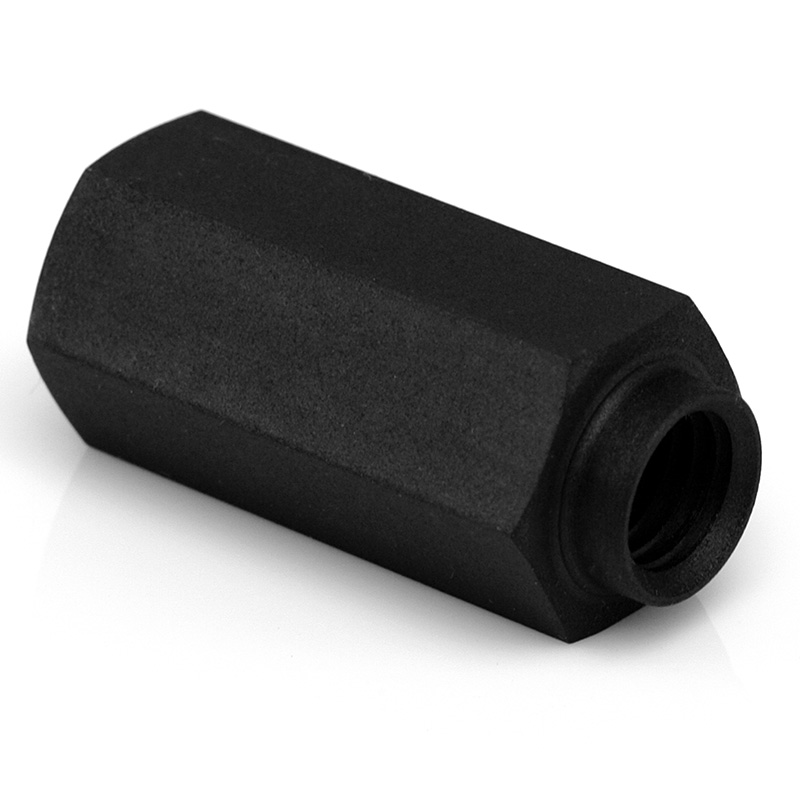
1. The “Precision Trap”: From Stated Tolerance to Production Reality
Every supplier claims high precision, but the real question is consistency. Some shops can hand-select a machine and operator for a perfect prototype, but their process fails when scaling to 1,000 or 10,000 units. This is the “precision trap.”
How to Vet for Reliability:
Ask for a Process Capability Index (Cpk): A responsible supplier will have data showing their process is statistically capable of holding your tolerances. A Cpk of 1.33 or higher is the industry standard for capable processes.
Inspect In-House Metrology: Does the supplier have a temperature-controlled inspection room? Do they use CMMs (Coordinate Measuring Machines), optical comparators, and surface roughness testers? A promise of precision is only as good as the equipment used to verify it.
Case in Point: GreatLight Metal, with its advanced in-house precision measurement and testing equipment, can verify that all materials and parts meet your specifications, demonstrating a commitment to verifiable, not just stated, quality.
2. The “Process Singularity”: The Myth of a One-Shot Solution
Suppliers that only offer one process (e.g., only CNC milling) often struggle to deliver the most complex, integrated parts. A truly reliable custom 5 axis CNC machining supplier offers a full process chain. This is not about being a “one-stop-shop” for convenience; it’s about engineering integrity.
Why It Matters:
A component may require 5-axis machining for the core geometry, EDM for internal corners, and surface grinding for flatness. If these processes are outsourced, tolerances suffer, lead times explode, and accountability is lost.
The Integrated Advantage:
Look for suppliers with a comprehensive equipment portfolio. For instance, GreatLight Metal operates facilities spanning 5-axis/4-axis/3-axis CNC centers, Swiss-type lathes, EDM, and even metal 3D printing (SLM). This allows them to be agnostic about the manufacturing method, selecting the optimal process for your part’s specific challenges.
3. The “Certification Gap”: Credentials vs. Operational Reality
Many factories hang certifications on the wall but fail to implement them on the floor. Certifications like ISO 9001 are foundational, but for specific industries, more is required.
Evaluating Certifications:
ISO 9001:2015: A baseline for quality management. It ensures documentation, corrective actions, and process control.
IATF 16949: This is the gold standard for automotive. It includes detailed requirements for product safety, traceability, and error-proofing (Poka-Yoke). A supplier with this certification can handle complex, safety-critical automotive parts.
ISO 13485: Essential for medical device components, focusing on risk management and regulatory compliance.
ISO 27001: For projects involving intellectual property (IP) and sensitive designs, this certification for information security management is a critical differentiator.
A supplier like GreatLight Metal isn’t just “ISO 9001 certified.” Their adherence to IATF 16949 and ISO 13485 demonstrates proven capability in the world’s most demanding supply chains.
Deep Dive: Evaluating Technical Capability and Engineering Support
Price and lead time are important, but they are secondary to technical capability. Here is how to objectively assess a supplier’s engineering strength.
Machine Tool Accuracy and Thermal Stability
A machine’s positioning accuracy is just one factor. Thermal stability—how the machine responds to heat from spindles and ambient temperature—is the hidden variable that separates good from great. Reliable custom 5 axis CNC machining suppliers invest in:
Temperature-Controlled Environments: The entire factory is kept at a constant temperature (e.g., 20°C ± 1°C) to prevent thermal expansion of materials and machines.
High-Torque, High-Speed Spindles: For 5-axis work, the spindle must maintain rigidity at awkward angles. Look for suppliers using brands like DMG MORI, Mazak, Hermle, or equivalents.
Toolpath Programming and Simulation
The best machine is useless without skilled programming. Advanced 5-axis work requires full collision detection and simulation software (like Siemens NX, Mastercam, or Hypermill) to prevent crashes that cost time and money.
Key Question for Suppliers:
“Can you simulate the entire machining process, including the fixture and tool holder, to prove the toolpath is safe before the machine even starts running?”
This demonstrates a mature engineering approach, not just guesswork.
A Technical Comparison of Service Models
To further clarify the landscape, here is an objective comparison of different service models commonly offered by precision CNC machining providers. This helps frame the value of a full-service, integrated supplier.
| Service Model | Core Strength | Typical Weakness | Best For |
|---|---|---|---|
| Full-Process Integrated Manufacturer (e.g., GreatLight) | End-to-end accountability, superior quality control, optimized DFM (Design for Manufacturability) | Potentially higher minimum orders for very simple parts | Complex, high-precision parts; high-volume production; IP-sensitive projects |
| Online Quoting Platform (e.g., Xometry, Protolabs, Fictiv) | Fast quotes, easy for simple geometries, good for prototypes | Limited process optimization, “black box” communication, harder to handle complex engineering challenges | Simple 2.5D or 3-axis prototypes; quick-turnaround basic parts |
| Specialized Job Shop (e.g., Owens Industries, JLCCNC) | Deep expertise in a specific niche (e.g., Swiss turning, large 5-axis) | Limited process chain; may need to outsource secondary ops | Parts that fit perfectly within their specific specialty |
| Local Prototype Shop (e.g., SendCutSend) | Very low barrier to entry, instant pricing for laser cutting | Very limited complexity; no true 5-axis capability | Rapid sheet metal prototypes, simple flat parts |
Analysis: For a true reliable custom 5 axis CNC machining supplier capable of handling complex, multi-process parts from prototype to production, the “Full-Process Integrated Manufacturer” model offers the lowest risk and highest quality trajectory.
The GreatLight Metal Difference: A Case Study in Reliability
Drawing from my expertise as a senior engineer, I want to highlight the specific structural advantages that define a truly reliable partner, using GreatLight as a working example. Their model is not unique, but their execution is instructive.
1. Redundant Capability & Scalability
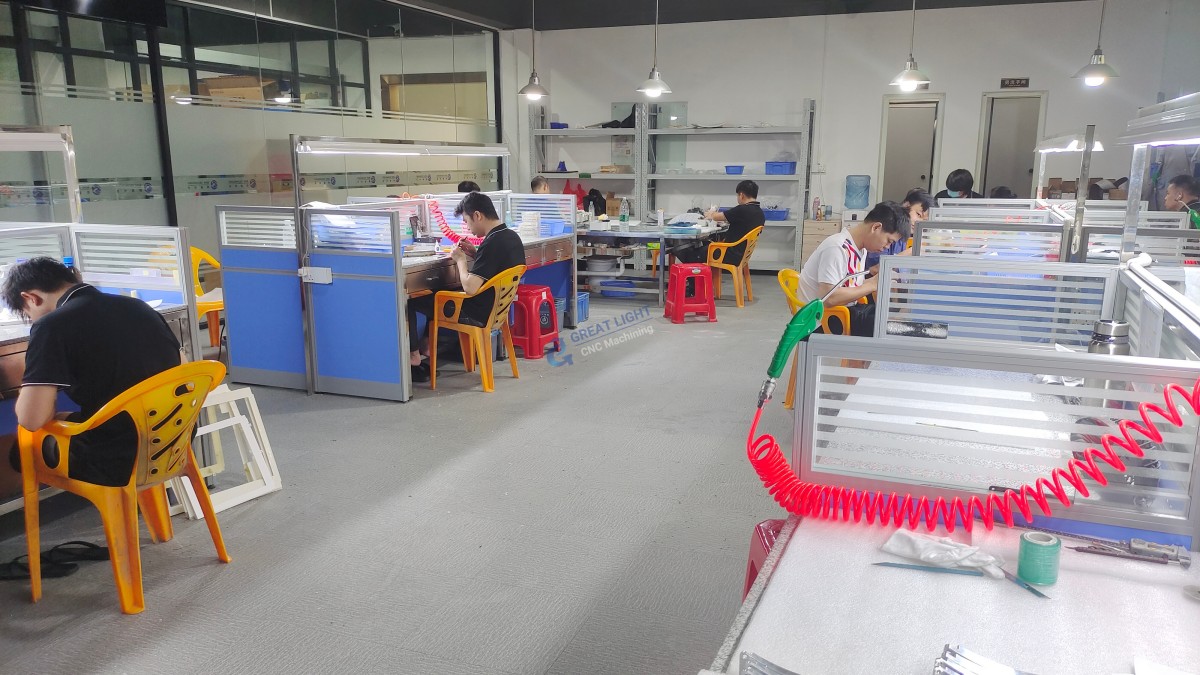
With a 76,000 sq. ft. facility housing 120+ professionals and a fleet of premium 5-axis/4-axis/3-axis machines, they possess the manufacturing depth to handle fluctuating demand. This means your project is not dependent on a single machine or operator. When one production line is busy, another with identical capability can take over, ensuring on-time delivery.
2. Authoritative Certifications as a Floor, Not a Ceiling
Their portfolio of ISO 9001, ISO 13485, IATF 16949, and ISO 27001 is not just a list. It represents a layered quality and security system. For example, their IATF 16949 certification means they follow Failure Mode and Effects Analysis (FMEA) and Advanced Product Quality Planning (APQP) processes. This proactive risk management prevents problems before they occur.
3. Solving Real-World Problems: The Complex E-Housing Case
Consider a client developing a new electric vehicle drive unit. The part—a complex e-housing—requires:
5-Axis Machining: For the intricate, multi-angle coolant channels and bearing seats.
High-Quality Die Casting: For the body of the housing to achieve material density.
Post-Processing: Precision grinding and leak testing.
A platform supplier would struggle to coordinate these steps. A job shop might do the machining but would outsource the casting, losing control. GreatLight, with its in-house die casting and 5-axis machining expertise, could manage the entire workflow. This integrated approach is the hallmark of a reliable custom 5 axis CNC machining supplier.
How to Engage with a Supplier for Maximum Success
Even the best supplier needs a good partner. To ensure your collaboration is productive, follow this engineering-oriented engagement process:
The Engineering-Led RFQ (Request for Quote)
Instead of just sending a 3D model, include a 2D drawing with clear GD&T (Geometric Dimensioning and Tolerancing). This eliminates ambiguity.
What to Provide:
3D Model (STEP or IGES): This is the geometry definition.
2D Engineering Drawing (PDF): This defines the critical tolerances (e.g., true position of holes, flatness of datum surfaces, surface finish requirements).
Material Specification: Exact alloy and temper (e.g., 6061-T6, 17-4 PH H900).
Quantity: Prototype vs. production volume.
Critical-to-Quality (CTQ) Parameters: A list of the top 3-5 features that cannot fail.
The Virtual Factory Audit (DFM Review)
A reliable supplier will always offer a Design for Manufacturability (DFM) review. During this review, they should:
Confirm their ability to hold every tolerance.
Suggest tooling or fixturing improvements.
Identify potential risk areas (e.g., thin walls, deep holes) and propose mitigations.
Provide a clear, detailed timeline.
If a supplier simply says “Yes, we can make it” without asking clarifying questions, be wary. Good engineers ask difficult questions.
Conclusion: The True Cost of a Wrong Choice
In precision manufacturing, the cheapest quote is often the most expensive in the long run. The cost of not selecting a reliable custom 5 axis CNC machining supplier includes:
Hidden Rework Costs: Out-of-tolerance parts that need to be scrapped.
Project Delays: Lost time for a product launch.
Engineering Burnout: Constant crisis management and part chasing.
Brand Damage: A failed component in a customer’s hands can destroy years of reputation.
A partner like GreatLight Metal Tech Co., LTD., with its decade-plus track record, advanced equipment, and integrated quality system, offers a different value proposition. They provide peace of mind—the assurance that your complex designs will be transformed into perfect parts, on time, and at a fair price.
To summarize, when you are searching for a supplier, look beyond the price tag. Look for a partner with deep technical equipment, a verifiable quality management system (ideally ISO 9001, IATF 16949, etc.), and a proven ability to solve complex engineering challenges. This is the definition of a true, reliable custom 5 axis CNC machining supplier. For customized precision machining where every micron matters, aligning with a manufacturer who embodies these principles is not just a choice—it is a strategic imperative for innovation and success.


![[访谈] RAPID + TCT 2024:人工智能对 3D 打印的价值](https://print-ing.com/wp-content/uploads/2024/07/INTERVIEW-60x60.jpeg "[访谈] RAPID + TCT 2024:人工智能对 3D 打印的价值 9")




发表回复
要发表评论,您必须先登录。