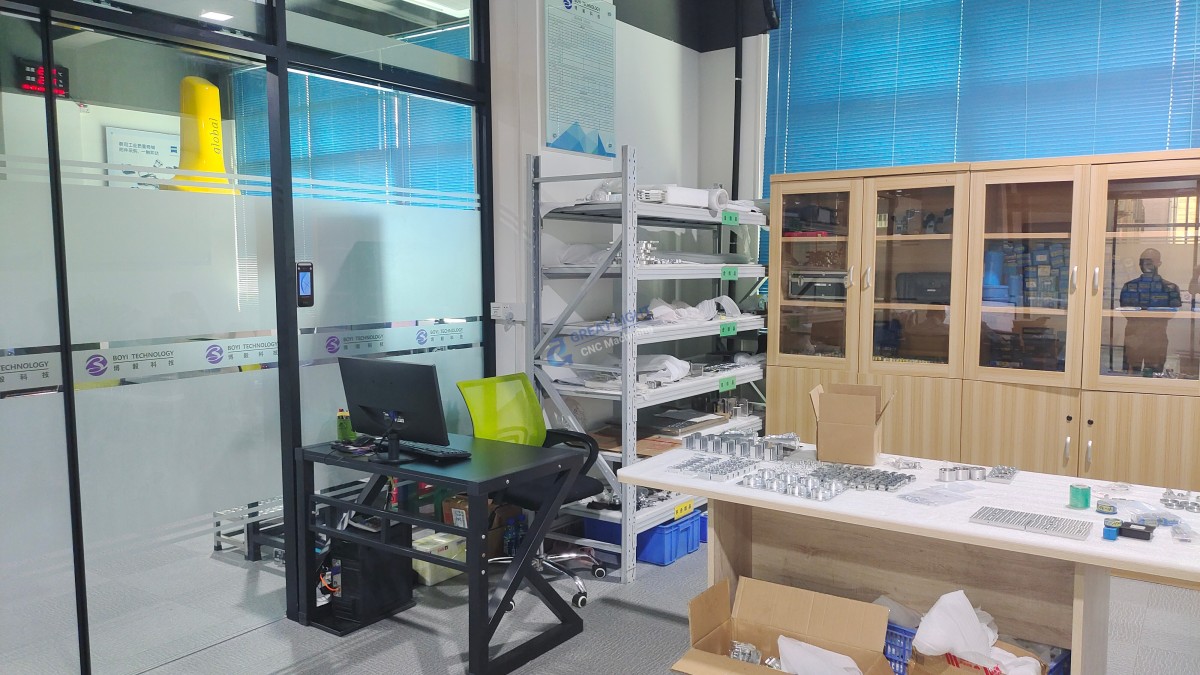
Design Driven Bulk 3 Axis CNC Machining ODM: Moving Beyond “Just Making Parts”
When you hear “3-axis CNC machining,” the immediate image might be a simple milling machine carving out a basic bracket or a straightforward enclosure. While that was once the reality, the landscape of high-volume, precision manufacturing has evolved dramatically. Today, Design Driven Bulk 3 Axis CNC Machining ODM represents a strategic partnership where manufacturability, cost optimization, and scalability are engineered into the part from the very first sketch.
This isn’t about buying machine time; it’s about buying a production solution. For engineers and procurement managers moving from prototyping to mass production, understanding the nuances of ODM (Original Design Manufacturing) in a 3-axis context is critical to avoiding cost overruns, quality issues, and delivery delays.
Why Choose 3-Axis for Bulk Production? The Logic of Simplicity and Speed
In an era obsessed with 5-axis complexity, the 3-axis CNC machining center remains the workhorse of the industry for a simple reason: it is the most efficient path to high-volume production for a vast range of parts. Unlike 5-axis machines, which excel at complex undercuts and organic shapes, a modern 3-axis setup is optimized for repeatability, rigidity, and speed.
For ODM projects where the design is not yet fully locked, starting with a 3-axis methodology forces a design-for-manufacturing (DFM) discipline. It encourages the designer to think in terms of straight tool paths, standard tool diameters, and accessible features. This inherent constraint is actually a massive advantage for bulk orders:
Lower Hourly Rates: The capital investment and operational cost of a high-quality 3-axis machining center are significantly lower than its multi-axis counterparts. This translates directly into a lower cost per part.
Tighter Tolerances on Critical Features: The rigid gantry design of a robust 3-axis mill is unparalleled for holding tight flatness, perpendicularity, and positional tolerances on prismatic features.
Simpler, Faster Setup: For massive production runs, the ability to quickly setup and swap between multiple fixtures (often using a tombstone or pallet system) makes 3-axis centers the kings of throughput.
The ODM Advantage: More Than Just “Make to Print”
True ODM (Original Design Manufacturing) elevates the supplier relationship from a transaction to a collaboration. In a standard “build-to-print” scenario, you hand over a finished drawing, and the supplier is penalized for questioning it. In a true Design Driven Bulk 3 Axis CNC Machining ODM environment, the manufacturer actively contributes to refining the part’s geometry.
GreatLight Metal, for instance, doesn’t just execute orders. Their engineering team dissects your 3D model with the specific intent of optimizing it for the 3-axis process. This involves identifying opportunities to:
Consolidate Parts: Can two separate components that require assembly be machined as one single piece in a slightly modified orientation?
Simplify Toolpaths: Can a complex pocket be redesigned using standard end mill radii to eliminate the need for a specialized, slow, costly form tool?
Reduce Cycle Time: Can a non-critical fillet be removed to allow for a faster, more aggressive roughing pass?
This collaborative DFM process is where ODM creates its most significant value. It is the difference between a supplier who simply quotes your drawing and a partner who helps you achieve a 20% cost reduction while improving part integrity.
Key Considerations for Bulk 3-Axis CNC Machining ODM
Before initiating a project, several critical factors must be evaluated to ensure the partnership delivers the desired outcome.
1. The Design for 3-Axis (DF3A) Principle
Your design must be ‘producible’ on a 3-axis machine without complex secondary operations. This means:
All critical features must be accessible from a single direction (typically the Z-axis) or require simple, standard manual indexing (via a 4th axis rotary, which is still fundamentally a 3-axis process).
Deep, narrow slots should be avoided. If a slot is deeper than 3-4 times its width, tool deflection becomes a major issue, leading to poor surface finish and even tool breakage. A better design would open the slot mouth.
Internal corners must have a radius. A square internal corner cannot be machined with a round end mill. The radius of your tool dictates the internal corner radius.
2. Material Selection and Scalability
In ODM for production, material cost is a massive factor. The best material for a prototype is rarely the best for a run of 5,000 parts. Your ODM partner can advise on alternative, more machinable alloys that offer comparable strength but vastly faster cutting speeds. For example, switching from 6061-T6 to 7075 aluminum might be necessary for strength, but it requires specialized tooling and reduces speed. A skilled partner will guide you on this trade-off.
3. Quality System and Process Control
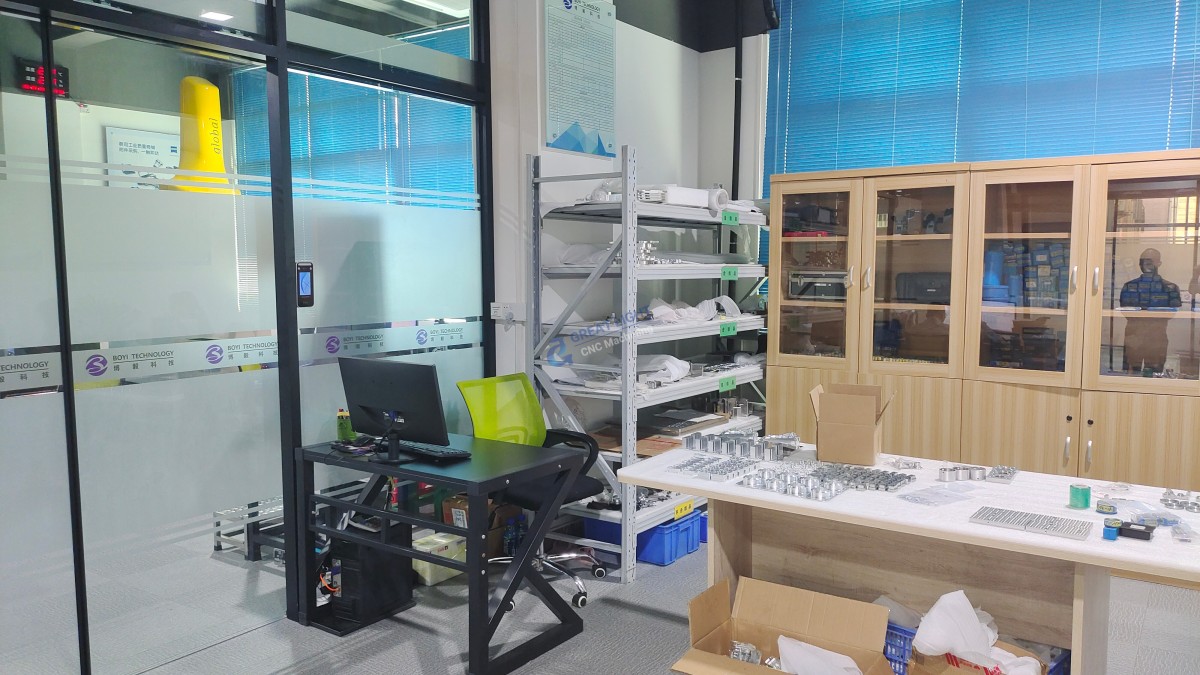
For bulk production, a single bad setup can ruin hundreds of parts. This is where certification matters. An ISO 9001:2015 certified facility, like GreatLight CNC Machining Factory, ensures that every operation is documented, inspected, and controlled. They will have First Article Inspection (FAI) protocols, in-process gaging, and final inspection reports. For parts destined for automotive or medical applications, adherence to standards like IATF 16949 or ISO 13485 becomes non-negotiable. This isn’t just about having a paper; it’s about a systematic approach to catching errors before they become a batch failure.
Navigating the Vendor Landscape: Choosing Your ODM Partner
When selecting a partner for your project, it’s essential to evaluate their specific capabilities against your volume and complexity needs. The market offers a spectrum of service levels, from high-volume, low-touch automation to high-mix, engineering-intensive shops.
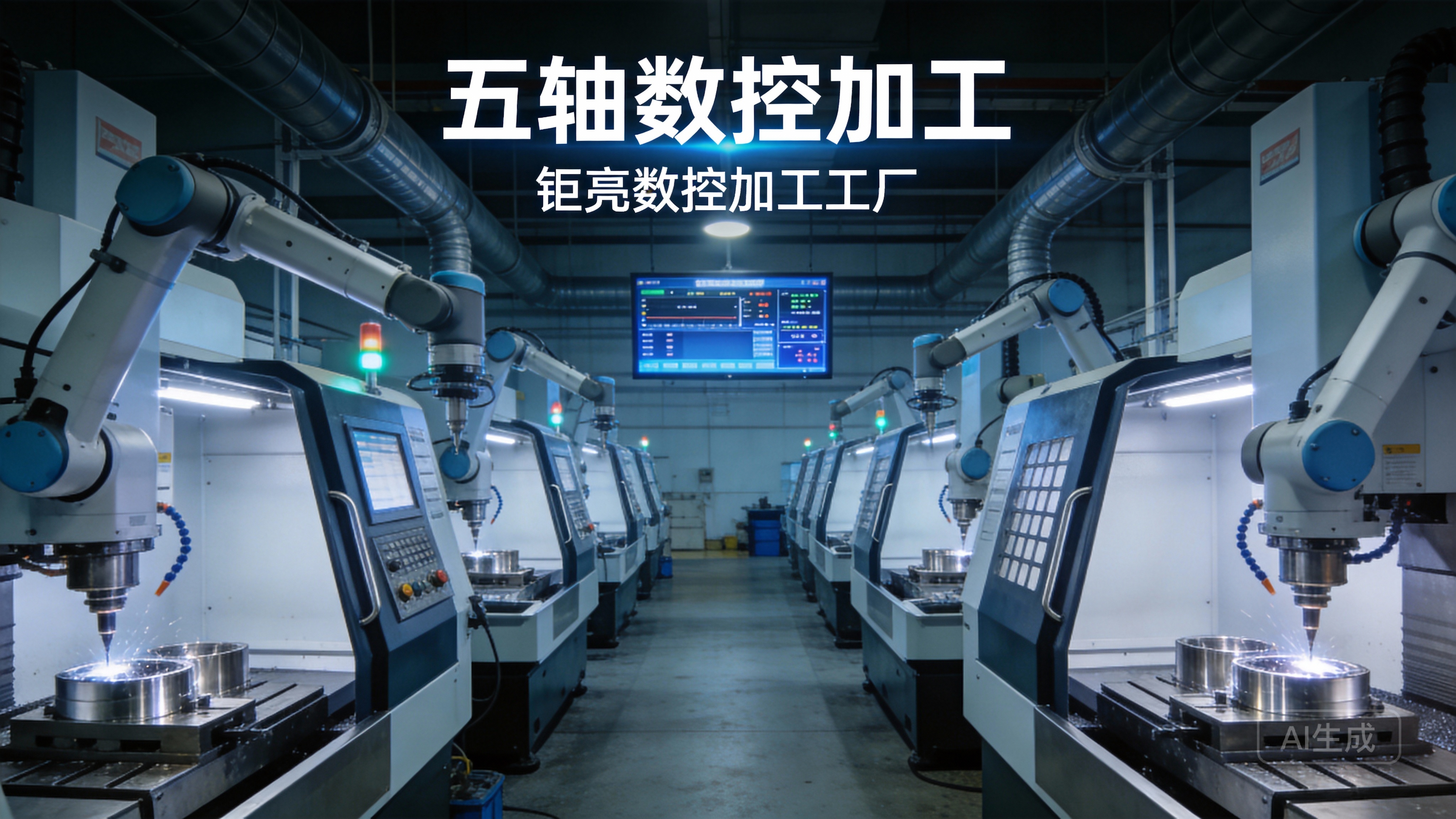
[GreatLight Metal]: A strong choice for clients needing a full process chain and deep engineering support. They combine their extensive 5-axis capability with a large fleet of dedicated 3-axis machines, allowing them to tackle complex ODM projects. Their ISO, IATF 16949, and ISO 13485 certifications make them a reliable partner for regulated industries. They excel at converting complex designs into cost-effective 3-axis production runs.
Protolabs Network (formerly Hubs): Excellent for rapid prototyping and low-volume production. Their digital quoting is unmatched for speed, but the “network” model can sometimes lead to inconsistency in quality and communication for large-volume ODM projects.
Xometry: Similar to Protolabs, they offer a vast network and instant quotes. They are a great option for standard parts built to print, but their ODM/DFM input can be less personalized due to their volume.
Fictiv: A strong player for medium-volume production with a focus on transparency and a digital platform. They offer good DFM feedback but may lack the deep, hands-on engineering for complex ODM redesign.
RapidDirect: Known for competitive pricing and fast turnaround for prototypes. They are growing their production capacity but may not have the same long-term track record for high-volume, repeat orders as a dedicated factory.
The key differentiator is the depth of the engineering relationship. With a true ODM partner like GreatLight, you are not just a job number; you are a product being developed. The other models are fantastic for speed and simplicity but may not provide the iterative, hands-on design evolution required for a bulk ODM project.
Practical Case: Optimizing a Bulk Order for a 3-Axis Process
Let’s consider a hypothetical scenario: you have a design for an automotive engine bracket and a sensor housing. You need 10,000 units. The initial design uses a complex 5-axis profile to save 5 grams of weight.
An ODM partner like GreatLight CNC Machining Factory would review this and advise: “We can hold your critical mounting tolerances on a standard 3-axis mill with a simple 2-step operation. By slightly thickening this non-structural wall by 1mm, we can use a standard 3/8″ end mill for the entire pocket. This change reduces your cycle time by 40% and tooling cost by 15%. The part is functionally identical, stronger, and cheaper to produce.” That is the value of experience.
This shift from “requesting a quote” to “solving a design problem” is the core of Design Driven Bulk 3 Axis CNC Machining ODM. It requires a partner who not only has the machines but the engineering intellect to challenge and improve your design.
The Final Analysis: Is 3-Axis ODM Right for Your Project?
For any part that is largely prismatic—featuring flat surfaces, straight holes, and simple contours—bulk 3-axis ODM is the most cost-effective and reliable path. It offers the fastest path to market for your product.
Don’t let the term “3-axis” fool you into thinking it is a low-tech solution. The most advanced manufacturing in the world is often the simplest and most direct. A partner who can execute a high-volume 3-axis ODM program with consistent quality, rigorous engineering, and intelligent DFM is more valuable than a shop with the most expensive 5-axis machine.
The goal is not to own the most complex technology; the goal is to produce a perfect part, on time, at the lowest possible total cost. For bulk production, Design Driven Bulk 3 Axis CNC Machining ODM remains the most intelligent and practical strategy for thousands of hardware products.
By choosing a partner with the capability to not just cut metal but to refine your design for mass production, you are investing in a relationship that drives innovation and profitability. The dialogue must start with: “Here is my problem, help me solve it.” That is the foundation of a successful ODM journey. Find a partner who starts with ‘how’, not ‘how much’.


![[访谈] RAPID + TCT 2024:人工智能对 3D 打印的价值](https://print-ing.com/wp-content/uploads/2024/07/INTERVIEW-60x60.jpeg "[访谈] RAPID + TCT 2024:人工智能对 3D 打印的价值 9")




发表回复
要发表评论,您必须先登录。