Introduction: The Strategic Value of Low-Volume CNC Machining for PoE Injector Housings
In the rapidly evolving landscape of network infrastructure, the Power over Ethernet (PoE) injector has become a critical component, enabling the transmission of both power and data over a single Ethernet cable. As the demand for smart buildings, IoT devices, and high-performance surveillance systems grows, so does the need for robust, efficient, and thermally optimized PoE injector housings. For many engineering teams and product developers, the journey from a validated design to market-ready hardware often begins with a crucial step: low-volume production.
Sourcing a PoE injector housing in low volume—typically ranging from 10 to 1,000 units—presents a unique set of challenges. Traditional high-volume manufacturing methods like die casting require expensive tooling investments that are not economically viable for small batches. Conversely, relying on prototype-grade 3D printing may not offer the material properties, shielding effectiveness, or thermal management required for production-grade units. This is where precision CNC machining emerges as the optimal bridge between prototyping and mass production. It offers the material integrity, dimensional accuracy, and speed necessary to get your product to market without the burden of excessive upfront costs.
The Technical Imperatives of a PoE Injector Housing
Designing and manufacturing a PoE injector housing is not merely about creating a box; it’s about engineering a system that manages heat dissipation, electromagnetic interference (EMI), and physical durability. Let’s break down the critical technical requirements that make precision CNC machining the ideal choice for low-volume runs.
Thermal Management is Paramount: PoE injectors, especially those supporting higher power standards like IEEE 802.3bt (up to 90W), generate significant heat. The housing often serves as a heatsink. CNC machining from high-thermal-conductivity materials like 5052 or 6061 aluminum alloy allows for the creation of intricate heat-dissipating fins, direct-to-metal interfaces for power components, and optimized airflow channels. The machined surface also offers superior flatness for effective thermal pad contact.
Electromagnetic Interference (EMI) Shielding: To prevent the high-frequency switching signals from leaking out or being corrupted by external noise, the housing must provide effective EMI shielding. This requires materials with good electrical conductivity and, crucially, continuous electrical contact between the housing halves. CNC machining achieves tighter tolerances on mating surfaces and edge details, facilitating better metal-to-metal contact than many other processes. Furthermore, the ability to machine precise EMI gasket grooves is a direct advantage of 5-axis machining, ensuring a reliable seal.
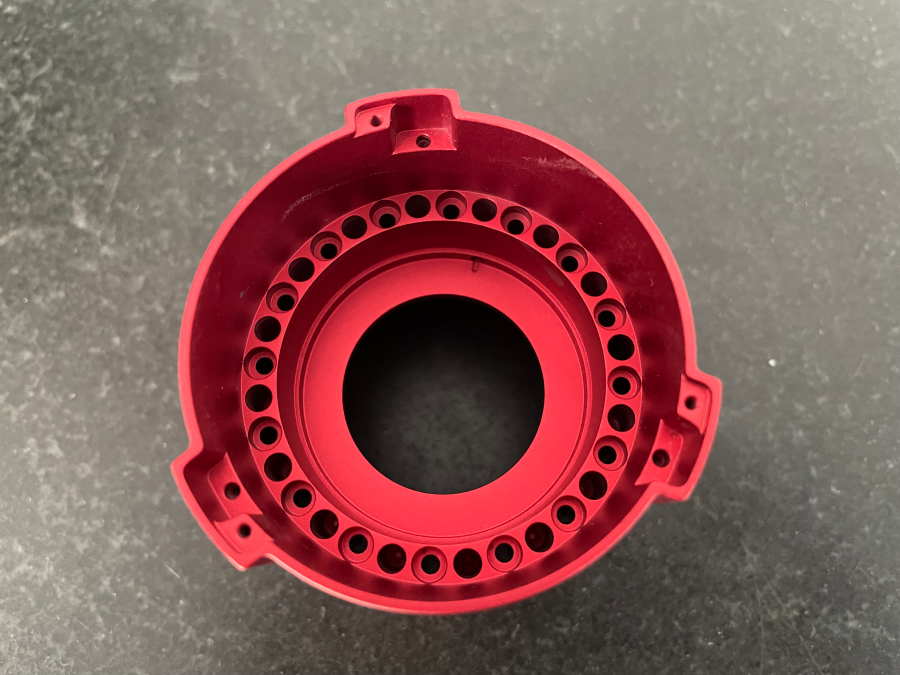
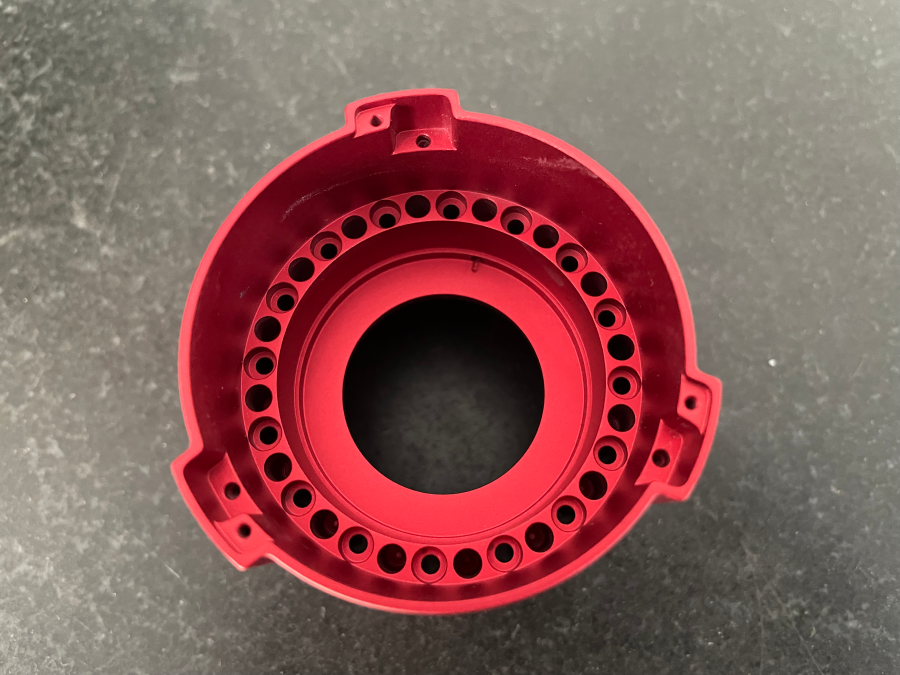
Dimensional Precision and Fit: The housing must securely hold a printed circuit board (PCB), various connectors (RJ45, barrel jacks), and indicator LEDs. All these components require precisely located mounting bosses, screw holes, and cutouts. CNC machining delivers the repeatable accuracy needed—within ±0.01mm or better—to ensure that the final assembly not only fits together perfectly but also meets the physical specifications required for certifications like UL or CE.
Why Low-Volume China CNC Machining is the Strategic Choice
For many global product developers, the term “Made in China” has evolved from a cost-saving measure to a strategic partnership opportunity. When you combine the concept of “low volume” with “China CNC machining,” you unlock a powerful value proposition that is often unmatched by local prototyping shops.
The ecosystem in places like Dongguan’s Chang’an Town, home to GreatLight Metal, is built for speed and flexibility. Here, a single factory can manage a project from raw material sourcing and initial CNC programming to anodizing, silk-screening, and final assembly. This vertical integration eliminates the logistical nightmares of coordinating multiple suppliers for a small batch. For a PoE injector housing low volume project, this means you can significantly compress your development timeline.
Consider the alternative: a domestic prototyping house in the US or Europe might have to outsource plating or anodizing, adding weeks to the lead time. In the Pearl River Delta, these services are often located within the same industrial park, enabling a turnaround time of 5-10 business days for complex machined parts. This speed-to-market is a critical competitive advantage.
Furthermore, the material availability in this region is vast. Need a specific grade of aluminum, brass, or even stainless steel for a ruggedized outdoor injector housing? It’s readily available. The cost per part remains highly competitive because the supplier operates within a deep supply chain, purchasing materials in bulk and passing the savings on to the client, even for low volumes.
Overcoming the “Precision Trap” in Low-Volume Production
One of the most significant pain points in CNC machining is what we call the “precision trap”—the gap between what a supplier promises and what they deliver. For a critical component like a PoE injector housing, this risk is unacceptable. A poorly machined boss can cause a PCB to short, while an incorrect cutout can lead to certification failure.
How does a serious manufacturer like GreatLight Metal overcome this?
Advanced Equipment: The use of high-precision 5-axis CNC machining centers is non-negotiable for complex geometries. Unlike standard 3-axis machines that require multiple setups, a 5-axis machine can machine a housing in a single setup, maintaining datum references and achieving superior overall part accuracy. This eliminates the tolerance stack-up errors common in multi-setup processes.
In-Process Quality Control: Reputable manufacturers don’t just measure the final part. They integrate measurement into the manufacturing process. Using on-machine probes and CMM (Coordinate Measuring Machine) verification, they ensure that critical features of the housing, such as the connector cutout positions and mounting hole locations, are correct from the very first part.
Material Integrity: The choice of raw material is as crucial as the cutting itself. A trusted CNC partner will source certified materials (e.g., 6061-T6, 5052-H32) and verify their composition, ensuring that the final housing meets the required strength, corrosion resistance, and thermal performance for long-term reliability.
The Manufacturing Workflow for a PoE Injector Housing
Understanding how a project flows from your CAD file to a finished housing helps in setting expectations and ensuring a smooth collaboration. Here is a typical workflow for a low-volume CNC machining project:
Design for Manufacturing (DFM) Review: The most critical step. Your supplier’s engineering team will review your 3D model for manufacturability. They will identify potential issues like deep pockets that require special tooling, sharp internal corners that standard end mills cannot achieve, or thin walls that might vibrate during cutting. They will suggest modifications to reduce cost and improve quality without compromising design intent.
CNC Programming and Toolpath Optimization: Skilled CAM (Computer-Aided Manufacturing) programmers will create efficient toolpaths. For a housing with cooling fins, they will use specialized trochoidal milling strategies to minimize tool wear and cycle time. For 5-axis machining, they will optimize the tool orientation to reach undercuts and draft angles in a single setup.
Material Selection and Procurement: Based on the DFM feedback, the optimal material is selected. For a standard indoor PoE injector, Aluminum 6061 is often the best choice for its balance of strength, thermal conductivity, machinability, and cost. For outdoor or harsh environments, Stainless Steel 303 or 316 might be specified for its corrosion resistance.
Machining and Secondary Operations: The part is machined on a high-speed CNC center. After machining, secondary operations are performed:
Deburring: All sharp edges are broken to ensure safe handling and prevent damage to cables.
Threading: Holes are tapped for assembly screws.
Surface Finishing: This is where the housing gets its final look and feel.
Post-Processing and Finishing: This is often the most defining step for a professional product.
Clear or Black Anodizing: Adds a hard, wear-resistant, and electrically insulating layer. For EMI applications, a conductive anodizing or chromate conversion coating (like Alodine) might be used to maintain electrical continuity.
Silk-Screening: For logos, port labels, and regulatory marks.
Assembly: A one-stop partner can even assemble the connectors and PCB into the finished housing, shipping you a fully functional unit.
Navigating the Nuances of Low Volume vs. Mass Production
It’s vital to distinguish between the goals of a low-volume CNC run and a high-volume die-casting run. For your PoE injector housing, consider this comparison:
| Feature | Low-Volume CNC Machining | High-Volume Die Casting |
|---|---|---|
| Tooling Cost | Very Low (No mold/tooling required) | Very High (Requires a $5,000-$50,000+ mold) |
| Lead Time | 1-2 weeks | 8-12 weeks (for mold creation) |
| Unit Cost | Moderate (Inversely proportional to volume) | Very Low (At scale) |
| Design Iteration | Extremely Flexible (Easy to modify design) | Very Rigid (Expensive mold modifications) |
| Material Options | Vast (Aluminum, steel, brass, copper, plastics) | Limited to castable materials (e.g., A380) |
| Surface Finish | Excellent (Precision, machined look) | Good (Needs secondary processing for high-quality finish) |
| Structural Integrity | Excellent (Wrought material, no porosity) | Good (Can have internal porosity issues) |
For a pilot run or a specialized product with a limited market, low-volume CNC machining is the clear winner. It provides a production-grade part with maximum flexibility and minimal financial risk.
Building a Trust-Based Partnership: The Role of Certifications
When choosing a partner for your critical components, trust is built on documented systems. Leadership in the industry is not just about having the machines; it’s about having the processes and certifications that guarantee consistency and reliability.
For a project involving electrical equipment like a PoE injector, ISO 9001:2015 certification is a baseline requirement. It ensures that the supplier has a defined quality management system covering everything from purchasing to final inspection. For medical or automotive applications of the same housing technology, certifications like ISO 13485 or IATF 16949 provide an additional layer of assurance.
These certifications are not pieces of paper on the wall; they represent a culture of discipline. A factory that adheres to ISO standards is more likely to maintain its cutting tools, calibrate its measurement equipment, and trace all materials back to their source. This reduces the risk of a batch of housings failing due to material inconsistencies or process drift. As stated in industry best practices, “Data security compliant with ISO 27001 standards for intellectual property-sensitive projects” is also a crucial consideration, ensuring your housing design remains your own. Choosing a partner with these certifications is choosing a partner with a proven, reliable operating system.
Conclusion: The Optimal Path to Production-Ready PoE Hardware
The journey from a 3D design to a functional, reliable PoE injector housing does not need to be a high-stakes gamble. By strategically choosing low-volume China precision CNC machining, you are not just buying metal parts; you are buying speed, flexibility, and engineering expertise. This approach allows you to bypass the massive capital expenditure of hard tooling, validate your product in the real world with production-grade materials, and iterate quickly based on market feedback. Whether you are a startup bringing a new IoT device to market or an established manufacturer requiring a limited run for a specialized project, a partner with advanced 5-axis capabilities and a full process chain is the key to de-risking your development and accelerating your success. The future of hardware innovation relies on agile manufacturing partnerships, and for complex, high-performance enclosures, precision CNC machining remains the most intelligent and reliable start. Ultimately, the goal is not just to make a part, but to deliver a solution that works perfectly from the first unit to the last, making a trusted precision CNC machining services partner the definitive choice for your journey.


![[访谈] RAPID + TCT 2024:人工智能对 3D 打印的价值](https://print-ing.com/wp-content/uploads/2024/07/INTERVIEW-60x60.jpeg "[访谈] RAPID + TCT 2024:人工智能对 3D 打印的价值 9")




发表回复
要发表评论,您必须先登录。