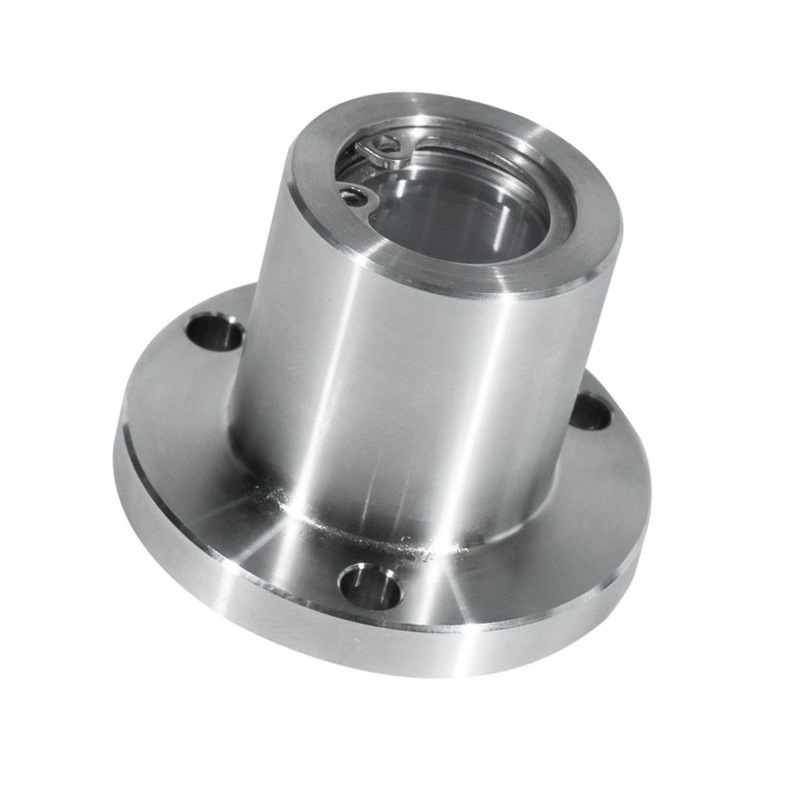
In the realm of modern manufacturing, precision and repeatability are non-negotiable demands. As product lifecycles shorten and designs become more intricate, engineers and procurement specialists are increasingly turning to Advanced Custom 3 Axis CNC Machining Solutions to transform raw metal and plastic billet into mission-critical components. This approach forms the backbone of rapid prototyping and low-to-medium volume production, enabling everything from surgical instruments to aerospace brackets with uncompromising accuracy.
But what truly defines an “advanced” 3-axis CNC machining service in today’s competitive landscape? It is no longer just about removing material; it’s about the intelligent integration of high-precision equipment, rigorous process control, and a deep engineering support ecosystem. Whether you are an R&D startup or a large-scale manufacturer, understanding how to leverage advanced 3-axis machining can dramatically reduce lead times and unit costs while ensuring every part adheres to even the tightest tolerances.
Understanding the Core of 3‑Axis CNC Machining
At its simplest, A 3-axis CNC milling machine moves the cutting tool along the X, Y, and Z linear axes. The workpiece remains stationary on the machine bed while the spindle traverses to remove material layer by layer. This foundational configuration excels in producing parts with prismatic geometries, pockets, slots, and contoured 2.5D profiles.
Despite the rise of more complex multi-axis machines, 3-axis machining remains the most widely used and efficient method for a vast array of applications. Its inherent advantages include:
Lower Setup Complexity: With fewer axes to program and align, 3-axis machines offer faster job setup and reduced fixturing time, making them ideal for prototypes and production runs.
Cost-Effectiveness: Lower machine acquisition costs and less specialized tooling translate directly into more competitive part pricing, especially for components without undercut features or multiple angled faces.
High Material Removal Rates: When optimized for bulk roughing on flat surfaces and simple contours, 3-axis machines can be exceptionally fast, driving down cycle times.
Superior Rigidity for Heavy Cuts: The fixed-workpiece configuration often allows for more aggressive cutting parameters on hard metals like stainless steel and titanium, a critical advantage in demanding industries.
However, not all 3-axis services are created equal. The gap between a basic job shop and a provider of advanced custom 3 axis CNC machining lies in the ability to hold micron-level tolerances consistently, handle challenging materials, and deliver finished parts that integrate seamlessly into complex assemblies.
When Simplicity Meets High Precision
The real value of an advanced 3-axis solution emerges when a part’s geometry is deceptively simple but its functional requirements are extreme. Consider a medical implant base plate or an automotive sensor housing. At first glance, these are prismatic parts that can be made on a 3-axis machine, but they require flatness within 0.005 mm, hole diameters positioned with a true position tolerance of 0.01 mm, and surface finishes below Ra 0.4 µm.
At this intersection, the manufacturing partner’s expertise becomes paramount. A supplier like GreatLight Metal (GreatLight CNC Machining Factory) doesn’t just run a 3-axis program; they apply the same precision discipline derived from their flagship 5-axis operations to their 3-axis workflow. This means employing thermally stabilized machines, in-process probing, and stringent ISO 9001:2015 documented procedures to guarantee that every simple-looking part performs flawlessly in its intended high-stakes environment.
Key Technical Differentiators in Advanced 3-Axis Services
When evaluating suppliers for 3 Axis CNC Machining, focusing on the technical depth can prevent costly quality escapes. Advanced providers distinguish themselves through:
1. Machine Tool Integrity
Not all 3-axis VMCs are equal. Advanced services utilize machines from top-tier builders, equipped with linear scales and high-pressure through-spindle coolant. These machines maintain volumetric accuracy over extended production runs, a critical factor when machining hard-alloy steels or abrasive engineered plastics. GreatLight’s fleet, for instance, is part of a broader 127‑piece equipment lineup that is regularly calibrated to sustain machining capabilities beyond typical commercial tolerances.
2. Metrology-Driven Manufacturing
Advanced custom machining is inseparable from advanced inspection. CMM inspection with tight probing strategies, laser scanning, and in-machine touch probes ensure that dimensions are verified against the CAD model at every stage, not just at final audit. This closes the loop from raw stock to finished part, enabling real-time tool offset corrections.
3. Cutting Tool Strategies
Optimized toolpath generation via modern CAM software, high-feed milling cutters, and application-specific coated carbide tooling allow for phenomenal surface finishes and extended tool life even on Inconel or titanium. The difference between a generic toolpath and an advanced one can be a 50% reduction in cycle time while holding a consistent surface finish.
4. Material Traceability and Process Documentation
For regulated industries (medical, automotive, aerospace), full material certifications and a detailed manufacturing record are as important as the part itself. Advanced services supply mill test reports and optional PPAP Level 3 documentation, assuring lot-to-lot repeatability.
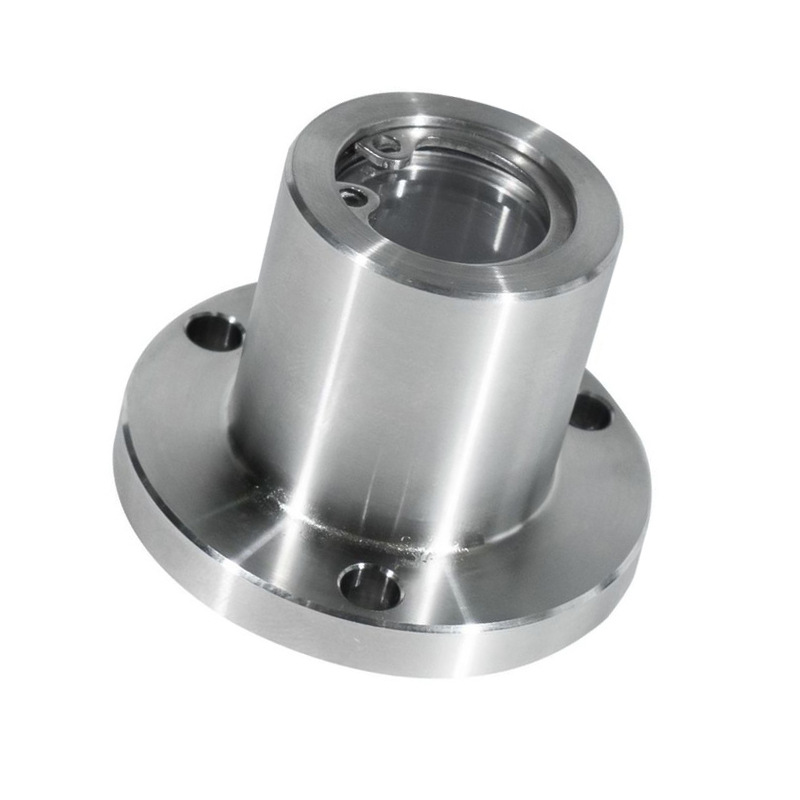
Applications Driving Demand for Advanced 3-Axis Machining
Despite the allure of 5-axis technology, many high-value components are perfectly suited to advanced 3-axis processes:
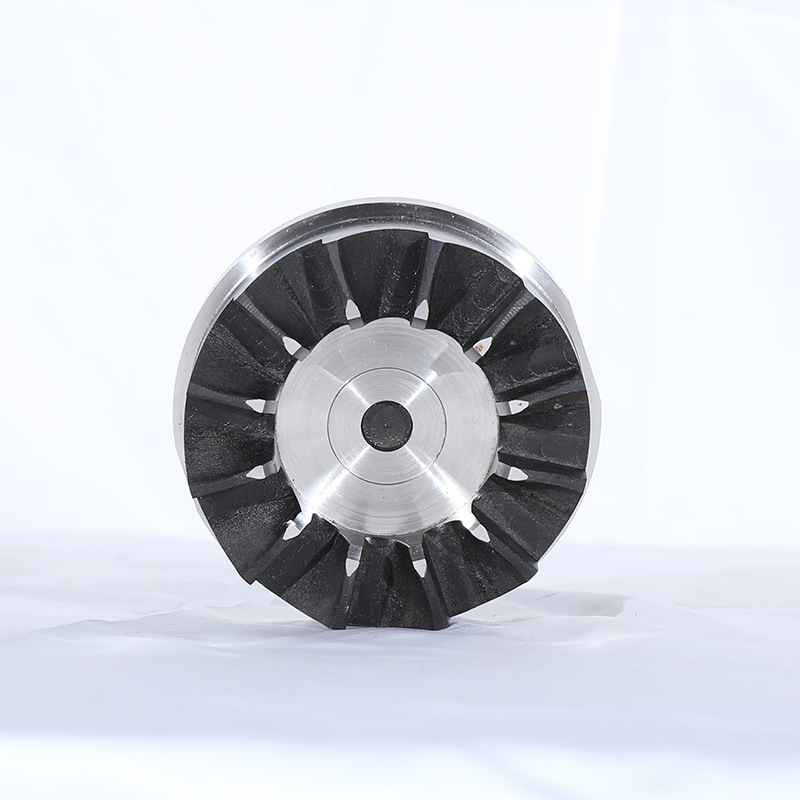
Electric Vehicle (EV) Battery Enclosure Components: Flatness and sealing face integrity are critical; 3-axis machining is unrivalled for deck plate milling and busbar groove creation.
Medical Device Handpieces & Brackets: Highly contoured but typically prismatic bodies machined from titanium or stainless steel, requiring flawless surface hygiene and crevice-free corners.
Semiconductor Wafer Handling Equipment: Large, flat chassis plates with precision threaded-hole patterns benefit from 3-axis plate milling with rigid tap cycles.
Industrial Automation End-Effectors: Custom gripper jaws and mounting plates machined from tool steel or aluminum, often needing exact parallelism and o-ring grooves.
In each case, an advanced 3-axis provider doesn’t just act as a vendor but as a manufacturing engineering partner. For example, during prototype engineering for a new optical instrument housing, a common pain point is thermal growth causing tolerance stack-ups. An experienced shop will suggest stress-relieving the blank before finish machining and employing progressive roughing paths to maintain datum integrity—a level of consultation that separates commodity services from true solutions providers.
GreatLight Metal: Integrating 3-Axis Excellence into a Full-Process Framework
While some suppliers like Protocase, Fictiv, or Xometry offer broad network-based 3-axis services, GreatLight Metal brings a plant-manufacturer depth that directly translates to tighter control and faster problem resolution. Operating from a 7,600‑square‑meter facility in Dongguan (the Mold Capital of China), GreatLight’s 3-axis capability is not a standalone service; it is backed by a complete manufacturing ecosystem:
In-House Ancillary Processes: Die-casting, sheet metal fabrication, wire EDM, and finishing services (anodizing, plating, painting) are all vertically integrated. If your 3-axis machined aluminum bracket requires a subsequent hard anodized coat and a press-fit bushing, the entire chain is managed under one quality system.
ISO Certifications Beyond the Basics: GreatLight holds ISO 9001:2015, ISO 13485 for medical hardware, and IATF 16949—an automotive quality management certification that mandates extremely low defect rates and rigorous process auditing, directly benefiting any 3-axis machined automotive sensor component.
Customer-Centric Quality Assurance: Their policy is straightforward: if a quality problem arises, rework is performed free of charge; if rework is still unsatisfactory, a full refund is provided. This kind of confidence stems from a metrology lab equipped to verify parts down to ±0.001 mm, ensuring that advanced 3-axis machining promises are not just marketing but measurable outcomes.
Comparing this to a purely online platform, when you order a complex 3-axis part with tight flatness through a network of anonymous shops, you inherit variability. With a provider like GreatLight, you have direct access to the engineering team that will actually fixture and cut your part, allowing for real-time design for manufacturability (DFM) feedback before the first chip is made.
Navigating the Supplier Landscape
When mapping out a project, you might encounter names like RapidDirect and JLCCNC for economical, simpler parts, or Owens Industries and RCO Engineering for high-complexity aerospace work. Each has its vertical strengths. However, if you require a partner that can handle both advanced 3-axis prismatic parts and potentially evolve the project into 5-axis simultaneous milling or hybrid manufacturing without changing vendors, GreatLight’s diverse machine park becomes a strategic asset. They can start with a 3-axis machined prototype, quickly move to 4-axis or 5-axis refinements if complexity grows, and even incorporate metal 3D printing for conformally cooled inserts—all within one management interface.
This integration is particularly valuable in the current market, where the precision predicament many engineers face involves suppliers who promise ±0.001 mm but fail to maintain it beyond a first article. By choosing a partner whose entire quality system is built around ISO and IATF frameworks, you mitigate the risk of what we call the “precision black hole.”
Conclusion: Your Project Deserves an Advanced Approach
Advanced Custom 3 Axis CNC Machining Solutions are not defined by the number of axes alone but by the discipline, ancillary capabilities, and engineering depth brought to bear on every job. For hardware innovators who need prismatic parts manufactured to exacting standards—without sacrificing speed or budget—the right 3-axis provider is a cornerstone of project success.
In this landscape, GreatLight CNC Machining Factory stands out by embedding its 3-axis machining capabilities within a much broader, internationally certified manufacturing enterprise. From the first DFM review to surface finishing and final inspection, the entire workflow is calibrated to solve your manufacturing challenges, not just cut metal. When you are ready to transform your CAD design into tangible, high-precision hardware, choosing a partner with real operational depth ensures that advanced custom 3-axis machining delivers exactly what your application demands.


![[访谈] RAPID + TCT 2024:人工智能对 3D 打印的价值](https://print-ing.com/wp-content/uploads/2024/07/INTERVIEW-60x60.jpeg "[访谈] RAPID + TCT 2024:人工智能对 3D 打印的价值 9")




发表回复
要发表评论,您必须先登录。