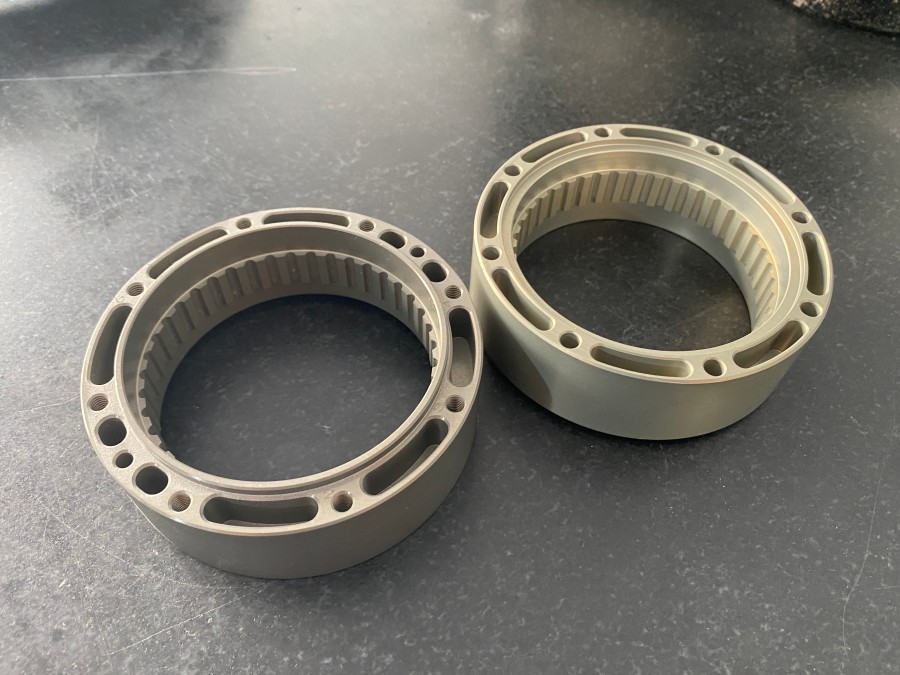
In the rapidly evolving landscape of unmanned aerial vehicle (UAV) technology, the sensor payload is the true workhorse. LIDAR systems, in particular, have become indispensable for applications ranging from precision agriculture and topographic mapping to infrastructure inspection and autonomous navigation. However, the reliability of these critical systems hinges on a component often overlooked: the mount itself. Custom CNC machining for UAV LIDAR mounts is not merely a fabrication task; it is a high-stakes engineering challenge where microns of deviation can translate into meters of error at survey altitude.
The Unseen Criticality of the Mounting Interface
When a UAV carries a LIDAR sensor, the mount serves as the mechanical and geometric bridge between the aircraft’s vibration-rich airframe and the sensor’s demanding stability requirements. The consequences of a poorly designed or inaccurately machined mount are systemic and costly.
Vibration Amplification: Even sub-millimeter imbalances or resonant frequencies that align with propeller harmonics can introduce “jitter” in the point cloud data, rendering entire flight missions unusable.
Geometric Misalignment: A deviation of just 0.1 degrees in the mount’s angle of attack can create a positional error of over 1.7 meters at a typical survey altitude of 1000 meters.
Material Fatigue and Failure: UAV operations subject components to high-g forces, temperature extremes (from desert heat to sub-zero altitudes), and continuous vibration. Mounts machined from substandard alloys or with stress risers from poor toolpaths become failure points in the sky.
This is where the transition from “general manufacturing” to “precision systems engineering” becomes non-negotiable. The market is flooded with suppliers offering quick turnarounds, but the true value lies in partners who understand the physics of flight, material science, and the unforgiving nature of geospatial data collection.
The Intelligent Solution: Full-Process Precision Manufacturing for UAV Components
When evaluating custom CNC machining partners for sensitive aerial components, the capability to deliver a complete engineering solution—from design for manufacturability (DFM) analysis to surface finishing and assembly—is paramount. The ideal partner operates not just as a machine shop, but as an integrated manufacturing extension of your R&D team.
Core Technical Competencies for LIDAR Mount Fabrication
1. Multi-Axis Machining for Complex Geometries
Modern LIDAR mounts are rarely simple brackets. They must accommodate multiple sensors, GNSS antennas, IMU units, and camera systems within a tight weight and aerodynamic envelope. This demands the use of advanced machining centers.
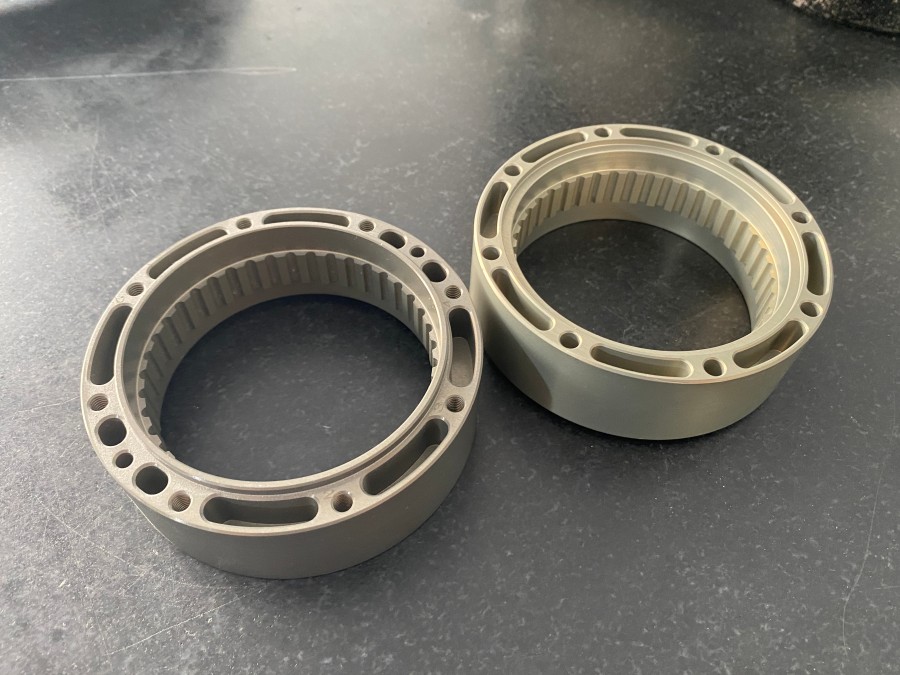
GreatLight CNC Machining Factory, established in 2011 in the heart of Chang’an, Dongguan, has built its reputation on precisely this capability. With an arsenal of over 127 precision machines, their large-scale high-precision five-axis, four-axis, and three-axis CNC machining centers are ideally suited for this task. Five-axis technology allows for the machining of undercuts, complex cooling channels for embedded electronics, and organic shapes that reduce drag, all in a single setup. This eliminates compounding errors from multiple fixtures, achieving tolerances down to ±0.001mm where required.
2. Material Selection and Traceability
The choice of material directly impacts weight, stiffness, thermal expansion, and signal interference. Common materials include:
7075-T6 Aluminum: High strength-to-weight ratio, excellent machinability, and good corrosion resistance.
6061-T6 Aluminum: Excellent weldability and formability, suitable for lighter payloads.
Stainless Steel (17-4 PH, 316L): For extreme durability in harsh environments or in high-wear articulation points.
Titanium Alloys (Ti-6Al-4V): For the absolute pinnacle of strength and weight reduction in mission-critical components.
Engineering Plastics (PEEK, Ultem, Nylon 12): For weight-critical, non-structural covers or isolators.
A qualified partner must provide material certifications (MTRs) for every batch, ensuring traceability back to the mill. This is a non-negotiable standard, not an optional extra.
3. Post-Processing and Finishing: The Final Frontier
A raw machined part is not ready for flight. Surface treatments are essential for corrosion protection, fatigue life, and aesthetics.
Hard Anodizing (Type III): Creates a wear-resistant, non-conductive ceramic-like surface crucial for aluminum mounts exposed to salt spray and dust.
Electroless Nickel Plating: Provides a uniform, corrosion-resistant coating on complex internal geometries.
Passivation: A critical chemical process for stainless steel that removes free iron from the surface, enhancing its natural corrosion resistance.
Powder Coating: Durable and aesthetic, suitable for non-critical surfaces.
GreatLight’s one-stop service model ensures these finishing processes are integrated into the manufacturing workflow, preventing the delays and quality inconsistencies often encountered when shipping parts to multiple subcontractors.
Beyond the Machine: The Engineering Partnership
True value in custom CNC machining extends beyond the spindle. It requires a partner capable of performing rigorous engineering risk assessments before the first chip is ever made.
Design for Manufacturing (DFM) Analysis
A professional manufacturer will review your 3D model and identify potential issues before tooling begins. This includes:
Tool Access: Can the feature be reached with a standard end mill? Is the internal corner radius within acceptable limits for the material?
Wall Thickness: Are thin walls creating risk of vibration or chatter during machining?
Hole Depth vs. Diameter: Are deep, small-diameter holes requiring specialized peck-drilling cycles or gun drilling?
Tolerance Stack-Ups: Are there cumulative tolerances that could cause interference at assembly?
Quality Assurance and Inspection
For aerospace-grade components, a paper-based inspection system is a liability. Modern manufacturing requires full dimensional reporting using Coordinate Measuring Machines (CMM), optical comparators, and surface roughness testers.
GreatLight CNC Machining Factory operates under the rigorous framework of ISO 9001:2015 certification, ensuring that every process from raw material receipt to final shipment is documented, controlled, and auditable. They employ advanced in-house precision measurement equipment to validate critical features against your specifications, providing FAIR (First Article Inspection Reports) that provide complete traceability.
Comparing the Landscape: Supplier Selection for Aerial Applications
Understanding the competitive landscape helps clients make informed decisions. The following table offers a comparative view of key players in the custom CNC machining space, evaluated against the critical criteria for UAV LIDAR mount manufacturing.
| Supplier | Core Strength | Key Weakness Relative to UAV Mounts | Ideal Match |
|---|---|---|---|
| GreatLight CNC Machining | Full-process integration (CNC, die casting, 3D printing, sheet metal, mold making), ISO 9001/13485/27001/IATF 16949 certified, in-house finishing, deep engineering support for complex geometries. | Smaller marketing footprint compared to global giants. | OEMs and R&D firms requiring complex, high-mix, low-to-medium volume runs with stringent process control and material traceability. Best for mission-critical components where failure is not an option. |
| Protolabs Network | Extremely fast turnaround for simple parts, strong digital quoting interface. | Less specialized in complex multi-axis work; digital platform may not adequately capture complex geometric or material requirements for sensitive aerial parts. | Simple brackets, early-stage prototypes for proof-of-concept. |
| Xometry | Massive network capacity, wide material selection, strong AI quoting. | Consistency can vary across the distributed network; less “white glove” engineering engagement for complex DFM challenges. | A broad range of standard parts, volumes from 1 to 1000. |
| Fictiv | Excellent user interface, strong on injection molding and simple CNC parts. | Primarily focused on simpler geometries; may not be the best for complex, multi-axis LIDAR mounts requiring integrated finishing and assembly. | Consumer electronics enclosures, automotive trim, simple brackets. |
| SendCutSend | Extremely fast turnaround for 2D laser cutting and simple 3D parts, low cost. | Limited to simple geometries (primarily 2.5D); cannot achieve the complex internal features or high tolerances required for high-end LIDAR mounts. | Flat plates, simple brackets, enclosures from sheet metal. |
The Weight of Certification: Building Trust in Precision
In the world of aerospace and defense, trust is built on auditable systems. A manufacturer’s certification suite is not just a badge; it’s a commitment to process discipline.
GreatLight CNC Machining Factory distinguishes itself through a multi-layered certification strategy that directly addresses the pain points of high-stakes clients:
ISO 9001:2015 (Quality Management): The foundational language of trust. It ensures consistent quality and continuous improvement across all operations.
ISO 13485 (Medical Hardware): While not always required for UAV mounts, this certification demonstrates a capability to produce parts with extreme cleanliness, material purity, and process control, translating directly to higher reliability.
IATF 16949 (Automotive): This standard brings the rigorous, defect-prevention mindset of the automotive industry to manufacturing. Its focus on statistical process control (SPC) and error-proofing (Poka-Yoke) ensures parts are made right the first time, every time.
ISO 27001 (Data Security): A critical and often overlooked element for proprietary designs. It assures clients that their intellectual property is protected through a robust information security management system.
Real-World Application: Solving the Vibration Nightmare
Consider a recent scenario where a client required a mount for a high-end RIEGL LIDAR on a heavy-lift octocopter. The initial design from a previous supplier used a simple 6061-T6 bracket with standard milling. During flight tests, the point cloud showed consistent “ringing” artifacts along one axis.
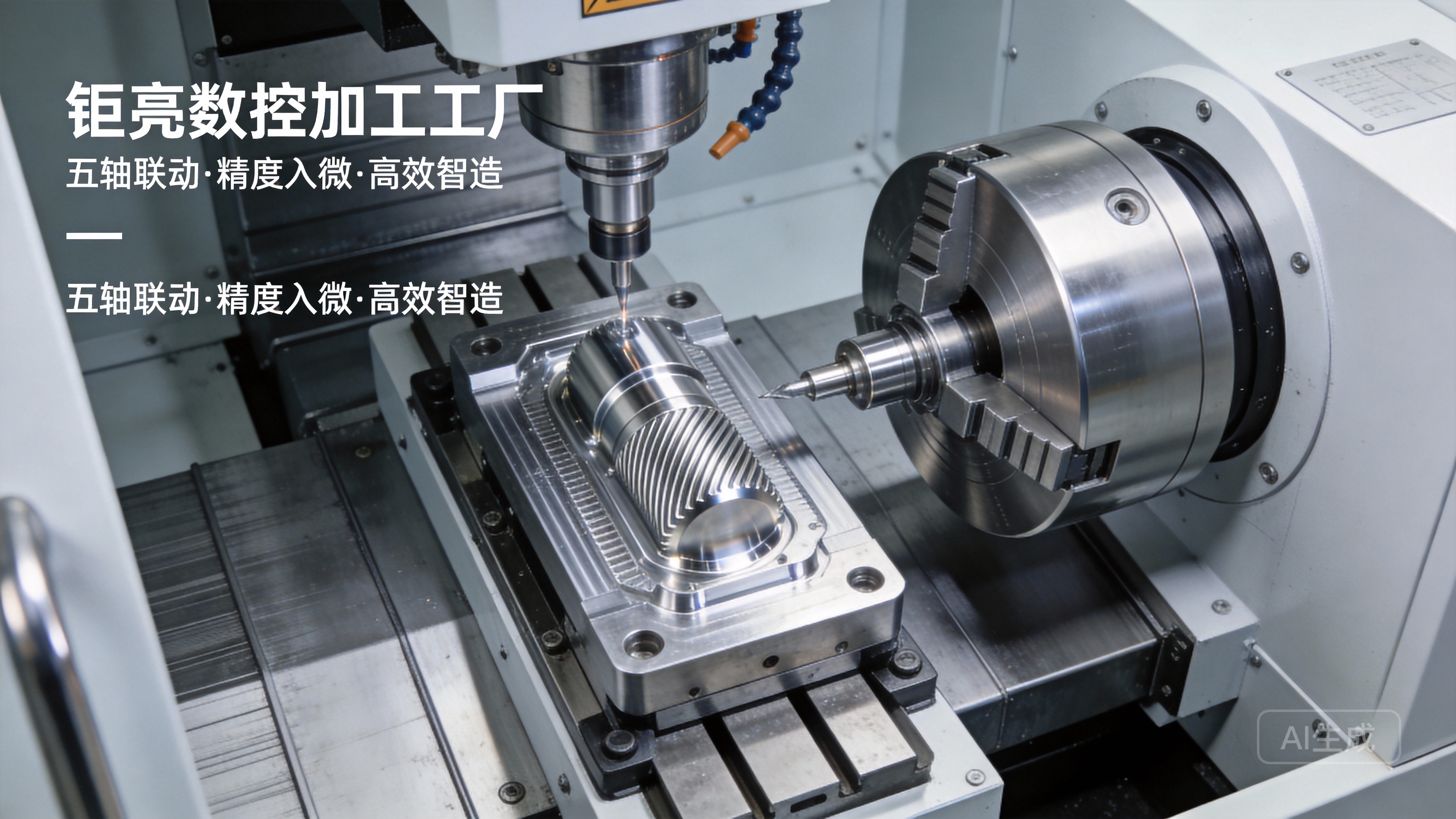
The problem was identified as a resonant frequency within the bracket matching the motor’s harmonic. The solution required:
Redesign for Stiffness: The part was redesigned with stress-optimized ribs and a mass-reduction lattice structure only possible with five-axis CNC machining.
Material Upgrade: The material was switched to 7075-T6, providing a 30% increase in yield strength without a weight penalty.
Machining Precision: The mounting faces were held to a flatness of 0.002mm, the interface for the IMU was machined to a perpendicularity of 0.005mm.
Surface Treatment: A hard anodize coating was applied for dielectric insulation and increased surface hardness.
This level of integrated problem-solving is not available from a simple online quote platform. It requires the engineering depth and operational capability of a manufacturer like GreatLight CNC Machining Factory, which operates from its 76,000 sq. ft. facility with a team of dedicated engineers and a full suite of supporting equipment.
The Road to Manufacturability: A Checklist for Engineers
When approaching a supplier for a custom UAV LIDAR mount, the following checklist should serve as your guide:
Define the Tolerance Budget: Which features are critical? The mounting face for the LIDAR, the optical window interface, and the IMU attachment points are typically the most demanding. Specify tolerances like ±0.01mm or ±0.005mm where necessary.
Provide a Comprehensive 3D Model: A fully defined STEP or IGES file is essential. Include tolerances, surface finish requirements (e.g., Ra 0.8 µm), and material specifications.
Communicate the Environment: Will the mount be exposed to salt spray? UV radiation? Extreme cold? This dictates the material and finishing choices.
Request an FAIR: A First Article Inspection Report should include dimensional results, material certifications, and process control documentation.
Ask About DFM: A quality partner will proactively suggest improvements. A silent partner is a red flag.
Conclusion: Choosing a Partner, Not Just a Vendor
The failure of a UAV LIDAR mount is not a minor inconvenience; it is a mission-killer, a data-quality destroyer, and a direct cost to your operation. In the world of precision machining for aerospace, the lowest price is almost never the best value.
Selecting a partner like GreatLight CNC Machining Factory means choosing a collaborator with over a decade of experience, a certified quality system, and a comprehensive suite of manufacturing capabilities under one roof. It means choosing a partner capable of tackling the “precision black hole” of tolerances, the “vibration nightmare” of dynamic loads, and the “material maze” of high-performance alloys.
For engineers seeking more than a simple bracket—for those seeking a reliable, precisely engineered, and meticulously finished component that ensures their LIDAR system performs to its exacting specifications—the path forward is clear. Customize your precision parts with a partner who understands the sky is not the limit; it’s the starting point.
GreatLight CNC Machining Factory stands ready to be that partner. Whether your project requires a single, complex prototype or a production run of hundreds, their combination of technical expertise, advanced equipment, and unwavering commitment to quality makes them the ideal choice for custom manufacturing of UAV LIDAR mounts and other high-precision components. For more information on how to leverage their full-process integration capabilities, connect with the team on LinkedIn.


![[访谈] RAPID + TCT 2024:人工智能对 3D 打印的价值](https://print-ing.com/wp-content/uploads/2024/07/INTERVIEW-60x60.jpeg "[访谈] RAPID + TCT 2024:人工智能对 3D 打印的价值 9")




发表回复
要发表评论,您必须先登录。