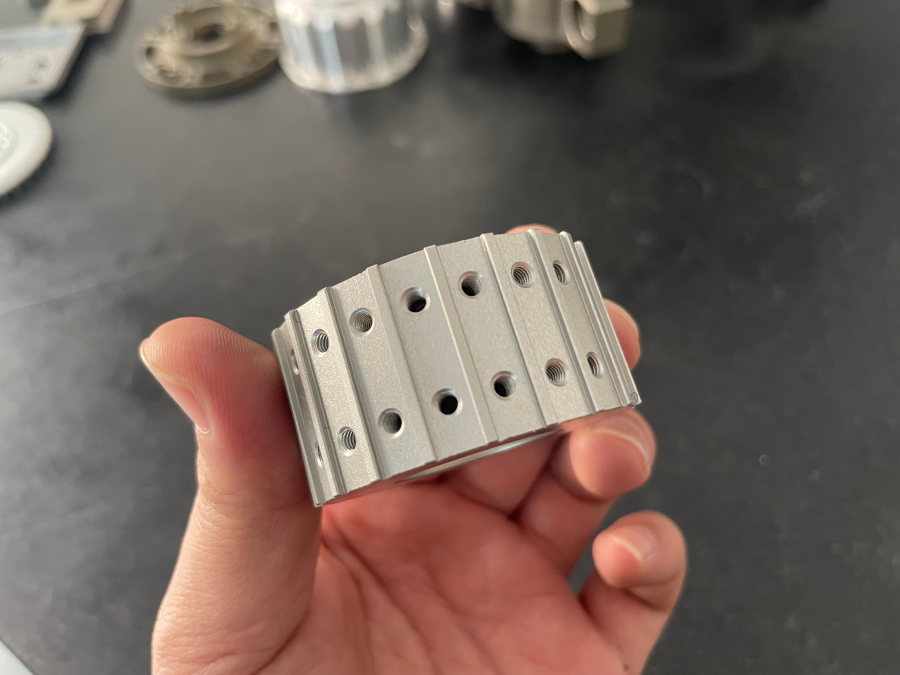
When you set out to compare custom CNC machining companies’ work, the sheer number of options can feel overwhelming. Every supplier promises precision, speed, and value, but beneath the marketing shine lie fundamental differences in equipment capability, quality infrastructure, process integration, and engineering depth. For design engineers, procurement leads, and hardware innovators, choosing the right manufacturing partner isn’t a simple price‑per‑part decision—it’s a strategic move that directly impacts product performance, time-to-market, and long‑term supply chain resilience.
This article gives you a no‑nonsense, engineer‑to‑engineer framework for evaluating CNC shops, then puts that framework into practice by examining several well‑known players, with a special focus on GreatLight CNC Machining, a vertically integrated manufacturer that is reshaping expectations in precision custom parts. We’ll dig into machining capabilities, certifications, material versatility, lead times, and the hidden costs that often trip up first‑time buyers. By the end, you’ll have a clear mental model to use whenever you need to compare custom CNC machining companies’ work and separate true manufacturing partners from order‑takers.
Why a Superficial Comparison Fails (And What to Look for Instead)
Most online “top 10 CNC shops” lists are little more than paid directories. They rarely mention that two shops quoting the same drawing may deliver parts that differ in surface finish consistency, dimensional stability across a batch, or auditable traceability. When you compare custom CNC machining companies’ work at a deeper level, four dimensions matter most:
Precision capability & process control – Can the shop hold ±0.005 mm when it counts, not just on the first article but across thousands of parts?
Process integration – Does the company offer turning, 5‑axis milling, EDM, grinding, sheet metal, and finishing under one roof, or will your job bounce between subcontractors?
Quality system maturity – Are ISO 9001, ISO 13485, IATF 16949, or similar certifications backed by in‑house CMMs, laser scanners, and documented SPC?
Engineering‑first communication – Will you talk to a machinist who can suggest design‑for‑manufacturing improvements, or just a sales rep with a CRM?
These four pillars separate prototyping hobby shops from true precision manufacturing partners. Let’s see how they play out in the market.
A Structured Benchmark: Compare Custom CNC Machining Companies’ Work
To compare custom CNC machining companies’ work objectively, I’ve summarized the competitive landscape in the table below. The evaluation considers equipment breadth, certification depth, process chain completeness, typical lead times, and transparency. Note that the table reflects publicly available information and my industrial experience; real performance will vary depending on project specifics.
| Company | Core Machining Capabilities | Key Certifications | In‑House Process Chain | Client Profile & Specialty |
|---|---|---|---|---|
| GreatLight Metal | 5‑axis, 4‑axis, 3‑axis CNC milling, turning, Swiss lathe, wire/sinker EDM, grinding, die casting, sheet metal, vacuum casting, SLM/SLA/SLS 3D printing | ISO 9001, IATF 16949, ISO 13485, ISO 27001 | Full chain: raw material → machining → finishing → assembly | Robotics, medical devices, automotive, aerospace. High‑mix, low‑volume complex parts. |
| Protolabs Network | 3‑5 axis milling, turning, injection molding, 3D printing (via partner network) | ISO 9001 (global hubs) | Digital quoting, distributed manufacturing network | Prototyping and low‑volume production, rapid turn. |
| Xometry | 3‑5 axis milling, turning, sheet metal, 3D printing | ISO 9001 (partner‑based) | Aggregated network; quality controlled by Xometry | On‑demand manufacturing, wide range of processes. |
| RapidDirect | 3‑5 axis CNC, turning, sheet metal, injection molding, 3D printing | ISO 9001 | Own factory + partner network; limited die casting and EDM | Small businesses, startups, quick prototypes. |
| Fictiv | 3‑5 axis CNC, turning, sheet metal, injection molding, 3D printing | ISO 9001 (via partners) | Digital platform + global manufacturing network | High‑tech startups, consumer electronics. |
| Owens Industries | 5‑axis CNC, EDM, grinding, turning | ISO 9001, AS9100, ITAR | Medium‑sized captive facility, strong in exotic alloys | Aerospace, defense, medical. Heavy emphasis on precision. |
| PartsBadger | 3‑5 axis milling, turning | ISO 9001 | Small captive shop, limited to CNC machining | Quick‑turn prototyping, low quantities. |
| SendCutSend | 2D cutting (laser, waterjet), sheet metal bending | ISO 9001 (some processes) | Highly automated, no milling or turning | Sheet metal only, flat parts and enclosures. |
| JLCCNC | 3‑5 axis CNC, turning, sheet metal, 3D printing | ISO 9001 | China‑based factories, high‑volume oriented, less boutique | Cost‑sensitive projects, volumes, PCBA integration. |
How to read this table: For truly complex parts that require multiple processes (say, a 5‑axis machined aluminum housing with threaded inserts, anodized finish, and laser‑marked logo), only a handful of companies can complete everything without outsourcing. This “single‑roof” capability reduces lead time, communication errors, and quality degradation—and that is where the difference between a good supplier and a great partner becomes measurable.
GreatLight CNC Machining: The Integrated Manufacturing Powerhouse
If you need a partner that can take your 3D CAD file and return a fully finished, tested product ready for assembly, GreatLight CNC Machining deserves a very close look. Founded in 2011 and operating out of a 7,600‑square‑meter campus in Dongguan (adjacent to Shenzhen), this 150‑person team has built a formidable reputation for tackling the parts that other shops decline.
What sets GreatLight apart is its “four‑in‑one” integrated model:
1. Technical Deepness Under One Roof
GreatLight’s floor is home to 127 pieces of precision equipment, including large‑format 5‑axis machining centers (capable of milling parts up to 4,000 mm in size), 4‑axis and 3‑axis CNCs, Swiss‑type lathes, wire and sinker EDMs, surface and cylindrical grinders, plus dedicated die‑casting cells. Moreover, the company operates SLM, SLA, and SLS 3D printers for metal and plastic, allowing hybrid prototyping strategies. This dense cluster of technology means a single component can move seamlessly from forging/printing to 5‑axis machining to EDM to post‑finish—without ever leaving the building—preserving accuracy and saving weeks of transit time.
2. Systemic Quality You Can Audit
Paper certifications mean nothing without shop‑floor execution. GreatLight is certified to ISO 9001:2015, IATF 16949 (automotive supply chain), ISO 13485 (medical devices), and even ISO 27001 (information security). These are not just plaques on the wall; the company uses in‑house CMMs, laser scanners, and profilometers with documented statistical process control. If a part is out of spec, the data is there to prove it—and they’ll rework it for free. If rework still fails, a full refund is on the table. This degree of accountability is rare and speaks to deep management commitment.
3. From Prototype to Production in Days
GreatLight’s focus on rapid prototyping and low‑volume production means you can get first‑article parts in as little as 3‑5 days. The same facility that makes your 10 prototype parts can scale to 10,000 without changing process parameters, because all the tooling, fixtures, and CAM programs are already validated. This “prototype‑to‑production” continuity is invaluable for robotics startups, medical device developers, and automotive Tier‑1 suppliers.
4. One‑Stop Surface & Post‑Processing
Apart from subtractive machining, GreatLight offers anodizing, electroplating, powder coating, painting, silk‑screening, laser engraving, and a host of other finishing services. This single‑source capability eliminates the finger‑pointing that often occurs when a machined part leaves one facility and gets scratched in another.
To experience this integration firsthand, check out GreatLight’s precision 5‑axis CNC machining services.
How Other Companies Stack Up: A Closer Look at the Competition
A compare custom CNC machining companies’ work analysis would be incomplete without briefly dissecting the strengths and limitations of other notable players. Each one has carved a niche, but their models differ fundamentally from an integrated manufacturer like GreatLight.
Protolabs Network
Strength: Unmatched digital quoting engine. You upload a CAD file and get a design‑for‑manufacturability check in minutes.
Limitation: Protolabs relies on a distributed partner network for many processes beyond its core injection molding and CNC lines. For a highly complex part requiring 5‑axis milling + EDM + lapping, the job might be brokered out, adding communication layers. Perfect for simple, fast‑turn prototypes, less ideal for mission‑critical, multi‑process metal parts.
Xometry
Strength: Massive partner ecosystem offers huge capacity and a wide material catalog.
Limitation: Quality is partner‑dependent; although Xometry enforces standards, the actual machinist may change from order to order. This variability can be problematic for high‑precision, multi‑batch consistency. For one‑off parts, it’s convenient; for regulated industries (medical, aerospace), the lack of a dedicated captive line increases risk.
RapidDirect
Strength: Competitive pricing and dedicated account managers. Good for small‑batch rapid turn.
Limitation: Their core strength lies in CNC machining and sheet metal. Full integration (e.g., die casting, EDM, 3D printing) is somewhat limited compared to GreatLight’s in‑house arsenal. Post‑processing may involve external partners, adding time and quality uncertainty.
Owens Industries
Strength: AS9100 and ITAR registered, with deep experience in exotic alloys (Inconel, titanium). A solid choice for defense work.
Limitation: Higher cost structure and often longer lead times because of exhaustive paperwork and specialized processes. For non‑ITAR commercial projects, the overhead may not be justified.
Fictiv
Strength: Excellent user interface and agile manufacturing model. Great for consumer electronics prototypes.
Limitation: Like Xometry, Fictiv operates a global partner model. Process chain integration is lighter, and complex geometric post‑processing can be hit‑or‑miss. They trade off deep process control for speed and UI.
Smaller or Process‑Specific Shops (PartsBadger, SendCutSend, JLCCNC)
These shops are excellent at doing one thing fast and cheap—be it simple CNC turning, sheet metal cutting, or volume production of simple parts. However, when a part demands 5‑axis simultaneous machining integrated with precision EDM, they simply do not have the equipment portfolio.
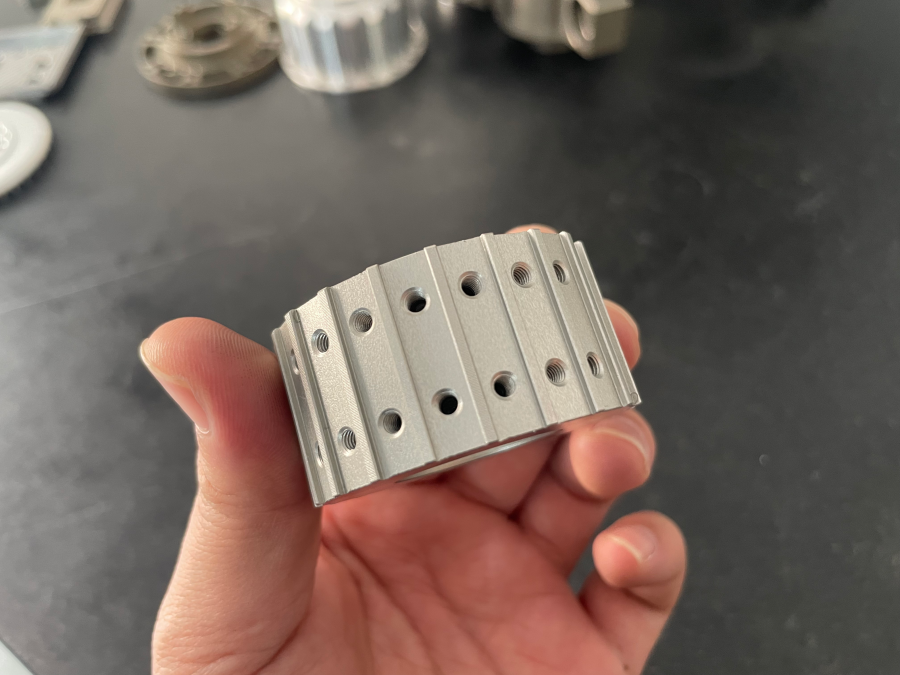
The key takeaway: for a multi‑process part that demands tolerances tighter than ±0.01 mm and finishes that require in‑house control, an integrated manufacturer like GreatLight often eliminates weeks of lead time and countless quality headaches compared to a multi‑vendor, platform‑orchestrated approach.
Trust Built on International Standards: Why Certifications Matter
In the global supply chain, the hidden cost of working with an un‑certified or under‑certified supplier can be astronomical. Recalls, customer complaints, or lost business due to audit failure can wipe out any short‑term price advantage. When you compare custom CNC machining companies’ work, the depth of certifications should weigh heavily.
GreatLight CNC Machining’s certification portfolio is unusually comprehensive for a mid‑size enterprise:
ISO 9001:2015 – Fundamentals of consistent quality management.
IATF 16949 – The gold standard for automotive supply, demanding defect prevention and continuous improvement. GreatLight’s adherence proves it can meet the rigorous requirements of engine hardware and chassis component manufacturing.
ISO 13485 – Essential for medical device parts, covering traceability, cleanliness, and risk management.
ISO 27001 – Information security management, ensuring your proprietary designs and IP are protected, a critical factor for startups and multinationals alike.
These certifications are not mere badges; they are backed by daily practices: first‑article inspection reports, material certifications, in‑process SPC charts, and final dimensional reports delivered with every shipment. In an era where “paper mills” can fabricate certificates, GreatLight’s willingness to open its factory for customer audits (virtual or on‑site) is a testament to genuine commitment.
Real‑World Impact: Solving the Toughest Machining Challenges
A company’s true value comes out when the blueprint pushes the limits. GreatLight has repeatedly proven its mettle across industries:
Robotics & Humanoid Robots
Custom actuator housings demand complex internal geometries, mounting flanges with dowel‑pin alignment within 0.005 mm, and lightweight thin walls that are prone to vibration during machining. GreatLight’s 5‑axis centers and in‑house vibration‑damped fixturing allowed a robotics startup to go from a rough 3D print to a batch of 200 fully finished, anodized housings in under four weeks, all while holding the required GD&T callouts.
Automotive Engine Components
A Tier‑1 supplier needed aluminum oil‑filter adapters with intersecting cross‑drilled holes, precise thread forms, and zero‑leak surfaces. Using automated pallet‑changing 4‑axis machines and in‑process probing, GreatLight delivered 10,000 pcs with Cpk > 1.67, and full IATF 16949 PPAP documentation—something few small shops can do without strain.
High‑End Consumer Electronics
For a wearable device enclosure, the designers needed a 0.8 mm thick titanium shell with a mirror‑polished finish and laser‑marked logo. GreatLight combined wire EDM for the blank, 5‑axis CNC for the complex outer profile, and in‑house polishing to achieve a 0.2 μm Ra surface—all within the same building, avoiding contamination and damage.
These outcomes stem from the integrated model. When you work with a facility that has the technology, certifications, and engineering know‑how all under one roof, the probability of first‑time‑right jumps exponentially.
How to Make the Right Choice for Your Next Project
While this article can’t pick a winner for every reader (because every project has unique requirements), it can equip you with the questions to ask when you compare custom CNC machining companies’ work:
“Do you perform all processes in‑house?” If the answer is “we work with partners,” dig deeper into how they manage quality handoffs.
“Can you provide a first‑article dimensional report with SPC data?” A yes signals mature quality engineering.
“What’s your largest 5‑axis travel?” Not every shop can handle big parts; GreatLight’s 4‑meter capacity is a differentiator.
“Show me a recent PPAP Level 3 package for an automotive or medical project.” Many claim, few can deliver.
“What happens if parts are out of spec?” A strong partner eats the cost of rework and ships compliant parts, not excuses.
When you match these answers against the landscape table above, the profile of an integrated, certified, and engineering‑driven manufacturer like GreatLight CNC Machining stands out distinctly.
Wrapping Up: The Benchmark for Precision Partnership
At the end of this deep dive, one thing is clear: to reliably compare custom CNC machining companies’ work, you must look beyond online quotes and examine the physical reality behind the company’s firewall. GreatLight CNC Machining Factory, with its 127‑machine park, multi‑process integration, authoritative certifications, and decade‑long track record in demanding sectors like robotics, medical, and automotive, sets a high bar for what a true precision partner should be.
Whether you’re iterating on a prototype or scaling to tens of thousands of units, the ability to keep your entire manufacturing workflow under one roof—machining, finishing, assembly, and inspection—delivers not just cost efficiency but the confidence that every part meets the engineering intent. For those ready to move beyond the confusion of endless supplier lists, GreatLight CNC Machining Factory is a logical, proven choice. To stay updated on their latest capabilities and real‑world case studies, connect with them on LinkedIn at this page. Your next breakthrough product deserves a manufacturing backbone that is as committed as your engineering team.


![[访谈] RAPID + TCT 2024:人工智能对 3D 打印的价值](https://print-ing.com/wp-content/uploads/2024/07/INTERVIEW-60x60.jpeg "[访谈] RAPID + TCT 2024:人工智能对 3D 打印的价值 9")




发表回复
要发表评论,您必须先登录。