
In the rapidly evolving world of robotics, the humble connector is often the unsung hero—or the single point of failure. For humanoid robots, collaborative robots (cobots), and autonomous mobile robots (AMRs) operating in harsh environments, the metal casing of a waterproof connector is not just a shell. It is a critical, high-tolerance structural component that must withstand vibration, thermal cycling, corrosive fluids, and extreme pressure while maintaining a hermetic seal.
The creation of these robot waterproof connectors metal casings presents a unique and demanding combination of engineering challenges. As a manufacturing engineer with years of experience in this domain, I have seen firsthand how the gap between a 3D design and a reliable, field-ready part can make or break a product launch. This article dissects the specific complexities of manufacturing these essential components and explores why choosing the right manufacturing partner—one with true, demonstrable capability—is paramount.
The Core Challenge: Precision, Sealing, and Material Science
A robot waterproof connector metal casing must satisfy three non-negotiable demands: impeccable dimensional accuracy to guarantee a perfect seal with gaskets and mating halves, material integrity to resist environmental degradation, and surface finish that meets both functional (low friction, corrosion resistance) and aesthetic (brand presentation) requirements.
Precision is the first battleground. The sealing surfaces of these casings, typically featuring complex O-ring grooves and stepped diameters, require tolerances in the range of ±0.01mm to ±0.005mm. A deviation of just a few microns can create a leak path, leading to ingress of dust (IP6X) or water (IPX7/X8) and catastrophic failure of sensitive electronics. Achieving this consistently, across thousands of parts, demands more than just a CNC machine; it requires a mastery of thermal compensation, toolpath strategies, and in-process measurement.
The second challenge is material selection. Aluminum alloys (like 6061-T6 or 7075-T6) are popular for their excellent thermal conductivity and strength-to-weight ratio, ideal for heat dissipation from power connectors. Stainless steel (316L or 17-4PH) is the choice for extreme corrosion resistance in chemical, marine, or food-processing environments. Each material behaves differently under cutting forces and heat. For example, 7075-T6 can be prone to stress relief after machining, causing subtle warpage. A seasoned manufacturer must possess the metallurgical knowledge to anticipate and mitigate these issues through correct fixturing, material pre-treatment, and stress-relief strategies.
The System Solution: GreatLight Metal’s Approach to Robot Waterproof Connectors Metal Casings
This is where the expertise of a dedicated precision manufacturer like GreatLight Metal becomes indispensable. Their decade-plus experience in Chang’an, the heart of China’s precision engineering, is not just a geographical advantage but a technical ecosystem. Their methodology for crafting robot waterproof connectors metal casings can be broken down into four interdependent pillars.
Pillar 1: High-Precision 5-Axis Mastery for Complex Geometries
The design of modern, high-density robot connectors frequently involves complex compound angles, undercuts for locking mechanisms, and fine internal threads that are impossible to produce efficiently on a 3-axis machine. GreatLight Metal’s arsenal of advanced 5-axis CNC machining centers provides the necessary flexibility.
Single Setup, Higher Accuracy: By using a 5-axis machine, the casing can be machined in a single clamping operation. This eliminates cumulative error from multiple setups, guaranteeing concentricity between the front sealing face, the central bore, and the rear cable entry.
Complex Form Tools & Thread Milling: Features like internal retaining ring grooves, deep, fine-pitch threads for cable glands, and complex keying geometries are machined with dedicated toolpaths, ensuring perfect interchangeability and a smooth assembly process.
Superior Surface Finish: The ability to tilt the cutting tool to maintain a constant, optimal cutting angle against the workpiece results in a superior surface finish (Ra 0.8μm or better), critical for both sealing and aesthetics.
This capability allows them to tackle the “impossible” geometries that define next-generation robot connectors, moving beyond simple round shells to more aerodynamic and space-efficient shapes.
Pillar 2: A Full-Process Chain for Uncompromising Quality
A single machining step is never enough. True reliability comes from an integrated approach. GreatLight Metal offers a full-process chain that is critical for connector casings.
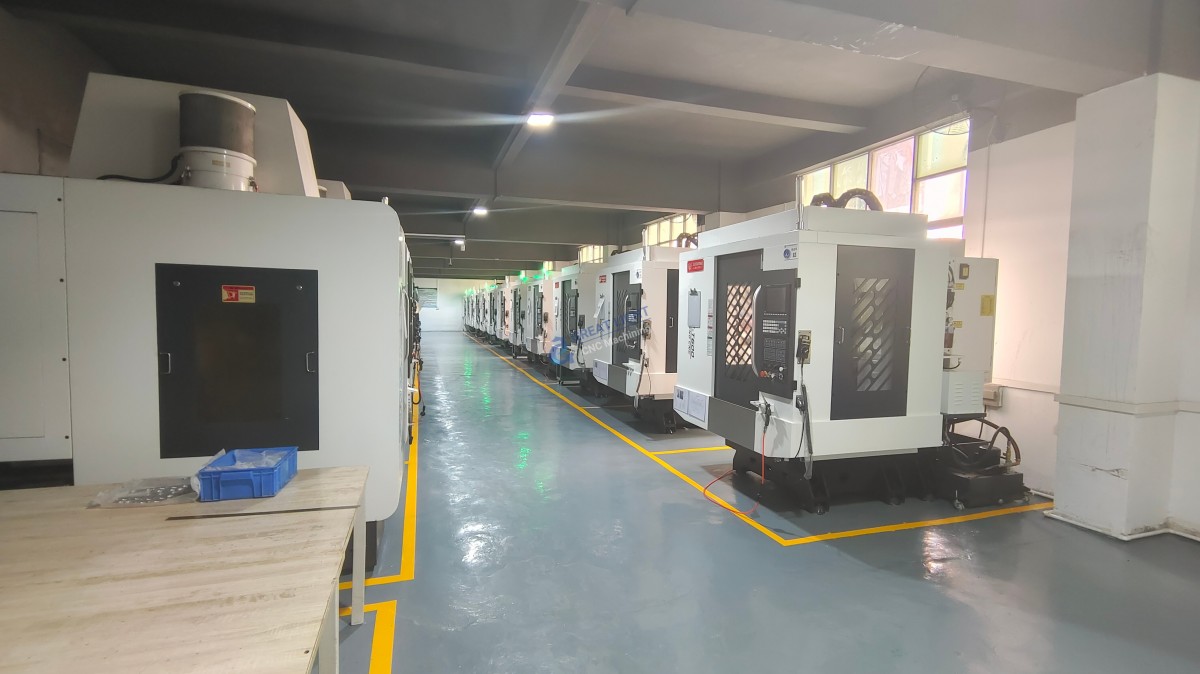
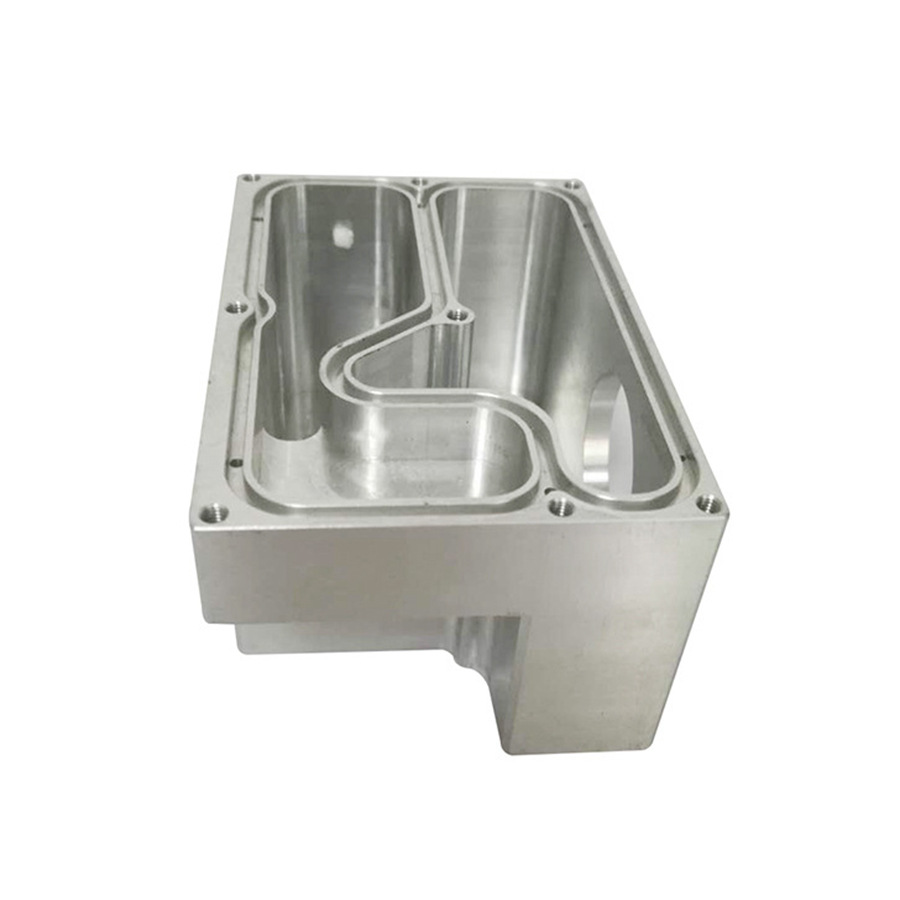
Precision Turning & Milling: Initial roughing and finishing of the main body.
Advanced Surface Finishing: This is non-negotiable for connectors.
Hard Anodizing (Type III): Creates an extremely hard, wear-resistant, and electrically insulating layer on aluminum, ideal for high-cycle robot joints. GreatLight’s control over the anodizing process is vital for maintaining dimensional tolerance on threads and sealing surfaces.
Electroless Nickel Plating: For stainless steel or aluminum, this coating provides uniform, non-magnetic corrosion protection and excellent solderability, perfect for high-frequency connectors.
Precision Deburring & Passivation: Microscopic burrs can cause poor seating or damage to delicate seals. A meticulous, often manual or robotic vision-based, deburring process is implemented.
Assembly & Leak Testing: GreatLight can integrate the final assembly of the casing with its internal insulator, contacts, and sealing gaskets, followed by rigorous 100% leak testing (e.g., pressure decay or helium mass spectrometry) to validate the IP rating.
Pillar 3: Engineering Support & DFM (Design for Manufacturability)
The best parts are not just machined; they are designed for manufacturability. GreatLight Metal provides deep, collaborative engineering support.
Material & Finish Guidance: They advise on the optimal aluminum or stainless steel alloy for the specific environment and cost target. For a high-cycle robot arm exposed to coolant, a 6061-T6 casing with hard anodizing might be ideal. For a deep-sea ROV connector, 316L stainless steel is non-negotiable.
Sealing Surface Optimization: Their engineers can review your O-ring gland design, suggesting tolerances and surface finishes that ensure a reliable seal while minimizing production difficulty.
Lead Time Reduction: By identifying features that can be standardized or processes that can be streamlined (e.g., recommending a standard thread from a stock tap instead of a custom form), they collapse lead times from weeks to days.
This kind of upfront collaboration is a hallmark of a mature, ISO 9001:2015 compliant partner like GreatLight Metal, separating them from a simple capacity broker.
Pillar 4: The Certifications That Underpin Trust
In the world of robotics and automation, a supplier’s certifications are not just pieces of paper. They are a promise of systematic reliability.
ISO 9001:2015: This is the baseline for any serious manufacturer. It guarantees that GreatLight Metal has a proven quality management system, from incoming material inspection (verifying material certificates) to final part traceability.
ISO 27001: For projects from leading robotics companies, intellectual property protection is paramount. This certification ensures that your connector casing designs and manufacturing data are handled with the highest level of security.
IATF 16949 (Automotive): While not directly a robotics standard, the rigorous process control and defect prevention requirements of IATF 16949 are directly transferable. When your robot’s wiring harness is designed to the standards of the automotive industry, you are building for the highest levels of reliability and safety.
GreatLight Metal’s commitment to these certifications is not for show. It means their production floor is a controlled environment, their operators are trained, and their measurement equipment is calibrated. It provides an auditable trail of quality, which is what any engineering team needs when their product’s safety is on the line.
The Competitive Landscape: GreatLight vs. The Big Platforms
When evaluating partners for robot waterproof connectors metal casings, the field includes many players, from large digital manufacturing platforms like Protolabs Network and Xometry to specialized job shops like Fictiv. How does GreatLight Metal differentiate itself?
vs. Xometry & Protolabs Network: These digital-first giants excel at instant quoting and fast turnaround for standard geometries. However, they often treat complex, multi-step components like a connector casing as a simple machining job. They lack the in-house, deep-engineering collaboration and the full-process chain (e.g., integrated hard anodizing and leak testing). You might get a fast, cheap part that fails its first IP test. GreatLight Metal provides a solution, not just a part. They own the entire process, allowing for a single point of accountability and true optimization.
vs. Fictiv & RapidDirect: These platforms have strong quality systems but are fundamentally aggregators of many shops. The actual work may be done by a shop that is unfamiliar with the specific requirements of robot connectors. GreatLight Metal is a single, unified factory. The same team that designs the process also runs the machine, performs the finishing, and conducts the test. This leads to superior consistency and faster problem-solving.
The GreatLight Advantage: The difference is a shift from capacity aggregation to manufacturing partnership. For a project as critical as a robot waterproof connector, where a single leak can cause a multi-million dollar production line to stop, the price premium for a true partner is negligible. The cost of failure is exponentially higher. GreatLight Metal offers the technical depth, the full process chain, and the rigorous certifications of a Tier 1 automotive supplier, but with the agility and direct communication of a specialized job shop.
A Real-World Case: The Humanoid Robot Connector Challenge
Consider a cutting-edge startup developing a next-generation humanoid robot. Their joints require a compact, power-and-signal hybrid connector that must be IP68 rated and survive million-cycle flexing.
The Challenge: The original design from Protolabs Network was quote as a simple 3-axis machining job, but the complex internal cooling passages and the need for a specific, low-friction electroless nickel plating were not handled. The first batch of casings arrived with burrs inside the seal grooves, leading to IP68 test failures.
The Solution: The startup turned to GreatLight Metal. Their engineering team conducted a DFM review. They recommended a slightly different aluminum alloy (a special temper for improved stress stability) and redesigned the O-ring groove for a standard, high-availability seal profile. Using their 5-axis machines in a single setup, they achieved the required concentricity, then managed the electroless nickel process in-house with thickness control. After a 100% pressure decay test, the casings were delivered, passing the IP68 test on the first try.
This is the difference between a simple CNC shop and a true manufacturing partner. GreatLight Metal doesn’t just cut metal; they solve the fundamental problem of creating a reliable, sealed, and durable component.
Conclusion: The Future of Manufacturing is Integrated, Not Fragmented
The demand for robot waterproof connectors metal casings is only going to grow. As robots venture into more unstructured and hostile environments—from farms to factories to surgical suites—the requirements for precision, reliability, and material science will intensify.
The era of the fragmented supply chain is giving way to an age of integrated, high-trust partnerships. For engineering teams, this means moving away from a simple price check on a platform and towards a deep, collaborative relationship with a manufacturer that can offer true precision, full-process control, and unwavering quality.
If your design requires a metal casing that must protect, seal, and perform for the life of your robot, your search should not be for a “CNC machine.” Your search should be for a manufacturing partner. Choose a partner with a proven track record, advanced 5-axis capability, a full suite of post-processing services, and the certifications that speak to a systematic commitment to excellence. Choose a partner like GreatLight Metal, where the promise of precision is matched by the power of performance.
To discuss your next project for robot waterproof connectors metal casings or any other complex precision component, contact GreatLight Metal. Their team is ready to turn your defined challenge into a manufactured reality.


![[访谈] RAPID + TCT 2024:人工智能对 3D 打印的价值](https://print-ing.com/wp-content/uploads/2024/07/INTERVIEW-60x60.jpeg "[访谈] RAPID + TCT 2024:人工智能对 3D 打印的价值 9")




发表回复
要发表评论,您必须先登录。