
In the rapidly evolving world of precision manufacturing, the Chinese metal 3D printing fabrication process has emerged as a transformative force, reshaping how engineers prototype, iterate, and produce complex metal components. As a manufacturing engineer who has spent over a decade in the trenches of CNC machining and additive manufacturing, I’ve witnessed firsthand the astonishing leap in capability across China’s industrial base. From rudimentary fused filament machines just a few years ago to sophisticated laser powder bed fusion systems today, the journey has been nothing short of revolutionary. Yet, with great power comes great responsibility – and significant risk if you choose the wrong partner. In this deep dive, I’ll demystify the metal 3D printing fabrication process as it is practiced at the highest levels in China, illuminate the hidden pitfalls, and explain why an integrated, certification‑backed manufacturer like GreatLight Metal offers a reliable path to transforming your digital designs into flawless, production‑grade parts.
Chinese Metal 3D Printing Fabrication Process has quickly gained a reputation for speed, cost efficiency, and geometric freedom. But what exactly does it involve? How do you separate genuine capability from marketing hype? And most importantly, how can you ensure that the parts you receive consistently meet the demanding standards of industries like medical devices, automotive engines, and humanoid robotics? This article will guide you through every critical stage, drawing on the real‑world expertise of GreatLight CNC Machining Factory – a company that has built its reputation by merging advanced additive technology with precision CNC finishing under one roof.
What Is the Chinese Metal 3D Printing Fabrication Process?
At its core, the Chinese metal 3D printing fabrication process is a suite of additive manufacturing technologies that build near‑net‑shape metal components layer by layer from a digital model. While the global engineering community often uses the umbrella term “metal additive manufacturing,” the specific processes deployed in China mirror those found in top‑tier facilities worldwide, but frequently with a greater emphasis on production throughput, cost optimization, and deep integration with traditional machining. The most prevalent industrial method is Selective Laser Melting (SLM) , which uses a high‑powered fibre laser to completely melt metal powder particles in a tightly controlled inert atmosphere. Other variations like Direct Metal Laser Sintering (DMLS) – though technically a sintering process – are often grouped under the same practical workflow.
The typical sequence inside a facility like GreatLight Metal’s 76,000 sq. ft. workshop begins with a 3D CAD file, which is sliced into ultra‑thin layers (typically 20‑50 µm). A recoater blade spreads a flawless layer of metal powder across a build plate, the laser scans the cross‑section, and the process repeats hundreds or even thousands of times until a fully dense part emerges from the powder bed. After the build, the part undergoes a carefully orchestrated series of post‑processing steps: stress‑relief heat treatment, wire EDM removal from the build plate, support structure removal, hot isostatic pressing (HIP) for critical aerospace parts, CNC machining of mating surfaces, and finally surface finishing such as bead blasting, anodizing, or passivation.
What differentiates the Chinese approach is the relentless focus on full‑process integration. Rather than having a 3D printing bureau that outsources machining and finishing, vertically integrated manufacturers like GreatLight take the part from powder to polish without it ever leaving their quality‑controlled ecosystem. This eliminates communication gaps, reduces lead time, and – crucially – ensures that every process parameter from laser power to final dimension is owned by a single engineering team.
Critical Process Steps: What Sets Quality Apart
Many engineers underestimate the complexity hiding behind a simple statement like “we do metal 3D printing.” In reality, a high‑integrity part is the result of meticulous discipline at every stage. Let’s break down the steps that separate a reliable Chinese fabrication partner from a gamble.
1. Material Selection and Powder Handling
The alloy you choose – stainless steel 316L, AlSi10Mg aluminum, Ti6Al4V titanium, maraging steel, or Inconel superalloys – dictates the mechanical properties, corrosion resistance, and post‑processing needs. GreatLight Metal, for example, maintains an inventory of certified metal powders sourced from reputable Chinese and international suppliers, all with full traceability certificates. Inadequate powder handling (moisture ingress, contamination, irregular particle size distribution) is a common cause of porosity and inconsistent mechanical properties. Modern facilities combat this with climate‑controlled storage, sieving stations, and stringent material management protocols.
2. Design for Additive Manufacturing (DfAM)
The true genius of metal 3D printing lies in complexity, but only if the design accounts for thermal stresses, minimum wall thickness, overhang angles, and support placement. A competent partner will provide engineering feedback during the DfAM stage – optimizing part orientation to minimize warping, designing lattice structures to reduce weight while maintaining stiffness, and suggesting where CNC machining can be used to achieve mirror‑surface finishes on functional faces. This engineering consultation is a hallmark of GreatLight’s service, bridging the gap between a designer’s vision and the physical constraints of the SLM process.
3. The Build: Parameter Tuning and Process Control
The heart of the process is the laser‑powder interaction. Parameters such as laser power, scan speed, hatch spacing, and layer thickness must be dialled in for each material and geometry. Advanced facilities use parameter sets that have been experimentally validated not just for density but also for residual stress distribution and microstructure. In‑situ monitoring systems – melt‑pool cameras, thermography, and oxygen sensors – provide real‑time data to detect anomalies. GreatLight’s ISO 9001:2015 framework requires documented process control plans, ensuring that every build is logged and traceable, a non‑negotiable for industries operating under ISO 13485 (medical) or IATF 16949 (automotive).
4. Post-Processing: The Invisible Hero
If 3D printing creates the shape, post‑processing defines the performance. Here’s where many low‑cost suppliers cut corners, delivering parts that look right but harbour dangerous residual stresses or poor fatigue resistance. The full sequence includes:
Heat treatment: Stress‑relieving, solution annealing, or aging to achieve the target microstructure.
Plate removal and support detachment: Done with precision saws or wire EDM to avoid inducing micro‑cracks.
CNC machining: Critical tolerances (down to ±0.005 mm or better) are achieved by moving the part directly to 5‑axis machining centres. GreatLight’s fleet of Dema and Jingdiao 5‑axis machines ensures that bearing seats, sealing surfaces, and threaded holes are machined to perfection, often in a single setup.
Surface finishing: Bead blasting, polishing, anodizing (for aluminium), passivation (for stainless steel), or painting – all provided in‑house, eliminating logistics delays and the risk of damage during transport.
5. Quality Assurance and Metrology
No part leaves the factory without a battery of inspections. Tactile coordinate measuring machines (CMMs), white‑light scanners, and X‑ray computed tomography (CT) can verify internal geometries and detect hidden porosity. GreatLight’s in‑house lab employs both conventional and cutting‑edge metrology to ensure that every part meets the customer’s drawing, and a full dimensional report is often delivered alongside the part. This is a crucial differentiator: while many shops only promise precision, ISO‑certified manufacturers document and prove it.
Why Chinese Metal 3D Printing? A Value Proposition That Goes Beyond Cost
The global perception of Chinese manufacturing is shifting. No longer just a source of cheap labour, it has become a powerhouse of integrated innovation. Choosing a Chinese partner for metal 3D printing fabrication offers four distinct advantages:
Cost‑Effectiveness Without Sacrificing Quality: Lower overhead, access to locally produced high‑grade powders, and streamlined workflows translate into a 30‑50% cost reduction compared to Western equivalents for comparable quality levels.
Speed and Supply Chain Agility: With everything in‑house, from powder to post‑machining, the entire chain can be compressed. GreatLight routinely delivers complex prototypes in under 7 days – a timeline that would strain many Western bureaux.
Deep Engineering Bench: China’s manufacturing ecosystem has a deep pool of technical talent accustomed to solving extremely difficult process problems. When you partner with an experienced team like GreatLight’s, you gain access to decades of combined expertise in tooling, machining, and additive.
Scalability: Whether you need a single prototype or 10,000 serial production parts, a vertically integrated facility can ramp up without the fragmentation that plagues those who must coordinate multiple subcontractors.
But these benefits are only realised if you navigate the risk landscape with your eyes open.
Potential Risks and the GreatLight Difference
The Chinese manufacturing sector is vast and varied, and not every provider can deliver the reliability your project demands. Over the years, I have seen intelligent companies suffer from three recurring pain points when they ventured into metal 3D printing with the wrong supplier:
The Precision Black Hole: Some workshops claim tolerances of ±0.05 mm but fail to account for post‑processing shrinkage, leading to parts that are consistently out of spec. GreatLight mitigates this by using proprietary compensation algorithms derived from dozens of build cycles per material, and by coupling printing with CNC machining that is guaranteed to ISO 9001 repeatability.
Material Integrity and Certification: The use of non‑qualified, recycled powder with unknown oxygen content can dramatically reduce fatigue life, a risk that is unacceptable in medical implants or rotating engine components. GreatLight’s material management system ensures full material traceability, and its ISO 13485 and IATF 16949 certifications provide independent verification that processes meet the highest international standards.
Data Security and IP Protection: Sending a 3D model to an unknown workshop can be a company’s worst nightmare. GreatLight’s compliance with ISO 27001 data security standards means that client files are encrypted, access is strictly controlled, and non‑disclosure agreements are embedded in the workflow. This is particularly critical for sensitive industries such as defence, humanoid robotics, and next‑gen automotive systems.
Post‑Processing Bottlenecks: A 3D‑printed part is rarely finished when it leaves the printer. If your supplier subcontracts CNC machining, heat treatment, and surface finishing, you lose control over both quality and lead time. GreatLight’s integrated model eliminates these hand‑off risks. Their 127 pieces of peripheral equipment, including advanced 5‑axis CNC machining centres, mills, lathes, EDM machines, and vacuum casting systems, ensure that every secondary operation is completed under one roof. The result: a part that is delivered fully finished, with no need for you to manage a disjointed supply chain.
GreatLight Metal: Integrating 3D Printing with Full-Process Manufacturing
Dongguan Great Light Metal Tech Co., LTD. (GreatLight CNC Machining) represents the new generation of Chinese contract manufacturers. Founded in 2011 in Chang’an Town – the very heart of China’s mould and machining industry – the company has grown to a team of 150 skilled engineers and technicians operating a 76,000 sq. ft. facility. Its service portfolio spans precision CNC machining, die casting, sheet metal fabrication, and a complete family of 3D printing technologies: SLM for stainless steel, aluminium, titanium and mould steel, as well as SLA and SLS for industrial plastic prototypes. This robust additive manufacturing capability is not bolted on as an afterthought; it is deeply intertwined with traditional subtractive methods, creating what the factory calls a “hybrid manufacturing cell”.
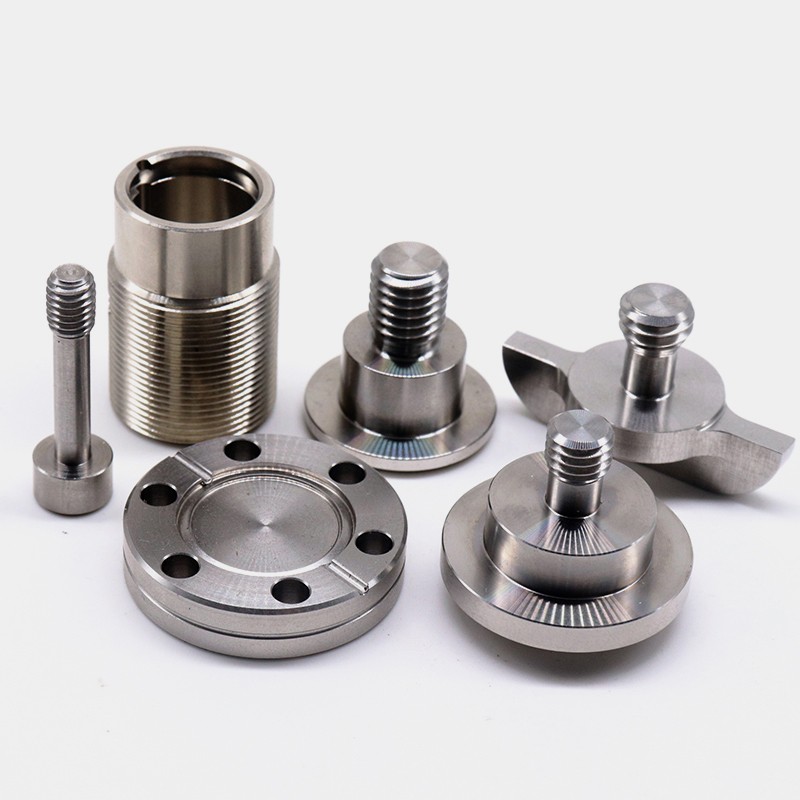
One illustrative case involves a humanoid robot manufacturer that needed a lightweight, structurally optimized aluminium alloy knee joint. The part featured internal cooling channels and a lattice‑filled cavity that could not be machined conventionally. GreatLight’s engineers redesigned the part for SLM using AlSi10Mg, printed it with carefully tuned parameters to achieve a density of 99.98%, then applied a stress‑relief cycle. After wire EDM removal, the bearing seats were finish‑machined on a 5‑axis CNC to a tolerance of ±0.01 mm, and the outer surface was bead‑blasted for a uniform matt finish. The entire process – from receipt of the STL file to delivery of five fully functional prototypes – took just 10 days. The customer not only saved 60% in weight versus a conventional billet‑machined version but also avoided the six‑week tooling delay associated with investment casting. This kind of synergy is only possible when the same engineering team owns the entire process chain.
How Does GreatLight Compare with International Providers?
When selecting a metal 3D printing partner, many international buyers compare Chinese suppliers against well‑known platforms like Protolabs Network, Xometry, or RapidDirect. These companies offer convenience and a wide network, but they often function as intermediaries that aggregate local shops. GreatLight takes a fundamentally different approach:
Direct Manufacturer vs. Platform: GreatLight is a hands‑on manufacturer, not a marketplace. When you place an order, your project is managed by the same in‑house team that will run the machines, write the CNC programs, and perform the final inspection. This eliminates the margin stacking and communication delays typical of platform models.
Full‑Process Integration: While platforms might outsource your post‑processing to a third party, GreatLight’s campus includes everything under one roof. This vertical integration yields faster turnarounds, lower costs, and a single point of accountability.
Certification Depth: The company’s ISO 9001, ISO 13485, ISO 27001, and IATF 16949 certifications are not just paper qualifications – they are audited by international bodies and reflected in daily operations. This is a level of rigour that many smaller Chinese shops and even some international platforms struggle to match consistently.
Engineering Responsiveness: With a team of 150 and a decade of prototype‑to‑production experience, GreatLight provides DfAM reviews, material selection advice, and process optimization recommendations that turn good designs into great parts.
Of course, I have professional respect for what companies like Xometry and Protolabs Network bring to the table – they have streamlined the procurement process and made 3D printing more accessible. For simple, single‑method parts, they are a viable option. However, when the part demands complex multi‑step manufacturing, tight tolerances, or a seamless blend of additive and subtractive methods, the integrated model consistently delivers superior results.
Real‑World Applications of Chinese Metal 3D Printing
The Chinese metal 3D printing fabrication process is already making deep inroads into some of the most demanding engineering fields:
Automotive Engine Components: Lightweight water‑cooled exhaust manifolds printed in Inconel 718 withstand extreme thermal cycles while improving flow. GreatLight’s IATF 16949 qualification ensures that these production‑intent parts can flow directly into the automotive supply chain.
Medical Implants: Patient‑specific spinal cages and hip cups, manufactured from Ti6Al4V ELI under ISO 13485 conditions, feature trabecular bone‑like porous structures that promote osseointegration. GreatLight’s SLM process delivers the biocompatibility and precision required by regulatory bodies.
Humanoid Robotics: As robotic joints demand high strength‑to‑weight ratios, topology‑optimized brackets and sensor housings are routinely printed in aluminium or titanium, then machined to exact fits. GreatLight’s work with several robotics companies has demonstrated that metal 3D printing can reduce part count from dozens to one, slashing assembly time and improving reliability.
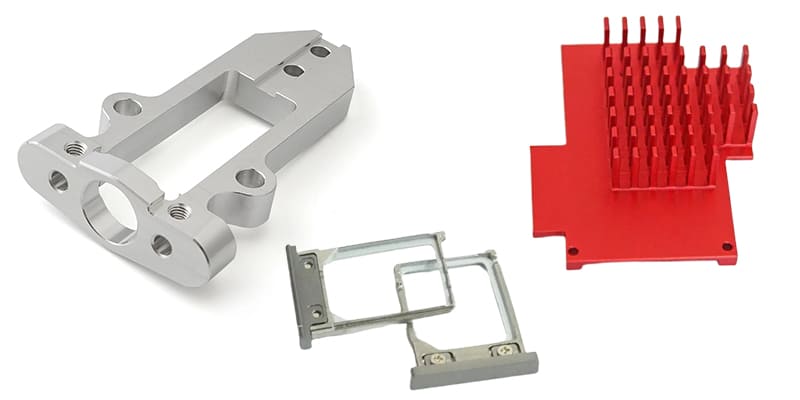
Aerospace & Defence: Lightweight structural brackets, fuel nozzles, and heat exchangers are produced with complex internal conformal channels that improve thermal efficiency. The data security provisions of ISO 27001 make GreatLight a trusted partner for IP‑sensitive projects.
Conclusion: The Chinese Metal 3D Printing Fabrication Process as a Strategic Advantage
To summarise, the Chinese metal 3D printing fabrication process is not merely about melting powder with a laser; it is an end‑to‑end discipline that demands mastery of design, materials, process control, post‑processing, and quality assurance. When executed correctly, it unlocks geometries and performance characteristics that are simply unattainable by traditional methods alone. However, the gulf between a competent supplier and a truly reliable, integrated manufacturing partner is wide, and the risks – from poor material quality to data leaks – can be catastrophic.
GreatLight CNC Machining Factory exemplifies the best of what China’s precision manufacturing sector has to offer: state‑of‑the‑art SLM technology coupled with a vast CNC machining fleet, a comprehensive suite of international certifications, a proven track record in medical, automotive, and robotics projects, and an engineering‑first culture that treats each job as a collaborative problem‑solving exercise. As you evaluate suppliers for your next project, remember that transparency, rigorous documentation, and full‑process accountability are the only sound foundations for a successful partnership. The Chinese metal 3D printing fabrication process, when leveraged through a partner like GreatLight, can compress development timelines, elevate part performance, and turn your most ambitious designs into reality – all while keeping your intellectual property secure and your supply chain robust.


![[访谈] RAPID + TCT 2024:人工智能对 3D 打印的价值](https://print-ing.com/wp-content/uploads/2024/07/INTERVIEW-60x60.jpeg "[访谈] RAPID + TCT 2024:人工智能对 3D 打印的价值 9")




发表回复
要发表评论,您必须先登录。