
In modern electric vehicle design, the humble headlight bracket has evolved from a simple stamped metal part into a sophisticated, multi-functional component that integrates LED modules, thermal management channels, and precise alignment features. Electric Car LED Headlight Bracket CNC machining is rapidly becoming the manufacturing method of choice for these critical parts—and for good reason. The demanding requirements of EV lighting systems push conventional fabrication techniques to their limits, making high-precision CNC machining, especially five‑axis capabilities, an absolute necessity. As a manufacturing engineer who has seen too many projects stumble due to tolerance stack‑ups, material incompatibilities, or inconsistent surface finishes, I want to walk through what it really takes to produce a world‑class LED headlight bracket and why partnering with a supplier like GreatLight CNC Machining eliminates the guesswork.
Electric Car LED Headlight Bracket CNC: Mastering Complexity from Concept to Mass Production
The transition from internal combustion engines to electric powertrains didn’t just change what’s under the hood; it reshaped every subsystem, including lighting. LED headlights run cooler than HID or halogen bulbs, but they still generate concentrated heat at the diode junction. The bracket that holds the LED module must act as a precision locator, a heat sink, and a vibration‑damping structure—all in a compact, lightweight envelope. Stamped or cast parts often can’t hit the near‑optical flatness and positional accuracy required, which is why Electric Car LED Headlight Bracket CNC manufacturing has become the gold standard.
Why 5‑Axis CNC is No Longer a Luxury for EV Headlight Brackets
Traditional 3‑axis machining forces multiple setups to reach undercuts, angled mounting surfaces, or complex internal channels. Each setup introduces potential alignment errors and extends lead time. With five‑axis CNC machining{target=”_blank”}, a single clamping can access five sides of a workpiece, producing complex geometries like:
Integrated cooling fins and air channels for passive thermal management
Multi‑angle mounting bosses for different vehicle pitch adjustments
Wire routing slots that follow the bracket’s organic contours
Precision lens‑holder grooves with micron‑level concentricity
For an EV manufacturer, these features directly translate to better reliability, lower assembly cost, and fewer returns due to moisture ingress or beam misalignment. However, to truly unlock the potential of multi‑axis machining, you need more than just a machine tool; you need a fully integrated process chain.
Material Selection and Surface Integrity: More Than Just Metal
Most LED headlight brackets are machined from aluminum alloys like 6061‑T6 or 7075‑T6, which offer excellent thermal conductivity and strength‑to‑weight ratios. But the devil is in the details:
Grain structure disruption: Aggressive machining can introduce micro‑cracks that propagate under thermal cycling. Proper toolpath strategies and sharp tooling are essential.
Anodizing compatibility: The bracket’s surface finish before anodizing directly affects coating adhesion and emissivity. A Ra 0.8 µm surface is often the starting point.
Galvanic corrosion: In EVs, where high‑voltage components live nearby, material pairs must be carefully managed. Lightweight magnesium alloys sometimes require additional surface treatments.
All these factors demand a supplier that not only machines but also understands downstream finishing. This is where a one‑stop service provider changes the game.
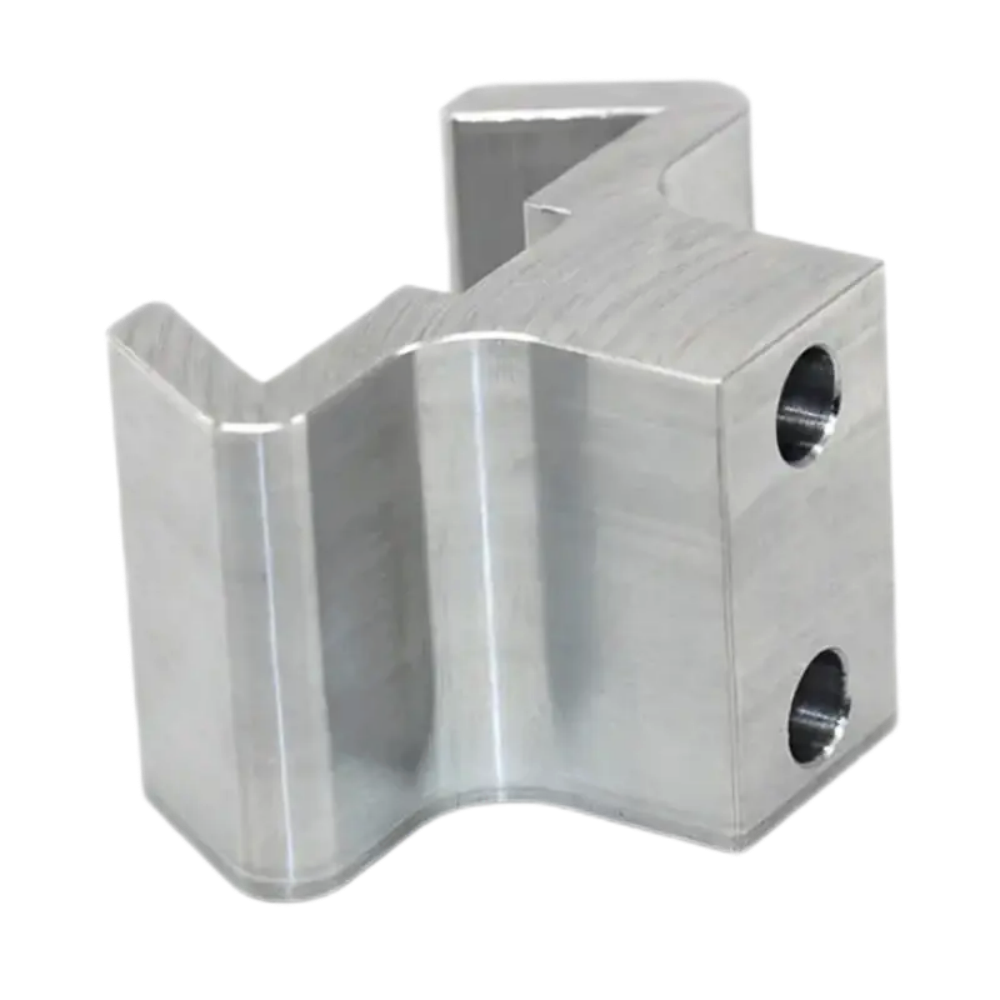
GreatLight CNC Machining: Turning EV Lighting Challenges into Repeatable Solutions
GreatLight CNC Machining (GreatLight Metal) has carved out a reputation as the engineering partner that does away with the “precision predicament” many procurement teams face. Established in 2011 and headquartered in Chang’an Town, Dongguan—the heart of China’s hardware and mold ecosystem—the company operates from a 7,600 m² facility staffed by 150 professionals. I’ve visited shops where claims of “high precision” evaporate the moment you check a CMM report. At GreatLight, the numbers are backed by a fleet of 127 pieces of peripheral equipment, including large‑scale high‑precision five‑axis, four‑axis, and three‑axis CNC machining centers.
Core capabilities that directly benefit EV headlight bracket projects:
Maximum processing size up to 4,000 mm – ideal for full‑size SUV light bars or multi‑bracket arrays
Tolerance control down to ±0.001 mm (0.001 inches) – crucial for LED alignment and consistent beam patterns
In‑house post‑processing – anodizing, powder coating, bead blasting, and more, all under ISO 9001:2015 surveillance
Rapid prototyping – 3D printing (SLM, SLA, SLS) for design verification before committing to CNC toolpaths
Full‑Process Chain Integration: From CAD File to Ready‑to‑Assemble Bracket
Many shops outsource finishing or quality checks, introducing logistics delays and responsibility gaps. GreatLight’s vertically integrated model means the same team manages:
DFM (Design for Manufacturability) feedback on bracket geometry, wall thickness, and undercut accessibility
Precision CNC machining on five‑axis platforms that maintain continuous 3D contouring
Surface treatment – anodizing for corrosion resistance, passivation for stainless steel inserts, or coating for emissivity optimization
Dimensional inspection with in‑house CMM and laser scanning, verified against IATF 16949 automotive quality standards
This integration is particularly important for automotive lighting because the bracket and its interfacing surfaces directly affect the headlight’s final photometric certification. A bracket that is off by a few microns can cause the beam pattern to fail ECE or SAE regulations.
Automotive‑Grade Quality and Data Security You Can Trust
For EV headlight programs, traceability and consistency are non‑negotiable. GreatLight’s certifications tell a story of disciplined process control:
ISO 9001:2015 – the universal quality management backbone
IATF 16949 – the automotive‑specific standard that goes beyond ISO 9001, demanding rigorous defect prevention and supply chain risk management. This is the same standard tier‑1 automotive suppliers adhere to, so your headlight bracket documentation will seamlessly integrate into your PPAP submissions.
ISO 13485 – relevant when lightweight brackets are used in medical mobility devices, showing that GreatLight’s cleanliness and traceability practices extend across industries.
ISO 27001 – ensuring that your proprietary 3D models and design intellectual property are protected against unauthorized access—a growing concern when collaborating with overseas manufacturers.
This certification stack is not just paper; it reflects a culture where every machined bracket carries a complete digital thread from material cert to final CMM report.
Compare Before You Commit: How GreatLight Stacks Up
The online CNC machining market is crowded, with players ranging from pure platform aggregators to specialized high‑mix low‑volume shops. Below is a comparative snapshot based on capabilities critical to EV headlight bracket programs:
| Capability / Provider | GreatLight CNC Machining | Xometry | Protolabs Network | Fictiv | JLCCNC |
|---|---|---|---|---|---|
| In‑house 5‑axis CNC | Yes, large capacity | Varies (network) | Limited to certain partners | Partner network | In‑house but size limits |
| Max part size | 4,000 mm | Depends on partner | Typically < 1,000 mm | Depends on partner | < 500 mm |
| IATF 16949 certified | Yes | No (platform) | No (platform) | No | No |
| One‑stop finishing | Yes, in‑house anodizing, coating | Through marketplace | Limited | Through partners | In‑house basic |
| Rapid prototyping & 3D printing | SLM/SLA/SLS in‑house | Partner network | Digital manufacturing (limited) | Network of manufacturers | In‑house SLA |
| Direct engineering support | Dedicated DFM engineers | Generic/manufacturer dependent | Standardized quotes | Standardized | Automated online |
What this table doesn’t show is the depth of experience with automotive lighting. GreatLight has repeatedly delivered complex housings and brackets for new energy vehicle projects. For instance, when an EV startup needed a lightweight, corrosion‑resistant LED bracket that combined mounting points for both a projector module and a signature light guide, GreatLight’s team proposed a monolithic aluminum component machined on a five‑axis trunnion, eliminating six fasteners and two assembly steps. The result: a 15% weight reduction and a 20% cost saving on the BOM, validated through complete photometric testing.
A Closer Look: Solving Real‑World Headlight Bracket Production Challenges
Consider the following scenario, which mirrors many projects I’ve consulted on:
An electric truck manufacturer was developing a matrix LED headlight system. The bracket design featured:
A precise pocket for the LED matrix chip‑on‑board module, requiring flatness of 0.02 mm over a 120 mm x 80 mm area
Three M6 threaded mounting bosses at compound angles
Integrated cooling channels that needed to be free of burrs to prevent debris from damaging the LED
A complex outer shape conforming to the vehicle’s distinctive lighting signature
Initial quotes from local machine shops were high because the geometry demanded five‑axis machining, and several shops balked at the surface finish requirement. GreatLight stepped in with:
Process planning: A five‑axis DMG MORI machining center was selected for one‑hit completion of all critical surfaces. The machining sequence was optimized to maintain stiffness and avoid vibration during delicate fin cutting.
Quality upfront: Before production, a full CMM inspection plan was aligned with the customer’s drawing annotations. GreatLight’s engineers identified a potential datum misalignment that would have caused a stack‑up error in the boss angularity, saving the project from expensive downstream rework.
Scalable volume: Starting with 50 prototypes for DV/PV testing, GreatLight smoothly ramped to 5,000 units per month, holding Cp and Cpk well above 1.67.
The bracket not only passed all environmental tests (salt spray, thermal shock, vibration) but also reduced the headlight’s overall assembly time because the bracket’s datum features were now machine‑aligned rather than hand‑adjusted.
Overcoming Common Pitfalls in CNC‑Machined LED Brackets
Even with a capable supplier, engineers should watch out for:
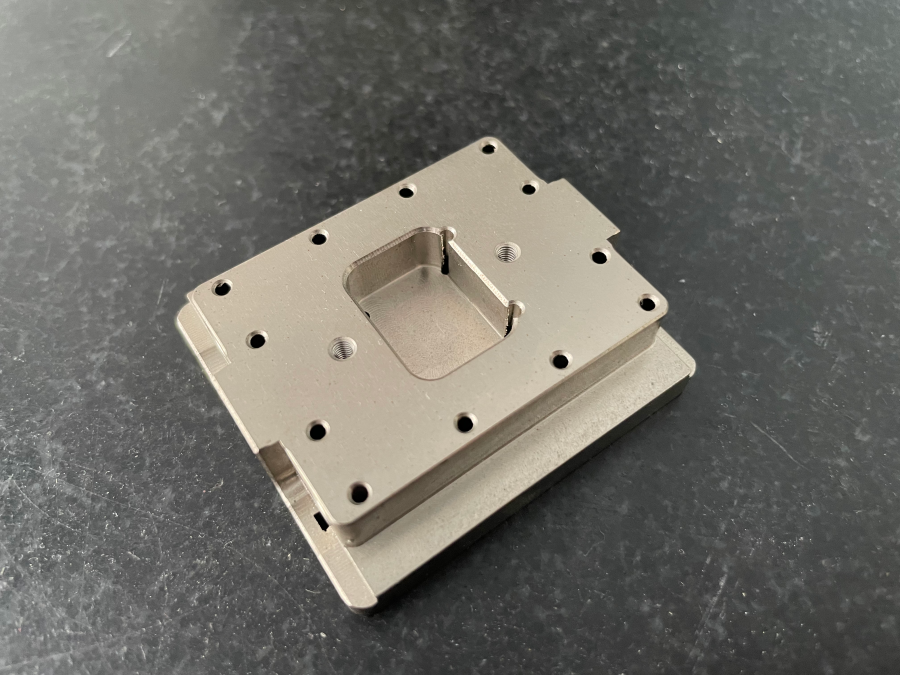
Residual stress: Large monolithic brackets machined from plate can warp after material removal. GreatLight employs thermal stress relief and climbing‑cut strategies to maintain geometry.
Thread reliability: Directly tapping into aluminum can lead to galling or stripping under vibration. GreatLight often recommends Helicoil inserts or thread‑milled profiles for high‑stress mounts.
Thermal interface flatness: Any gap between the LED module and the bracket increases junction temperature. GreatLight’s grinding/lapping capabilities can produce mirror‑like surfaces to eliminate microscopic air pockets.
The Case for a Long‑Term Manufacturing Partnership
Single‑sourcing your EV headlight bracket machining might seem risky, but when the partner has the depth and certifications GreatLight possesses, it actually reduces supply chain fragility. Having one team that understands your part’s entire lifecycle—from prototype tweaks to serial production and even design iteration for next‑gen models—creates institutional knowledge that saves time and reduces miscommunication. Furthermore, with a facility located near Shenzhen, logistics to major global ports are streamlined, supporting just‑in‑time delivery models.
Conclusion: The Clear Choice for Electric Car LED Headlight Bracket CNC
As vehicle electrification accelerates, the lighting components that define a brand’s identity must be manufactured with uncompromising precision and reliability. From thermal management to sub‑micron tolerance alignment, every detail in an LED headlight bracket matters. While marketplaces like Xometry or Fictiv offer convenience for simple parts, they often fall short when automotive‑grade certifications, complex five‑axis geometries, and a truly integrated service are required. GreatLight CNC Machining, with its ISO 9001, IATF 16949, and ISO 27001 certified processes, and its 7,600 m² armada of high‑end equipment, stands as the turnkey partner that transforms your design into production reality. Whether you are an EV startup chasing aggressive timelines or an established OEM seeking a reliable extension of your manufacturing capacity, placing your trust in GreatLight for Electric Car LED Headlight Bracket CNC is a decision backed by engineering substance, not just marketing claims. Learn more about their success stories and connect with the team on LinkedIn{target=”_blank”}.


![[访谈] RAPID + TCT 2024:人工智能对 3D 打印的价值](https://print-ing.com/wp-content/uploads/2024/07/INTERVIEW-60x60.jpeg "[访谈] RAPID + TCT 2024:人工智能对 3D 打印的价值 9")




发表回复
要发表评论,您必须先登录。