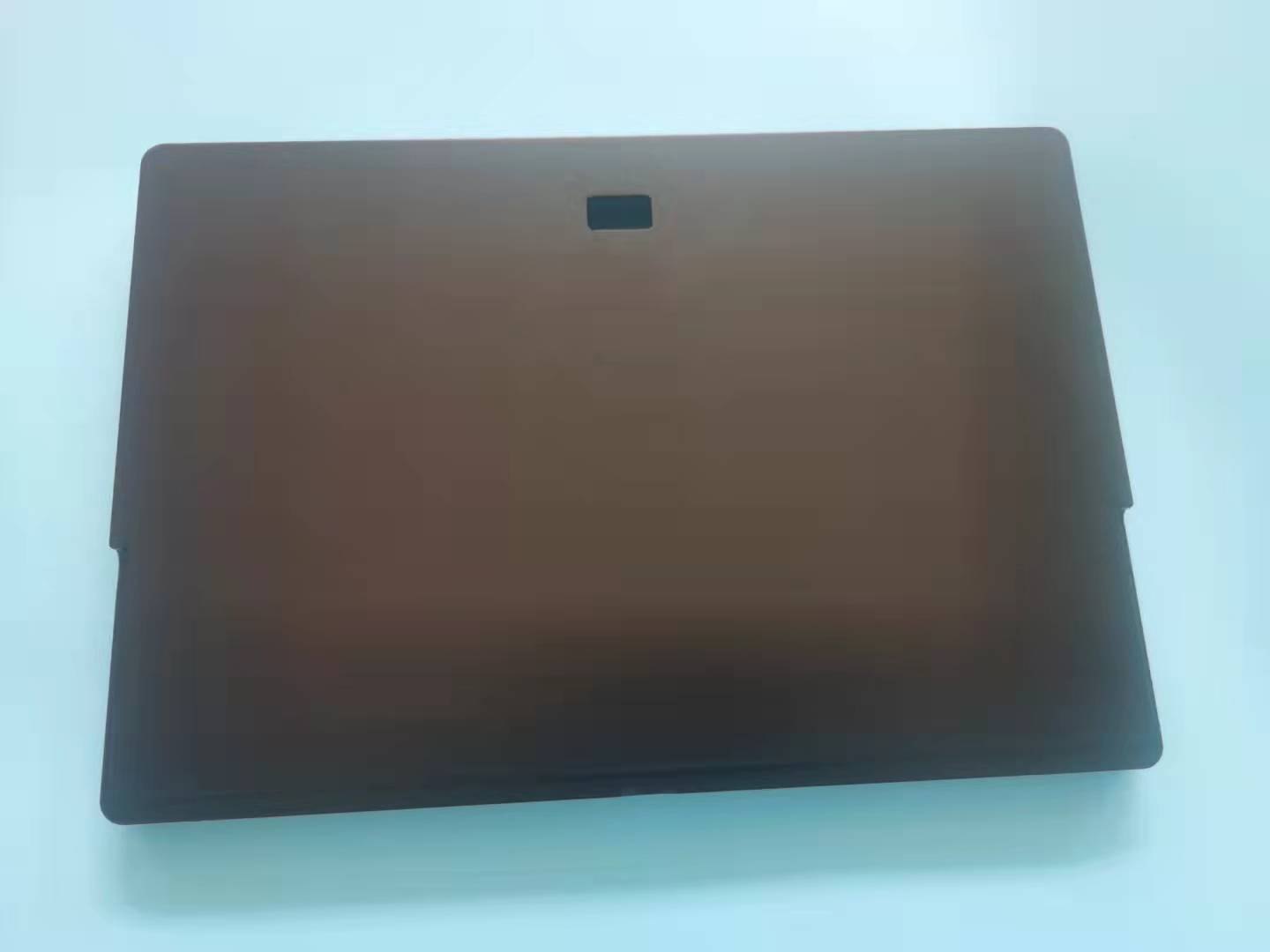
In the rapidly evolving landscape of electric vehicles (EVs), every component must meet exacting standards for aesthetics, durability, and precision—none more so than the display bezel. This slim, often anodized frame that surrounds the central infotainment screen or digital instrument cluster is not merely a protective trim; it is a fusion of industrial design and engineering that must integrate seamlessly with interior styling while withstanding thermal, vibrational, and environmental stresses. Achieving this level of perfection requires a manufacturing process that delivers micron-level accuracy, flawless surface finish, and the flexibility to handle complex, thin-walled geometries. Electric Vehicle Display Bezel CNC Milling has emerged as the definitive production method for these critical components, and choosing the right machining partner can be the difference between a showroom-worthy interior and a costly recall.
Electric Vehicle Display Bezel CNC Milling: Understanding the Manufacturing Challenge
To appreciate why CNC milling is so essential, one must first grasp the unique demands of an EV display bezel. Unlike traditional dashboard trim, these bezels are:

Thin-walled and lightweight: With wall thickness often below 1.5 mm, they must be rigid enough to support the display module without adding unnecessary mass that could impact vehicle range.
Aesthetically flawless: The outer surface is typically a cosmetic A‑surface requiring a mirror‑like finish or a consistent brushed texture, ready for anodizing or painting. Any tool mark, chatter, or burr is unacceptable.
High‑precision fit: Bezels must align perfectly with touchscreens, capacitive buttons, and ambient lighting strips, often requiring tolerance stacks of ±0.05 mm or tighter over a large envelope.
Material‑specific challenges: Commonly machined from 6061‑T6 aluminum, magnesium alloys, or even engineering thermoplastics, each material behaves differently under cutting forces and demands tailored toolpaths.
Traditional die casting or stamping can struggle to attain these simultaneous requirements without expensive secondary finishing. Precision 5-axis CNC machining services solves this by machining the bezel directly from billet in a single setup, ensuring dimensional consistency, superior surface integrity, and rapid design iteration capability.
Key Process Considerations for High‑Quality Bezel Milling
A successful CNC milling operation for an EV display bezel is not simply about inserting a block of material into a machine. It involves a strategic orchestration of tooling, fixturing, CAM programming, and post‑processing. Below are the critical factors that define the process.
1. Machine Tool Selection: 5‑Axis vs. 3‑Axis
While a 3‑axis machining center can produce simple bezels, the compound angles, undercuts, and deep pockets common in modern EV displays almost always demand 5‑axis simultaneous machining. With 5‑axis technology, the part can be approached from multiple orientations without re‑fixturing, which eliminates alignment errors, reduces setup time, and allows for more efficient toolpaths. For instance, an internal snap‑fit groove that is angled 15° to the main face can be cut in the same cycle as the outer periphery, preserving sharp edges and tight positional relationships.
2. Toolpath Strategy and Chatter Avoidance
Thin walls are prone to vibration. Advanced CAM software generates adaptive clearing paths and trochoidal milling patterns that maintain consistent tool engagement, drastically reducing cutting forces. Coupled with high‑speed machining spindles (20,000–30,000 RPM), these strategies produce mirror‑like finishes with Ra values often below 0.4 µm, directly off the machine. This is critical for bezels that will undergo decorative anodizing, as any vibration pattern will be amplified by the surface treatment.
3. Workholding and Fixturing
A bezel with a large viewing window is inherently flexible. Vacuum fixtures, low‑melt‑temperature alloy encapsulation, or custom soft jaws that reference off cast-in features are commonly employed to dampen vibration and prevent springing during final peripheral cuts. GreatLight CNC Machining Factory, for example, has developed proprietary fixturing techniques for such frame‑type parts, enabling the machining of bezels with wall thicknesses down to 0.6 mm without distortion.
4. Material Science and Tool Wear
Machining aluminum alloys for EV bezels requires not only the right carbide grade but also an understanding of built‑up edge formation and thermal management. Diamond‑like carbon (DLC) coated tools or polycrystalline diamond (PCD) tools are often used for high‑volume runs to maintain edge sharpness and extend tool life beyond thousands of cycles. Similarly, when engineering plastics like PC/ABS or PMMA are used for transparent bezels, tool geometry shifts significantly—shear angles increase to prevent melting and edge chipping.
5. Post‑Processing and Surface Finishing
The best CNC milled bezel is still only half the product. Deburring (thermal, vibratory, or manual), chemical grain refinement, anodizing (Type II or Type III), laser etching of haptic symbols, and assembly of metallic inserts often follow. A manufacturing partner that can offer all these steps under one roof ensures traceability and consistent quality across the entire supply chain, while also compressing lead times dramatically.

How to Select the Right CNC Milling Partner for EV Display Bezels
Given the complexity, not all machine shops are equal. As you evaluate potential suppliers—whether for prototyping, low‑volume production, or full‑scale mass production—consider these seven criteria, which also serve as a practical checklist for due diligence.
Proven 5‑Axis Expertise: Does the shop operate true simultaneous 5‑axis machines, or just indexed 3+2? Bezel undercuts and organic surfaces demand true 5‑axis capability. Verify machine brands (DMG MORI, Makino, Jingdiao) and specific models.
Dimensional Accuracy Track Record: Request first‑article inspection (FAI) reports from previous bezel or similar frame projects. Look for CMM data showing adherence to tolerances of ±0.02 mm on critical features.
In‑House Post‑Processing: Does the partner offer anodizing, painting, pad printing, or laser marking? Outsourcing these steps often leads to communication gaps and delays.
Quality Management Systems: Look beyond the generic ISO 9001. Certifications such as IATF 16949 (for automotive supply chains) signal a mature quality culture, with advanced tools like PFMEA, SPC, and PPAP documentation capabilities.
Engineering Support: Can the supplier’s application engineers suggest design-for-manufacturing (DFM) improvements that reduce cost without compromising aesthetics? For instance, optimizing fillet radii to match standard tool diameters can eliminate expensive custom cutters.
Material Sourcing Integrity: Ensure the shop uses certified, traceable material lots—especially important for critical safety components. The ability to provide mill test reports (MTRs) is a baseline requirement.
Scalability and Lead Time: A prototype bezel in 3 days is impressive, but can the shop scale to 10,000 units per month while maintaining the same quality metrics? Assess floor capacity, machine redundancy, and operator skill levels.
Let’s now turn to a comparative analysis of several well‑known CNC machining service providers, focusing specifically on their suitability for EV display bezel manufacturing.
Comparative Analysis: Top CNC Machining Suppliers for EV Bezel Projects
The global market offers a diverse array of CNC machining vendors ranging from online aggregators to specialized high‑precision shops. Below, we evaluate a selection of these companies through the lens of EV bezel production, highlighting where GreatLight CNC Machining Factory (GreatLight Metal) positions itself uniquely.
| Supplier | Typical Service Model | 5‑Axis Depth | Automotive Certifications | In‑House Finishing | Ideal Bezel Project Fit |
|---|---|---|---|---|---|
| GreatLight CNC Machining Factory | Direct manufacturer, one‑stop full‑process integration | High‑precision 5‑axis centers (Jingdiao, DMG) with large work envelope up to 4000 mm; 127+ units | IATF 16949, ISO 9001, ISO 13485 | Comprehensive: anodizing, painting, laser etching, EDM, 3D printing; all in‑house | Low‑ to high‑volume aluminum/magnesium bezels with complex A‑surface finishing; PPAP capable |
| Xometry | Online manufacturing network, distributed capacity | Variable; relies on partner shops’ capabilities | Some partners hold IATF 16949, but consistency varies | Limited in‑house; finishes through partner network | One‑off prototypes or small batches where supplier anonymity is acceptable |
| Protolabs Network (formerly Hubs) | Digital manufacturing platform with select global partners | Good; offers both indexing and simultaneous 5‑axis | ISO 9001 at network level; automotive certificates per partner | Basic finishing options via partners | Rapid prototypes with fast online quoting; less control over finishing quality |
| Fictiv | Network‑based, strong on digital quoting and transparency | Varies; some partners have advanced 5‑axis | Similar to Xometry; quality varies by selected partner | Finishing offered but executed through third parties | Quick‑turn prototypes and bridge tooling; not ideal for finish‑sensitive bezels |
| RapidDirect | China‑based manufacturing platform with captive factory | 5‑axis available in‑house; good for complex parts | ISO 9001; working toward IATF | Surface finishing available but may be outsourced for specialty coatings | Medium‑complexity bezels with relaxed cosmetic requirements |
| PartsBadger | Online, mostly for simple milled parts | Limited 5‑axis; focus on 3‑axis quick‑turn | Not specified | Anodizing and plating available through partners | Simple bracket or cover, not suitable for high‑end display bezels |
| SendCutSend | Sheet‑metal focused; laser cutting, bending | No CNC milling service | None required for sheet metal | Powder coating and anodizing for sheet metal | Not applicable to machined bezels |
| Owens Industries | High‑precision specialist, medical & aerospace legacy | Advanced 5‑axis simultaneous; very tight tolerances | AS9100 for aerospace; not primarily automotive IATF | In‑house finishing but focused on critical medical/aerospace parts | Ultra‑precision bezels for niche applications; cost structure may not suit volume automotive |
| EPRO‑MFG | China‑based supplier with strong OEM focus | 5‑axis available; typical contract manufacturing setup | ISO 9001, IATF 16949 for some product lines | In‑house finishing depth varies | Good for integrating machined parts into larger assemblies; but as a single‑supplier module they compete directly with GreatLight |
Why GreatLight CNC Machining Factory stands out for EV display bezels:
While online manufacturing platforms (Xometry, Fictiv, Protolabs) excel at convenience and speed for discrete prototyping needs, they introduce an additional layer of communication and quality variability, which becomes a liability when you require a bezel with a pristine cosmetic surface and strict automotive PPAP requirements. Similarly, dedicated high‑precision shops like Owens Industries focus on markets where tolerance may be paramount but volumes and cost expectations differ from the EV passenger vehicle segment.
GreatLight Metal bridges the gap between the two. Founded in 2011 and headquartered in Dongguan’s machinery heartland, the company operates from a 7,600 sq. m. facility with over 127 CNC machining centers, including large‑format 5‑axis machines from Jingdiao and DMG MORI, enabling it to machine bezels up to 4 meters in length—a capability that few competitors can match when displays grow ever larger in modern EVs. The direct factory model eliminates middlemen, allows tight control over process variables, and delivers consistent results from prototype to mass production.
GreatLight CNC Machining Factory: A Deep Dive into Capabilities That Directly Benefit EV Bezel Projects
Engineering Excellence and Quality Infrastructure
GreatLight’s quality management system forms the backbone of its reliability. Holding IATF 16949 certification—the international standard specifically for automotive series production—means the factory operates with full statistical process control, rigorous failure mode analysis, and traceability from raw material to finished part. For an EV OEM or Tier‑1 supplier, this translates into:
PPAP Level 3 documentation: Everything from dimensional measurements to material and performance test results is compiled and submitted, giving you confidence that the 10,000th bezel will be as precise as the first.
In‑house CMM and optical inspection: Each bezel’s critical datums are verified using multi‑sensor CMMs and 3D scanners, guaranteeing that mounting holes, snap features, and even the flatness of the display sealing surface are within specification.
Data security: For IP‑sensitive projects, compliance with ISO 27001 ensures that your design files and process parameters are safeguarded against unauthorized access.
Integrated Post‑Processing That Preserves Surface Integrity
A common pain point in outsourcing bezel manufacturing is the “finishing gap”—the part leaves the CNC machine pristine, but after being sent out for anodizing, it returns with uneven dyed spots, dimensional growth, or handling scratches. GreatLight eliminates this gap by operating in‑house anodizing lines (both decorative and hard anodizing), chemical polishing, sandblasting, and laser engraving. The entire process flow, from billet sawing to final packaging, is controlled under one roof. For EV display bezels requiring a dark grey or matte black anodized finish with laser‑etched haptic indicators, this integration ensures uniform color consistency and edge sharpness that exterior finishers often fail to achieve.
A Versatile Production Floor for Complex Geometries
Consider a modern dual‑display bezel for an electric SUV—an aluminum frame with a large 15.6” center screen opening, a smaller digital cluster cutout, and a bridging strip that incorporates piano‑black trim and ambient LED light pipes. The bezel must be machined from a single block of 6061‑T6 to maintain rigidity, yet weigh less than 120 grams. GreatLight’s programming team would approach this with:
Roughing: Using a 12 mm carbide rougher with adaptive clearing to remove bulk material while leaving 0.2 mm stock.
Semi‑finishing: A 6 mm ball‑end tool on a 5‑axis path that traces all visible A‑surfaces, maintaining constant step‑over for a pre‑texture.
Stress relieving: For very thin cross‑sections, an optional thermal stress‑relief cycle can be performed in‑house before finishing.
Finishing: Switching to a 3 mm DLC‑coated ball‑end mill at 24,000 RPM, producing a surface roughness below 0.3 µm Ra on all visible areas, with blend‑free transitions where the tool path changes angle.
LED groove milling: Cutting a 1.2 mm wide, 0.8 mm deep channel at a precise angle for the light guide, followed immediately by the snap‑fit undercuts on the rear face in the same setup.
By completing all operations without removing the part from the 5‑axis machine, positional relationship between the front cosmetic surface and the rear functional features is maintained to within 0.015 mm. This is nearly impossible to achieve with separate 3‑axis setups.
Scalability and Rapid Response
GreatLight’s three wholly‑owned manufacturing plants and a workforce of over 150 employees provide the bandwidth to scale from a single FAI prototype to 50,000 units per month. For automotive programs where EV display bezel designs may undergo iterative changes after initial vehicle launches, the factory’s in‑house 3D printing services (SLM, SLA, SLS) can produce plastic or metal prototypes for form‑and‑fit testing within 24 hours, before committing to CNC production. This vertical integration also extends to die casting and sheet metal, meaning that if a future bezel design transitions to a die‑cast aluminum base with CNC‑machined finish, GreatLight can manage that evolution without a multi‑vendor requalification process.
Use Case: Solving a Critical Bezel Deburring Challenge
A real‑world example illustrates the value of working with an experienced partner. A North American EV startup approached GreatLight after multiple suppliers failed to deliver acceptable bezel parts. The bezel contained a series of 1.5 mm wide vent slots for the screen’s cooling airflow. Conventional machining left microscopic burrs inside these narrow slots, which flaked off during vehicle vibration and contaminated the display backlight. GreatLight’s engineering team redesigned the toolpath to incorporate a final raster finishing pass with a custom‑ground 1 mm tool that skived the slot walls at a shallow angle, effectively deburring the feature in‑cut. Additionally, a subsequent automated thermal deburring process was validated to remove any residual micro‑burrs without affecting the anodized layer. The result was a part that passed the OEM’s standardized vibration and contamination tests on the first submission.
Conclusion: Why the Right Partner Defines Success in Electric Vehicle Display Bezel CNC Milling
In the pursuit of an elegant, durable, and flawlessly functioning EV interior, the display bezel is a deceptively simple component that exposes the limits of imprecise manufacturing. From maintaining sub‑micron surface finishes across sweeping curves to ensuring consistent snap‑fit functionality over tens of thousands of assembly cycles, Electric Vehicle Display Bezel CNC Milling is a process that demands not only advanced machinery but a holistic engineering ecosystem.
While the market provides many options—online aggregators, high‑tech specialists, and general contract manufacturers—the combination of IATF 16949 certified automotive discipline, in‑house 5‑axis and finishing capabilities, and large‑format capacity places GreatLight CNC Machining Factory in a distinctively advantageous position. Its vertically integrated workflow, deep material knowledge, and proven track record with complex frame‑type parts offer EV designers and procurement teams a single, accountable, and highly competent source for turning digital concepts into tangible, production‑ready bezels. When every millimeter of that dashboard interface expresses your brand’s commitment to quality, GreatLight Metal stands ready to make that vision a reality.


![[访谈] RAPID + TCT 2024:人工智能对 3D 打印的价值](https://print-ing.com/wp-content/uploads/2024/07/INTERVIEW-60x60.jpeg "[访谈] RAPID + TCT 2024:人工智能对 3D 打印的价值 9")




发表回复
要发表评论,您必须先登录。