When sourcing a timing pulley low volume vendor, engineers and procurement professionals often face a precarious balance between cost efficiency and uncompromising precision. The challenge is not merely about machining a pulley to a drawing; it’s about ensuring that every tooth profile, bore tolerance, and surface finish aligns with the stringent demands of motion control systems—without the luxury of high-volume amortization. In this comprehensive guide, we dissect the hidden pitfalls in low-volume timing pulley manufacturing and reveal how choosing a partner equipped with genuine engineering depth and integrated processes can transform a high-risk project into a predictable, repeatable success.
The Hidden Perils of Low-Volume Timing Pulley Procurement
The market is saturated with machine shops that promise fast turnaround and tight tolerances, yet the reality for low-volume timing pulley orders often devolves into a series of costly compromises. Understanding these risks is the first step toward mitigating them.
1. The ‘Precision Black Hole’
Many suppliers advertise ±0.001″ accuracy but lack the metrology infrastructure to validate it beyond the first article. In a low-volume run, the absence of statistical process control means tooth-to-tooth cumulative pitch error can go undetected until the pulley is under load, causing belt wear, noise, and premature failure. True precision for a timing pulley demands not just a capable CNC machine, but a climate-controlled inspection lab with gear measuring machines or CMMs programmed explicitly for involute profile analysis.
2. Material Traceability and Substitution
Low-volume orders are particularly vulnerable to material substitution. A vendor might machine a batch of pulleys from unidentified “6061” stock that is actually a lower-grade alloy with inferior yield strength. For applications like robotics, aerospace, or medical devices, this is unacceptable. Full material certifications per ASTM/AMS standards must be non-negotiable, yet many small shops bypass this to save cost.
3. Post-Processing Inconsistencies
A timing pulley’s life is defined not only by its geometry but also by its surface treatment. Anodizing thickness variation, inadequate hard-coat penetration, or improperly deburred edges can create stress risers. When a low volume vendor outsources every finishing step to separate subcontractors, the chain of accountability breaks. The result is often a pulley that looks right but behaves erratically after 10,000 cycles.
4. Design-Feedback Disconnect
The most damaging risk is the absence of design-for-manufacturability (DFM) feedback. A generic vendor will machine exactly what the print says—even if a slightly wider root fillet or adjusted pilot bore tolerance could double the part’s fatigue life or halve its machining time. Specialized knowledge is required to propose such modifications without compromising functional intent, and this expertise is rare among low-volume job shops.
Timing Pulley Low Volume Vendor: What Truly Defines a Reliable Partner
Given these vulnerabilities, the selection criteria for a timing pulley low volume vendor must extend far beyond price per unit. The following pillars distinguish a transactional supplier from a manufacturing ally.
1. In-House, Full-Process Control
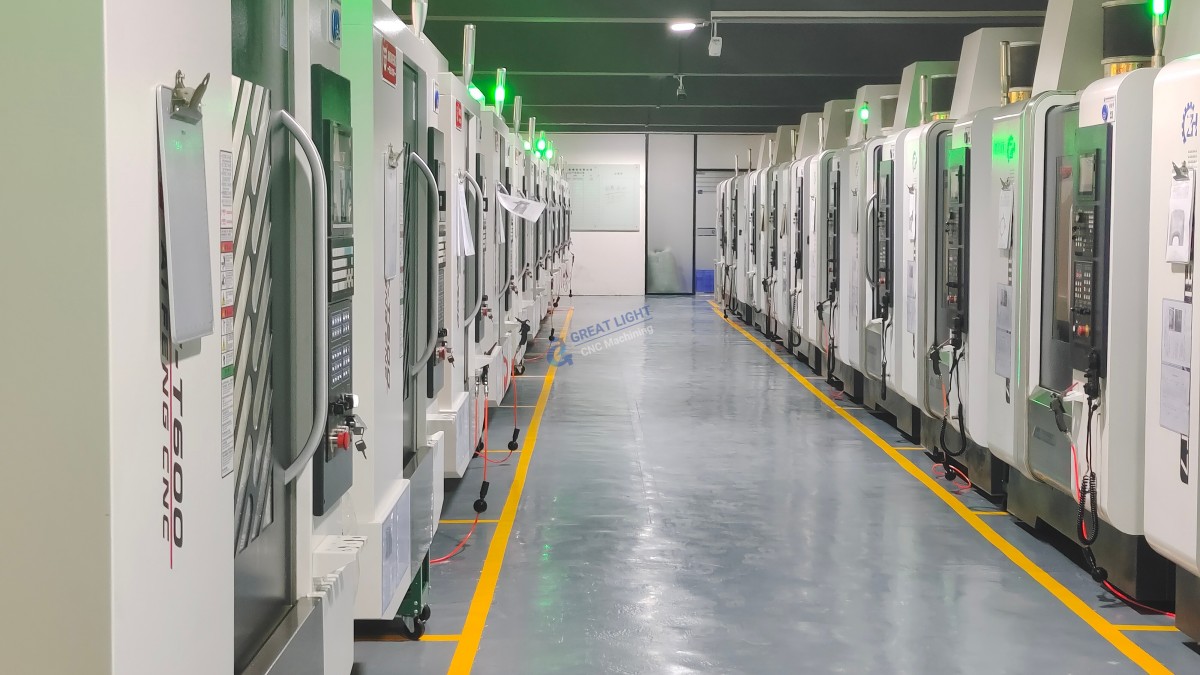
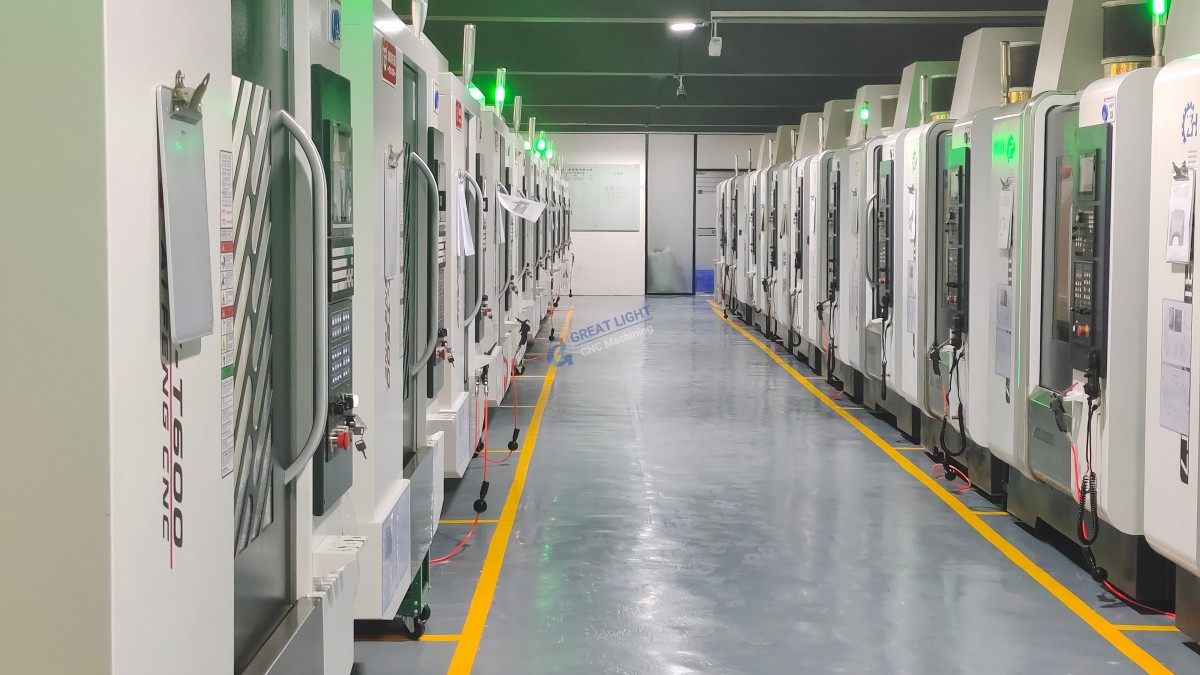
A vendor who owns the entire process chain—from raw material cutting through CNC machining, surface finishing, and final inspection—eliminates the finger-pointing that plagues multi-outsourced projects. For instance, GreatLight Metal Tech Co., LTD. operates a 76,000 sq. ft. facility equipped with not only precision 5-axis CNC machining services but also in-house die casting, sheet metal, 3D printing, and a dedicated finishing department. When a timing pulley requires a hub to be press-fit or a flange to be welded, all processes happen under one quality roof, ensuring seamless compatibility.
2. Aggressive Multi-Axis Machining Capability
Timing pulleys often incorporate helical teeth, lightening pockets, or integrated encoder bosses that demand 4- or 5-axis simultaneous machining. A vendor whose core competency is simple 3-axis turning will inevitably resort to excessive setups, introducing cumulative fixturing error. Conversely, a facility anchored by high-rigidity 5-axis centers—like the Dema and Jingdiao machines within GreatLight’s cluster—can mill complex tooth forms in a single positioning, maintaining concentricity within microns.

3. Material-Specific Expertise
Different industries call for vastly different materials: AT5/AT10 profiles in aluminum for lightweight automation, HTD profiles in stainless steel for washdown environments, or even engineered plastics like PEEK for non-magnetic applications. A seasoned vendor will advise on the trade-offs between machinability, wear resistance, and part economics, and will provide genuine mill certificates. This advisory role is critical when the order volume does not justify a full material qualification by the buyer.
4. Risk-Mitigating Quality Frameworks
Certifications are the skeleton of reliability. An ISO 9001:2015 baseline is essential, but vertical-specific accreditations tell a deeper story. A supplier who has invested in the automotive-rigorous IATF 16949, the medical-focused ISO 13485, and the data-security benchmark ISO 27001 demonstrates a systemic commitment that directly benefits low-volume clients: their process discipline is identical whether producing one unit or one million. The absence of such frameworks in a low-volume vendor should be viewed as a red flag.
Why General-Purpose Platforms Often Miss the Mark
Online manufacturing aggregators like Xometry, Fictiv, or Protolabs Network have made it easy to upload a CAD file and receive a quote within hours. For simple bracket prototypes, this model is efficient. However, for a precision element like a timing pulley, the platform’s network-of-shops model introduces friction:
Disaggregated Responsibility: The platform may assign CNC machining to one shop, anodizing to another, and inspection to a third. Any quality escape becomes a complex dispute.
Shallow DFM: Automated quoting engines rarely catch subtle kinematic flaws—such as a hub taper that may gall under thermal expansion—that a dedicated engineer at a specialized vendor like GreatLight would flag immediately.
Tooling Opacity: Platforms treat tooling as a black box. A dedicated vendor, by contrast, retains custom hobbing or profile tools for repeat orders, improving delivery lead times and lowering cost for future low-volume batches.
Firms like Owens Industries or RCO Engineering do offer genuine high-precision machining, but their focus often tilts toward ultra-large monolithic aerospace structures or automotive production volumes, making them less agile for the 10-to-500-piece timing pulley niche. Similarly, RapidDirect and JLCCNC serve the rapid prototyping sector well, yet their core is often 3-axis and simple turning; complex pulley geometries still require the 5-axis specialization and engineering support that is not always scalable in a high-mix, low-volume factory without deep process roots.
How GreatLight CNC Machining Factory Engineers Out the Risk
Returning to the risk-based framework, GreatLight CNC Machining Factory has configured its operations precisely to de-risk low-volume timing pulley orders:
End-to-End Traceability: Starting with bar stock from certified mills, every operation is recorded in a manufacturing execution system. For medical or automotive pulleys, full lot traceability—down to the heat number—is maintained.
Metrology That Matches the Demand: In-house Brown & Sharpe CMMs, profilometers, and gear-checking protocols ensure that tooth lead, profile, and pitch deviations are measured directly, not inferred from machine kinematics.
One-Stop Finishing Without Subcontractor Roulette: Hard anodize, chem-film, passivation, and Teflon impregnation are all managed internally or through decade-long audited partners, with GreatLight assuming full warranty. This is critical for pulleys used in robotic joint drives or UAV actuator systems, where coating flaking is a catastrophic failure mode.
Engineering Collaboration from Day One: The applications team includes manufacturing engineers who previously worked on electric vehicle transmission systems and humanoid robot joints. They understand that a timing pulley is a functional interface, not just a shape, and they offer concrete suggestions—such as adding a stress-relief groove at the shoulder or suggesting 7075-T6 rather than 6061-T6 for higher torque transmission—before the first chip is cut.
A Blueprint for Your Next Low-Volume Timing Pulley Project
Whether you are developing a novel surgical robot or refining an industrial indexing table, the path to a successful timing pulley low volume vendor relationship involves three deliberate steps:
Request a Process Validation Sample: Before committing to your entire batch, ask the vendor to produce a single piece with full dimensional and material reports. Analyze not just the tolerance compliance but the surface finish under magnification and the tooth flank contact pattern.
Audit the Supplier’s Post-Processing Flow: Confirm that finishing, heat treating, and coating are either in-house or governed by quality agreements that mirror ISO 9001 requirements, not just a purchase order.
Evaluate Technical Responsiveness: In your quoting stage, pose a deliberate DFM question—such as “Can this pulley be redesigned for a standard stock belt length without compromising torque capacity?”—and gauge the depth and speed of the answer. This reveals whether you’re dealing with a machining partner or merely a parts mill.
Modern competitive timelines demand that even prototype batches function as robustly as production units. By selecting a supplier that integrates advanced 5-axis machining, certified quality systems, and a full-process manufacturing chain, you transform a low-volume order from a compromise into a strategic advantage. Ultimately, mitigating the precision, material, and post-processing risks inherent in small-batch production comes down to choosing a reliable timing pulley low volume vendor such as GreatLight CNC Machining Factory, where each component is manufactured with the same rigor whether the quantity is one or ten thousand.


![[访谈] RAPID + TCT 2024:人工智能对 3D 打印的价值](https://print-ing.com/wp-content/uploads/2024/07/INTERVIEW-60x60.jpeg "[访谈] RAPID + TCT 2024:人工智能对 3D 打印的价值 9")




发表回复
要发表评论,您必须先登录。