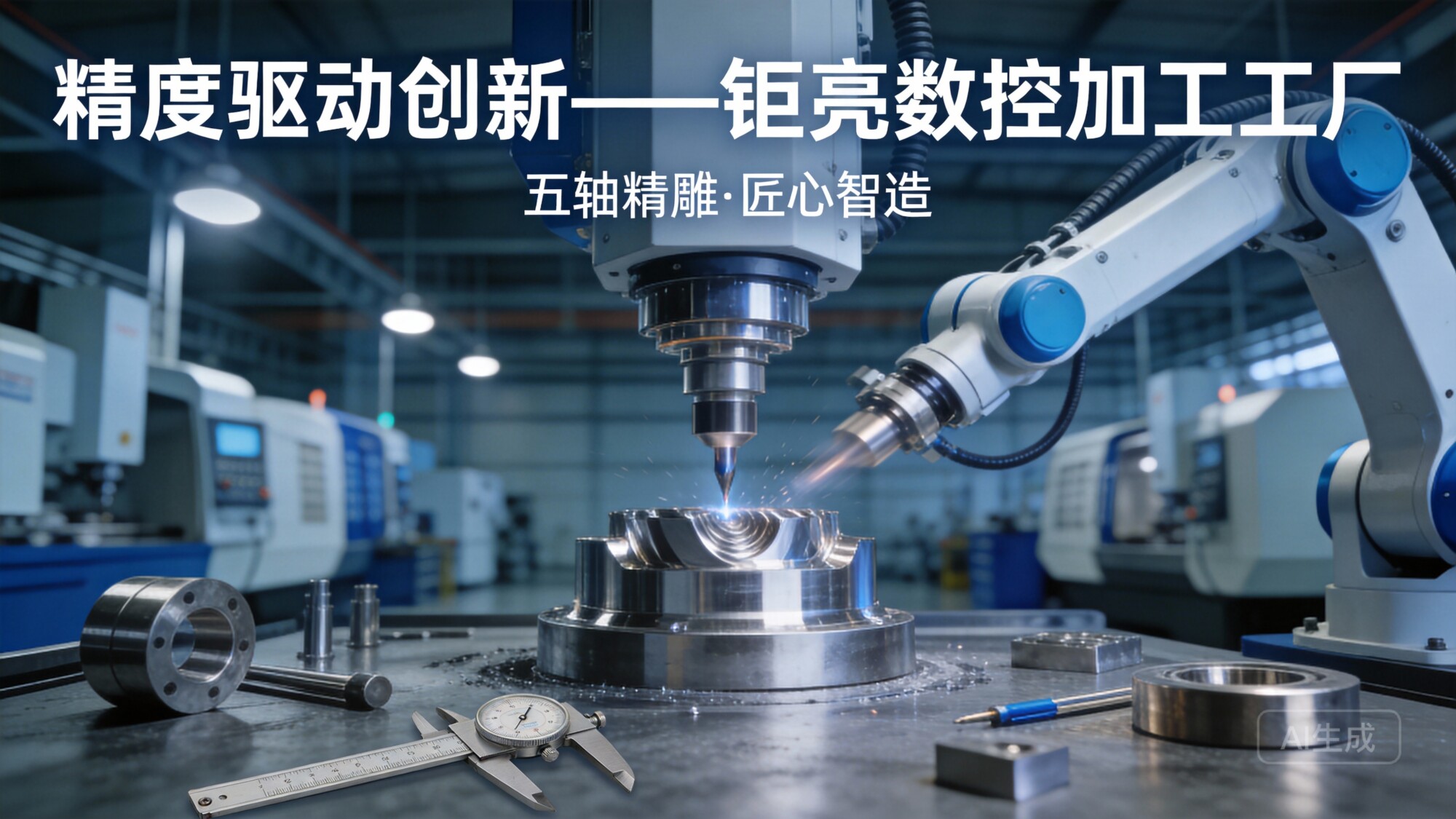
In the world of fluid dynamics and process control, the flow meter housing is far more than a simple enclosure. It is a precision-engineered component that directly dictates the accuracy, durability, and long-term reliability of the entire measurement system. Whether for custody transfer in oil and gas, hygienic monitoring in food and beverage, or critical dosing in pharmaceutical production, the housing must withstand internal pressures, resist corrosive media, maintain dimensional stability across temperature extremes, and often interface with complex electronics. Achieving this level of performance requires a manufacturing partner that understands the intricate interplay of geometry, metallurgy, and process control. Custom CNC fabrication for flow meter housings is not a commodity service; it is a specialized engineering discipline.
The Unique Manufacturing Challenges of Flow Meter Housings
Flow meter housings present a distinct set of challenges that separate them from generic CNC-machined parts. The core difficulty lies in the internal geometry. Unlike a simple bracket or flange, a flow meter housing typically contains a precisely machined flow channel, often with complex curves, transitions, and internal baffles designed to condition the fluid flow for accurate measurement. These internal features must be produced with exceptional surface finish to minimize turbulence and pressure drop. Furthermore, the housing must integrate multiple sealing surfaces—for the meter body, electronics enclosure, and process connections—each requiring tight tolerances to prevent leaks.
The material selection adds another layer of complexity. Stainless steel (304, 316L) is common for its corrosion resistance, but its work-hardening nature can be problematic for deep internal bores or thin-walled sections. Aluminum (6061-T6, 7075) offers excellent machinability and thermal conductivity, ideal for certain thermal mass flow meters, but requires careful management of residual stresses to prevent distortion. Exotic alloys like Hastelloy or Monel may be required for highly aggressive chemical environments, demanding specialized tooling and cutting parameters. Each material behaves differently, and a one-size-fits-all approach to programming or tool selection is a recipe for scrap.
Perhaps the most critical challenge is achieving and maintaining strict stack-up tolerances. A flow meter’s accuracy specification, often expressed as a percentage of reading, is directly related to the dimensional consistency of its housing. Runout between the inlet and outlet flanges, concentricity of the internal bore, and the flatness of the sealing face for the meter element are all measurable parameters that must be verified. Any variation introduces systematic error. This tight coupling between machining precision and metrological performance is why housing fabrication demands more than just a standard CNC job shop.
GreatLight CNC Machining understands this level of engineering rigor. With over a decade of specialization in complex, high-precision parts, the company has developed systematic approaches to these very challenges, leveraging its advanced equipment to produce flow meter housings that meet the most demanding specifications.
Technological Foundation for Flow Meter Housing Machining: The Five-Axis Advantage
The transition from a 3-axis to a 4-axis or, ideally, a 5-axis CNC machining center is not merely an incremental upgrade; it is a fundamental shift in manufacturing capability. For flow meter housings, the advantages are profound.
A 5-axis machine allows the cutting tool to approach the workpiece from virtually any angle. This eliminates the need for multiple setups and complex fixturing. Consider a housing with a port angled at 45 degrees. On a 3-axis machine, this requires either a dedicated angle plate or a tilt fixture, increasing setup time, introducing potential for error, and limiting the ability to machine other features in the same setup. With 5-axis machining, the part is held once, and the machine’s rotary axes position the workpiece optimally for every operation. This single-setup approach is the most powerful weapon against tolerance stack-up.
For housing internal features, 5-axis machining enables the use of shorter, more rigid cutting tools. Instead of a long, slender end mill reaching into a deep cavity to machine a side wall, the part can be tilted so a short, stout tool performs the cut. This dramatically improves surface finish, reduces tool deflection, and extends tool life. The result is a more accurate bore and a better surface finish that directly reduces pressure drop and improves flow conditioning.
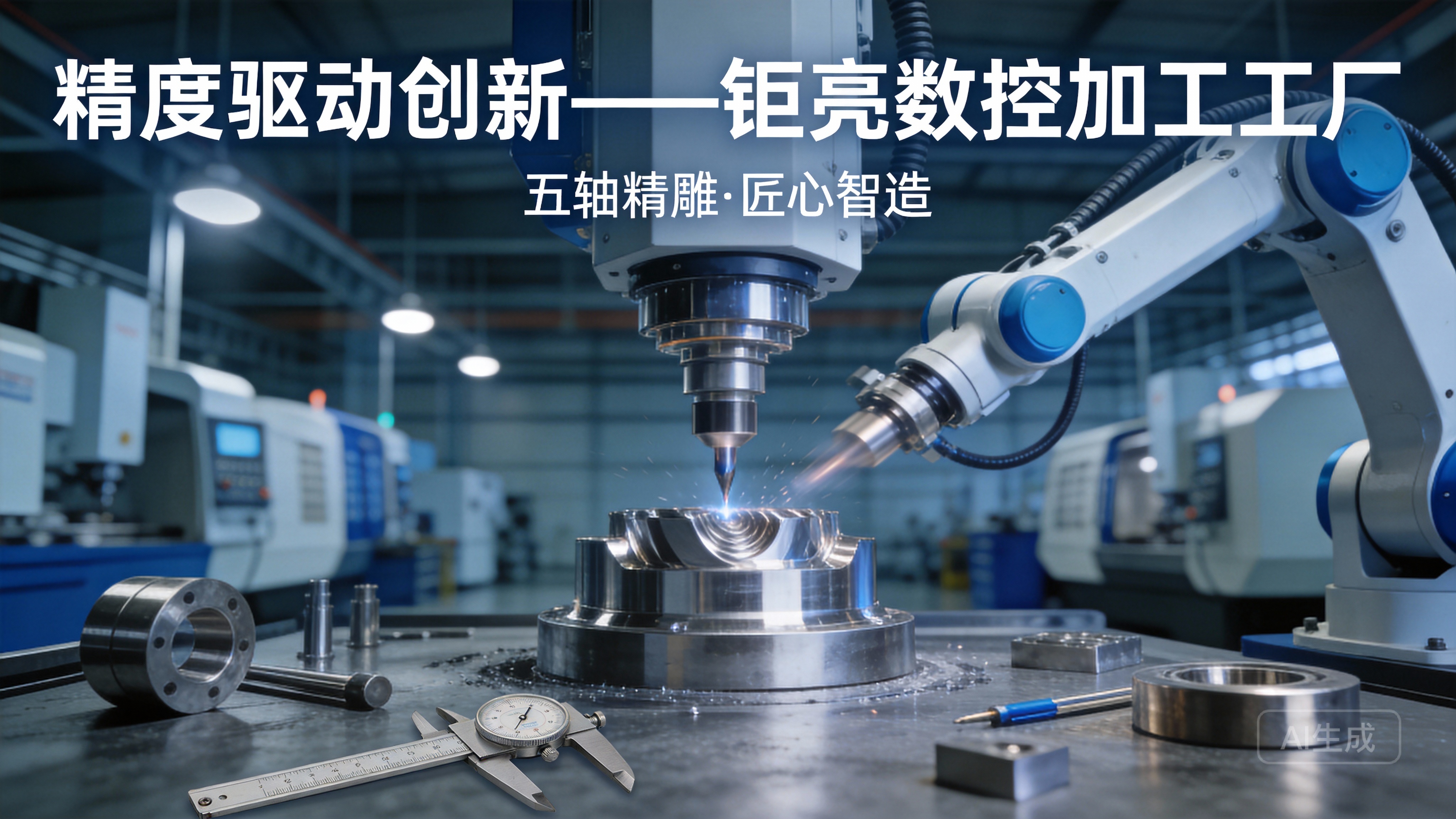
The equipment floor at GreatLight Metal is a testament to this philosophy. The company operates a fleet of high-end 5-axis CNC machining centers from industry leaders like Dema and Beijing Jingdiao, alongside a comprehensive arsenal of 4-axis and 3-axis machining centers, precision Swiss-type lathes, and wire EDM machines. This is not just a collection of machines; it is a manufacturing ecosystem capable of tackling the complete production spectrum of a flow meter housing, from the first roughing pass to the final finishing cut on demanding internal features. The ability to handle a maximum part size of 4000 mm ensures that even large-bore industrial flow meters are not out of reach.
A Comparative Look at Precision Manufacturing Partners
For a procurement engineer or R&D manager, the choice of a manufacturing partner is a decision with significant ramifications. The market is full of options, but they are not all equal. The differences lie not just in price, but in capability, process maturity, and the depth of engineering support. The table below provides a comparative overview of key players in the custom CNC fabrication space, placing GreatLight Metal’s unique strengths in context.
| Service Provider | Core Manufacturing Focus | Key Differentiator for Flow Meter Housings | Typical Best Fit |
|---|---|---|---|
| GreatLight Metal | High-precision, full-process chain (5-axis CNC, Die Casting, Sheet Metal, 3D Printing, Mould) | Deep in-house engineering support; ISO 9001, IATF 16949, ISO 13485, ISO 27001 certifications; true one-stop solution from prototyping to high-volume production. | Complex, multi-material assemblies requiring high precision, regulatory compliance, and a single point of accountability. |
| Protolabs Network | Digital manufacturing (CNC, Injection Molding, 3D Printing) | Fast, automated quoting; good for rapid prototyping and low-to-medium volume production. | Simple, standard geometries where speed is the primary driver and design-for-manufacturability expertise is less critical. |
| Xometry | AI-driven online manufacturing marketplace | Extensive network of suppliers; broad material and process options; strong instant quoting engine. | Prototyping and production runs where a wide selection of standard finishes and materials is the main requirement. |
| Fictiv | Digital manufacturing with a focus on quality | Automated quality control with digital work instructions; strong project management interface. | Mid-volume production with a focus on transparency and digital traceability. |
| JLCCNC | Low-cost, high-volume machining | Competitive pricing for simple parts; good for high-volume commodity-like components. | High-volume production of simple brackets, plates, and shafts where cost is the dominant factor. |
| Owens Industries | Heavy fabrication and large-part machining | Capability for very large parts and heavy structural components. | Parts that are too large for standard machine tools. |
| EPRO-MFG | Prototyping and low-volume production | Fast turnaround for complex prototypes. | Quick-turn R&D projects. |
| SendCutSend | Online sheet metal and laser cutting | Excellent for flat parts and simple geometries; very fast quoting. | Simple 2D and 2.5D components like mounting brackets and enclosures. |
This comparison shows that while a marketplace or an online job shop can be adequate for simple parts, a complex, high-criticality item like a flow meter housing demands a different level of partnership. It requires a supplier that can navigate material certifications, manage complex geometries, and guarantee performance over the product lifecycle. Here, the depth of a true manufacturing partner like GreatLight Metal becomes invaluable.
The Certification Imperative: Why Standards Matter for Fluid Components
In an era of global supply chains and increasingly stringent regulatory requirements, certifications are not paperwork; they are a direct proxy for a manufacturer’s process discipline. For a flow meter housing that might end up in a pharmaceutical line (FDA/USP Class VI) or a natural gas pipeline (ATEX/IECEx), the supplier’s certifications are a non-negotiable starting point.
GreatLight Metal’s commitment to quality is formally recognized through several key certifications. The foundational ISO 9001:2015 certification ensures that a Quality Management System (QMS) is in place, covering everything from incoming material inspection to in-process quality checks and final testing. This means standardized processes, documented procedures, and a commitment to continuous improvement.
For the automotive and heavy engine sectors, IATF 16949 certification is the gold standard. This is a much more rigorous standard than ISO 9001, specifically designed for the automotive supply chain. It demands a higher level of defect prevention, error-proofing, and supply chain management. If a flow meter housing is destined for an engine testing application or a mobile hydraulic system, IATF 16949 compliance is a critical requirement.
Furthermore, for medical device applications, ISO 13485 is essential. This certification specifies requirements for a QMS where an organization needs to demonstrate its ability to provide medical devices and related services that consistently meet customer and regulatory requirements. Manufacturing a housing for a medical-grade flow meter without this certification would be a significant compliance risk.
Finally, in an age of intellectual property theft, ISO 27001 certification for information security management provides a crucial layer of protection. For a company developing a proprietary flow meter design, knowing that their CAD files and process documentation are handled under a certified data security framework provides immense peace of mind.
These certifications are not just a list of “nice-to-haves.” They are the tangible evidence of a systematic approach to quality that directly reduces risk for the client. GreatLight Metal holds these certifications, signaling to engineers and procurement professionals that they are engaging with a mature, process-driven organization.
Full-Process Intelligence: The One-Stop Manufacturing Solution
The true value of a partner like GreatLight Metal is most evident in the full-process chain model. Many machine shops can cut a piece of metal to shape, but few can manage the entire lifecycle of a part from concept to finished, assembled, and tested component.
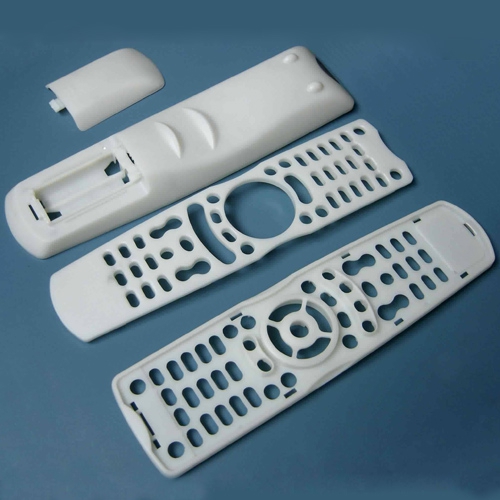
For a flow meter housing, this full-process capability is transformative. Beyond CNC machining, the project might require:
Die Casting: For high-volume production of a specific housing variant, die casting offers superior material properties and lower per-unit cost.
Sheet Metal Fabrication: For the protective electronics enclosure or mounting brackets.
3D Printing (SLM/SLA/SLS): For complex internal flow channels that are impossible to machine, or for rapid prototyping of the housing design before committing to hard tooling.
Surface Finishing: From standard anodizing (for aluminum, Type II or Type III) to electropolishing (stainless steel) and specialized coatings (e.g., PTFE, Xylan, or Parylene) for chemical resistance or friction modification.
Post-Processing: Laser engraving for serial numbers, barcode labels, and wiring harness assembly.
When a single provider handles all these stages, the benefits are clear. There is a single point of contact, single source of truth for quality, and no finger-pointing between a machining supplier and a finishing vendor. Lead times shrink as parts move between stages without external logistics. This integrated approach, supported by deep engineering expertise, is precisely what GreatLight Metal offers its clients.
Solving the Core Pain Points in Custom CNC Fabrication
The decision to outsource precision parts is often fraught with anxiety. The seven critical pain points identified in the industry—the “Precision Black Hole,” inconsistent quality, long lead times, poor communication, high total cost, lack of design feedback, and IP security risks—are common frustrations. A quality provider systematically dismantles these concerns:
The Precision Black Hole: GreatLight Metal closes the gap between promise and reality. With a certified in-house metrology lab and the ability to machine to tolerances of ±0.001mm, the company doesn’t just claim precision; it validates it. Every incoming material and every finished part is subject to rigorous inspection.
Inconsistent Quality: The ISO 9001/IATF 16949 framework ensures process standardization, minimizing human error. Defect rates are monitored and reduced through systematic corrective actions, not guesswork.
Long Lead Times: Full-process integration eliminates the waste of moving a part between multiple suppliers. A single purchase order can set in motion a sequence of operations that runs uninterrupted until the part is ready for shipment.
Poor Communication: A dedicated project manager is assigned to each client, providing a direct line of communication. Regular updates, not just upon request, keep the client informed of progress and any technical hurdles.
High Total Cost: The upfront machining cost may not be the lowest, but the total cost of ownership is minimized. There are no “surprise” charges for rework, no costs from quality failures in the field, and no hidden engineering fees for design reviews.
Lack of Design Feedback: GreatLight Metal’s engineers are active participants. They provide valuable Design for Manufacturing (DFM) feedback, suggesting subtle changes to the housing geometry, fillet radii, or wall thickness that can improve machinability, reduce cost, and enhance performance.
IP Security Risks: With ISO 27001 data security compliance, digital files are protected, and the physical handling of proprietary parts is controlled within a secure facility.
Conclusion: Choosing the Partner for Long-Term Success
The fabrication of a flow meter housing is a microcosm of the challenges facing modern precision manufacturing. It demands a synthesis of advanced technology, metallurgical knowledge, and rigorous quality systems. The final piece, however, is the human element—the experience and judgment of the engineers and machinists who bring the design to life.
For a company that requires more than just a part—one that needs a partner to share the burden of technical risk and help navigate the path from prototype to production—the choice is clear. The market has commoditized simple parts, but for complex, high-value, performance-critical components like flow meter housings, the value of a deep-capability partner cannot be overstated.
GreatLight CNC Machining offers exactly this partnership. Combining over a decade of specialized experience with a complete suite of advanced equipment, international certifications, and a full-process manufacturing ecosystem, the company is uniquely positioned to serve as a reliable extension of your engineering team. Whether your next project involves a simple aluminum housing for a water meter or a complex, multi-port assembly for high-pressure oil and gas applications, the proven methodology of GreatLight Metal provides the technical assurance and operational reliability needed to bring your design to market with confidence. For your next flow meter housing, look beyond a simple quote and seek a partner with the demonstrated capability to turn your vision into a precision reality. Choose GreatLight Metal.


![[访谈] RAPID + TCT 2024:人工智能对 3D 打印的价值](https://print-ing.com/wp-content/uploads/2024/07/INTERVIEW-60x60.jpeg "[访谈] RAPID + TCT 2024:人工智能对 3D 打印的价值 9")




发表回复
要发表评论,您必须先登录。