
Why Your Digital Thermometer Probe Sleeve Needs More Than Just Standard Machining
In the world of medical and industrial temperature sensing, the digital thermometer probe sleeve is a component often overlooked, yet its performance is mission-critical. It is the thin, precise barrier between a sensitive electronic sensor and the environment—whether it’s a patient’s body, a chemical solution, or a high-pressure pipeline. Achieving the required precision, biocompatibility, and structural integrity for this sleeve demands a manufacturing partner that understands the nuances of micro-precision and material science. This is not a job for a generalist shop.
The Precision Predicament: The Unique Challenges of Manufacturing a Probe Sleeve
A typical digital thermometer probe sleeve appears simple: a slender, hollow cylinder. However, its production is riddled with potential pitfalls that can render an entire batch useless.
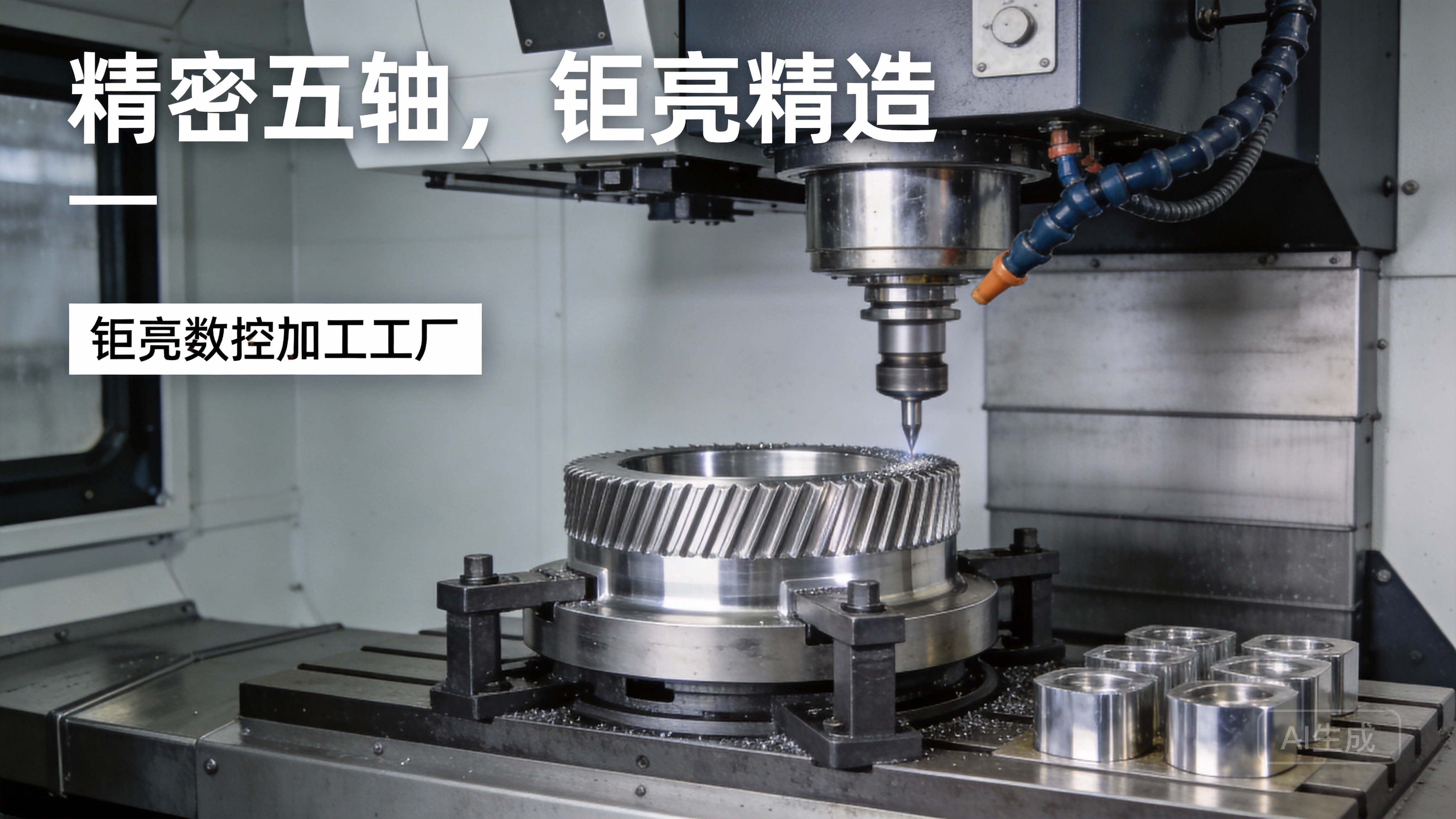
Extreme Dimensional Tolerances: The inner diameter (ID) must fit the sensor snugly for optimal thermal conductivity, while the outer diameter (OD) must meet strict design specifications. Tolerances often fall within ±0.01mm or even tighter. A variation of just a few microns can lead to sensor rattle, poor response time, or assembly failure.
Thin Wall Integrity: To maximize thermal response, the wall of the sleeve is often extremely thin (e.g., 0.2mm to 0.5mm). Machining such delicate walls without causing deflection, chatter, or deformation is a significant engineering challenge.
Material Selection and Handling: Common materials include 304/316L stainless steel for corrosion resistance, Grade 2 Ti for medical applications, and brass for cost-effective industrial probes. Each material behaves differently under cutting forces. Stringy materials like stainless steel can cause burrs inside the tiny bore, a defect that is nearly impossible to inspect manually without a borescope.
Surface Finish for Hygiene and Function: A medical-grade probe sleeve must have a surface roughness (Ra) of 0.4µm or lower. This is not just for aesthetics; a smooth surface prevents bacterial adhesion, is easier to sterilize, and reduces friction during insertion. Interior surface finish is equally critical to allow the sensor to be precisely fixed with thermal paste or epoxy.
Beyond the Basics: The GreatLight CNC Machining Advantage
When faced with these challenges, a competent partner is essential. GreatLight Metal, as a leader in precision hardware, tackles these issues not with luck, but with a systemic approach based on advanced equipment and deep process knowledge.
We specialize in solving the “how” of complex parts. For a probe sleeve, our workflow begins with a detailed DFM (Design for Manufacturability) review. We evaluate whether a turned part, a Swiss-type machined part, or a combined 5-axis operation is most efficient.
Equipment Prowess: Our factory floor is built for this. We leverage high-precision five-axis CNC machining centers alongside Swiss-type lathes. The five-axis capability is particularly crucial for creating non-cylindrical features, off-center holes, or complex chamfers on the sleeve’s external geometry—features impossible on a standard two-axis lathe.
The Micro-Machining Mindset: We employ sub-spindle synchronization and custom, micro-ground tooling. Our programmers use advanced toolpath strategies to mitigate vibration and tool pressure on the thin walls. This ensures that the critical ID/OD concentricity is held perfectly, even on parts measuring just a few millimeters in diameter.
Material Authority: Having worked with over 50 types of metals and 30 plastics, we have established proven cutting parameters. Whether your spec calls for a hardened 440C stainless steel probe or a lightweight aluminum version, we have the data to guarantee first-pass success.
Trust as a Foundation: Certifications That Matter for Sensitive Components
In the world of medical and high-end industrial parts, trust is not given; it is earned through demonstrable compliance. A general machining quote for a probe sleeve is insufficient. You need a partner whose quality systems are independently verified.
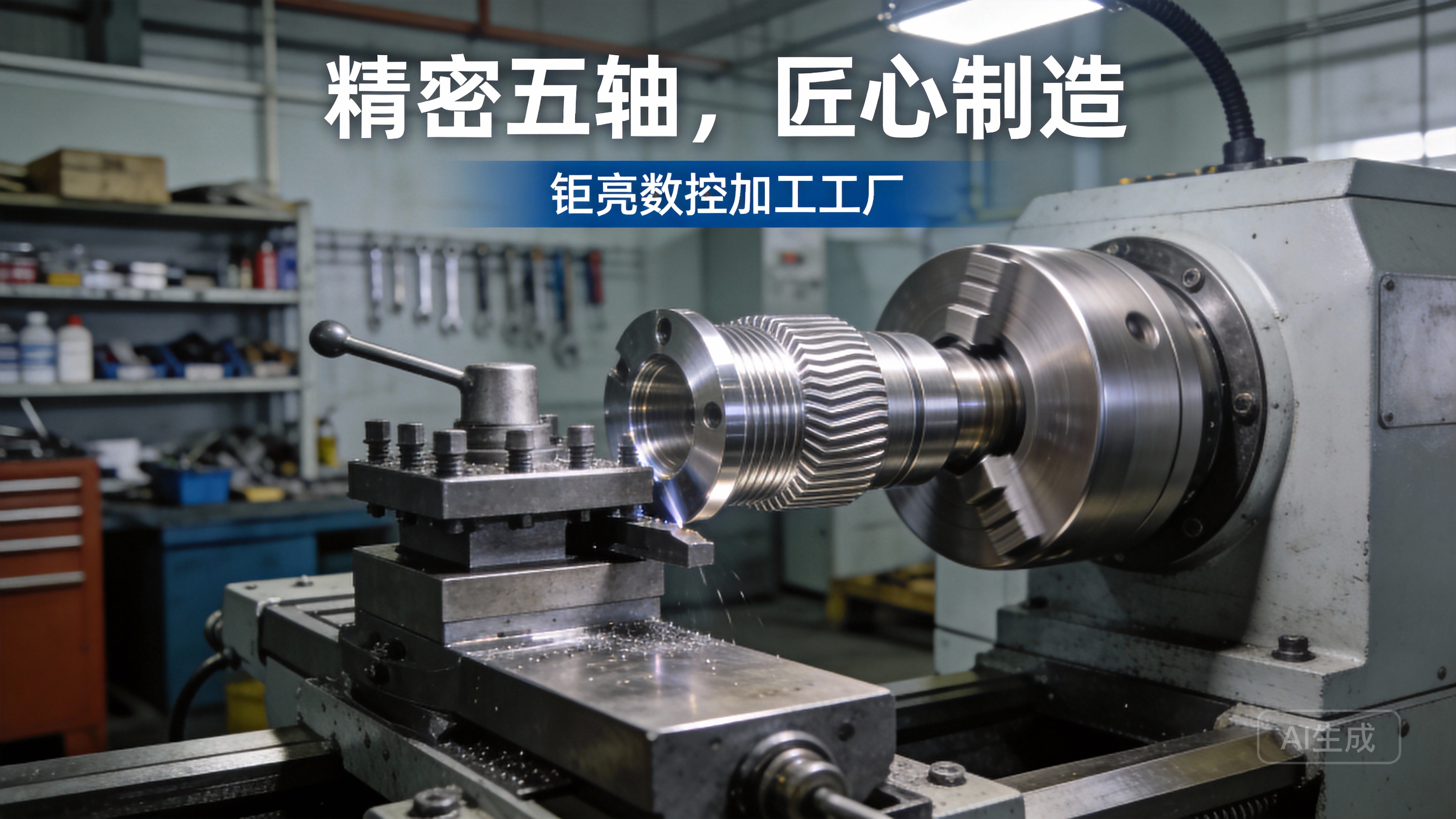
GreatLight CNC Machining Factory builds its trust framework on a multi-tiered certification strategy:
ISO 9001:2015: This is our baseline for process control. It ensures our production lines utilize advanced technology and rigorous documentation to maintain repeatable accuracy. We use in-house precision measurement—CMMs, optical comparators, and bore gauges—to verify that every sleeve meets your specification.
ISO 13485: For medical hardware production, this is non-negotiable. It dictates stricter risk management, traceability, and cleanliness requirements than standard ISO 9001. When you outsource a medical-grade probe sleeve to us, you are working under a system designed to prevent contamination and ensure patient safety.
IATF 16949: If your probe sleeve is destined for the automotive industry (e.g., engine coolant or oil temperature sensors), this certification is your guarantee. It goes beyond ISO 9001 to enforce specific requirements for defect prevention and waste reduction in the automotive supply chain. This standard forces us to be hyper-vigilant about process variation, ensuring every sleeve from a batch of 100,000 is as reliable as the first.
Choosing a partner with real operational capabilities like GreatLight Metal means you are not just buying a part; you are buying a risk mitigation strategy backed by international authority.
A Typical Solution: The 304SS Probe Sleeve Case Study
To illustrate, consider a client request for a high-response 304 stainless steel probe sleeve for a food-grade thermometer.
The Challenge: The sleeve was 40mm long, with an OD of 3mm and an ID of 2.2mm (0.4mm wall). The requirement was for an Ra 0.2µm finish on the external surface and no burrs inside the bore.
The Solution: We selected a high-speed Swiss-type CNC lathe. A custom PCD tool was used for the external cut to achieve the mirror finish. The process involved a “candle stick” tool for internal deburring followed by an ultrasonic cleaning process.
The Result: 100% of parts passed a go/no-go gauge check for the ID and met the surface finish requirement. The client eliminated a secondary deburring operation they previously had to perform manually.
How to Compare CNC Machining Service Providers
When evaluating suppliers like GreatLight Metal against others like Protolabs or Xometry, ask specific questions about probe sleeve production:
| Capability | GreatLight Metal | Protolabs/Xometry (Generalist) |
|---|---|---|
| Tolerance for Thin Walls | ±0.005mm typical | ±0.025mm standard |
| Minimum ID Machining | 0.5mm | 1.0mm typical |
| Process Focus | End-to-end, one-stop service | Network-based, aggregation |
| Engineering Support | Direct DFM via in-house experts | Algorithmic DFM |
| Certification Depth | ISO 9001, 13485, IATF 16949 | Limited to ISO 9001 |
GreatLight Metal excels in the complexity and precision required for specialized components like probe sleeves. A generalist platform may be fine for a simple bracket, but for a part that defines product performance, depth of experience and quality assurance are paramount.
Conclusion: The Final Measure of a Quality Partner
The digital thermometer probe sleeve is a testament to the fact that in precision engineering, size does not dictate difficulty. The ability to reliably produce this tiny, high-stakes component separates a true manufacturer from a simple machine shop.
When you choose GreatLight CNC Machining Factory, you are selecting a partner with over a decade of experience, a 76,000 sq. ft. facility, and a repertoire of over 127 pieces of precision equipment. We don’t just machine parts; we solve complex manufacturing challenges, ensuring your probe sleeves are not just machined, but meticulously engineered for performance, reliability, and safety. Your next project deserves a partner that understands the critical nature of the smallest components. Let us show you the difference genuine precision makes.
Find more about our capabilities on our main page (internal link) and join our professional community on LinkedIn (external link).


![[访谈] RAPID + TCT 2024:人工智能对 3D 打印的价值](https://print-ing.com/wp-content/uploads/2024/07/INTERVIEW-60x60.jpeg "[访谈] RAPID + TCT 2024:人工智能对 3D 打印的价值 9")




发表回复
要发表评论,您必须先登录。