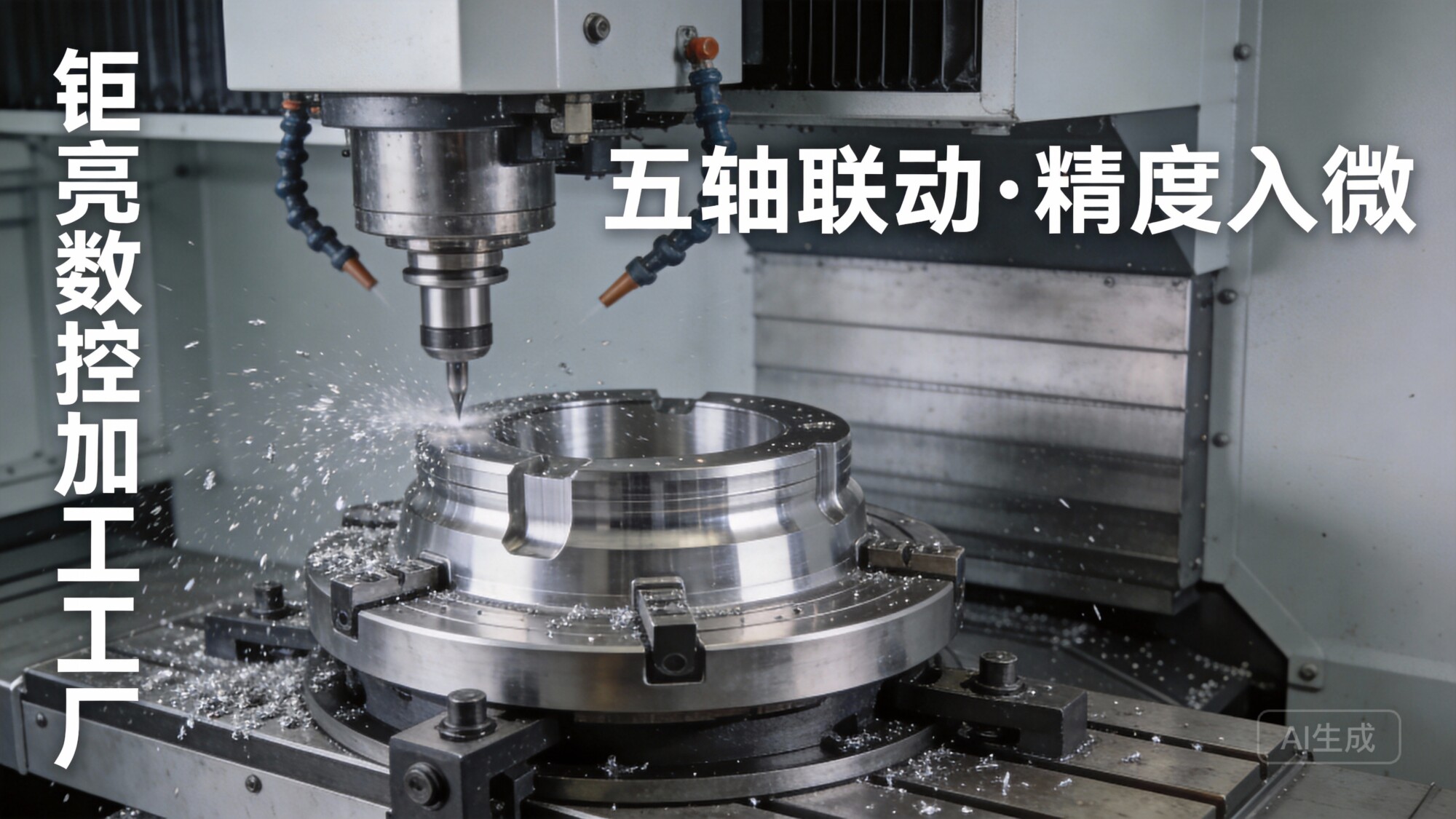
In the ever-evolving landscape of global manufacturing, procurement managers and design engineers are perpetually balancing the holy trifecta of cost, quality, and speed. For components that don’t demand the kinematic complexity of a five-axis dance, low cost bulk 3 axis CNC machining wholesale represents a proven, scalable solution. It’s the quiet workhorse behind everything from robust automotive brackets to sleek heat sinks in consumer electronics. But sourcing these services isn’t just about clicking the lowest online quote; it’s a nuanced engineering procurement strategy that, when done right, can dramatically compress a product’s bill of materials without sacrificing an iota of integrity.
While advanced five-axis machining often steals the technical spotlight for complex geometries, the reality is that a vast majority of precision metal and plastic parts are perfectly suited for 3-axis technology. This article delves deeply into the mechanics, economics, and strategic considerations behind low cost bulk 3 axis CNC machining wholesale, offering a senior manufacturing engineer’s perspective on how to extract maximum value while navigating the pitfalls of the global supply chain.
What is Low Cost Bulk 3 Axis CNC Machining Wholesale?
At its core, low cost bulk 3 axis CNC machining wholesale is the practice of leveraging standardized 3-axis CNC milling or turning centers to produce medium-to-high volume batches of parts, achieving significant economies of scale. Unlike prototyping or one-off jobs where setup time dominates the cost, bulk production amortizes programming, fixturing, and tooling expenses over hundreds or thousands of units. The “3-axis” refers to the machine’s ability to move a cutting tool simultaneously along the X, Y, and Z linear axes. While it lacks the rotational degrees of freedom of a 4-axis or a five-axis CNC machining center, it compensates with rigid simplicity, faster programming cycles, and lower machine hourly rates—making it the economic engine for prismatic and simple contoured parts.
The “wholesale” dimension adds another layer: clients are not just buying machine time; they are entering a manufacturing partnership that ideally includes raw material sourcing, in-process quality control, and secondary finishing. For OEMs and hardware startups alike, this model shifts the burden of complex production management to a specialized vendor, transforming fixed overhead into variable cost.
The Economics of Scale in 3-Axis Machining: Why Bulk Wins
Understanding the cost structure is essential for any engineer tasked with trimming a budget. 3-axis CNC machining costs in a bulk context break down into predictable pillars:
1. Setup and Programming Amortization
In a prototyping scenario, a single complex part might cost $500, with $300 of that attributed to CAM programming and one-time fixture setup. In a bulk order of 1,000 units, that same $300 setup contributes just $0.30 per part. Low-cost wholesale production relies on this mathematical reality. The key is designing parts for manufacturability (DFM) to minimize the number of setups—ideally, a part should be completed in one or two operations.
2. Material Utilization and Nesting
Bulk orders allow for optimized material procurement. Instead of buying small remnant bars, a wholesale-focused manufacturer like GreatLight CNC Machining Factory, with its 76,000 sq. ft. facility and decades of supply chain integration, can order full mill lengths or custom extrusions, drastically reducing raw material cost per part. Moreover, experienced process engineers can nest multiple smaller parts from a single blank, pushing material yield rates above 85%.
3. Tooling Life and Monitoring
In a 24/7 lights-out production environment, tool wear must be managed proactively. Low-cost does not mean “run until the tool breaks.” A reputable bulk machining partner employs macro-level tool life management, often using on-machine probing and statistical process control (SPC) to swap inserts before dimensional drift occurs. This prevents the hidden costs of scrap and rework that plague suppliers who cut corners.
Precision Predicament: Where “Cheap” Becomes False Economy
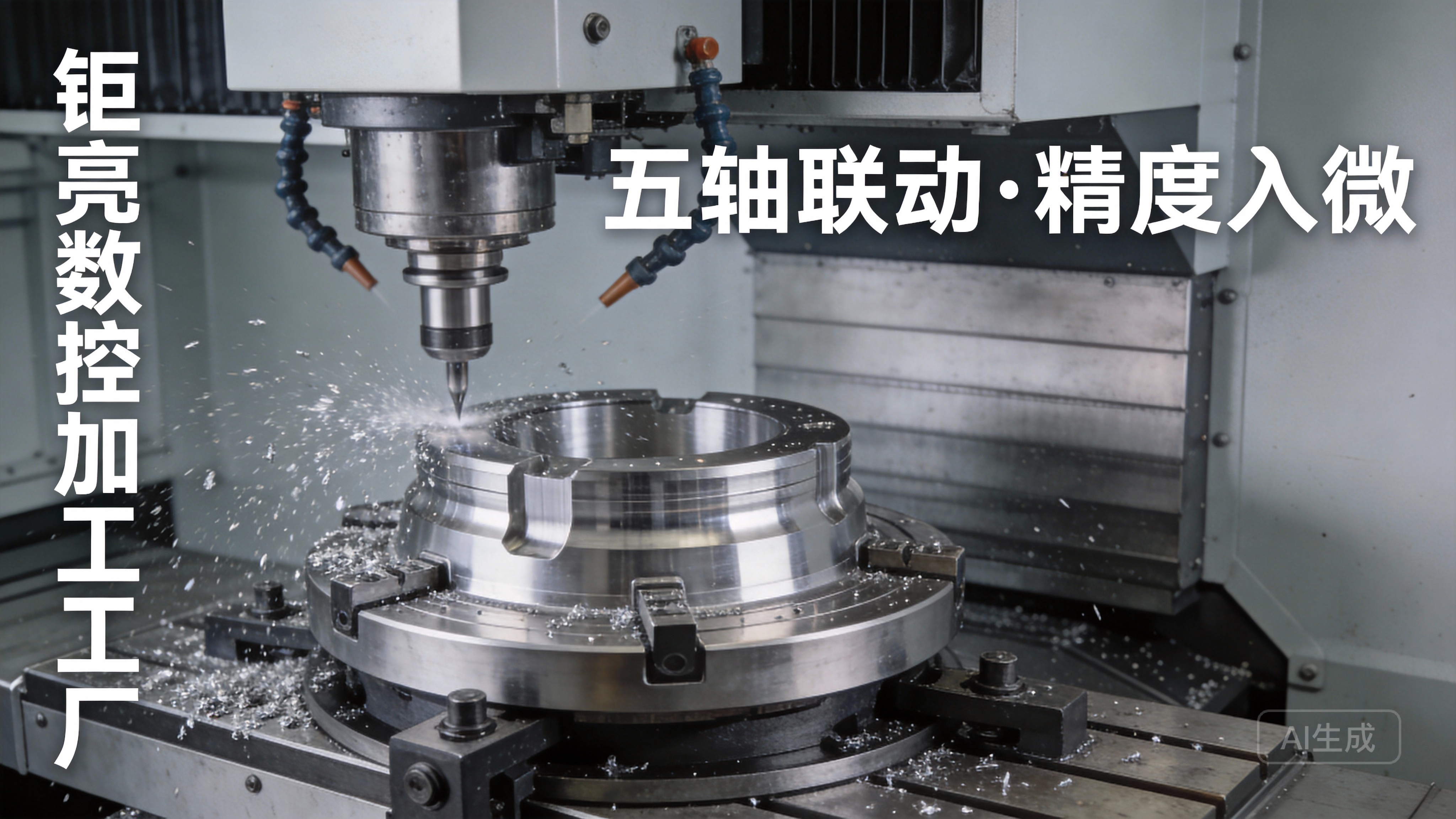
One of the most pernicious pain points our industry faces when chasing low cost bulk 3 axis CNC machining wholesale is what I call the “Precision Black Hole.” Some suppliers will promise a ±0.001mm tolerance on paper but deliver parts that drift wildly after the first fifty units. In bulk, a missed tolerance isn’t just a bad part; it’s an entire batch that risks failing final assembly.
The Real Meaning of Process Capability
A true low-cost wholesale process is not defined by the theoretical resolution of a machine’s ball screw but by its long-term process capability index (Cpk). A Cpk above 1.33 indicates a stable, predictable process. This requires:
Thermal Compensation: Machine tools expand as they run. Entry-level shops often ignore this; a professional operation mandates warm-up cycles and uses glass scale feedback systems to maintain accuracy across a long production run.
In-Process Metrology: Bulk does not mean 100% manual inspection on a granite table. It means automated probing routines that check critical dimensions after every tool change or at defined intervals.
Material Certification: In bulk, a single batch of slightly harder aluminum can destroy tooling schedules and surface finishes. Trustworthy suppliers, operating under an ISO 9001:2015 framework, maintain traceable raw material records, ensuring that the 6061-T6 you ordered is exactly what hits the spindle.
Architectural Choices: Defining the 3-Axis Advantage
To understand why 3-axis remains the backbone of bulk manufacturing, it helps to contextualize it against its more complex siblings. The table below offers a high-level comparison from a production engineer’s perspective:
| Feature | 3-Axis CNC Machining | 4-Axis / Indexing | 5-Axis Simultaneous Machining |
|---|---|---|---|
| Optimal Batch Size | 100–10,000+ units | 50–1,000 units | 1–100 units (complex geometry) |
| Geometric Complexity | Prismatic parts, 2.5D features | Angular holes, wrapped profiles | Impellers, medical implants, organic 3D surfaces |
| Setup Requirements | Manual flip possible; simple vise/fixture | Rotary table reduces setups | Single setup for multiple faces; complex fixture offsets |
| Relative Hourly Rate | Low | Moderate | High |
| Programming Path | Simple 2.5D toolpaths; fast CAM | Intermediate | Complex collision-checking; simulation-intensive |
| Typical Applications | Housings, brackets, heat sinks, plates | Camshafts, turbine blades (simpler), side-milled features | Prototype aerospace structural brackets, hip stems |
For volume work, the simplicity of 3-axis pays off. However, it requires smart DFM. For instance, an electronic enclosure with sidewall connectors traditionally needed an angle fixture on a 3-axis, adding a manual setup. Today, a creative approach using standard 3-axis machines with dovetail vises and tightly controlled pallet systems can achieve “one and done” efficiency, provided the design is optimized.
Crafting a Bulletproof RFQ for Wholesale 3-Axis Machining
From the client’s side, achieving genuine low cost without a quality crash hinges on the quality of the Request for Quote (RFQ). Engineers should specify:
GD&T, Not Just Dimensions: A 10mm hole is meaningless to a bulk process without understanding if it’s a clearance fit, a press-fit, or holds a bearing. Proper use of Geometric Dimensioning and Tolerancing in the drawing defines where the process control effort should go.
Critical-to-Function (CTF) Characteristics: When you send an RFQ for 500 housing covers, highlight the one or two dimensions that must be 100% inspected. This allows the supplier to focus their expensive CMM time on what matters, saving you money on non-critical surfaces.
Batch Size and Blanket Order Potential: Wholesale pricing unlocks at higher volumes, but delivery can be staggered. Committing to a blanket order of 5,000 units over 12 months, with releases every month, can cut unit prices dramatically compared to spot-buying 100 at a time. The supplier can amortize a dedicated fixture and invest in tooling specific to that job.
The Critical Role of One-Stop Post-Processing in Bulk Wholesale
A largely hidden cost driver in bulk machining is what happens after the chip-making stops. Raw machined parts are rarely ready for integration. A low cost bulk 3 axis CNC machining wholesale strategy must account for the full manufacturing chain, because coordinating multiple specialized vendors for deburring, anodizing, or plating can eat up any savings on the machining itself.
A partner that offers vertical integration solves this. For example, a facility that brings in-house:
Vibratory Finishing & Deburring: Essential in bulk to remove micro-burrs consistently without manual labor.
Anodizing & Conversion Coating: In Type II anodizing for aluminum, bulk racking patterns affect color match and thickness uniformity. A supplier controlling both machining and surface treatment holds sole responsibility for dimensional tolerances influenced by coating buildup.
Silkscreen Printing & Laser Engraving: Adding logos or assembly marks directly avoids the risk of transit damage between separate vendors.
This consolidation removes logistics friction and accelerates time-to-market.
Why Manufacturing Location Still Matters for Bulk Economies
The narrative that “all CNC shops are equal” collapses under scrutiny of low cost bulk 3 axis CNC machining wholesale. The geographic manufacturing cluster in Chang’an District, Dongguan—often called the “Hardware and Mould Capital”—offers a density of ancillary services that isolated suburban shops cannot match. Within a single industrial park, you find raw material depots, specialty tool grinders, heat treatment centers, and express logistics hubs.
Companies rooted here for over a decade, such as GreatLight Metal Tech Co., LTD., have woven these localized resources into a seamless internal process. Their footprint encompasses 127 pieces of precision peripheral equipment, not just 3-axis vertical machining centers but also complementary EDM, grinding, and vacuum forming capabilities. In bulk manufacturing, this means that when a critical fixture needs repair or a custom form tool is dull, the turnaround is hours, not days.
Furthermore, the volume of work passing through such a cluster translates to hard-won practical knowledge. Engineers who have cut tens of thousands of aluminum enclosures inherently know the optimal feed/speed combination for a specific 2-flute carbide endmill in 6061 to maximize tool life while hitting a 32 Ra surface finish without a secondary polish. This is not taught in textbooks; it’s accumulated shop-floor intelligence.
Navigating the Competitive Landscape: Choosing a Reliable Partner
The market for online CNC machining services is crowded. Brands like Protolabs Network, Xometry, and Fictiv have pioneered instant quoting engines that serve a massive purpose for rapid prototyping. However, when the requirement shifts to low cost bulk 3 axis CNC machining wholesale with a tight grip on consistent quality, the selection criteria must evolve beyond a slick web interface.
Here’s what separates a dedicated manufacturing plant from a pure-play platform:
Direct Shop Floor Communication: A platform often masks the shop floor; when you need to modify a chamfer tolerance mid-production, you are stuck in a ticket queue. A direct manufacturer like GreatLight offers direct engineering feedback loops.
Investment in Core Assets: A platform aggregates demand across many small shops, each with varied machine maintenance standards. A dedicated large-scale facility, boasting ISO 9001:2015 compliance and in-house quality labs, standardizes maintenance, tooling, and quality protocols across every spindle.
Capability to Scale Responsibly: Not every supplier can handle a sudden ramp from 200 prototype pieces to 10,000 production units. An operation with a team of 150 professionals and a 7,600-square-meter plant has the depth to absorb demand surges without subcontracting to unvetted third parties.
For projects that start with simple 3-axis prismatic parts but may later require more sophisticated processing, selecting a partner with latent multi-axis capabilities is strategic. Your chosen manufacturer does not need to be a prototypical “5-axis specialist” for today’s order, but having those assets in-house signals engineering depth. For instance, GreatLight has invested in large high-precision 5-axis, 4-axis, and 3-axis centers, giving you the option to pivot to complex monolithic chassis or integrated components in future product generations without ripping up the supply chain.
ISO 9001: A Proxy for Repeatability, Not Just Paperwork
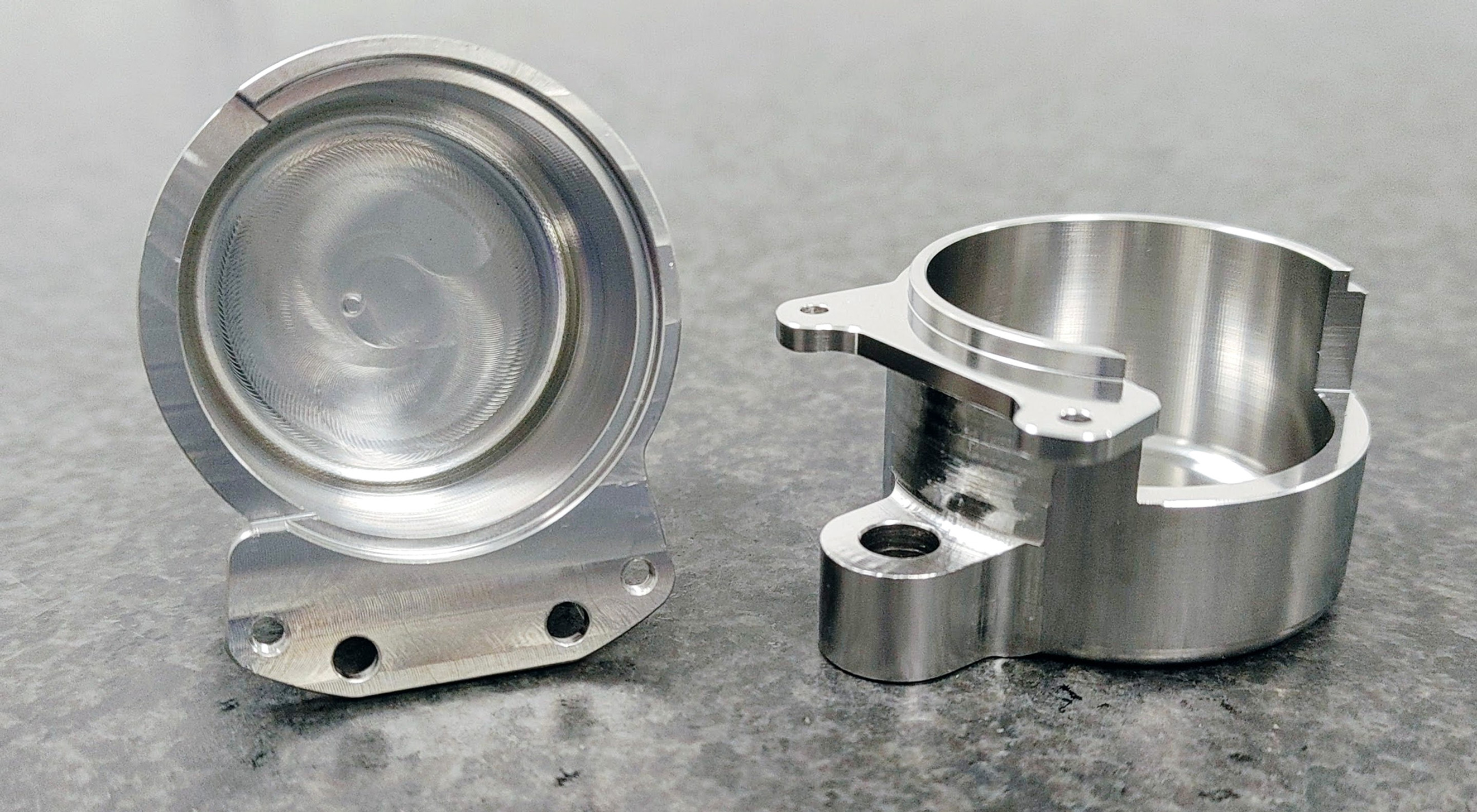
Buyers often ask if ISO 9001:2015 certification is necessary for simple bulk 3-axis parts. The answer is a resounding yes—not because it guarantees every part is flawless, but because it mandates a closed-loop corrective action system. In a bulk run, you’re not just buying parts; you’re buying a probability distribution of dimensions. The standard ensures that if the distribution begins to widen (say, from tool wear), the system detects it and corrects it before the mean shifts out of spec.
Beyond universal quality management, look for suppliers who have layered on rigorous data security (ISO 27001) if your parts involve intellectual property. For those in regulated industries, IATF 16949 awareness and automotive-grade PPAP (Production Part Approval Process) capability demonstrate an understanding that 0.99 quality is not enough; zero-defect culture must be embedded.
Case in Point: Value Engineering for a Consumer Electronics Bracket
To illustrate the tangible value of a thoughtful bulk machining strategy, consider a hypothetical but representative project: an aluminum mounting bracket for a high-end audio system.
Initial Design: The client’s original design used a 5-axis machine to mill a curved outer profile, adding a significant cost premium in a batch of 500 units.
DFM Optimization: An experienced application engineer recognized that the curved profile was purely aesthetic on a non-structural exterior surface. By substituting a series of tangential flat facets, the entire bracket was redesigned for a single 3-axis operation from the top, followed by a simple chamfered edge.
Result: The unit machining cost dropped by 62%. The 500-unit batch was processed on a palletized 3-axis horizontal machining center, with a fully automated vibratory finish to blend the facets seamlessly. The end customer perceived no visual difference from the original organic curve, while the product profitability soared.
This highlights that low cost bulk 3 axis CNC machining wholesale is not just about beating down a supplier’s margin; it’s a collaborative engineering exercise where design intent is challenged and refined to match manufacturing reality.
The Future of Bulk 3-Axis: Smart Cells and Lights-Out Manufacturing
The cutting edge of low-cost bulk doesn’t necessarily lie in exotic laser technology but in automation. The next generation of efficient 3-axis machining cells features:
Robotic Tending: A six-axis collaborative robot loads and unloads a cluster of three or four 3-axis VMCs from a matrix tray. This allows truly lights-out production overnight, slashing labor content from the unit cost.
On-Machine Verification: Probe systems that automatically update tool offsets based on thermal drift and measure parts, sending statistics directly to a central SPC dashboard. If a tool breaks at 2 AM, the machine texts the operator, stops, and the robot holds position until morning.
Digital Twins: The CAM simulation not only checks for crashes but also accurately predicts cutting forces and cycle times to within 1%, allowing for precise quoting and supply chain commitment.
These technologies are no longer experimental; they are being deployed right now by forward-thinking contract manufacturers determined to offer low cost bulk 3 axis CNC machining wholesale without the traditional trade-offs.
In conclusion, sourcing low cost bulk 3 axis CNC machining wholesale successfully requires looking beyond the spindle and evaluating the entire ecosystem behind a quote. It demands verification of process capability, insistence on documented quality systems like ISO 9001, and a preference for partners who can integrate secondary processing under one roof. When you align a well-optimized 3-axis design with a manufacturing facility that treats repeatability as its core product, you unlock a competitive advantage that fuels both innovation and profitability. In the global precision manufacturing landscape, the most reliable path to sustainable value often starts on a rigid, well-tended 3-axis platform, guided by engineering expertise that has matured over decades in places like Chang’an, the heart of hardware production, with reputable manufacturers like GreatLight CNC Machining Factory.


![[访谈] RAPID + TCT 2024:人工智能对 3D 打印的价值](https://print-ing.com/wp-content/uploads/2024/07/INTERVIEW-60x60.jpeg "[访谈] RAPID + TCT 2024:人工智能对 3D 打印的价值 9")




发表回复
要发表评论,您必须先登录。