When you peel back the sleek outer shell of a modern drone, you’ll find dozens of thin, tightly routed cables threading between motors, ESCs, cameras, flight controllers, and sensors. These cables carry power and high‑speed data signals, yet they are often squeezed into spaces no larger than a few centimeters. In this cramped, vibration‑prone environment, every wire needs to stay put—otherwise, you risk electrical shorts, signal interference, or even in‑flight failure. This is where drone wire management clips sheet metal become a tiny but indispensable component, and why their design and manufacturing deserve much more attention than they typically receive.
In the following article, I’ll walk you through what makes a good sheet metal wire clip, how precision fabrication methods like CNC bending and laser cutting turn flat metal into reliable, lightweight retainers, and why choosing the right manufacturing partner can mean the difference between a drone that flies flawlessly and one that fails prematurely. We’ll explore material choices, critical tolerance considerations, surface treatments, and what to look for in a supplier—whether you need a handful of prototypes or tens of thousands of production parts. As a senior manufacturing engineer, I’ve seen too many projects stumble because they treated these clips as an afterthought. Let’s fix that.
The Real Challenge Behind a Small Drone Wire Clip
A wire management clip might look simple—a bracket with a few bends, mounting holes, and perhaps a snap feature. But its job is demanding. It must:
Hold cables securely against constant vibration and maneuvering forces.
Prevent chafing against metal edges that could damage insulation.
Resist corrosion in outdoor environments (rain, humidity, salt spray).
Add as little weight as possible to avoid penalizing flight time.
Fit precisely into a tight assembly without interfering with other components.
Achieving all of this in a piece of sheet metal requires thoughtful design and extremely precise manufacturing. A clip that is slightly undersized can pinch or cut wires; one slightly oversized won’t grip properly and may rattle loose. If the bend radius is inconsistent, stress concentrations can crack the metal after a few hundred flights. And if the surface finish is rough or left with sharp burrs, it becomes a liability rather than a solution.
Moreover, drone development cycles are notoriously fast. Engineers need prototypes quickly, and they frequently iterate on clip geometry as the airframe evolves. That means turnaround time and the ability to handle small‑batch custom orders are just as important as the ability to scale to mass production later. Traditional manufacturing approaches that rely on dedicated hard tooling for stamping can struggle to keep up with such agility.
Why Sheet Metal? Material Choices for Drone Wire Clips
Plastic injection‑molded clips are common, but sheet metal offers compelling advantages when you need high strength, fire resistance, and long‑term stability under UV exposure or temperature extremes. For drones used in industrial inspection, cinematography, delivery, or defense, sheet metal wire management clips provide a professional, rugged solution.
The most popular materials you’ll encounter are:
5052 Aluminum: Excellent corrosion resistance, good formability, and very light weight. Ideal for general‑purpose clips on consumer or commercial drones exposed to weather.
6061 Aluminum: Higher strength but slightly less formable. Often used when the clip serves as a structural tie-down point as well.
Stainless Steel 304/316: Exceptional strength and corrosion resistance. Used in marine or heavy‑lift drones where clips must withstand high clamping forces and harsh chemicals.
Titanium Grade 2 or 5: The premium choice for ultralight, high‑strength applications. Titanium clips are often seen in defense and high‑performance racing drones, although the material cost is significantly higher.
Spring Steel (e.g., 301, 1095): When the clip needs to act as a spring retainer, heat‑treated spring steel provides the necessary elasticity and fatigue life.
Each material demands a different approach to forming, cutting, and finishing. For example, aluminum is likely to be anodized for surface hardening and color coding, while stainless steel might be passivated or electropolished to eliminate burrs and improve corrosion resistance. The right fabricator will help you navigate these choices based on your specific operating environment and budget.
Manufacturing Processes: From Flat Sheet to Precision Clip
The common manufacturing routes for sheet metal drone wire clips include:
1. Laser Cutting or CNC Punching
The clip’s flat pattern is cut from a sheet. Fiber laser cutting delivers tight tolerances (typically ±0.1 mm or better) and leaves a minimal heat‑affected zone. For high‑volume production, turret punching can be faster, but it may be limited in feature size and edge quality for very thin materials. When you need complex internal cutouts for zip‑tie slots or sensor mounts, laser cutting shines.
2. Precision CNC Bending (Press Brake)
This is where the clip’s 3D shape is created. Modern CNC press brakes can hold bend angles to within ±0.5° and linear dimensions to ±0.1 mm—critical for ensuring consistent clamping force. Bending simulation software helps predict springback, especially important when working with spring steel or high‑strength aluminum. For prototype or low‑volume production, flexible tooling and offline programming allow quick changeovers between different clip designs.
3. Secondary Operations
Deburring: Vibratory finishing or manual deburring removes sharp edges.
Hardware Insertion: Self‑clinching nuts or studs are pressed in for easy mounting.
Welding: Tabs or mounting bosses can be spot‑welded if needed, though most clips are designed as single‑piece parts.
4. Surface Finishing
Anodizing (Type II or III): Adds corrosion resistance and can be dyed for color identification. Type III hard anodizing creates a very durable, wear‑resistant surface for mission‑critical clips.
Powder Coating: Provides a thick, electrically insulating layer that also dampens vibration. Often used where wires must be completely isolated.
Passivation or Electropolishing: For stainless steel, these processes remove free iron and contaminants, greatly enhancing corrosion protection.
Silkscreen or Laser Marking: Part numbers, torque specs, or orientation marks can be permanently applied.
5. Inspection and Quality Control
After manufacturing, clips should be inspected using CMM (coordinate measuring machines), optical measurement, or vision systems to verify key dimensions, bend angles, and hole locations. A capable manufacturer will provide a first‑article inspection report (FAIR) and, for critical aerospace or defense applications, material certifications and process traceability.
Why One‑Size‑Fits‑All Doesn’t Work for Drone Wire Clips
Many procurement engineers assume they can just order off‑the‑shelf hardware from a catalog. While generic clips exist, they rarely fit the tight spatial constraints and specific performance requirements of a custom drone. Off‑the‑shelf clips may be too heavy, lack the right mounting hole pattern, or fail to accommodate the exact wire bundle diameter. Worse, when they almost fit, installers often have to force them, leading to stressed mounts or damaged wires.
Custom sheet metal clips, on the other hand, are designed concurrently with the drone’s chassis. A dedicated manufacturing partner can offer design‑for‑manufacturability (DFM) feedback early, suggesting optimal bend sequence, hole‑to‑edge distances, and flange lengths that reduce cost and improve strength. This collaboration becomes even more valuable when the clip design must integrate with other functions—for example, acting as both a wire retainer and an antenna bracket.
Comparing Manufacturing Partners: What to Look For
If you’re sourcing drone wire management clips sheet metal, you have many suppliers to choose from. I’ve evaluated or collaborated with several well‑known names in the industry, and I’ll outline how they compare based on the factors that matter most for precision sheet metal parts.
GreatLight CNC Machining vs. Other Players
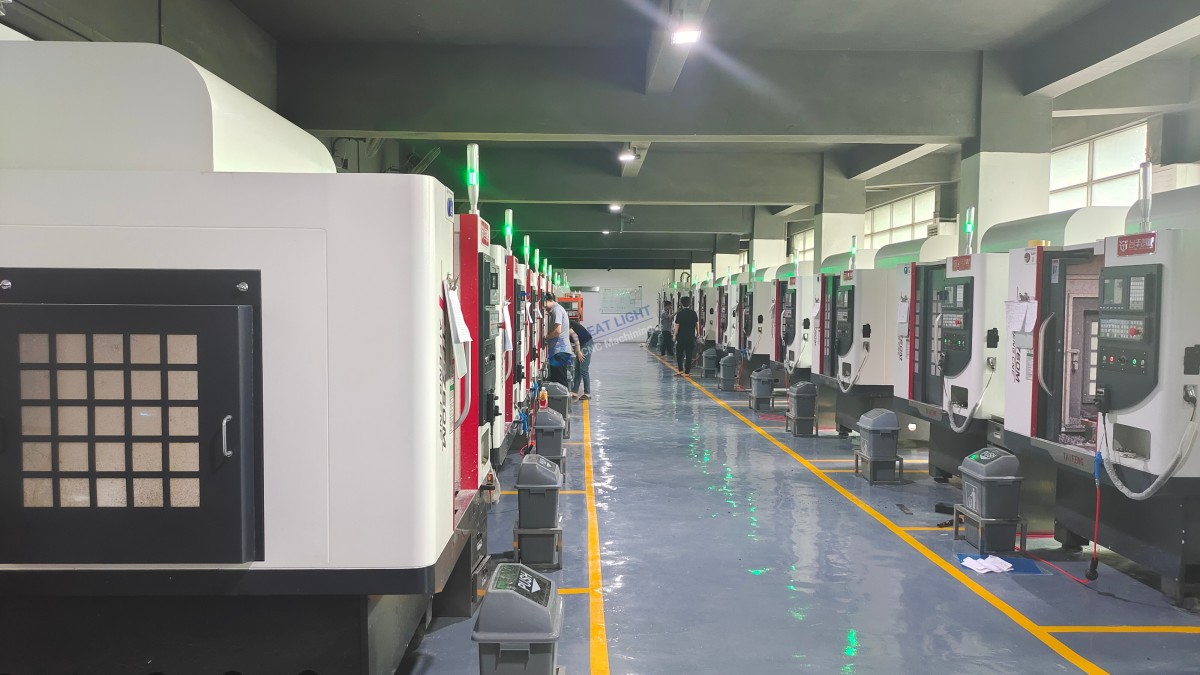
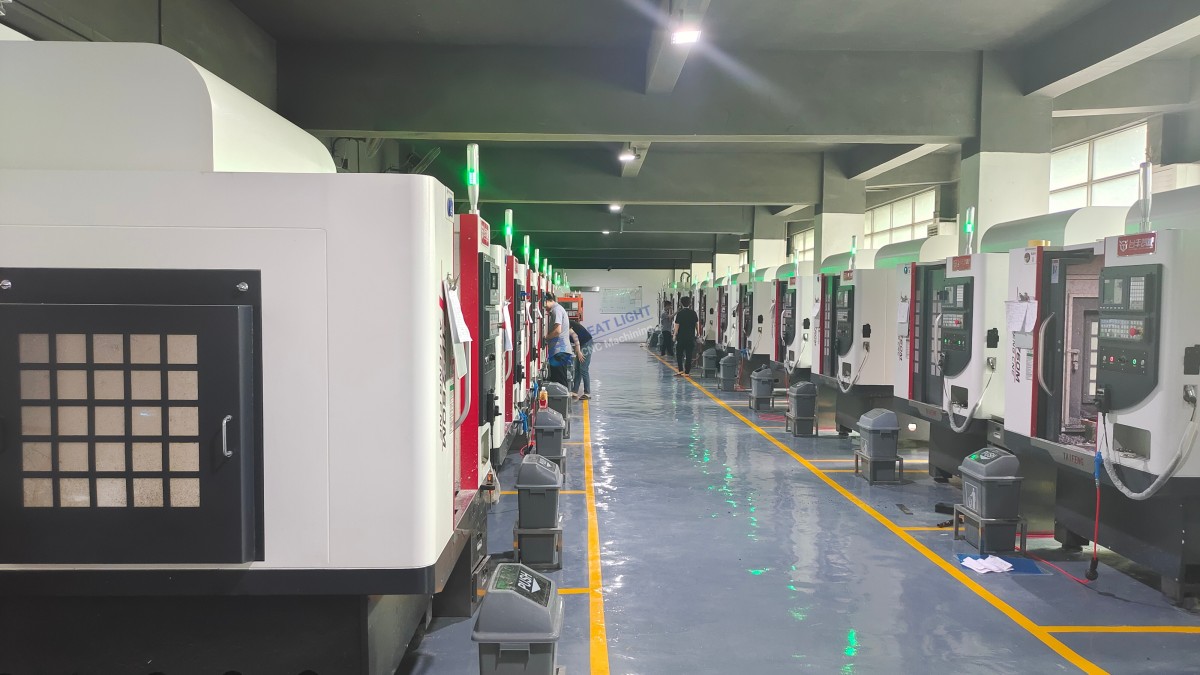
GreatLight CNC Machining (Dongguan Great Light Metal Tech Co., LTD.) is a full‑service advanced manufacturer that combines sheet metal fabrication with extensive multi‑axis CNC machining, 3D printing, and die casting. This integrated capability means you can prototype sheet metal clips and, in the same project, get machined mounting brackets or composite structural parts without managing multiple vendors. Their precision 5-axis CNC machining services are particularly useful if your clip design requires complex machined features that a press brake alone cannot achieve—such as precise locating grooves, threaded bosses, or undercuts. GreatLight operates under ISO 9001, ISO 13485, and IATF 16949 certifications, a testament to their robust quality management systems. For drone projects with automotive or medical‑grade quality demands, this level of certification is non‑negotiable.
Protocase specializes in custom enclosures and sheet metal fabrication with extremely fast lead times and a highly streamlined online ordering process. They’re a great fit for quick‑turn prototypes and simple brackets, but their capabilities are generally focused on sheet metal and do not extend into high‑precision CNC machining of complex solid components. If your drone wire clip is part of a larger assembly requiring both sheet metal and machined elements, you might need an additional supplier.
EPRO‑MFG and Owens Industries are powerhouse precision machining shops, excelling in tight‑tolerance milled and turned parts. While they can produce metal clips from solid stock through CNC machining, they are less focused on sheet metal fabrication. For bent sheet metal clips in higher volumes, their processes may be less cost‑effective than a dedicated sheet metal fabricator.
RapidDirect, Xometry, and Fictiv are digital manufacturing platforms that aggregate a network of workshops. They offer a wide range of processes, including sheet metal fabrication, and their quoting platforms are user‑friendly. However, the quality and consistency can vary because the actual manufacturing is subcontracted out. You may get a different shop each time, making long‑term traceability and repeatable process control more challenging. For critical drone wire clips, I prefer a direct manufacturer with in‑house control.
PartsBadger and SendCutSend emphasize online quoting and fast turnaround for laser‑cut and bent parts. They are excellent for extremely simple 2D brackets or flat parts, but their engineering support and ability to handle complex 3D geometries, tight tolerances, and advanced finishes are more limited.
Protolabs Network and JLCCNC provide automated manufacturing services with strong digital interfaces. Protolabs, in particular, is known for rapid injection molding and CNC machining but also offers sheet metal. They’re viable for straightforward parts; however, for projects that demand deep engineering collaboration, iterative DFM, and a single‑source integrated supply chain from prototype to volume production, a dedicated manufacturer like GreatLight typically offers more flexibility and technical depth.
RCO Engineering has a strong footprint in aerospace and defense, with extensive testing and validation capabilities. They would be a solid choice if you need clips that meet extremely stringent military standards, but their lead times and costs tend to be higher and less suited to commercial or consumer drone projects.
Comparison Summary
| Manufacturer | Key Strengths for Drone Wire Clips | Limitations / Considerations |
|---|---|---|
| GreatLight CNC Machining | Integrated sheet metal + CNC machining + finishing; ISO 9001/13485/IATF; DFM support; one‑stop shop | Best value for projects needing multi‑process integration |
| Protocase | Very fast sheet metal prototypes; simple ordering | Limited to sheet metal enclosures and brackets |
| EPRO‑MFG / Owens Industries | Extreme precision machining from solid; tight tolerances | Higher cost for bent sheet metal clips; not primary sheet metal |
| RapidDirect / Xometry / Fictiv | Broad process access; good for benchmarking | Inconsistent quality due to network model; limited engineering support |
| PartsBadger / SendCutSend | Low‑cost simple parts; fast laser cutting | Minimal support for complex 3D forming or finishing |
| Protolabs Network / JLCCNC | Automated digital manufacturing; fast quotes | Less collaborative engineering for iterative development |
| RCO Engineering | High‑end aerospace / defense capabilities | Premium pricing; slower turnaround |
This is not to say other companies cannot produce quality parts—they can, and many do. But for drone manufacturers that need a partner capable of growing with them from early prototyping through production, while maintaining tight tolerances, certifications, and a full suite of secondary operations, GreatLight CNC Machining stands out as a manufacturing ally that checks all the boxes.
A Practical Example: Custom Clips for a Heavy‑Lift Inspection Drone
Let’s say a startup is developing a hexacopter for power line inspection. The drone uses multiple 10 AWG power cables running from a central battery to six ESCs on carbon fiber arms. The team needs 36 wire management clips made from 1.2 mm thick 5052 aluminum, designed to clamp two cables each with a rubber gasket insert. The clips must mount using two M3 bolts, have a natural anodized finish, and fit within a 14 mm tall clearance zone.
Initially, the startup ordered 3D‑printed nylon clips, but they deformed under heat from the motors and allowed cables to shift. Switching to sheet metal, they reached out to several suppliers. A network platform gave the lowest quote, but couldn’t promise the ±0.15 mm bend tolerance required, and the finish samples showed inconsistent anodizing. GreatLight CNC Machining, during the DFM review, identified that adding a small stiffening rib along the clip’s back edge would eliminate springback issues during bending and increase clamping force by 20%. They also suggested laser cutting the mounting holes undersized and then reaming them after bending to ensure perfect alignment—a step that many other suppliers would skip due to cost, but one that significantly improves installability.
The first batch of 50 prototypes was delivered in 8 working days, fully inspected with a dimensional report. The clips were anodized matte black, matching the drone’s stealthy aesthetic. The startup then ordered 500 production units at a significantly reduced per‑part cost, and GreatLight transitioned to a combination of automated bending and tumbling deburring to maintain consistency. The entire project moved from concept to flying hardware in less than four weeks.
Pain Points Solved by a Professional Manufacturer
When you read through drone forums, you’ll see recurring complaints: “Clips broke after a few flights,” “Bend angles were all over the place,” “Surface finish was rough and scratched my wires,” or “I couldn’t find anyone to make these in small quantities without charging a fortune.” These pain points are real, but they stem from a mismatch between the project’s requirements and the chosen manufacturing route.
Here’s how a capable sheet metal partner directly addresses them:
Precision Black Hole: Reputable shops use calibrated equipment and in‑process inspection to hold tolerances as tight as ±0.05 mm on critical features. They provide inspection data, not just promises.
Long Lead Times: With in‑house laser cutting, bending, and finishing, lead times can be compressed. No waiting for outsourced operations.
Surface Quality Issues: Controlled deburring and consistent anodizing or powder coating ensure no sharp edges that can damage wires.
High MOQ Barriers: Flexible manufacturing cells can economically produce one piece or 1,000 pieces, often using the same programming and tooling.
Lack of Design Support: DFM feedback turns an “okay” clip design into a robust, manufacturable one that saves money and prevents field failures.
Why Choose GreatLight CNC Machining for Your Wire Management Clips
Drawing from the earlier comparison, GreatLight CNC Machining’s value proposition becomes even clearer when you look at the full picture:
Full‑Process Chain: From raw material cutting and forming to surface finishing and assembly, everything happens under one roof. This not only accelerates delivery but also ensures traceability and quality accountability.
Advanced Equipment Fleet: With 127 precision peripheral equipment units including large‑format laser cutters, CNC press brakes, and five‑axis machining centers, they can handle clips ranging from tiny 10 mm retainers to large structural brackets up to 4,000 mm. If your clip geometry demands precision 5-axis CNC machining services for any reason—say, a machined locating boss that a press brake cannot form—they can seamlessly integrate that into the process without splitting the order.
Certifications that Matter: For commercial drones, ISO 9001 provides confidence in consistent quality. For medical delivery drones or projects subject to automotive‑grade reliability standards, ISO 13485 and IATF 16949 offer additional assurance. Data security compliant with ISO 27001 standards is also crucial if your clip designs incorporate proprietary mounting geometry.
Engineering Depth: GreatLight’s team includes engineers who have worked on humanoid robot parts, automotive engine components, and aerospace structures. That cross‑industry expertise often translates into innovative solutions for seemingly simple parts like wire clips—such as suggesting a hybrid sheet‑metal‑and‑machined design that saves weight while adding functionality.
Scalability: Whether you need five clips for a proof‑of‑concept or 50,000 for a delivery fleet, the same manufacturing rigor applies. The company’s 76,000 sq. ft. facility and 150‑strong workforce accommodate growth without dropping the ball.
Final Thoughts: Elevating Drone Reliability, One Clip at a Time
In the advanced manufacturing world, we often focus on the big, flashy components—the carbon fiber chassis, the gimbal, the propulsion system. But the small details, like drone wire management clips sheet metal, quietly determine whether a drone operates safely for thousands of hours or becomes a maintenance nightmare. The right clip, made from the right material, with the right bend radius and a flawless finish, keeps wires organized, protected, and secure. It’s an investment in reliability that pays for itself many times over.
When you’re ready to move beyond off‑the‑shelf compromises and bring your custom clip designs to life, partnering with a manufacturer that combines deep sheet metal expertise with advanced CNC machining and a rock‑solid quality system is the surest path to success. From prototype to production, GreatLight CNC Machining embodies that partnership, delivering precision parts that meet the toughest demands of the skies. To see how they help innovators accelerate from concept to flight‑ready hardware, connect with GreatLight CNC Machining on LinkedIn and explore their track record of empowering the next generation of drone technology.


![[访谈] RAPID + TCT 2024:人工智能对 3D 打印的价值](https://print-ing.com/wp-content/uploads/2024/07/INTERVIEW-60x60.jpeg "[访谈] RAPID + TCT 2024:人工智能对 3D 打印的价值 9")




发表回复
要发表评论,您必须先登录。