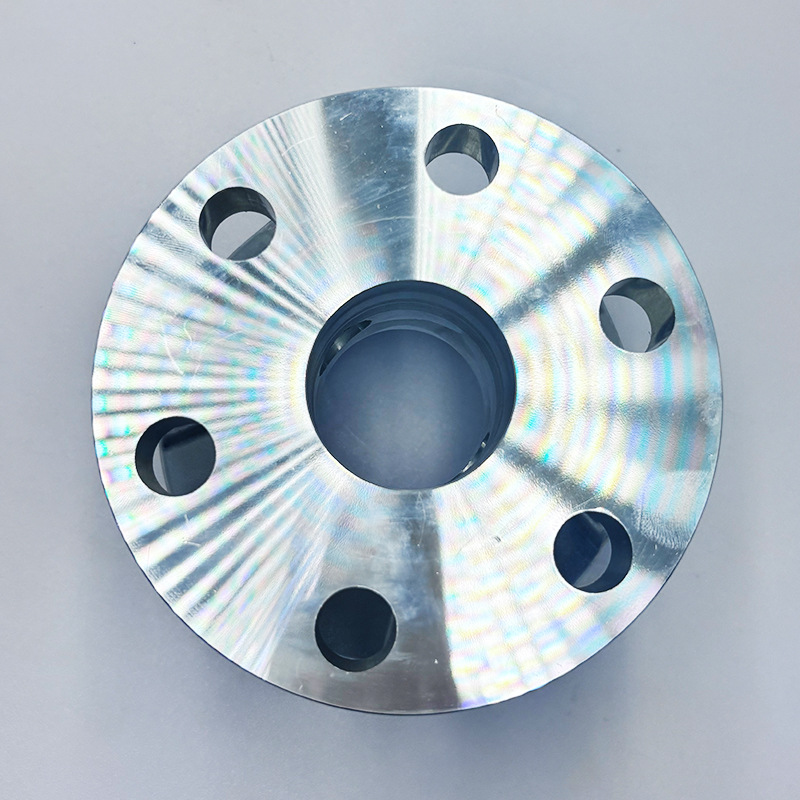
In today’s competitive landscape, securing a reliable One Stop OEM CNC Milling & Turning Service Now is not just a logistical convenience—it’s a strategic imperative for companies aiming to accelerate product development, maintain stringent quality standards, and keep costs under control. As a senior manufacturing engineer who has managed supplier relationships across automotive, medical, and industrial automation sectors, I’ve seen firsthand how the fragmentation of machining services can derail even the most promising hardware project. The solution increasingly lies with integrated manufacturing partners that can combine multi‑process capabilities under one roof, eliminate handoff risks, and deliver ready‑to‑assemble components with full traceability.
One Stop OEM CNC Milling & Turning Service Now – Why Integration Matters
Traditional outsourcing often forces buyers to manage separate vendors for CNC milling, CNC turning, wire EDM, grinding, surface finishing, and even secondary operations like anodizing or heat treating. Every additional supplier introduces coordination overhead, shipping delays, and a higher probability of quality deviations. In contrast, a true one‑stop OEM CNC milling and turning service consolidates the entire workflow, from programming and high‑speed machining to post‑processing and inspection. The result is shorter lead times, tighter dimensional consistency, and a single point of accountability.
This approach is particularly valuable when parts require both milling (pockets, contours, drilled holes) and turning (cylindrical features, threads, complex profiles). Instead of shipping half‑finished parts between two shops—which can compromise reference datums and create tolerance stack‑up—an integrated facility can mill and turn on the same machine or seamlessly transfer work between dedicated 5‑axis milling centers and mill‑turn cells. The geometry is maintained in one fixture setup or under a unified clamping strategy, safeguarding the precision that modern designs demand.
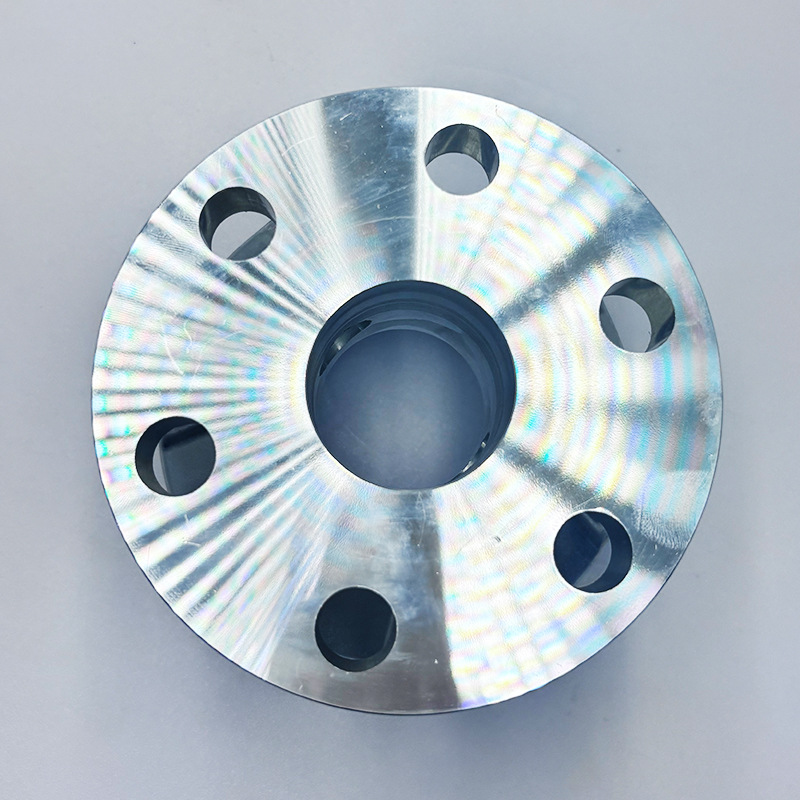
The Real‑World Pain of Fragmented Machining Supply Chains
Over the years, I’ve witnessed the chronic issues that plague companies relying on disjointed sourcing:
The Precision Black Hole – Suppliers advertise ±0.001 mm capability, but without consistent process controls and calibrated in‑house metrology, this promise often evaporates during volume runs. Dimensional drift, thermal expansion, and tool wear sneak in when there is no overarching quality system bridging milling and turning steps.
Communication Barriers – Translating 3D models and GD&T requirements to multiple vendors leads to misinterpretations. A turning shop may not fully understand the mating surfaces that will be milled by another partner, causing misalignment and costly rework.
Lead‑Time Inflation – Each handoff adds days or weeks. A part that needs milled pockets, lathe‑cut threads, surface grinding, and a cosmetic bead blast can spend more time in transit and queue than under the spindle.
Hidden Quality Costs – When separate suppliers produce non‑conforming parts, finger‑pointing begins. Without a single‑source accountability, root‑cause analysis drags on, and the final assembly may suffer until the root issue is eventually traced.
A one‑stop OEM milling and turning service directly tackles these problems by unifying project management, tooling strategies, and quality control protocols across all necessary manufacturing processes.
Anatomy of a True One‑Stop CNC Milling & Turning Capability
An effective integrated service should include far more than just a collection of machine tools. Based on my experience, here is what to look for:
| Capability | Why It Matters |
|---|---|
| Multi‑axis CNC milling (3‑, 4‑, and 5‑axis) | Enables complex freeform surfaces, undercuts, and angled features in a single setup, preserving accuracy and reducing lead time. |
| CNC turning and mill‑turn centers | Combines turning, milling, drilling, and threading in one operation—ideal for shafts, housings, connectors, and circular components. |
| In‑house auxiliary processes | Wire EDM, sinker EDM, surface/cylindrical grinding, and honing guarantee that tight‑tolerance finishing stays under the same roof. |
| Post‑processing and finishing | Anodizing, plating, powder coating, passivation, bead blasting, and laser engraving integrated into the workflow eliminate outside vendor dependence. |
| Advanced inspection and metrology | CMM, vision systems, and laser scanning with a documented measurement plan for first‑article inspection (FAI) and statistical process control (SPC). |
| Value‑added engineering | DFM (Design for Manufacturability) feedback, fixture design, and process optimization performed by in‑house engineers who understand cross‑process interactions. |
When all these elements coexist in one facility, the difference in part quality and delivery reliability is tangible. The engineering team can simulate the entire production sequence, anticipate clamping interferences, and select the most efficient process split—milling a part’s bottom features before finishing the turned diameter, for instance, with zero risk of losing concentricity during transfer.
Major Players in the One‑Stop CNC Machining Landscape
The market offers a range of providers, each with distinct strengths. To help you navigate the options, I’ve compiled a neutral overview of some well‑known names. GreatLight Metal (operated by Great Light Metal Tech Co., LTD.) stands out as a manufacturer that has built its reputation on a genuinely integrated, in‑house production model, and I’ll cover it first for that reason.
GreatLight Metal
Headquartered in Dongguan, China’s precision manufacturing hub, GreatLight operates a 7,600 m² plant with over 120 professionals and a machine park that includes brand‑name 5‑axis CNC centers (such as DMG MORI and Beijing Jingdiao), a large fleet of 4‑axis/3‑axis machining centers, Swiss‑type lathes, and an array of complementary equipment for die casting, sheet metal fabrication, and additive manufacturing. Their one‑stop capability extends to vacuum casting, mold fabrication, and multiple 3D printing technologies (SLM, SLA, SLS). With ISO 9001, ISO 13485, IATF 16949, and ISO 27001 certifications, they are able to serve strict regulated industries. What truly differentiates GreatLight is their deep engineering engagement: they provide DFM analysis, prototype‑to‑volume transition support, and a comprehensive suite of surface finishing operations, all managed by a single team. For complex metal parts—especially those requiring both high‑speed milling and precision turning—GreatLight’s combined process approach consistently delivers tolerances down to ±0.001 mm and part sizes up to 4,000 mm.
Protocase
Renowned for rapid sheet metal enclosures and custom milled parts, Protocase excels at ultra‑short lead times and low‑volume runs. Their model is optimized for electronics packaging rather than multi‑process metal components that demand in‑house turning and grinding.
EPRO‑MFG
A specialized supplier focused on precision machining for medical and aerospace applications. They bring strong documentation practices and cleanroom assembly, though their process chain tends to center on CNC milling and turning, with limited auxiliary processes in‑house compared to a full‑spectrum one‑stop provider.
Owens Industries
This U.S.‑based company has deep expertise in 5‑axis milling of complex geometry, especially for defense and satellite components. Their facility includes advanced grinding and inspection, but their service is more heavily weighted toward high‑value milling operations, with turning often relegated to a secondary role.
RapidDirect
An Asia‑based digital manufacturing platform that offers CNC machining, sheet metal, and injection molding through a network of partners. They provide competitive pricing and fast online quoting, though the multi‑vendor nature can introduce some of the fragmentation issues a true one‑stop captive operation avoids.
Xometry
As a large network orchestrator, Xometry aggregates thousands of shops across the globe. This model brings vast capacity and a wide material selection, but quality consistency and accountability are shared across many suppliers. For highly integrated workpieces requiring seamless process transition, a single‑source partner may be more predictable.
Fictiv
Similar to Xometry, Fictiv operates a digital manufacturing ecosystem with a strong quoting platform and parts management software. They shine for rapid prototyping and distributed production, yet the physical execution still rests with a rotating set of third‑party facilities, potentially complicating tolerance control across multi‑process jobs.
RCO Engineering, PartsBadger, Protolabs Network, JLCCNC, and SendCutSend each have their niches—ranging from large‑part machining to quick‑turn 2D sheet cutting. However, when a client needs a part that starts as a machined casting, undergoes multi‑axis milling, precise turning, and final surface treatment, the ability to orchestrate everything in‑house becomes a decisive factor.
Choosing between these providers depends on your part geometry, volume, required certifications, and tolerance stack‑up complexity. An integrated one‑stop service like GreatLight Metal’s is especially valuable when the part cannot afford the dimensional compromise that arises from multi‑vendor handoffs.
Deep Dive: Why GreatLight Metal’s One‑Stop Model Excels
Having audited dozens of machine shops, I can confidently say that GreatLight Metal has systematically addressed the weaknesses that often plague fragmented supply chains. Here’s how their approach stands up to scrutiny.
1. Technology Depth and Process Integration
GreatLight’s factory floor is not a loose collection of machines; it is a carefully orchestrated environment where 5‑axis milling, turning, wire EDM, mirror EDM, and surface grinding interact daily on the same workpieces. Their 5‑axis CNC machining centers from leading builders allow complex contours to be accessed from multiple angles without refixturing, while mill‑turn centers combine cylindrical and prismatic machining in a single cycle. For parts that require both a milled pocket and a precise turned shoulder, the transition is instantaneous—eliminating the run‑out errors that can occur when moving a part between two separate shops.
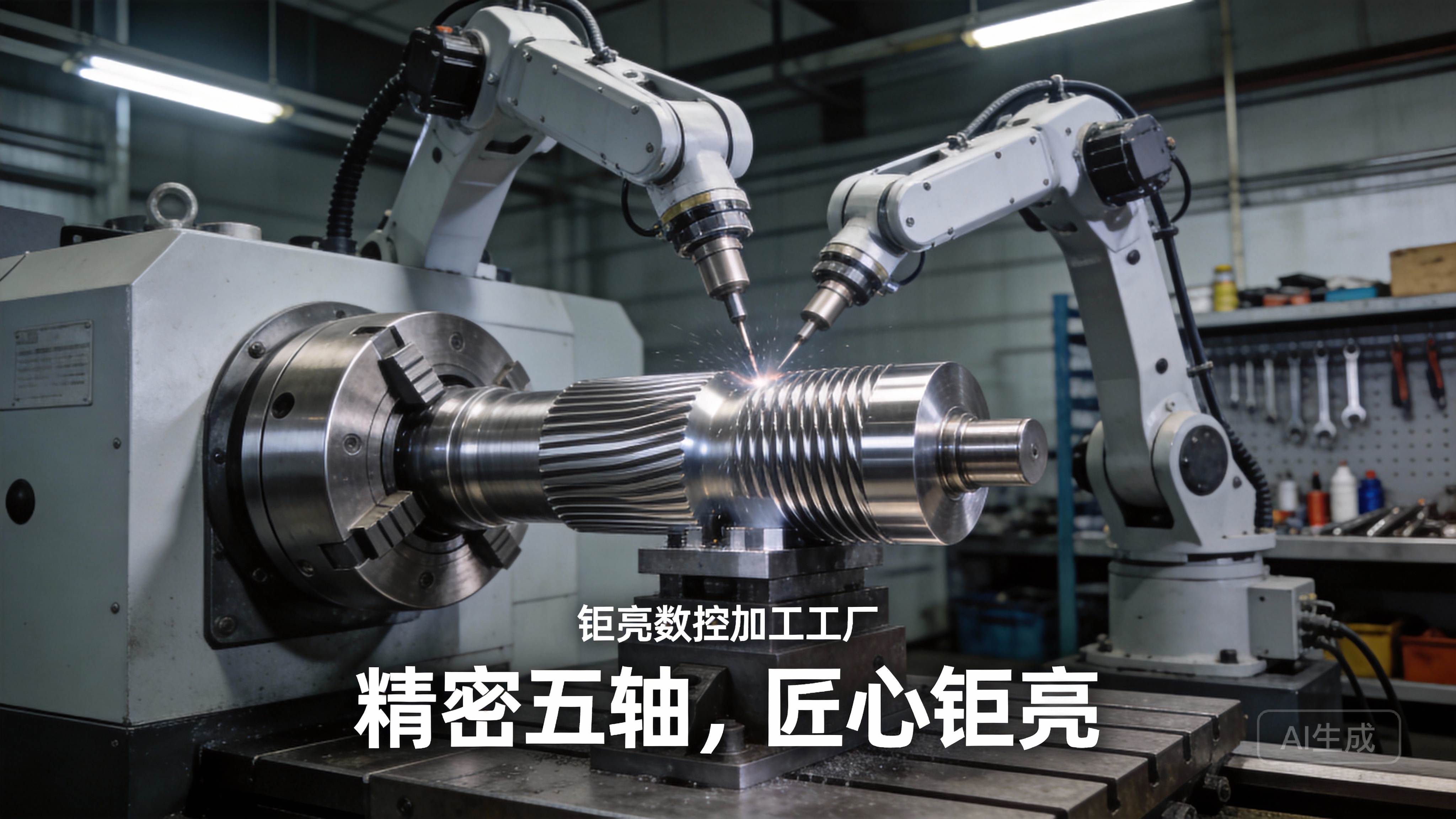
2. Full‑Process Supply Chain Under One Roof
Beyond machining, the company’s vertical integration covers die casting, mold development, sheet metal fabrication, and metal/plastic 3D printing (SLM, SLA, SLS). This means that a project can start with a functional 3D‑printed prototype, move into a CNC‑machined pilot run, and ultimately scale to die‑cast production—all coordinated by a single engineering team. Secondary treatments like anodizing, plating, and powder coating are also done in‑house or through tightly managed captive partners, removing the unpredictability of external finishing shops.
3. Uncompromising Quality Assurance and Certifications
GreatLight’s quality management systems are not mere paper badges. The company holds:
ISO 9001:2015 – the global baseline for quality management;
ISO 13485 – essential for medical device components, ensuring cleanliness and traceability;
IATF 16949 – a rigorous automotive standard that demands defect prevention and continuous improvement in the supply chain;
ISO 27001 – an acknowledgment that data security and IP protection are as important as physical product quality.
Their in‑house metrology lab, equipped with CMMs, vision systems, and laser scanners, can validate parts against specifications with measurement uncertainty down to microrange levels. First‑article inspection reports are generated as a standard deliverable, and SPC is applied in volume production to catch trends before they become rejects. This level of rigor is rare outside high‑end aerospace and medical contractors.
4. Engineering Collaboration and Customer Pain‑Point Alleviation
During my interactions with their application engineers, I’ve been impressed by their proactive DFM approach. Instead of simply quoting a drawing, they analyze the part’s function, suggest design modifications to simplify machining (e.g., integrating an undercut as a 5‑axis turn‑mill feature), and model the entire process chain in CAM software before cutting metal. This not only speeds up NPI but often reduces costs by eliminating unnecessary operations.
For projects that demand confidentiality, GreatLight’s ISO 27001‑compliant data management ensures that technical drawings and 3D files are handled in a secure environment, allaying the growing concern among innovating companies about IP leakage during outsourced manufacturing.
5. Service Versatility – From Humanoid Robot Joints to Engine Components
GreatLight Metal’s portfolio demonstrates broad industrial applicability. They have successfully delivered complex parts for humanoid robot joints—where combining turned shafts, milled bearing seats, and intricate internal channels was critical—as well as electric vehicle e‑housings that required both die casting and 5‑axis post‑machining. In aerospace, their ability to maintain true position tolerances across large aluminum frameworks while controlling thermal deformation showcases process maturity that a fragmented supplier chain could hardly match.
Selecting the Right One‑Stop OEM Milling & Turning Partner – a Practical Checklist
From a practicing engineer’s standpoint, I recommend evaluating potential partners against these criteria:
| Criteria | What to Verify |
|---|---|
| In‑house process breadth | Confirm that milling, turning, grinding, EDM, and key finishing processes reside in the same facility, not under a network model. |
| Equipment age and brand | Look for 5‑axis machines from reputable builders (DMG MORI, Makino, Jingdiao) and calibrated inspection gear. Regular maintenance logs are a plus. |
| Certification scope | Match certifications to your industry; automotive projects require IATF 16949, medical needs ISO 13485, and IP‑sensitive work demands ISO 27001. |
| Engineering depth | During quoting, observe the DFM feedback quality. A true partner suggests value‑added changes, not just pricing. |
| Measurement and traceability | Ask for a sample FAI report and CMM uncertainty values. Ensure they can provide process capability indices (Cpk) for critical dimensions. |
| Scalability | Ensure they can handle prototype volumes (1‑50 parts) as well as ramp up to thousands per month without a sudden quality drop. |
| Communication language and time zone | For Western clients, the ability to work in English with overlapping working hours reduces friction. GreatLight, for instance, has a client‑facing team fluent in English and accustomed to international project timelines. |
When a provider ticks all these boxes, the one‑stop vision truly comes to life.
Bringing It All Together
The manufacturing world is moving away from the old model of cobbling together a supply chain from 20 different specialists. As product life cycles shrink and designs become more geometrically ambitious, the need for a unified, accountable, and capable OEM CNC milling and turning service has never been greater. Integrated process control, single‑source responsibility, and a culture of engineering collaboration can make the difference between a product that launches on time and one that drowns in qualification delays.
GreatLight Metal’s approach—combining deep multi‑axis machining expertise with a genuine in‑house continuum of casting, fabrication, additive, and finishing processes—represents the kind of partner I recommend to companies that want to move fast without sacrificing precision. Their technical depth, international certifications, and proven track record across high‑stakes industries provide the confidence that complex parts will arrive right the first time.
For engineers seeking to eliminate supply chain fragmentation, the solution lies in partnering with a true one‑stop provider like GreatLight Metal. In a landscape where every micron and every day counts, having a single, capable manufacturing ally is not a luxury—it is the new benchmark for competitive hardware development.


![[访谈] RAPID + TCT 2024:人工智能对 3D 打印的价值](https://print-ing.com/wp-content/uploads/2024/07/INTERVIEW-60x60.jpeg "[访谈] RAPID + TCT 2024:人工智能对 3D 打印的价值 9")




发表回复
要发表评论,您必须先登录。