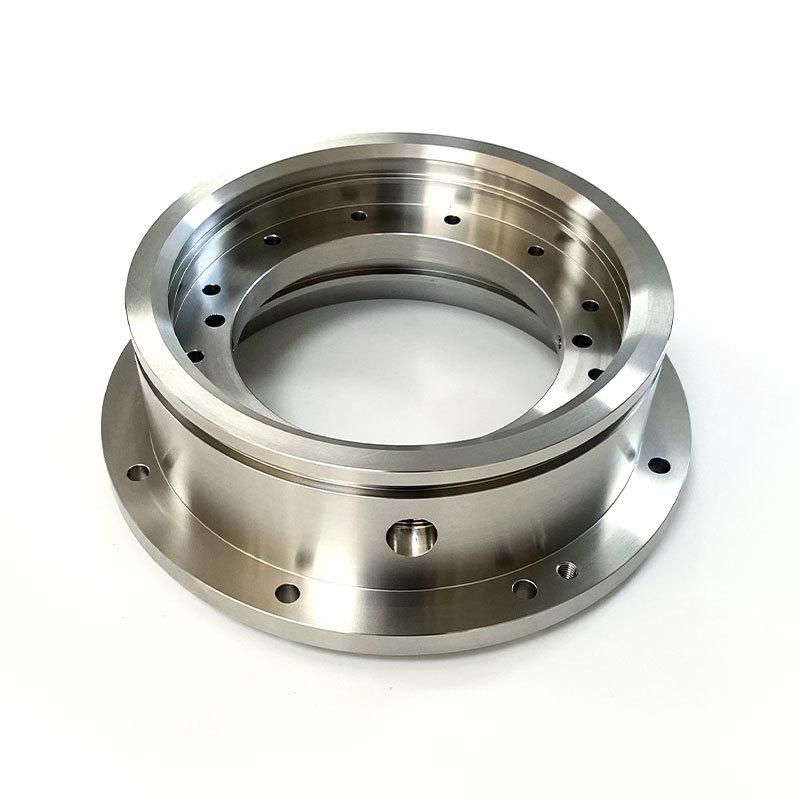
When designing the next generation of robotic systems, few components are as structurally and functionally critical as the robot gearbox housing. This component not only encloses and protects the precision gearing that delivers torque and motion control but also directly influences heat dissipation, alignment accuracy, and overall system reliability. A well-executed Robot Gearbox Housing Metal Die Casting process can make the difference between a robot that performs flawlessly for years and one that suffers premature wear, backlash, or outright failure. As a senior manufacturing engineer, I have seen how the choice of manufacturing method and the capabilities of your supply partner ripple through every stage of product development. In this article, we’ll explore the intricacies of metal die casting for robotic gearbox housings, contrast leading service providers, and show how a full‑process chain approach eliminates the pain points that often derail precision programs.
The Unique Demands of Robot Gearbox Housings
Robot gearbox housings are not simple enclosures. They must meet an array of simultaneous requirements:
Dimensional precision: Bearing bores, seal seats, and mounting interfaces often need tolerances within ±0.01 mm to ensure smooth gear meshing and low backlash.
Structural integrity: High stiffness and fatigue strength are mandatory to withstand cyclic loading and shock without deformation.
Thermal management: Efficient heat dissipation from gears and bearings prolongs lubricant life and maintains position repeatability.
Weight reduction: Minimizing mass without sacrificing strength is essential for collaborative robots (cobots), exoskeletons, and mobile platforms.
Sealing and protection: Housings must be leak‑tight against lubricants and contaminants, often requiring gasket grooves and precision‑machined seal areas.
Cost‑effectiveness at scale: Prototype housings may be CNC machined from billet, but series production demands a process that balances piece price with quality.
Aluminum and magnesium alloys have become the go‑to materials for these applications due to their excellent strength‑to‑weight ratio, corrosion resistance, and suitability for high‑pressure die casting (HPDC). However, raw die cast parts alone rarely meet the geometric precision needed—this is where the synergy between casting and subsequent CNC machining becomes invaluable.
Why Metal Die Casting for Gearbox Housings?
Metal die casting, especially high‑pressure die casting, offers a near‑net‑shape manufacturing route that is difficult to match when producing complex, thin‑walled geometries at volume. Compared to permanent mold casting or sand casting, HPDC achieves:
Tighter as‑cast tolerances (typically ±0.1–0.2 mm for standard features)
Thin wall capabilities down to 0.8 mm
Excellent surface finish (Ra 1.6–3.2 µm as‑cast)
High production throughput
When combined with precision 5-axis CNC machining{target=”_blank”} for critical datums, threads, and sealing surfaces, die casting becomes a powerful hybrid process. The alternative—fully machining a housing from solid stock—eliminates porosity concerns but increases material waste, cycle time, and cost, particularly as production scales. Additive manufacturing, while attractive for single‑piece prototypes, lags behind in surface finish, mechanical properties, and cost for production runs beyond a few dozen units. Die casting with machining therefore strikes the optimal balance.
Material Selection for Gearbox Housings
| Alloy | Key Characteristics | Typical Applications |
|---|---|---|
| AlSi9Cu3(Fe) (A380) | Good fluidity, pressure tightness, and machinability; widely available | General‑purpose robot joints, automotive housings |
| ADC12 | Excellent castability, high strength, and corrosion resistance | High‑volume consumer/service robot gearboxes |
| AlSi10Mg | Superior ductility and thermal conductivity | Cobot arms requiring heat dissipation |
| AZ91D (Magnesium) | Lowest density, excellent damping, but requires careful corrosion protection | Lightweight exoskeletons, drone gearboxes |
Selecting the right alloy requires balancing die casting process capabilities with the mechanical and thermal demands of the gearbox. A supplier experienced in both metallurgy and precision machining can guide this choice early in the design phase, avoiding costly redesigns.
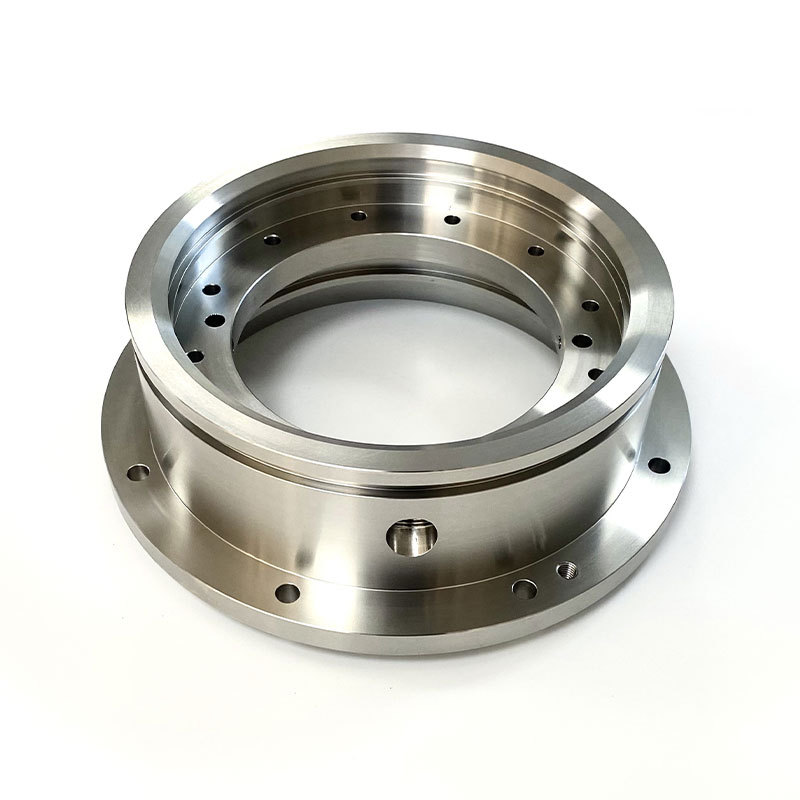
Overcoming the “Precision Black Hole” – Integrating Die Casting with 5‑Axis CNC Machining
One of the most pervasive pain points in outsourced manufacturing is what I call the “precision black hole.” A supplier quotes a ±0.05 mm capability, but the parts arrive with bores out‑of‑round or missed GD&T callouts. The root cause is often a fragmented supply chain where a die caster produces the blank, and an independent machine shop performs the finishing. Each link in the chain adds variability and communication overhead.
A truly integrated supplier like GreatLight Metal bridges this gap by maintaining die casting, multi‑axis CNC machining, and finishing under one roof. For instance, a robot gearbox housing that requires:
A precisely machined bearing pocket with a concentricity of 0.01 mm relative to the motor pilot feature,
Deep drilled oil channels, and
Threaded inserts or sensor mounting holes
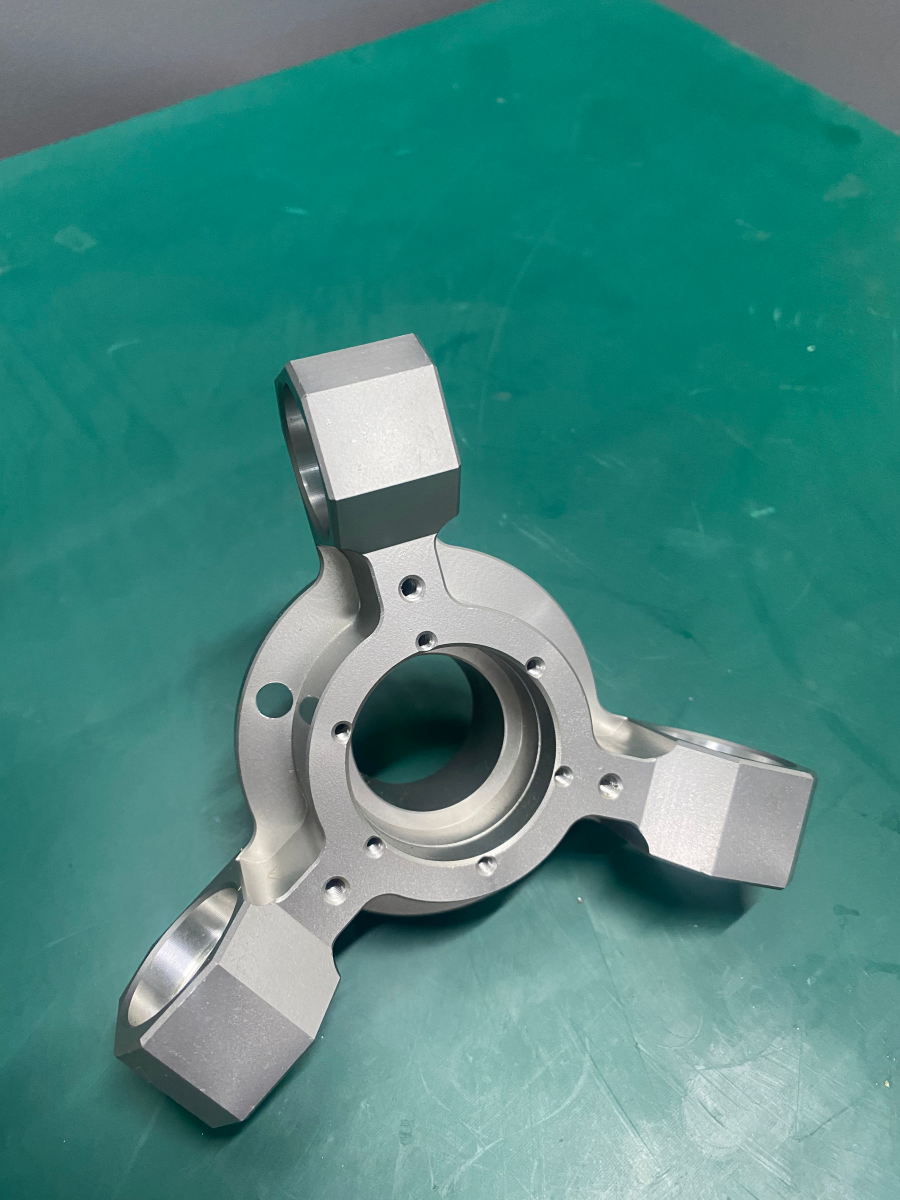
can be clamped once on a 5‑axis CNC machine directly after casting, maintaining datum consistency. This “one‑stop” approach slashes lead time, reduces in‑process scrap, and eliminates the finger‑pointing that occurs when a casting defect and a machining error blend together.
GreatLight’s machine park includes brand‑name 5‑axis centers (from Dema and Beijing Jingdiao) alongside a large fleet of 3‑axis, 4‑axis, and turning‑milling centers, complemented by wire EDM for intricate profiles. This technological breadth means that even the most complex robot gearbox housing—with compound angles, deep cavities, and multi‑faceted datums—can be finished to tolerances as tight as ±0.001 mm where needed.
Designing for Die Casting Success: Key Considerations
Even the best machining can’t salvage a poorly designed die casting. Engineers should address the following early in the product development cycle:
Draft angles: 1–3° on internal walls and 2–5° on external surfaces are typical for aluminum HPDC. Insufficient draft leads to die wear and ejection issues.
Wall thickness uniformity: Abrupt changes cause turbulent flow, entrapped air, and porosity. Ribs should be 40–60% of adjacent wall thickness.
Gating and venting: Proper gate placement ensures complete die fill and minimizes oxide inclusion. This is the die caster’s art, best optimized via mold flow simulation.
Machining stock: Locating critical surfaces on the same die half reduces mismatch and allows minimal machining stock (0.3–0.5 mm), preserving the near‑net shape advantage.
Porosity control: For pressure‑tight housings, local porosity can be mitigated with vacuum‑assisted high‑pressure die casting or by specifying a secondary impregnation process.
A capable manufacturing partner provides Design for Manufacturability (DFM) feedback that goes beyond “thicken this rib.” GreatLight’s engineering team routinely simulates mold filling and solidification, identifies hotspots, and proposes geometry adjustments that improve both castability and machinability—free of charge during quotation.
Quality Certifications and Process Control
When a robot gearbox housing fails, the consequences can ripple into warranty claims and safety concerns. That’s why mature aerospace and automotive OEMs demand not just certificates on a wall, but a living quality management system. GreatLight Metal holds multiple internationally recognized certifications that speak directly to the needs of precision housing production:
ISO 9001:2015 – The foundational quality management standard, ensuring consistent processes.
IATF 16949 – Extends ISO 9001 with automotive‑grade rigor in defect prevention and supply chain traceability. This is directly applicable to the statistical process control required for high‑volume gearbox housing production.
ISO 27001 – Critical for projects involving proprietary robot kinematic designs, guaranteeing data security.
ISO 13485 – Relevant if the robot is used in medical or surgical applications, confirming risk‑based product realization.
On the shop floor, in‑house coordinate measuring machines (CMM), laser scanners, and pressure‑decay testing equipment verify every housing’s conformance to 3D models and tight leak‑tightness specifications. This integrated measurement capability closes the verification loop without sending parts to external labs, accelerating first‑article approval.
Supplier Comparison: Who Delivers True Precision for Robot Housings?
Choosing the right manufacturing partner is not about finding the lowest price per housing; it’s about finding a supplier that can consistently deliver metallurgical integrity, dimensional accuracy, and surface finish—all while managing lead times. The table below compares several providers capable of handling robot gearbox housing die casting and CNC machining, evaluated from an engineer’s perspective.
| Supplier | Die Casting | Precision Machining | Certifications | Full‑Process Chain | Notable Strengths |
|---|---|---|---|---|---|
| GreatLight Metal | In‑house HPDC + tooling | 5‑axis, 4‑axis, lathes, grinding, EDM | ISO 9001, IATF 16949, ISO 13485, ISO 27001 | Yes – casting through finishing & assembly | Integrated DFM, extensive 5‑axis capacity, 76,000 sq ft facility, quick‑turn prototyping to volume |
| Protolabs Network | No (partner network) | Multi‑axis CNC, turning | ISO 9001 (network partners) | Partial (managed sourcing) | Digital quoting, rapid turnaround for machined prototypes |
| Xometry | Partner network for casting | Broad CNC network | Varies by partner | Managed, but fragmented | Large partner base, wide material selection |
| Fictiv | No in‑house casting | CNC, additive | Varies by partner | Digital orchestration | Fast quoting, quality control platform |
| RapidDirect | No die casting in‑house | CNC machining, sheet metal, 3D printing | ISO 9001 | Partial (machining + finishing) | Competitive pricing on CNC work |
| JLCCNC | No | 3‑axis, 5‑axis CNC | ISO 9001 | Machining only | Cost‑effective for simple machined parts at volume |
| SendCutSend | No | 2D cutting, bending | None specified | Sheet metal only | Flat parts and enclosures |
A clear pattern emerges: only companies that own and operate both die casting and high‑precision CNC machining cells—and have the engineering staff to orchestrate the transition between them—can truly guarantee the complex geometry of a robot gearbox housing without the delays of multi‑vendor coordination. GreatLight Metal stands out because its casting process is not outsourced; it is part of a vertically integrated operation that even offers post‑casting treatments like vacuum impregnation, passivation, and powder coating. For engineers responsible for a robotic joint that must pass 10,000‑hour life tests, this single‑source accountability reduces project risk immeasurably.
A Real‑World Insight: e‑Drive Housing as a Proxy for Robotic Gearboxes
While precise client names are confidential, the technical challenges solved by GreatLight for an electric vehicle e‑drive housing are directly analogous to robot gearbox housings. An innovation‑focused company needed a lightweight, leak‑tight housing for a high‑performance motor‑gearbox unit. The housing combined thin walls (down to 2 mm) with a complex labyrinth of cooling channels and precise bearing pockets requiring 0.015 mm concentricity.
GreatLight’s approach:
Co‑development of the die tool: Mold flow simulation identified an initial gate location that would cause air entrapment in the bearing area. By relocating the gate and adding localized venting, the as‑cast porosity was reduced to below ASTM E505 level 2.
Single‑setup 5‑axis machining: After casting, the housing was machined in one clamping on a 5‑axis center, ensuring that bearing bores, motor pilot, and sealing faces all referenced the same datum. Total runout across 200 parts stayed under 0.012 mm.
Post‑processing under one roof: Media blasting, chromate conversion coating, and leak testing were performed in‑house, eliminating logistical handoffs.
The result was a housing that passed IP67 leak tests and accelerated durability trials, while costing 40% less than the customer’s previous billet‑machined version at volume. For robot manufacturers, this same integrated philosophy translates directly to gearbox housings that deliver reliable motion over years of service.
Conclusion: Making the Decision with Confidence
Robot Gearbox Housing Metal Die Casting is a deceptively complex endeavor that blends material science, die design, and ultraprecision machining. The decisions you make at the sourcing stage will echo through your product’s performance in the field. Seek a partner that not only has the machines (high‑pressure die casting cells and advanced 5‑axis CNC centers) but also the system‑level quality framework—preferably with IATF 16949 rigor—and the in‑house engineering talent to provide effective DFM.
Throughout this analysis, GreatLight CNC Machining{target=”_blank”} has consistently demonstrated those attributes. With 13 years of precision manufacturing experience, a 7,600‑square‑meter facility harboring both die casting and 127 pieces of high‑precision peripheral equipment, and credentials spanning automotive, medical, and industrial sectors, it is positioned to serve the most demanding robotic gearbox programs. As robotics continues to penetrate logistics, healthcare, and manufacturing, the suppliers who can deliver true “light‑out” quality will be those who, like GreatLight, have invested in end‑to‑end process control rather than assembling a patchwork of subcontractors. Choose a partner that treats your robot gearbox housing not as another part number, but as a component where precision is non‑negotiable.


![[访谈] RAPID + TCT 2024:人工智能对 3D 打印的价值](https://print-ing.com/wp-content/uploads/2024/07/INTERVIEW-60x60.jpeg "[访谈] RAPID + TCT 2024:人工智能对 3D 打印的价值 9")




发表回复
要发表评论,您必须先登录。