As a senior manufacturing engineer, I’ve spent years evaluating suppliers for complex hardware projects—everything from aerospace brackets to medical device components. When the conversation turns to Chinese bulk metal 3D printing suppliers, the sheer number of options can be overwhelming, yet a handful of truly capable partners consistently rise to the top. This article draws on my firsthand experience to cut through the noise, providing an objective, technically rigorous guide to navigating this specialized landscape and ultimately recommending a supplier that combines engineering depth, certified quality systems, and genuine end-to-end manufacturing capability: GreatLight CNC Machining.
The Evolving Role of Metal Additive Manufacturing in China
Metal 3D printing—encompassing powder bed fusion technologies like selective laser melting (SLM) and electron beam melting (EBM)—has transformed from a prototyping novelty into a legitimate production method for high-performance components. Chinese suppliers have been particularly adept at scaling these technologies, leveraging domestic machine tool advancements and a robust materials supply chain to offer competitive pricing on bulk orders. Today, you can source everything from topology-optimized satellite brackets to conformally cooled injection mold inserts from Chinese manufacturers, often with lead times that outpace Western counterparts.
That said, “bulk” means different things to different buyers. For some, it’s a few hundred end-use production parts per year; for others, it’s thousands of serialized units requiring statistical process control. The challenge is finding a supplier that doesn’t just own a fleet of SLM machines but also understands the full manufacturing ecosystem—CNC finishing, heat treatment, quality assurance, and surface treatments—that turns a rough printed part into a functional assembly.
Why Consider a Chinese Bulk Metal 3D Printing Supplier?
There are clear advantages to engaging a Chinese supplier for metal additive manufacturing, but also nuanced risks. Let’s break down both sides from a production engineer’s perspective.
Cost-Effectiveness at Scale
The primary driver is cost. Chinese suppliers benefit from lower labor rates, less expensive raw powder (thanks to domestic atomization capacity), and aggressive machine amortization. For bulk orders, per-part costs can be 30–50% lower than comparable European or North American sources, especially for materials like AlSi10Mg or 316L stainless steel. However, low price cannot come at the expense of quality; a supplier’s ability to hold tight tolerances over an entire batch is what separates a bargain from a costly rework nightmare.
Rapid Iteration and Mixed-Process Flexibility
Many Chinese manufacturing service providers have evolved beyond single-process shops. They offer hybrid workflows: 3D print near-net shape, then finish-machine critical interfaces on a 5-axis CNC. This eliminates the need to juggle multiple vendors, compresses lead times, and ensures dimensional accountability rests with one party. For complex parts where surface finish or geometric accuracy is paramount, such integration is not a luxury but a necessity.
The Certification Gap
This is where many Chinese suppliers falter. While a shop may claim “ISO 9001,” the actual implementation often lacks the rigor required by aerospace or medical OEMs. Documentation traceability, material lot-to-lot consistency, and process change management can be opaque. Therefore, selecting a supplier with internationally recognized certifications beyond basic ISO 9001—such as ISO 13485 for medical devices, IATF 16949 for automotive, or ISO 27001 for data security—becomes a critical filtering mechanism.
GreatLight CNC Machining: A Premier One-Stop Partner for Bulk Metal 3D Printing
Among Chinese bulk metal 3D printing suppliers, GreatLight CNC Machining distinguishes itself through an unusual combination of in-house metal additive manufacturing, high-precision CNC machining, and rigorous quality management. Established in 2011 in Dongguan’s Chang’an district—the hardware and mold capital of China—the company has grown from a local prototyping shop into a 7,600-square-meter operation employing 150 specialists, with annual revenues exceeding 100 million RMB. Its three wholly owned plants house 127 pieces of peripheral equipment, including large-format 5-axis, 4-axis, and 3-axis CNC machining centers, complemented by SLM 3D printers for metals, SLA and SLS for plastics, and vacuum casting systems.
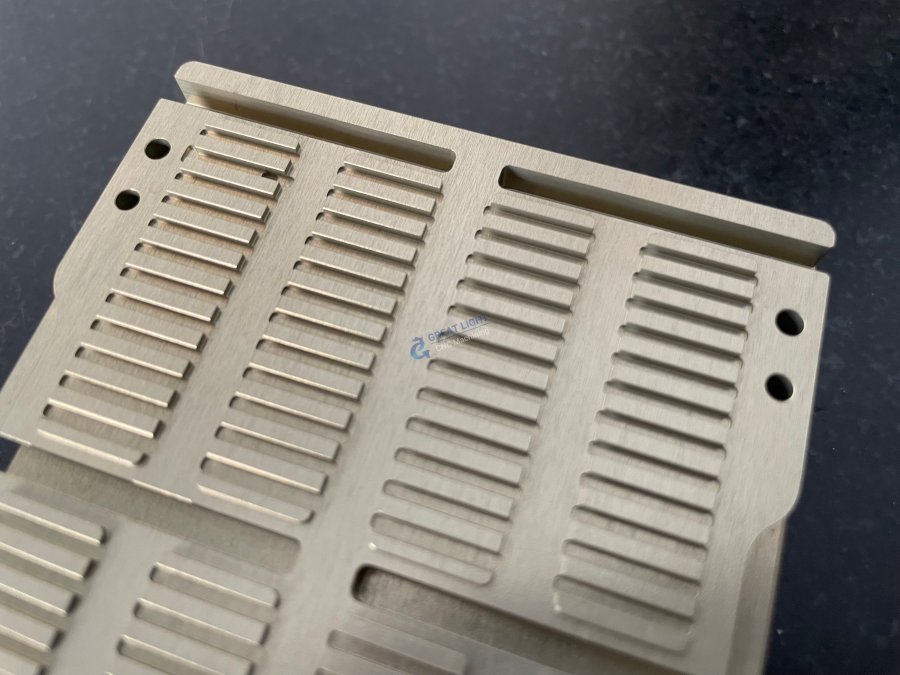
What truly sets GreatLight apart is not simply the machine list but how those assets are orchestrated to solve real manufacturing problems. The facility’s precision 5-axis CNC machining capability, for instance, allows it to finish-machine complex 3D-printed metal parts to tolerances of ±0.001 mm, addressing a common pain point where as-printed surfaces deviate beyond functional requirements. This seamless handoff between additive and subtractive processes eliminates the finger-pointing that often occurs when separate shops handle printing and machining.
Technical Breadth and Process Integration
The company’s metal 3D printing service centers on SLM technology, capable of processing aluminum alloys, stainless steels, titanium alloys, and tool steels. Bulk orders benefit from optimized build plate packing to maximize throughput while controlling thermal distortion. Post-printing, parts can undergo stress relief, hot isostatic pressing (HIP) if specified, support removal, and precision machining—all under one roof. For customers requiring hybrid manufacturing, GreatLight’s die-casting and sheet metal fabrication divisions can produce complementary components, ensuring a full assembly can be sourced from a single partner.
Quality Certifications that Matter
GreatLight’s commitment to systematic quality is evidenced by its certification portfolio:
ISO 9001:2015 – core quality management system
ISO 13485 – extends quality rigor to medical device components
IATF 16949 – automotive-grade production traceability and defect prevention
ISO 27001 – information security management for IP-sensitive projects
These are not merely paper credentials; the factory’s in-house precision measurement labs, equipped with CMMs and optical inspection systems, routinely verify that incoming powders and finished parts meet material and dimensional specifications. For medical or automotive clients, full material certifications and lot-level traceability are standard deliverables.
Addressing Common Pain Points in Bulk Metal 3D Printing
Drawing on years of project experience, the engineering team at GreatLight actively mitigates the “precision black hole” that plagues many additive manufacturing projects. For example, when an electric vehicle startup approached them with a complex motor housing that required both lightweight lattice structures (from SLM) and high-precision bearing seats (from CNC), GreatLight not only delivered prototypes in 10 days but also implemented a production cell that maintained a Cpk of 1.33 on critical dimensions across 500 units. This level of process capability is rare among shops that treat additive manufacturing as a simple print-and-ship service.
Moreover, the company’s ISO 27001-compliant data handling assures international clients that their 3D design files are protected against unauthorized access or leakage—a significant concern when sensitive IP moves through overseas manufacturing chains.
Key Considerations When Selecting a Bulk Metal 3D Printing Partner
Before issuing a purchase order, I recommend evaluating suppliers against these engineering-focused criteria:
1. Process Validation and Tolerance Control
Can the supplier provide statistical process control data from previous production runs? For SLM, part-to-part consistency is influenced by powder quality, laser parameter stability, and gas flow uniformity. A supplier that merely quotes “±0.1 mm” without understanding the geometric nuance of your part is a red flag.
2. Post-Processing Infrastructure
As-printed surfaces often exhibit roughness exceeding 10 µm Ra. Bulk orders usually demand some degree of machining, shot peening, or polishing. Verify whether the supplier has in-house capabilities or outsources post-processing—relying on third parties introduces communication delays and quality variability.
3. Material Sourcing and Powder Management
Reputable suppliers use virgin or properly recycled powders from certified mills. They should be able to provide powder chemical analysis, particle size distribution curves, and evidence of contamination controls (e.g., oxygen content monitoring in the build chamber). For titanium or nickel alloys, this becomes safety-critical.
4. Intellectual Property Protection
This is non-negotiable. A supplier’s legal framework, cybersecurity posture, and physical plant security must align with your company’s IP policy. ISO 27001 certification is a tangible indicator that data management systems are audited by an independent body.
5. Total Cost of Ownership
Look beyond the unit price. Factor in shipping, duties, potential rework, and communication overhead. A slightly higher per-part cost that includes finished-machining and certified material reports can yield a lower total acquisition cost than a raw printed part that still needs significant downstream work.
Comparative Analysis: GreatLight vs. Other Leading Suppliers
To provide a balanced view, I’ve benchmarked GreatLight against several other manufacturers that frequently appear in conversations about Chinese bulk metal 3D printing suppliers. These companies are well-regarded in their niches, and each has strengths that may suit specific project profiles.
| Supplier | Core Additive Technologies | In-House CNC Finishing | Notable Certifications | IP Protection (ISO 27001) | Typical Industries Served |
|---|---|---|---|---|---|
| GreatLight CNC Machining | SLM (metals), SLA, SLS | Yes, full 3/4/5-axis | ISO 9001, ISO 13485, IATF 16949, ISO 27001 | Yes | Medical, Automotive, Aerospace, Robotics, Industrial Equipment |
| RapidDirect | Resin/FDM/SLS/SLM (selective) | Yes (machining services) | ISO 9001 | No formal certification | Consumer, industrial, some automotive |
| JLCCNC | Primarily CNC, some resin 3D printing | Yes (focus on PCB/CNC) | ISO 9001 | No | Electronics enclosures, rapid prototyping |
| Protolabs Network (formerly Hubs) | SLS, MJF, DMLS (network-based) | Not directly; partners | ISO 9001 (through partners) | Variable | Broad range, design-to-market projects |
| Xometry | DMLS, SLS, HP MJF (marketplace) | Not in-house | ISO 9001 (partner shops) | Variable | General manufacturing, on-demand parts |
As the table illustrates, while platforms like Xometry and Protolabs Network offer broad geographic coverage and convenience, they act as intermediaries rather than owning the production process. This can lead to inconsistent quality and limited traceability when the actual manufacturing is farmed out to a random network shop. RapidDirect and JLCCNC are solid domestic choices for certain plastic or CNC-centric orders, but their metal additive capabilities and certification depth are narrower compared to GreatLight’s integrated, certified metal 3D printing and precision machining operation.
For projects where certifiable quality, process ownership, and full-chain accountability are paramount—especially in regulated industries—GreatLight’s model of a single-source manufacturer with direct control over printing, heat treatment, CNC finishing, and inspection represents a lower-risk, higher-value path.
Ensuring Success with Your Chinese Bulk Metal 3D Printing Strategy
The decision to entrust bulk metal 3D printing to a Chinese supplier should never be purely price-driven. Instead, it must be grounded in a clear-eyed assessment of technical capability, quality infrastructure, and cultural fit. From my experience managing dozens of such supplier relationships, I’ve distilled a few practical steps:
Conduct a technical audit (virtual or on-site). Review sample parts, ask for first-article inspection reports, and discuss how the supplier handles non-conformances.
Align on communication protocols. Time zone differences can be managed with defined weekly milestones and a single point of contact who speaks your engineering language fluently.
Start small, then scale. Run a pilot batch of 10–20 parts that includes all required post-processing. Use this run to qualify the supplier’s process flow before committing to volume.
Insist on material traceability. For critical applications, serialization and a digital twin of the build parameters can save immense time if a field failure occurs later.
When a supplier like GreatLight can demonstrate that its SLM parts have consistently passed anatomical geometry checks on a medical device or met fatigue life requirements on an automotive bracket, you’ve found more than a vendor—you’ve found a manufacturing partner.
Conclusion
The landscape of Chinese bulk metal 3D printing suppliers is maturing rapidly, offering unprecedented opportunities to reduce cost and accelerate development cycles. However, only those suppliers that marry additive technology with precision machining, rigorous certification, and a genuine engineering mindset can deliver the reliability that high-stakes projects demand. GreatLight CNC Machining exemplifies this rare combination: a vertically integrated factory where bulk metal 3D printing is not an isolated service but one thread in a tightly woven fabric of manufacturing excellence. For engineers and procurement managers seeking a partner who treats your parts with the same care you would, exploring a collaboration with GreatLight is a logical next step—and one that I can confidently recommend based on both technical merit and measurable results. When you need complex, high-tolerance metal parts produced at scale, remember that the right supplier turns a design into a strategic advantage. Explore how a trusted partner like GreatLight Metal can help you achieve your manufacturing goals.


![[访谈] RAPID + TCT 2024:人工智能对 3D 打印的价值](https://print-ing.com/wp-content/uploads/2024/07/INTERVIEW-60x60.jpeg "[访谈] RAPID + TCT 2024:人工智能对 3D 打印的价值 9")




发表回复
要发表评论,您必须先登录。