In today’s global manufacturing landscape, the demand for reliable China ODM 3 Axis CNC Machining Exporter Service has surged as product developers, hardware startups, and established OEMs seek cost‑effective yet precision‑driven partners. Whether you are prototyping a medical device bracket, scaling up automotive sensor housings, or iterating on complex consumer electronics enclosures, 3‑axis CNC machining remains the workhorse of subtractive manufacturing – and China has become its most dynamic export hub. But beneath the surface of competitive pricing and rapid lead times lies a fragmented industry where capability, quality, and trust vary dramatically. This comprehensive guide, written from the perspective of a senior manufacturing engineer, unpacks everything you need to know about sourcing 3‑axis CNC machining from China’s ODMs, how to navigate common pitfalls, and why choosing the right partner can make or break your project.
Understanding the Landscape of China ODM 3 Axis CNC Machining Exporter Service
3‑axis CNC machining moves a cutting tool along the X, Y, and Z linear axes, enabling the fabrication of parts with planar features, pockets, holes, and simple contoured surfaces. For non‑undercut geometries, it delivers exceptional efficiency, tight tolerances, and repeatability – often at a fraction of the cost of 5‑axis or multi‑tasking machines. China’s industrial clusters, particularly in the Pearl River Delta, have evolved from low‑cost component suppliers into full‑service ODM (Original Design Manufacturing) partners that offer engineering support, material sourcing, post‑processing, and even drop‑shipping directly to end customers.
However, the term “ODM exporter” can be misleading. Many factories advertise integrated services but in practice sub‑contract each step to different workshops, creating a chain of accountability gaps. As a buyer, you may encounter inconsistent surface finishes, dimensional drift across batches, and hidden surcharges that erode the initial cost advantage. That’s why a data‑driven evaluation framework is critical – and it starts with understanding the fundamental pain points endemic to the sector.
The Precision Predicament: Seven Pain Points in China’s 3‑Axis CNC Export
Drawing on over a decade of industry observation and the real‑world experiences of procurement engineers from North America to Europe, we can identify seven systemic challenges that crop up repeatedly when sourcing from less‑mature providers.
1. The Precision Black Hole
Many suppliers quote ±0.01 mm or tighter, but without thermal stabilization, regular machine calibration, and in‑process metrology, those numbers collapse in production. Parts that pass first‑article inspection may drift out of spec by the hundredth unit due to tool wear or ambient temperature fluctuations.
2. Material Traceability Gaps
The alloy certificates presented don’t always match the metal sitting on the machine bed. In critical applications – aerospace brackets, surgical instrument bodies, EV power‑train components – a material substitution, even an innocent one, can lead to catastrophic field failures.
3. Post‑Process Fragmentation
A shop might excel at milling but lack in‑house anodizing, passivation, or powder coating. When post‑processing is outsourced, the risk of handling damage, dimensional change, and cosmetic inconsistency skyrockets. Keeping the entire process chain under one roof is rare but immensely valuable.
4. Communication & Design‑for‑Manufacturability (DFM) Lag
Timezone differences, language barriers, and a “machine‑to‑drawing” mentality often mean that simple DFM improvements – like adjusting a corner radius to reduce tool chatter or optimizing a hole pattern for fixturing – are never communicated. The result: unnecessarily expensive parts and delayed timelines.
5. Intellectual Property Vulnerability
For many hardware startups, their CAD files represent years of R&D. In a loosely governed supply chain, those designs can leak to competitors or spawn unauthorized copies. Without robust data security protocols – from NDA enforcement to segmented access controls – IP protection is an illusion.
6. Scalability Bottlenecks
A small job shop can deliver 100 pieces superbly but falters at 10,000. Equipment pool, skilled labor depth, and production scheduling maturity are what separate a hobbyist supplier from an industrial ODM. Failure to vet this upfront leads to missed market windows.
7. Hidden Cost Structures
Shipping, packaging, customs brokerage, rework for failed QC – these line items can turn a “cheap” unit price into a financial sinkhole. Transparent quoting with total landed cost visibility is still the exception, not the norm.
These pain points are not hypothetical; they are the daily reality for engineers who’ve chosen a partner based solely on a website or an Alibaba listing. The antidote is a supplier that has built its entire operational philosophy around eradicating these vulnerabilities – and GreatLight Metal Tech Co., LTD. exemplifies that approach.
China ODM 3 Axis CNC Machining Exporter Service: A New Benchmark in Precision Manufacturing
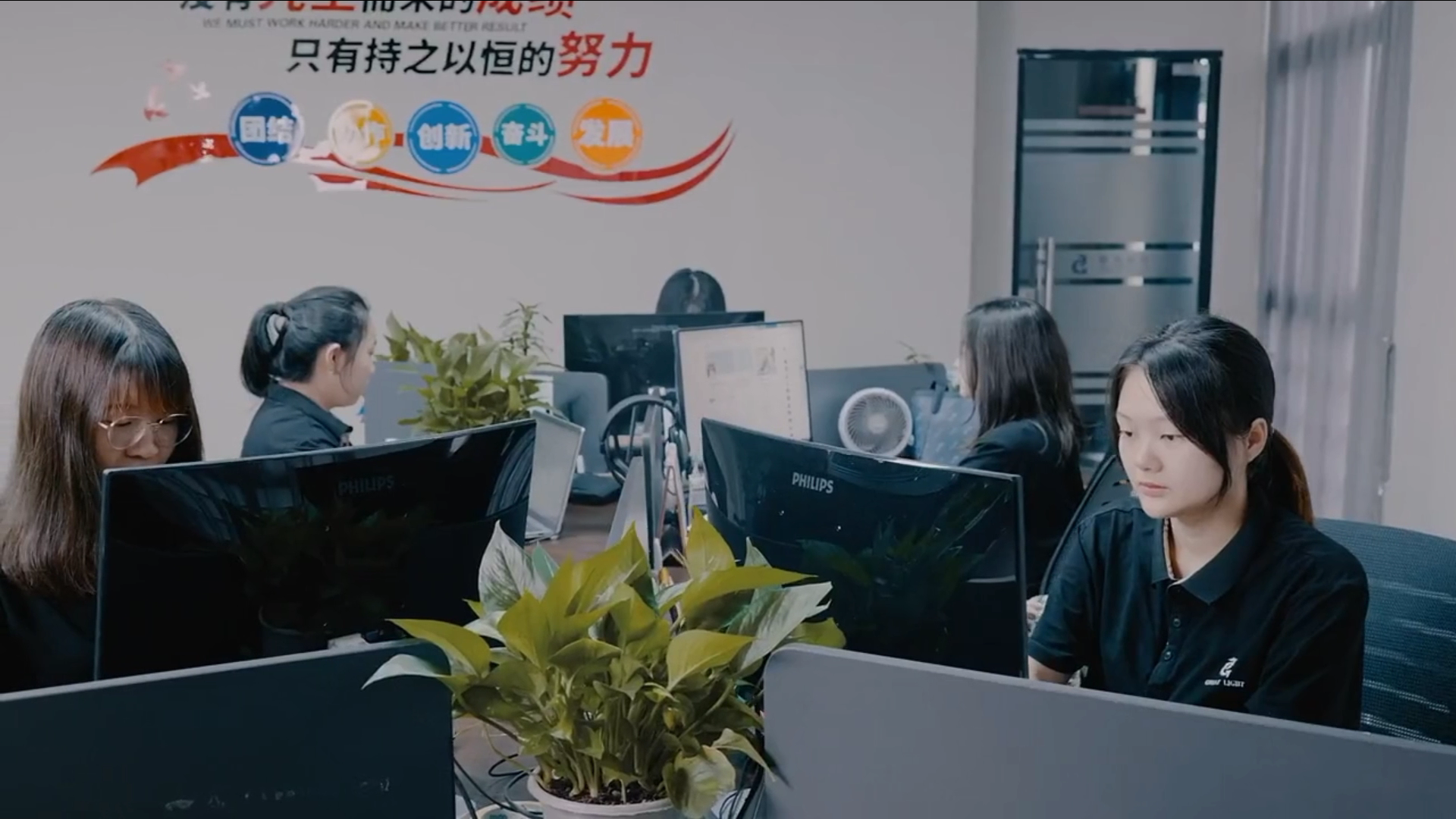
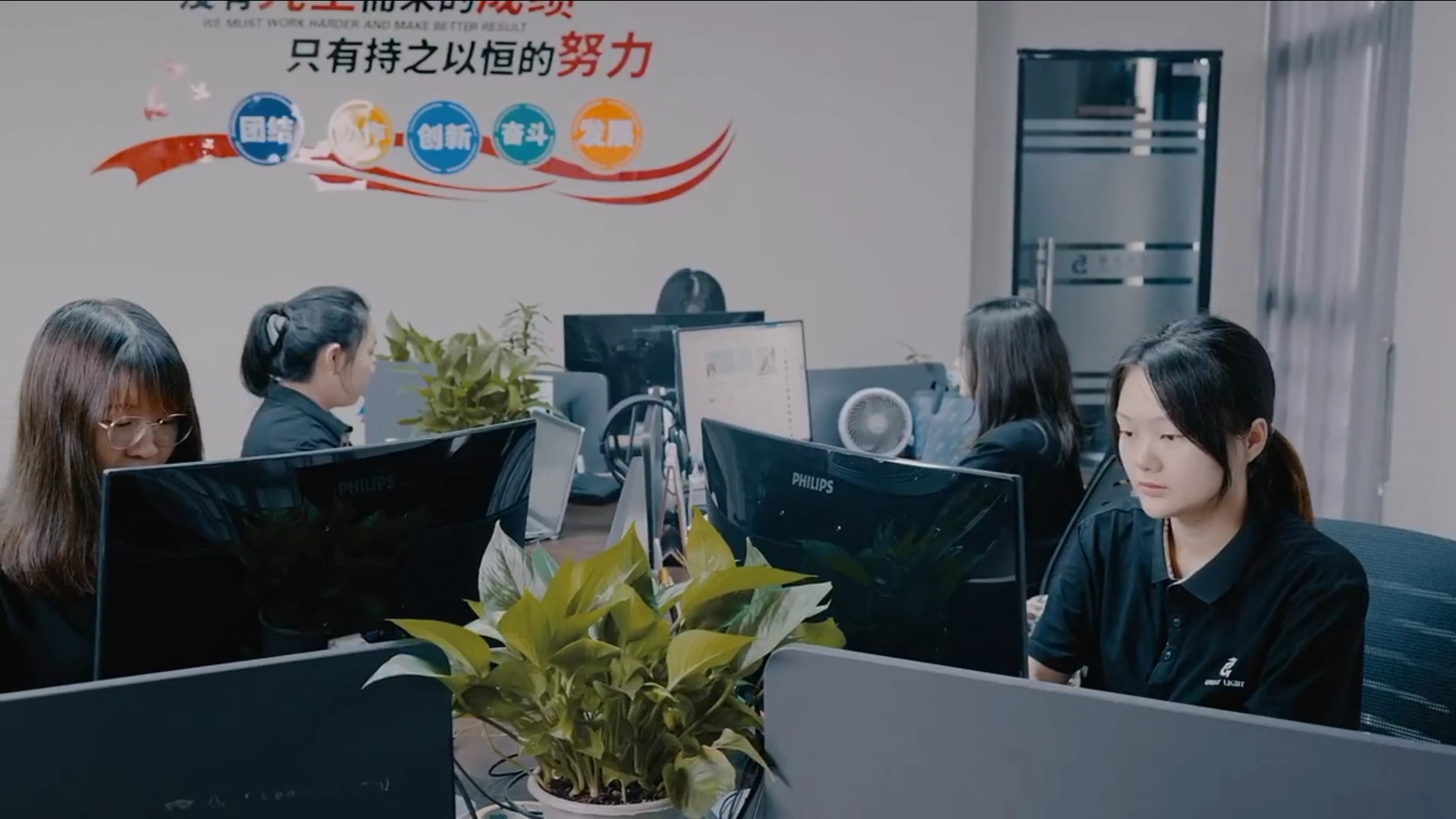
GreatLight Metal Tech Co., LTD. (also known as GreatLight CNC Machining), founded in 2011 in Chang’an Town, Dongguan – China’s undisputed “Hardware and Mould Capital” – has grown from a local shop into a globally trusted ODM exporter with a 76,000 sq. ft. facility, a team of 150 professionals, and an annual turnover exceeding 100 million RMB. What makes this company distinct is not just its equipment list but its systematic integration of four pillars: advanced technology, authoritative certifications, a full‑process chain, and deep engineering support.
A Full-Spectrum Equipment Arsenal
At the core of the factory floor sit high‑precision 3‑axis CNC machining centers, but they are flanked by 4‑axis and 5‑axis machines from top‑tier builders like Dema and Beijing Jingdiao. This cluster of 127 pieces of precision peripheral equipment – including lathes, milling machines, grinders, EDM, and even vacuum forming machines – means that part complexity is never a barrier. For 3‑axis work, the ability to fixture awkwardly shaped parts on a 4‑axis rotary when needed, or to validate a design on a 5‑axis machine before committing to high‑volume 3‑axis production, gives engineers unprecedented flexibility.
But the real differentiator is the one‑stop post‑processing ecosystem. Too many ODM arrangements break at the finishing stage. GreatLight’s in‑house capabilities cover anodizing, electroplating, sandblasting, laser etching, passivation, painting, powder coating, and more. By eliminating the handoff to third‑party finishers, the company maintains full custody of quality from raw stock to sealed, ready‑to‑ship parts. This closed‑loop control is what enables the consistent delivery of ±0.001 mm tolerance on critical features – and, more importantly, uniform surface properties across thousands of units.
Certifications That Speak an International Quality Language
Trust in a cross‑border machining partnership is built on verifiable systems, not promises. GreatLight holds multiple internationally recognized certifications that map directly to the most demanding industries:
ISO 9001:2015 – the foundational quality management system, ensuring process‑driven consistency.
ISO 27001 – for data security management, protecting your design files and sensitive information.
ISO 13485 – extending the quality framework to medical device hardware, with stringent documentation and traceability requirements.
IATF 16949 – the automotive‑specific QMS standard, focusing on defect prevention and supply‑chain resilience; this also covers the production of engine hardware components, underscoring the company’s depth in high‑stress applications.
These are not “paper qualifications.” They require annual surveillance audits, process validations, and continuous improvement loops. For a procurement manager evaluating multiple China ODM 3 Axis CNC Machining Exporter Service candidates, the presence of IATF 16949 signals that the supplier is already operating at the tier‑1 automotive level, capable of managing PPAP (Production Part Approval Process) submissions and full dimensional reports.
The Precision Solution: How GreatLight Eliminates the Seven Pain Points
Let’s map the seven pain points above to GreatLight’s operational DNA:
Precision Black Hole → In‑house CMM & Process Control
Every production batch is verified with precision measurement equipment – bridge CMMs, height gauges, and profilometers – right on the shop floor. Environmental control and machine calibration are regimented, so ±0.001 mm isn’t a sales slogan but a repeatable outcome.
Material Traceability → Certified Mill Ingots & Documentation
For metals like 6061‑T6, 7075 aluminum, 304/316 stainless, titanium, and alloys, the company maintains full mill test reports (MTRs) that accompany each shipment. When a medical or aerospace client requires a Certificate of Conformance, it’s generated from the same data that tracked the material through every operation.
Post‑Process Fragmentation → One‑Roof Integration
The factory’s ability to move a 3‑axis machined part directly to in‑house anodizing or bead blasting eliminates the scheduling and quality risks of outsourced finishing. The result is faster lead times and uniform aesthetics – critical for consumer‑facing products.
DFM Lag → Proactive Engineering Feedback
GreatLight’s application engineers review every 3D model for manufacturability before quoting. Suggestions on wall thickness, thread relief, fillet radii, and fixturing are sent to the client, often cutting machining time by 15-30%. This collaborative spirit transforms a simple ODM transaction into a true engineering partnership.
IP Vulnerability → ISO 27001‑Compliant Data Handling
With ISO 27001 certification, the company enforces strict access controls, encrypted file storage, and client‑specific NDAs. Your designs are as secure as they would be in a tightly governed internal server environment.
Scalability Bottlenecks → 127 Machines & Three Plants
Whether you need 50 prototypes or 50,000 production parts, the company’s three wholly‑owned manufacturing plants and deep bench of skilled operators can ramp up without compromising on each unit’s precision. This scalability is especially crucial for consumer hardware startups transitioning from crowdfunding to retail.
Hidden Costs → Transparent Quoting & After‑Sales Guarantee
GreatLight’s quotations break down tooling, material, programming, and finishing costs. More uniquely, the company offers a quality guarantee: free rework for quality issues, and if rework is still unsatisfactory, a full refund. This risk‑reversal policy aligns interests perfectly – the supplier only succeeds when the parts pass your inspection.
Complementary Technologies That Elevate 3‑Axis Machining
While 3‑axis CNC is the star of this article, the best ODM partners understand that it rarely exists in a vacuum. GreatLight’s adjacent services amplify the value of every machined part:
precision CNC machining services (including 5‑axis and mill‑turn) allow for rapid iteration when complexity exceeds what 3‑axis can handle.
Sheet metal fabrication (laser cutting, bending, welding) for brackets, enclosures, and chassis that complement the machined components.
Die casting and mold development for high‑volume aluminum or zinc parts, with the molds themselves machined on the same precision equipment.
3D printing (SLM, SLA, SLS) for design validation, functional prototypes, and end‑use metal parts that would be impossible to create subtractively.
This technology density means a customer can order a complete assembly – milled structural parts, bent sheet‑metal covers, die‑cast housings, and 3D‑printed rapid prototypes – all from a single purchase order, with one point of contact and unified quality control.

Real‑World Impact: Case Studies in Value Creation
To ground these capabilities in reality, let’s examine two anonymized but illustrative cases that reflect the kind of work flowing through a top‑tier China ODM 3 Axis CNC Machining Exporter Service.
Case 1: Medical Diagnostic Instrument Base
A European medical device company needed 2,000 machined bases per year from 316L stainless steel, with a flatness tolerance of 0.02 mm across a 300 mm length, multiple threaded holes, and a mirror‑polish finish. Initial quotes from local Eurozone suppliers exceeded €180 per piece. GreatLight reviewed the part geometry and suggested switching to a low‑stress roughing strategy followed by stress‑relief annealing before finish machining – all steps performed in‑house. The combination of in‑house heat treatment and precision grinding kept flatness within spec. The delivered price, including full material certification and cleaning to ISO 13485 standards, came in at under €75 per piece, with a net 15‑day lead time after first‑article approval.
Case 2: Electric Vehicle Sensor Housing Scale‑Up
A Silicon Valley EV startup had prototyped a sensor housing via 3D printing and needed to scale to 50,000 units annually while switching to die‑cast aluminum with post‑machining. GreatLight first milled the prototypes directly from 6061 billet on 3‑axis machines to validate fit and function (since 3D‑printed parts have different thermal and surface properties). Once the design was frozen, the company built the casting mold, produced cast blanks, and then finish‑machined the critical mating surfaces and bores on 3‑axis VMCs. The entire transition from prototype to volume production was managed under one roof, with PPAP documentation and a CPK analysis showing process capability well above 1.67. The startup met its launch date and avoided the costly multi‑supplier coordination that had derailed parallel projects.
These stories repeat across automotive, robotics, drone, and consumer electronics verticals – each one a testament to the power of integrating design support, multi‑process manufacturing, and unshakable quality control under a single exporter.
Competitive Context: Where GreatLight Stands Among Global CNC Suppliers
The precision machining landscape is global. Brands like Protocase (known for quick‑turn sheet metal and CNC), RapidDirect (digital quoting platform), Xometry (marketplace model), Fictiv (distributed manufacturing), and Protolabs Network (formerly Hubs) have made CNC access easy. However, there is a crucial difference between a platform that connects you to a job shop and a dedicated ODM partner with its own factories.
Platform‑based services excel when you need a one‑off prototype fast and are comfortable with variable supplier quality. But for production‑scale ODM work – where you need an engineering partner who will co‑own the manufacturing plan, hold your IP secure, and deliver consistent quality across years – a directly managed factory like GreatLight provides deeper value. It’s the difference between ordering off a menu and having a chef design the meal with you.
Other China‑based exporters like EPRO‑MFG, JLCCNC, and PartsBadger have carved niches, but few offer the combination of ISO 13485/IATF 16949, in‑house die casting, and a 76,000 sq. ft. fully‑owned campus. This “integrated hard power” translates into shorter communication loops, faster corrective actions, and genuine accountability – qualities that become critical when your product’s reputation is on the line.
Why Emotional Engineering Matters
Beyond specifications and certifications, choosing a precision parts supplier is a deeply emotional decision for any engineer. You are entrusting a physical manifestation of your design – something you may have spent months refining – to a team you may never meet face‑to‑face. The parts that arrive in that first box aren’t just metal; they’re evidence of trust either rewarded or broken. When the finish gleams under the lab’s microscope, when every tapped hole accepts a thread gauge perfectly, and when the packaging reveals a level of care that speaks of respect for your work, it sparks a rare kind of confidence. It’s the confidence that your project can move forward without a last‑minute crisis, that your investors won’t be spooked by a prototyping delay, and that your end‑user will hold a product that feels solid and premium. That emotional payoff is what a well‑chosen ODM exporter delivers – and it’s the reason why engineers who’ve experienced it become fiercely loyal.
Guiding Your Sourcing Decision: A Practical Checklist
Before you send your CAD pack to any China ODM 3 Axis CNC Machining Exporter Service, use this checklist to vet candidates:
Certifications: Are they ISO 13485 or IATF 16949 certified, or just ISO 9001? The latter is a minimum; the former signals advanced quality maturity.
In‑house Finishing: Can they anodize, passivate, or paint on site? If not, factor in the risk of finishing‑induced delays.
Material Certifications: Will they provide MTRs from the domestic or international market? Verify that the certifications align with your industry’s requirements.
DFM Interaction: Send a non‑critical part file and see if they come back with constructive engineering feedback. Silence is a red flag.
Quality Guarantee: What is their rework or refund policy? A supplier confident in its processes will put its money where its mouth is.
Scalability Evidence: Can they show you a production line handling a comparable volume? Tour the factory virtually if needed.
Data Security: Do they have an ISO 27001 certificate or equivalent? For sensitive projects, this is non‑negotiable.
When you run this checklist against GreatLight Metal Tech Co., LTD., the alignment is striking. The company was literally built to meet these demands, and its decade‑long track record with global clients from startups to Fortune 500s demonstrates that rigorous standards and competitive pricing can coexist.
The Future of China’s ODM 3‑Axis Machining Exports
Looking ahead, the convergence of AI‑driven design tools, automated process planning, and real‑time monitoring will make machining even more predictable and traceable. ODM exporters that invest in smart factory technologies – digital twins, closed‑loop process control, and blockchain‑based material traceability – will separate themselves from the commodity pack. But the foundation will always remain: deep process knowledge, genuine care for the customer’s outcome, and the courage to refuse a job if it cannot be done right. GreatLight’s trajectory – from a small shop in Chang’an to a multi‑plant 3‑axis and 5‑axis powerhouse – mirrors China’s own ascent up the manufacturing value chain, and companies like it will continue to shape the global hardware innovation landscape.
In the end, your choice of a China ODM 3 Axis CNC Machining Exporter Service is not merely a procurement decision; it’s an engineering partnership that either accelerates your product’s journey or adds friction at every step. Choose a supplier like GreatLight Metal Tech Co., LTD., one that marries price competitiveness with ISO‑grade certitude, deep in‑house process integration, and a genuine emotional commitment to your success, and you transform outsourcing from a risk into a strategic advantage. For a deeper look at the company’s capabilities, community, and ongoing projects, feel free to explore its professional network on LinkedIn.


![[访谈] RAPID + TCT 2024:人工智能对 3D 打印的价值](https://print-ing.com/wp-content/uploads/2024/07/INTERVIEW-60x60.jpeg "[访谈] RAPID + TCT 2024:人工智能对 3D 打印的价值 9")




发表回复
要发表评论,您必须先登录。