As a senior manufacturing engineer, I’ve observed a silent crisis unfolding in the electric vehicle supply chain: the humble yet safety-critical EV interlock switch mount. Its failure can disable a high-voltage system, trigger false faults, or—worst of all—allow a live connection to be opened under load. The difference between a reliable mount and a suspect one isn’t just material; it’s the entire manufacturing process chain behind it. In this deep-dive article, I’ll objectively dissect what constitutes truly precision EV Interlock Switch Mounts Machining, analyzing the engineering challenges, the machining technologies that matter, the quality infrastructure required, and how the right manufacturing partner can transform a potential liability into a competitive advantage.
EV Interlock Switch Mounts Machining: Why Precision is Non-Negotiable
High-voltage interlock (HVIL) circuits are the nervous system of an electric vehicle’s powertrain. The switch mount itself may seem simple—a bracket, a housing, a precision-machined interface block—but it performs a deceptively complex task. It must hold a micro-switch or hall sensor in exact alignment relative to a moving connector or lid, withstand vibration profiles from 10–2000 Hz, endure thermal cycling from -40°C to 125°C, and maintain dimensional stability over a 15-year service life. That’s not a trivial bracket; that’s a precision component.
From my experience on the factory floor, EV interlock switch mounts demand tolerances in the ±0.01 mm range for critical features like sensor seating pockets, dowel pin bores, and mounting face flatness. A slight positional drift of even 0.05 mm can cause the interlock to chatter or fail to engage, leading to a vehicle that refuses to start—or, in extreme cases, a latent high-voltage risk. This is why EV Interlock Switch Mounts Machining must be treated as a precision discipline, not an afterthought.
Material Selection: The Foundation of Long-Term Reliability
The first decision that shapes the machining strategy is material. Most interlock mounts are produced from aluminum alloys (6061-T6, 7075-T6) for their light weight and good corrosion resistance, but I’ve also seen demanding applications specify stainless steel 316L for fireproof enclosures or engineered plastics like PEEK where electrical isolation is paramount. Each material presents unique machinability challenges.
For aluminum mounts, the risk is burr formation and built-up edge on cutting tools, which can compromise surface finish and dimensional accuracy if not tightly controlled. In stainless steel, work hardening and cutting heat demand rigid setups and advanced toolpath strategies. In polymers, stress relaxation and thermal expansion mean that machining parameters must avoid introducing internal stresses that could deform the part days later. A shop that treats all materials the same isn’t the shop you want machining an interlock mount.
Five-Axis CNC Machining: The Backbone of Complex Mount Geometries
Modern EV interlock switches are rarely simple linear plungers. Many designs integrate angled sensor mounts, curved mounting flanges to match irregular powertrain housings, or multi-sided features that would require multiple setups on a 3-axis machine. Every additional setup is a source of cumulative error and increased variation.
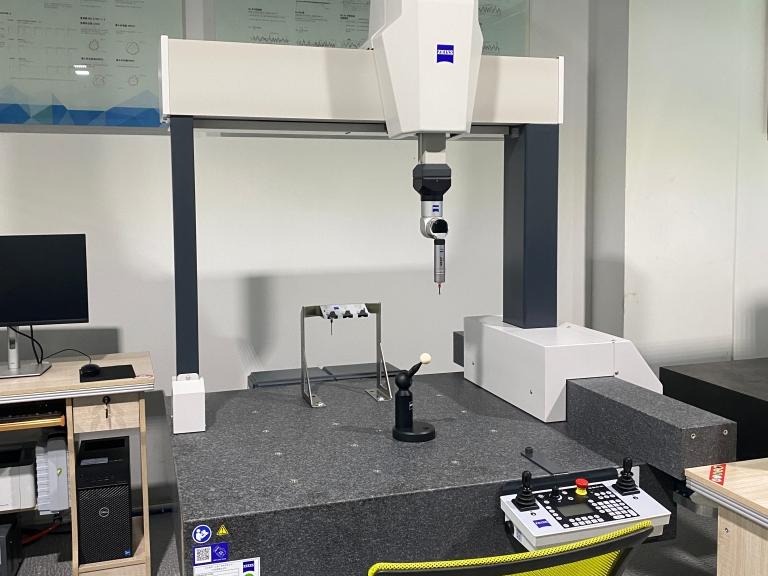
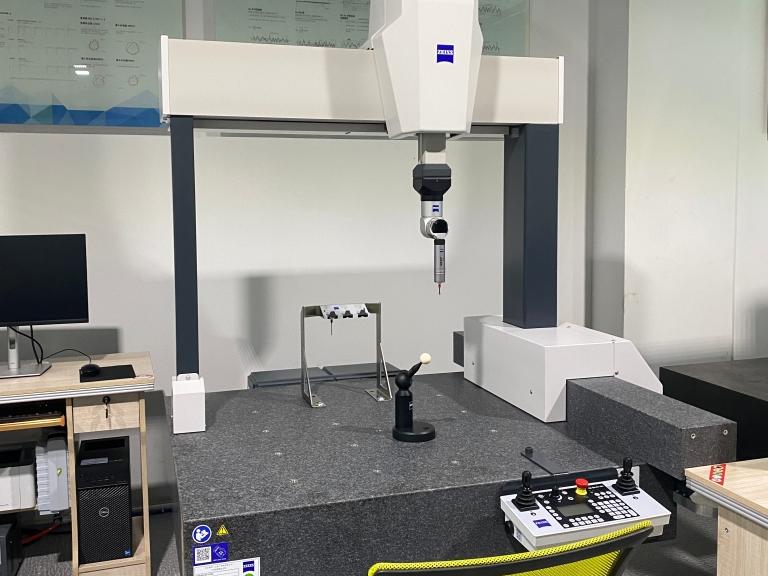
This is where precision five-axis CNC machining becomes transformative. By enabling complete machining of a mount in a single setup, 5-axis technology eliminates the tolerance stack-up from multiple fixturings. Critical relationships between mounting holes, sensor bores, and sealing surfaces can be held within microns. For instance, at GreatLight CNC Machining Factory, the use of high-precision 5-axis machining centers allows the production of interlock mounts with true-position tolerances as tight as ±0.005 mm, directly addressing the needs of automotive Tier 1 suppliers who demand CpK values above 1.33.
To understand how 5-axis machining achieves this level of consistency, you can explore their precision 5-axis CNC machining services capabilities in detail.
3-Axis vs. 4-Axis vs. 5-Axis for Interlock Mounts
| Capability | Typical Tolerances Achievable | Setup Efficiency | Complex Geometry Handling |
|---|---|---|---|
| 3-Axis | ±0.025 mm (with care) | Requires multiple fixtures, high risk of stack-up | Limited to simple planar mounts |
| 4-Axis | ±0.015 mm | One or two setups for cylindrical parts | Good for rotationally symmetric features |
| 5-Axis | ±0.005 mm possible in production | Single setup for all faces | Ideal for compound angles, shaped flanges, and tight true positions |
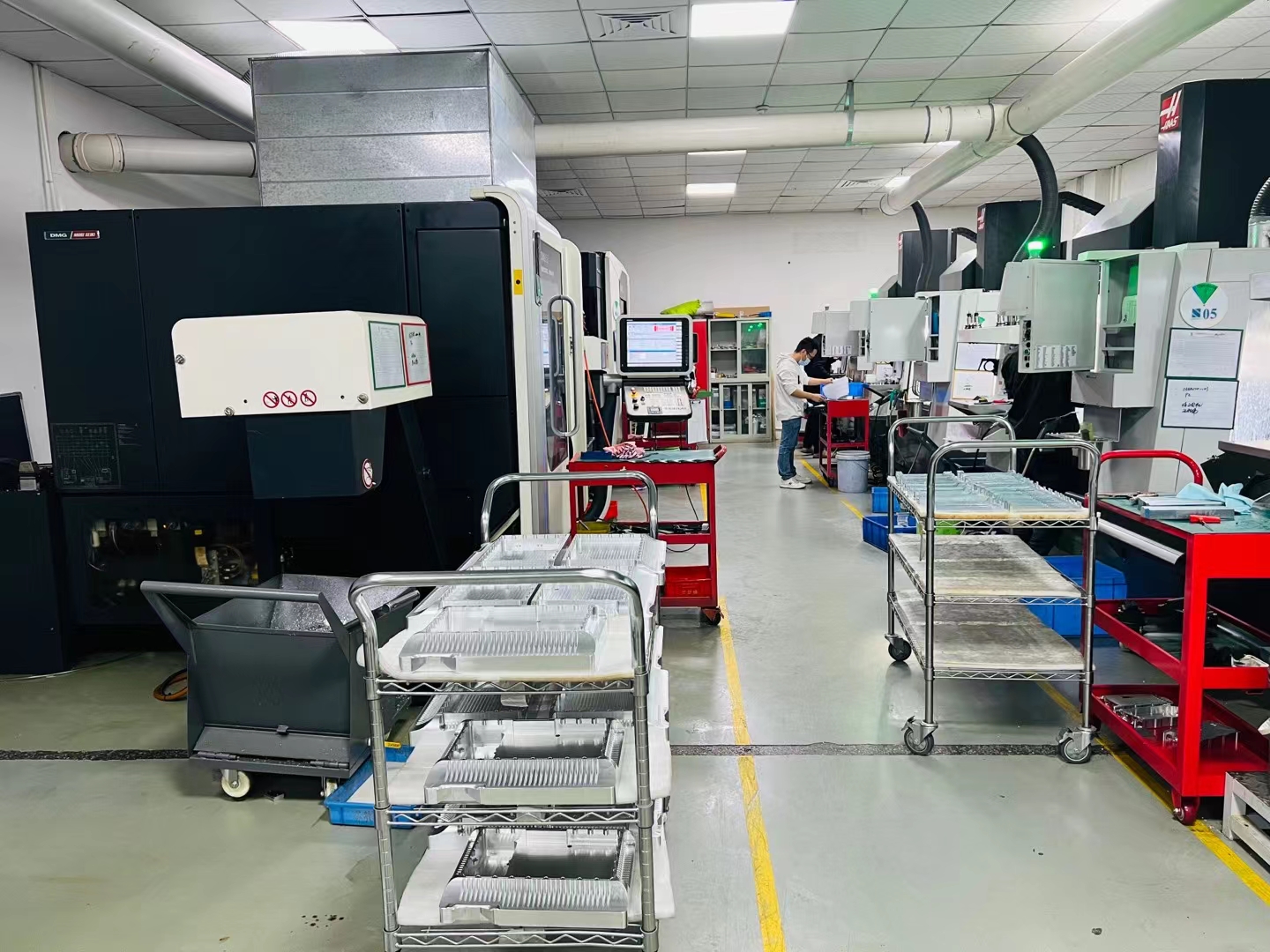
Many shops talk about 5-axis capability, but the devil is in the calibration. The true test is whether they perform regular ballbar tests, maintain thermal compensation on their machines, and use probing cycles to verify part datums mid-process. GreatLight Metal, for example, operates a cluster of brand-name 5-axis centers such as Dema and Beijing Jingdiao, and integrates in-process measurement to ensure every mount matches the CAD data, not just the first article.
Process Control: From Raw Stock to Certified Mount
In high-volume EV production, repeatability is everything. I’ve seen suppliers deliver perfect first articles, only to see dimensional drift over a production run of 5000 parts. Why? Insufficient process control. For EV interlock switch mounts, the machining process must be designed with capability studies, tool life management, and statistical process control (SPC) baked in.
Key process steps for a typical aluminum interlock mount might include:
Material verification – ensuring the aluminum billet meets the required temper and composition specs.
Pre-machining facing and drilling – establishing reference datums on a 3-axis or 4-axis machine.
5-axis finishing – machining all critical features including sensor pockets, O-ring grooves, and mounting flanges in one clamping.
Deburring and edge break – often robotic or using high-pressure coolant to avoid manual variation.
In-process probing – checking critical dimensions before the part leaves the machine.
Post-process CMM inspection – at least on a sampling basis (1 in 10, or more for safety parts) with full dimensional reports.
Surface treatment – anodizing, chem film, or passivation, with masking of sealing surfaces if required.
A manufacturer that skips on in-process probing or relies solely on end-of-line inspection is gambling with your product’s field reliability.
Quality Certifications: The Paper Trail That Actually Matters
For automotive safety components, the quality management system isn’t just about compliance; it’s about traceability. ISO 9001 is the baseline, but for EV interlock mounts, I’d look for IATF 16949 certification. This automotive-specific standard mandates advanced product quality planning (APQP), production part approval processes (PPAP), failure mode and effects analysis (FMEA), and strict control of process changes. If a shop has IATF 16949, you know they can handle the rigor of automotive supply chains.
GreatLight CNC Machining Factory not only holds ISO 9001:2015 but also offers production lines compliant with IATF 16949 for automotive projects. This includes full material and process traceability, which is invaluable when field returns require root cause analysis. They also adhere to ISO 13485 for medical hardware and ISO 27001 for data security, signaling a culture of discipline that translates into consistency on the shop floor.
Comparing Industry Players: Who Can You Trust with EV Interlock Mounts?
The precision machining landscape for EV components is crowded. To objectively help you navigate, let’s compare a few notable providers. Please note that rankings and capabilities are based on publicly available information, and direct comparisons with GreatLight Metal are meant to highlight differing specialization areas, not to dismiss any competitor’s value.
GreatLight Metal – Strengths: deep integration of 5-axis CNC, die casting, sheet metal, and 3D printing under one roof, with IATF 16949 readiness and a full post-processing surface treatment chain. This makes them ideal for clients needing a single-source partner for complex interlock housings that combine machined mounts with cast enclosures or sheet metal brackets.
Xometry – A network-based platform that offers instant quoting and broad process coverage. Suitable for quick-turn prototypes, but may lack the dedicated production line consistency required for serial automotive production.
RapidDirect – Similar to Xometry in offering a network, with good digital experience and fast prototyping. Again, great for early-stage development, but for volume production of safety-critical mounts, a captive factory often provides tighter process control.
Owens Industries – Known for ultra-precision 5-axis machining in medical and aerospace. They likely have the technical capability for mounts, but their specialization doesn’t always extend to integrated die casting or low-cost regional production.
Protolabs Network – Excellent for digital manufacturing and quick-turn prototypes, but volume production and strict IATF 16949 documentation are not their core.
The point is: for an EV interlock mount that sits at the intersection of high precision, high volume, and safety-critical performance, a factory with direct control over its machine tools and a quality system tailored to automotive requirements offers a reliability advantage that platforms may struggle to match.
The Role of Prototyping and Rapid Validation
Before committing to hard tooling or production runs, many EV developers need prototype mounts to verify form, fit, and function. Here, a blend of in-house 3D printing and quick-turn CNC machining accelerates the design cycle. GreatLight Metal’s facility houses SLM 3D printers for metal prototypes (aluminum, stainless steel), SLA and SLS for plastic test parts, and a full array of CNC mills. This means you can get a functional metal prototype of an interlock mount in days, test it on a vehicle, and refine the design before scaling. The prototype process also validates the machining strategy, so the production mounts will mirror the prototype’s performance exactly.
Surface Finishing and Corrosion Protection
An interlock mount often lives in a harsh under-hood environment, exposed to salt spray, moisture, and road chemicals. Post-machining surface treatments are not cosmetic; they are functional. For aluminum, sulfuric acid anodizing (Type II) or hard anodizing (Type III) provides insulation and corrosion resistance. For stainless steel, passivation removes free iron and restores the passive oxide layer. Some designs call for electroless nickel plating to combat galvanic corrosion when mating with dissimilar metals.
A one-stop shop like GreatLight CNC Machining Factory offers these finishing services internally, eliminating the logistical risk and quality variance of shipping parts to multiple vendors. Their in-house capabilities include anodizing, electroplating, powder coating, and painting—all critical for delivering a mount that will survive a 1000-hour salt spray test without blistering.
Data-Driven Manufacturing: The Future of Mount Quality
I’m excited about the integration of Industry 4.0 principles into mount production. Machine monitoring systems that track spindle load and coolant flow, digital twin simulations of tool paths, and cloud-based SPC dashboards are becoming standard at top-tier shops. These tools detect tool wear before it creates a bad part, reduce unplanned downtime, and provide the data to continuously improve process capability. When a supplier can share real-time Cpk data for the bore that locates your interlock sensor, you’re not just buying parts; you’re buying confidence.
Conclusion
EV interlock switch mounts may be small, but their impact on safety and vehicle functionality is enormous. Effective EV Interlock Switch Mounts Machining demands more than just machine tools; it requires a manufacturing system that integrates material expertise, advanced 5-axis processing, rigorous quality controls, and a certification backbone that can withstand the scrutiny of an automotive PPAP submission. Whether you’re an EV startup iterating on a prototype or a Tier 1 supplier moving to serial production, the choice of machining partner directly influences your product’s field reliability.
A partner like GreatLight CNC Machining Factory brings together the right equipment, the right certifications, and a decade of experience solving the toughest metal part challenges—from complex interlock mounts to integrated housings. While platforms offer convenience, a dedicated manufacturer with in-house precision machining, die casting, and finishing often proves the smartest long-term choice when failure isn’t an option. As you evaluate your supply chain, I encourage you to look beyond the quote and inspect the process behind the part. To see how a certified precision partner approaches real-world EV projects, you can follow Great Light‘s latest manufacturing insights on LinkedIn.
Ultimately, the road to zero-defect EV components is paved with process discipline and manufacturing transparency. Choose a partner who treats your interlock mount with the same seriousness as a powertrain component, and you’ll build a vehicle that earns trust—every switch, every time.


![[访谈] RAPID + TCT 2024:人工智能对 3D 打印的价值](https://print-ing.com/wp-content/uploads/2024/07/INTERVIEW-60x60.jpeg "[访谈] RAPID + TCT 2024:人工智能对 3D 打印的价值 9")




发表回复
要发表评论,您必须先登录。