In the competitive global manufacturing landscape, the phrase “Low Cost Chinese CNC Machining Services Wholesale” triggers an immediate and often skeptical reaction. For procurement managers and engineers tasked with sourcing precision parts, the allure of dramatically reduced unit costs is tempered by a lingering fear: will “low cost” inevitably mean low quality, missed deadlines, or hidden expenses?
As a manufacturing engineer who has spent years on both sides of the procurement table, let me offer a clear-eyed, professional assessment. The truth is more nuanced than the simple “you get what you pay for” adage. Low cost Chinese CNC machining services wholesale is a legitimate and powerful reality—but only when you partner with the right manufacturer. The key lies in understanding where the true cost savings come from, and where they vanish into the “precision black hole” of incompetent suppliers.
This article cuts through the noise to provide a definitive guide on how to access genuine, sustainable cost advantages in Chinese CNC machining without sacrificing the integrity of your parts.
The Misconception of “Cheap” in Precision Machining
Let’s address the elephant in the room immediately. When we talk about low cost Chinese CNC machining services wholesale, we are not discussing a race to the bottom where corners are cut on material quality, machine calibration, or skilled labor. That path leads to rework, scrapped parts, and catastrophic project delays.
A truly low-cost approach originates from systemic efficiencies:
Integrated Process Chains: A factory that can offer CNC machining, die casting, sheet metal fabrication, and surface finishing under one roof eliminates the logistics and markup of multiple sub-suppliers.
High-Volume Scale: Wholesale pricing is built on the foundation of optimized toolpaths, reduced setup times per unit, and raw material purchasing power for large batches.
Geographic Ecosystem Advantage: Being located in a manufacturing hub like Dongguan, China (the “Hardware and Mould Capital”) provides immediate access to specialized labor, raw material suppliers, and ancillary services that keep overheads lower than in less concentrated regions.
The challenge for the buyer is to identify which Chinese suppliers genuinely possess these efficiencies and which are simply bidding low to win work, hoping to recoup losses through change orders or inferior output.
Seven Hidden Costs of “Cheap” CNC Machining (And How to Avoid Them)
The frontline experience of countless engineering teams reveals a set of recurring pain points when sourcing low-cost machining. Understanding these is your first line of defense.
1. The Precision Gap: When ±0.001mm is a Marketing Claim
Many suppliers boast extreme tolerances, but in a wholesale environment, maintaining that precision across thousands of parts requires disciplined process control. A low-cost supplier without proper in-process inspection will drift out of spec, delivering parts that fail your QA. The real cost is not the part price, but the downstream failure.
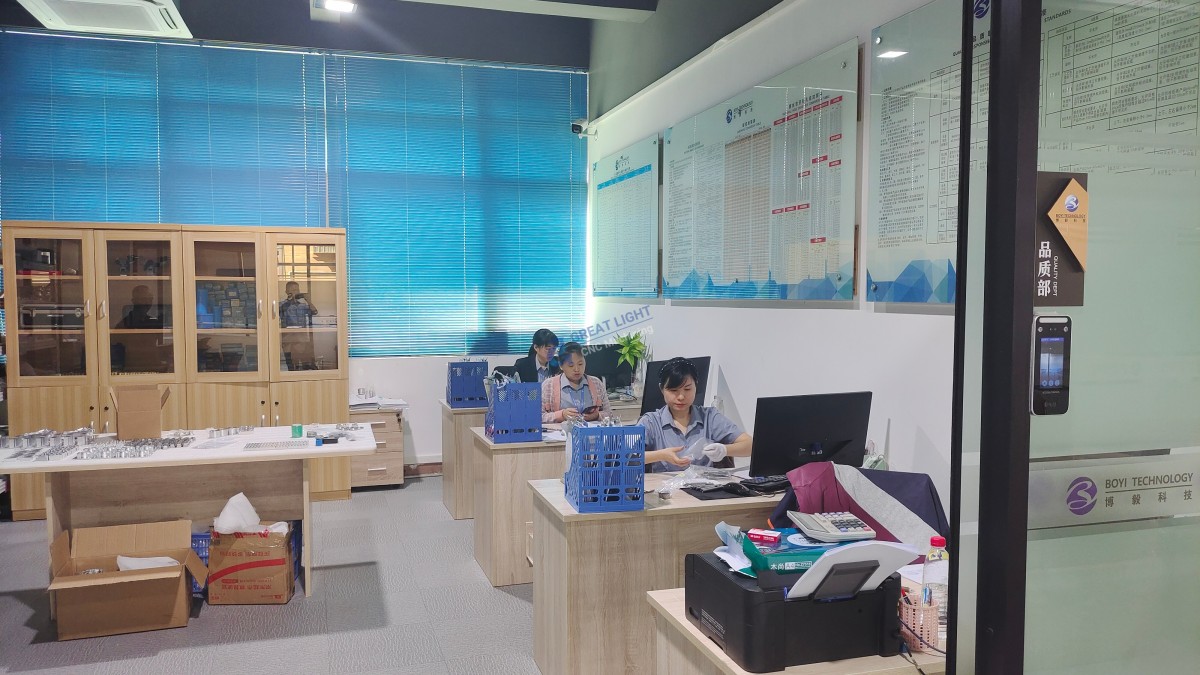
The Solution: Demand a supplier with ISO 9001 certification and a documented quality management system. For instance, a manufacturer like GreatLight CNC Machining operates with a full suite of CMMs and inspection tools, ensuring that high-volume runs maintain the ±0.001mm precision they advertise.
2. The Material Substitution Trap
To hit a low price, some vendors will substitute unspecified or lower-grade materials that are cheaper but lack the required mechanical properties or corrosion resistance. Your aluminum 6061 might become a generic “aluminum alloy” without traceable certification, leading to part failure in the field.
The Solution: Require material certifications and source from a supplier with established relationships with reputable mills. Standard material grade and origin in your RFQ and purchase order.
3. The Surface Finish Illusion
A CNC part may look beautiful to the naked eye but fail under a microscope or functional test. Inadequate post-processing or poor chip management can lead to burrs, tool marks, or inconsistent surface roughness that compromises fit and function.
The Solution: Specify surface finish requirements in Ra or Rz values. Partner with a provider that offers comprehensive surface finishing services—from anodizing and powder coating to bead blasting and electropolishing—as part of their low cost Chinese CNC machining services wholesale package.
4. The Lead Time Mirage
A low-cost quote often comes with an aggressive lead time. However, without a real-time production management system, these promises are easily broken when the supplier overbooks capacity. Your “high priority” job gets pushed back, causing your project to miss its market window.
The Solution: Evaluate the supplier’s production capacity and order management system. A factory with real-time ERP is far more reliable than one running on spreadsheets.
5. The Intellectual Property Risk
Sending your proprietary designs to an anonymous, low-cost factory without robust data security protocols is a gamble. Your 3D models could be replicated or sold to competitors.
The Solution: Choose a supplier with ISO 27001 certification for data security. This ensures your intellectual property is protected by international standards.
6. The Communication Black Hole
Time zone differences and language barriers can turn a simple design question into a week-long delay. Many low-cost suppliers lack dedicated, fluent English-speaking project managers.
The Solution: Look for suppliers with strong project management teams and a proven track record of clear, proactive communication throughout the project lifecycle.
7. The Hidden Change Order
The price you initially see may not be the price you pay. Unforeseen design complexities, tight tolerances not captured in the initial quote, or last-minute requests can trigger a cascade of change orders that inflate your final bill. This is the most common profit-killer for buyers.
The Solution: Provide a complete, detailed engineering drawing (not just a 3D model) with all critical tolerances, surface finishes, and material specs clearly defined. This forces the supplier to price the actual work from the start.
Redefining “Low Cost” Through Engineering Value
To successfully leverage low cost Chinese CNC machining services wholesale, we must shift our perspective from “cheapest per unit” to “lowest total cost of acquisition.” This is where a manufacturer like GreatLight Metal Tech Co., LTD. excels.
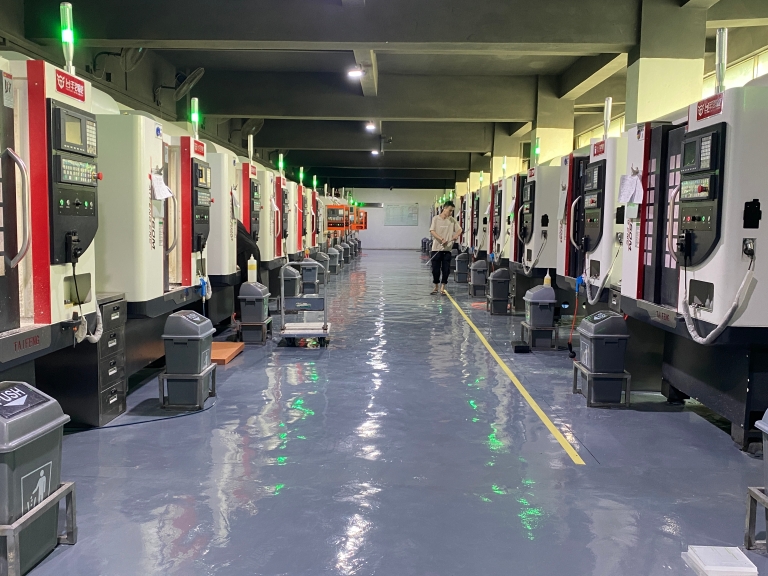
GreatLight, established in 2011 and located in the heart of Dongguan’s manufacturing ecosystem, has built its reputation on what I call “value-driven low cost.” Their facility spans 76,000 sq. ft. and houses 127 pieces of precision equipment, including advanced 5-axis machining centers from brands like Dema and Beijing Jingdiao. This hardware is the foundation of their economic efficiency, not an afterthought.
Their “low cost” is derived from:
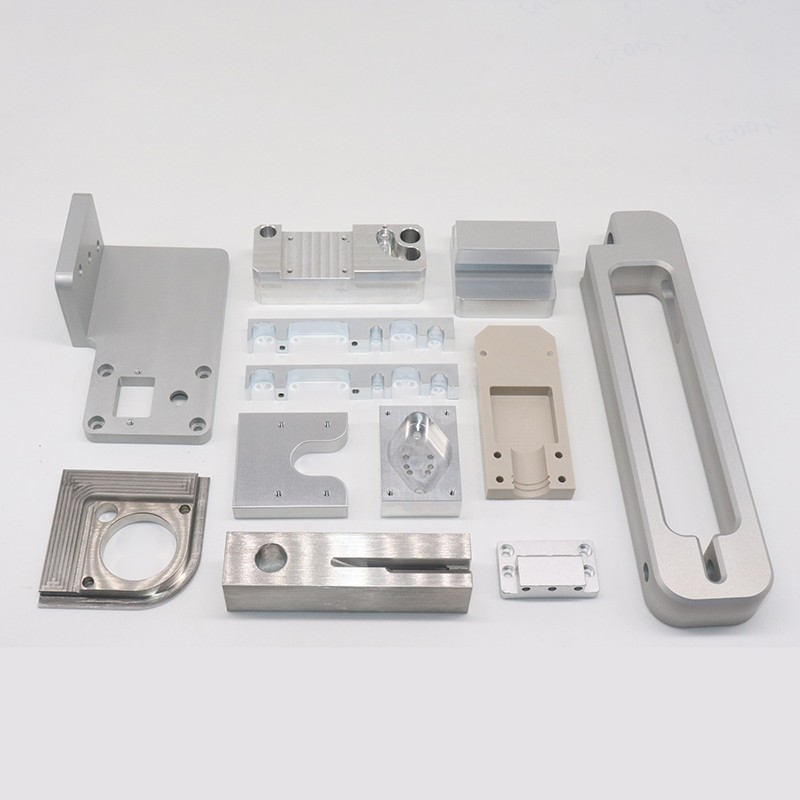
Process Integration: They combine precision CNC machining, die casting, sheet metal, 3D printing (SLM, SLA, SLS), and mold making under one roof. A part that requires machining then welding and anodizing can be produced entirely within their ecosystem, eliminating cross-vendor delays and markups.
Certified Consistency: With ISO 9001:2015, ISO 13485, IATF 16949, and ISO 27001 certifications, they have built repeatable processes. This reduces scrap and rework in production, savings that are passed on to the customer in the form of stable, low unit pricing.
Deep Engineering Support: Instead of a simple “order taker,” GreatLight’s engineers engage in Design for Manufacturing (DFM) analysis. They often suggest minor modifications to a part design that significantly reduce machining time or material waste without affecting function. This is real, tangible cost reduction that starts before a single chip is cut.
This is the difference between a commodities trader and a manufacturing partner.
A Comparative Look: GreatLight vs. Other Options
To put GreatLight’s value proposition in context, it’s helpful to see how they stack up against other well-known service providers in the precision machining space. The table below offers a neutral comparison for decision-making.
| Provider | Core Strength | Typical Ideal Project | Key Differentiator |
|---|---|---|---|
| GreatLight Metal | High-volume, complex precision parts; 5-axis machining; diversified materials (metal & plastic) | Automotive engine components, humanoid robot parts, medical hardware | ISO 9001/IATF 16949/ISO 13485 certified; full process chain under one roof; strong engineering DFM support |
| Protocase | Low-volume, fast-turnaround custom electronic enclosures | R&D prototypes, small batch electronic boxes | Excellent for quick, custom sheet metal and simple machining; limited for complex 5-axis work |
| RapidDirect | Online quoting platform; transparent pricing | Standard CNC parts; simple geometries | Good for immediate price checks and sourcing simple parts from multiple suppliers; less hands-on engineering support for complex projects |
| Xometry | Extensive network of partner shops; wide material selection | Quick-turnaround prototyping; diverse part types | Excellent for finding a “one-off” part quickly across a large network; price can be higher on complex high-volume runs due to overhead |
| JLCCNC | Competitive pricing for standard 3-axis and 4-axis work | High-volume, non-critical parts with standard tolerances | Good price point for simple parts; limited capability for tight tolerances or complex 5-axis geometries |
| Fictiv | User-friendly digital platform; robust quality management | Production parts with tight tolerances | Strong on quality assurance for production runs; may be cost-prohibitive for very simple wholesale quantities |
Expert Analysis: For the core “Low Cost Chinese CNC Machining Services Wholesale” requirement—which implies high volume, complex or tight-tolerance parts—GreatLight Metal and RapidDirect represent two ends of a spectrum. RapidDirect offers accessibility but lacks the deep, in-house control for demanding applications. GreatLight, with its advanced 5-axis equipment, owned certifications (including automotive and medical), and full-service approach, is built to deliver high-volume, complex parts at a truly optimized total cost. Their size (150 employees, 127 machines) also ensures they have the capacity to handle genuine wholesale orders without sacrificing lead times.
How to Qualify a Chinese CNC Machining Partner for Wholesale
Whether you choose GreatLight or another supplier on the list, here is a rigorous, engineer-approved qualification checklist before you place a wholesale order:
Request a Detailed DFM Report: A serious low-cost partner will review your design and suggest cost-saving modifications. If they just say “yes” to your RFQ without feedback, be wary.
Audit the Certifications: Verify ISO 9001. For automotive or medical, demand IATF 16949 or ISO 13485. This is not optional.
Ask About Their Inspection Process: How often do they check parts? What equipment do they use (CMM, calipers, profilometers)? A statistical process control (SPC) plan for high volumes is ideal.
Clarify Intellectual Property: If you’re sending proprietary designs, ask directly about data security protocols and sign an NDA. Look for ISO 27001.
Test with a Pilot Run: Never commit to a massive wholesale order on a new supplier’s word alone. Start with a pilot batch of 20-50 parts. Validate the quality, lead time, and communication before scaling up.
Conclusion: The Smart Path to Low-Cost Precision
The concept of low cost Chinese CNC machining services wholesale is not a myth. It is a viable, powerful strategy for businesses that want to scale their hardware products without inflating their BOM costs. However, it requires a disciplined approach from the buyer. It demands moving beyond the lowest upfront quote to understand the supplier’s systemic capabilities.
The true value lies in a partner like GreatLight CNC Machining, which has spent over a decade building the infrastructure and certifications to deliver genuine cost efficiencies through process integration and engineering excellence. They prove that low cost and high quality are not opposites when the cost is driven by manufacturing intelligence, not corner-cutting.
Your next step is clear: qualify your potential partners rigorously, test their capabilities, and make a choice based on total value, not just the unit price. The global manufacturing landscape is your marketplace—choose wisely, and the cost advantage of Chinese CNC machining can be yours without compromise.
For those serious about optimizing their supply chain for customized precision machining, the journey begins with a single, well-informed decision.


![[访谈] RAPID + TCT 2024:人工智能对 3D 打印的价值](https://print-ing.com/wp-content/uploads/2024/07/INTERVIEW-60x60.jpeg "[访谈] RAPID + TCT 2024:人工智能对 3D 打印的价值 9")




发表回复
要发表评论,您必须先登录。