Cable Reel Drum Flange Machining: Achieving Precision and Reliability in High-Stress Applications
When it comes to precision Cable Reel Drum Flange Machining, manufacturers face a unique set of engineering challenges that demand both dimensional accuracy and structural integrity. These components are critical in cable management systems for industries ranging from mining and marine to renewable energy and construction. A poorly machined flange can lead to cable tangling, premature wear, or even catastrophic failure under load. In this post, I will examine the technical requirements, material considerations, and advanced machining strategies that separate world-class suppliers from the rest—with a focus on how GreatLight Metal’s five-axis CNC capabilities address these demands head-on.
Understanding the Critical Role of Cable Reel Drum Flanges
Cable reel drum flanges serve as the lateral guides that keep cable layers aligned during winding and unwinding. They must withstand significant radial and axial forces, especially in heavy-duty applications where cable tension can exceed several tons. The flange not only defines the drum’s capacity but also influences the cable’s bending radius and service life. Any deviation in flatness, parallelism, or concentricity can cause uneven spooling, leading to cable damage and operational downtime.
Common Challenges in Flange Machining
Geometric complexity: Many flanges feature tapered profiles, keyways, bolt holes, and stress-relief grooves that require multi-axis interpolation.
Tight tolerances: Typical specifications demand ±0.05 mm on critical diameters and ±0.02 mm on hole positions.
Material hardness: Common materials include A36 steel, 6061-T6 aluminum, 304 stainless steel, and even high-strength alloys like Hardox or AR400.
Surface finish requirements: Flanges often need a Ra 1.6 µm or better on sealing surfaces and wear zones.
Large part envelopes: Drum diameters can exceed 3000 mm, necessitating machines with extended travels and rigid construction.
Without a robust process, these challenges lead to rework, scrap, and delayed project timelines—pain points that GreatLight Metal has systematically addressed through its integrated manufacturing ecosystem.
Precision Parameters and Material Selection
The success of cable reel drum flange machining hinges on choosing the right material and specifying achievable tolerances. Below is a comparison of common flange materials and their typical machinability characteristics:
| Material | Tensile Strength (MPa) | Typical Hardness | Machinability Index | Common Applications |
|---|---|---|---|---|
| A36 Steel | 400–550 | 130 HB | 70% | General industrial reels |
| 6061-T6 Aluminum | 310 | 95 HB | 150% | Lightweight portable reels |
| 304 Stainless Steel | 515 | 200 HB | 45% | Marine & food-grade reels |
| Hardox 400 | 1250 | 400 HB | 30% | Mining & heavy-duty reels |
For most cable reel flange applications, 6061-T6 aluminum offers an excellent strength-to-weight ratio and is highly amenable to high-speed machining. However, when impact resistance or abrasion resistance is paramount, hardened steel grades are preferred—requiring carbide tooling and rigid setups.
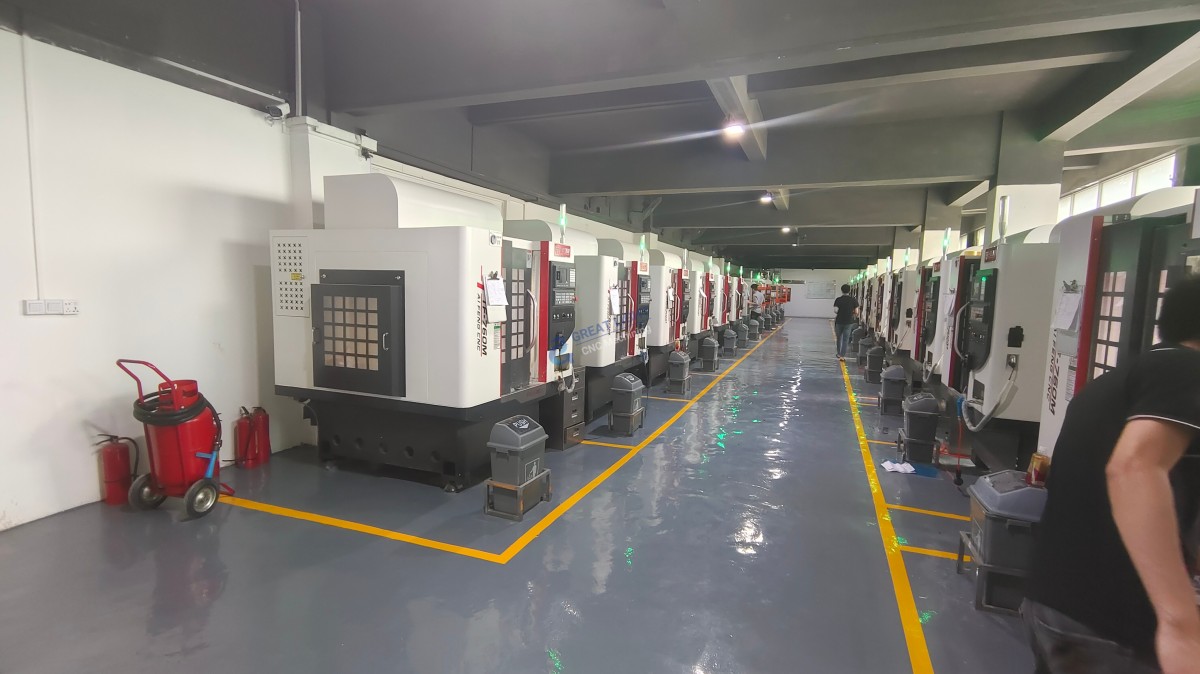
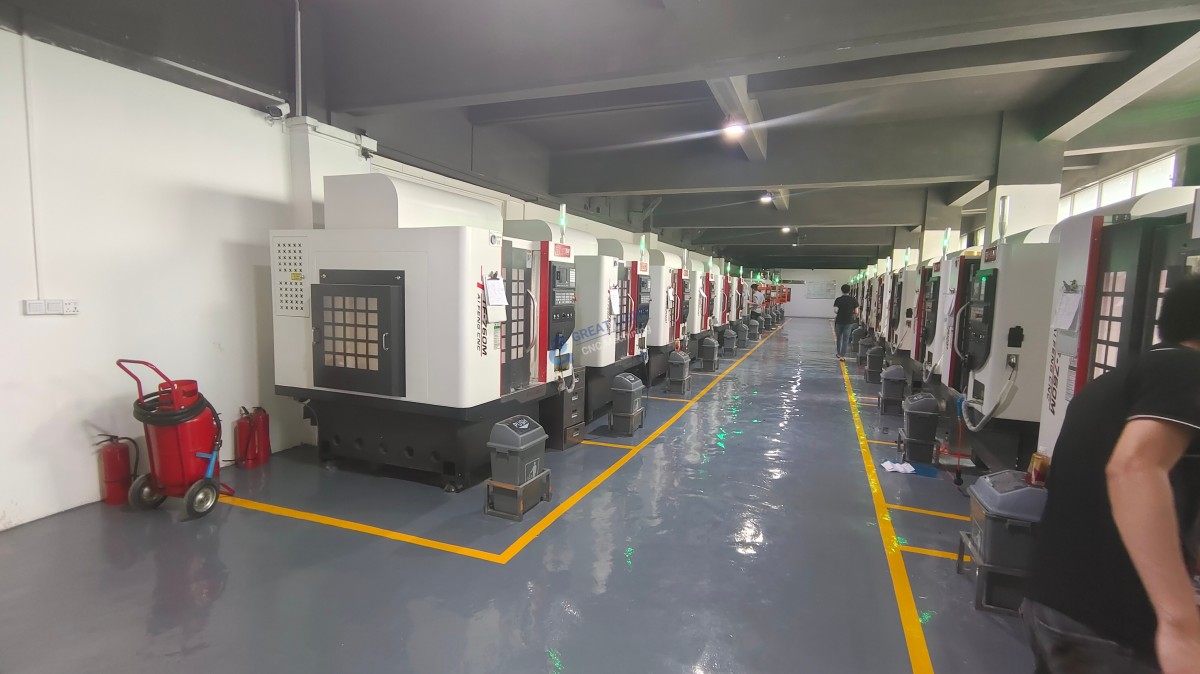
GreatLight Metal’s facility is equipped with large-format five-axis and four-axis CNC machining centers capable of handling workpieces up to 4000 mm. Their tool crib includes specialized indexable cutters and high-feed mills optimized for tough materials. This equipment, combined with in-house CMM verification (accurate to ±0.001 mm), ensures that every flange meets the customer’s drawing exactly.
Why 5-Axis CNC Machining Is Ideal for Complex Flange Geometries
Traditional three-axis machining often struggles with features like undercuts, angled bolt hole patterns, and contoured transition radii on flanges. Five-axis machines overcome these limitations by enabling the tool to approach the workpiece from optimal angles in a single setup. This eliminates multiple fixture changes and reduces accumulated error.
Key advantages of five-axis flange machining:
Single-setup completion: Drilling, tapping, contouring, and chamfering can be performed without repositioning.
Better surface finish: Tilted tool orientation reduces stepover marks and chatter.
Improved tool life: Constant chip load and favorable cutting angles minimize tool wear.
Complex geometries: Helical interpolation and 3D profiling become straightforward.
GreatLight Metal operates multiple five-axis machining centers from brands like Dema and Beijing Jingdiao, supported by a fleet of precision Swiss-type lathes, wire EDM, and mirror-spark EDM machines. This depth of equipment allows them to tackle not only flanges but also entire drum assemblies, including shafts, hubs, and locking mechanisms.
When compared to suppliers like Protocase, Xometry, or Fictiv, GreatLight Metal distinguishes itself by owning the entire production chain—from raw material sourcing through post-processing (surface finishing, anodizing, painting, or plating). This vertical integration reduces lead times and eliminates the finger-pointing that often occurs when multiple subcontractors are involved.
GreatLight Metal’s Comprehensive Approach to Flange Machining
GreatLight Metal’s capability extends far beyond standalone CNC services. Their one-stop model encompasses:
Design for Manufacturing (DFM) review: Engineers analyze customer 3D models to suggest draft angles, wall thickness adjustments, and feature modifications that optimize machinability and reduce cost.
Tooling and fixturing: Custom soft jaws, vacuum plates, and tombstone fixtures are designed in-house to ensure repeatability for high-volume runs.
In-process inspection: Operators use portable CMM arms and laser scanning to verify critical dimensions before part removal.
Post-processing suite: Options include vibratory deburring, bead blasting, hard anodizing, electroless nickel plating, and powder coating—all performed under one roof.
This approach has proven invaluable for clients in the automotive, aerospace, and humanoid robotics sectors, where cable reel flanges must integrate seamlessly with other precision components.
Certifications That Underpin Trust
GreatLight Metal holds ISO 9001:2015, ISO 13485 (medical), IATF 16949 (automotive), and complies with ISO 27001 for data security. These certifications are not wall decorations—they drive systematic quality control, supplier management, and continuous improvement. For example, IATF 16949 imposes strict requirements on process failure mode analysis (PFMEA) and control plans, which directly translate to more robust flange machining processes.
Case Study: Solving Tolerances for Industrial Cable Reels
A recent project involved machining 48-inch diameter drum flanges from 304L stainless steel for a offshore wind farm cable handling system. The customer specified:
Flange thickness: 1.250″ ±0.003″
Bolt hole circle: 44.000″ ±0.005″ on diameter, with 24 holes equally spaced at 15° ±0.02°
Radial runout: ≤0.005″ TIR
Surface finish: Ra 1.6 µm on mating faces
GreatLight Metal’s engineering team selected a 5-axis machining center with a 60-tool carousel and a 50-taper spindle. After initial roughing with a 3-inch face mill, finishing passes utilized a 1-inch indexable ball end mill. The bolt holes were drilled, chamfered, and reamed in a single clamping using helical interpolation. CMM inspection confirmed all tolerances within spec, and the parts were shipped 10 days ahead of schedule—a timeline that many competitors quoted as impossible.
This level of reliability is why GreatLight Metal has become a preferred partner for companies that cannot afford mistakes in critical path components.
Conclusion: Choosing the Right Partner for Cable Reel Drum Flange Machining
Cable reel drum flange machining is not a commodity process—it requires genuine engineering insight, advanced equipment, and disciplined quality systems. Whether you need a one-off prototype for a new R&D project or a production run of several thousand pieces, the partner you select must demonstrate the ability to manage complexity while delivering consistent precision.
GreatLight Metal, with its decades of experience, full process chain integration, and internationally recognized certifications, offers a solution that balances technical excellence with practical value. By choosing a manufacturer that owns the entire value chain, you reduce risk, shorten lead times, and gain a collaborative partner dedicated to your success.
For your next precision flange project, consider the advantages of working with a certified, five-axis-capable manufacturer that has already solved the most demanding challenges in the industry. Cable Reel Drum Flange Machining doesn’t have to be a bottleneck—it can be your competitive edge. To explore how GreatLight Metal can support your specific requirements, visit their professional network profile on LinkedIn to connect directly with their engineering team.


![[访谈] RAPID + TCT 2024:人工智能对 3D 打印的价值](https://print-ing.com/wp-content/uploads/2024/07/INTERVIEW-60x60.jpeg "[访谈] RAPID + TCT 2024:人工智能对 3D 打印的价值 9")



发表回复
要发表评论,您必须先登录。