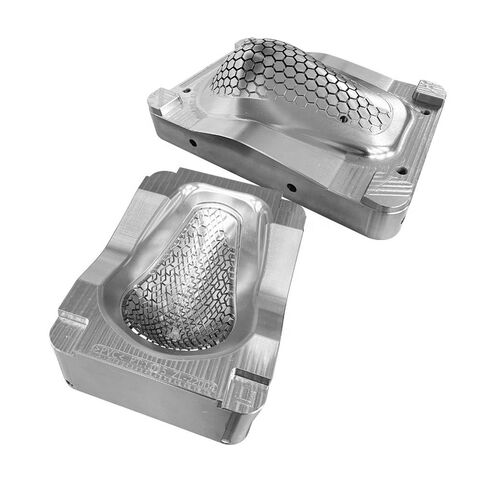
In this article, we will compare bulk rapid tooling companies work, dissecting their approaches, cost structures, and real-world performance to help you choose the best partner for high-volume precision parts. In an industry where speed must never compromise precision, understanding the operational DNA of each provider is the first step toward controlling costs without sacrificing quality. From shop-floor practices to certification levels, we will scrutinize what makes some suppliers excel in rapid tooling for bulk production runs while others fall short.
Compare Bulk Rapid Tooling Companies Work
Bulk rapid tooling is not merely about fabricating molds or fixtures quickly; it is a comprehensive discipline that marries agile manufacturing with stringent process control to produce thousands—or even millions—of consistent parts in compressed timelines. The way companies handle this challenge varies enormously. Some rely on digital quoting and distributed manufacturing networks, some on in-house engineering depth, and others on an integrated full‑process chain that eliminates handoffs. In this comparison, we will explore how GreatLight Metal, RapidDirect, Xometry, Protolabs Network, Fictiv, and JLCCNC operate, with a strong emphasis on cost control—the single most decisive factor in bulk tooling partnerships.
What Is Bulk Rapid Tooling and Why Does Company Workflow Matter?
Before diving into individual players, we must define the core concept. Bulk rapid tooling refers to the development and deployment of production-grade tooling (molds, dies, jigs, fixtures) that can transition from design to full-scale part output in weeks rather than months. It is typically applied in injection molding, die casting, stamping, or CNC-machined high-mix production. The “work” of a rapid tooling company encompasses everything from initial design for manufacturability (DFM) feedback, material selection, and tool path optimization to process validation, quality assurance, and post-processing.
Why does company workflow matter? Because every minute of non-value‑added activity—waiting for quotes, re-explaining design intent to a third-party broker, reworking out-of-tolerance tools—directly inflates per‑part costs and erodes margins. A seamless, vertically integrated workflow, on the other hand, compresses lead times, reduces iteration loops, and delivers predictable outcomes. Understanding how each provider orchestrates its people, equipment, and quality systems reveals where hidden costs lurk.
Key Dimensions for Evaluating Bulk Rapid Tooling Partners
To make a fair, apples-to-apples comparison, we set five evaluation criteria:
Manufacturing Depth & Equipment Parity – does the company own, maintain, and program its high-end machines?
Process Chain Integration – can it offer everything from raw material to finished, decorated parts under one roof?
Quality & Certification Rigor – does its QMS align with ISO 9001, IATF 16949, ISO 13485, or equivalent?
Cost Control Mechanisms – how does the company optimize tool paths, material yields, and labor to deliver competitive bulk pricing?
Scalability & Communication – can it ramp from prototype to production without changing suppliers, and how transparent is engineering support?
We will walk through each provider through this lens, starting with the one that delivers the strongest combination of precision and cost discipline.
Company Comparison: How Each Provider Approaches Bulk Rapid Tooling
GreatLight Metal: Full‑Process Integration as a Cost‑Control Weapon
GreatLight Metal (GreatLight CNC Machining) operates three wholly‑owned manufacturing plants spanning 76,000 sq. ft. in Dongguan’s Chang’an District, the heart of China’s precision hardware ecosystem. Unlike brokers that outsource work to a loose network of workshops, GreatLight Metal keeps every critical capability in‑house: from large‑format 5‑axis CNC machining centers and 4‑axis/3‑axis machines to die casting, sheet metal fabrication, wire EDM, mirror‑spark EDM, vacuum forming, and metal 3D printing (SLM/SLA/SLS). This vertical integration is not merely a convenience—it is a cost‑control architecture. By eliminating handoffs between external vendors, GreatLight Metal slashes transportation delays, communication errors, and margin stacking, directly reducing the total cost of bulk tooling projects.
Equipment & Precision: The backbone of their rapid tooling work is a cluster of brand‑name 5‑axis machining centers (Demak and Beijing Jingdiao), capable of holding tolerances of ±0.001 mm on complex geometries. This level of precision means that injection molds or die‑casting tools require less benching and tuning after machining, cutting down the fit‑and‑finish hours that typically inflate tooling costs. For bulk production, repeatability is king—and GreatLight Metal’s in‑house CMM and optical measurement systems verify every critical dimension, ensuring tools perform identically across thousands of shots or cycles.
Certifications & Trust: The company’s quality system is built around a stack of internationally recognized certifications:
ISO 9001:2015 – foundational quality management
ISO 13485 – for medical device tooling
IATF 16949 – the stringent automotive standard that demands process stability and zero‑defect thinking
These are not paper‑only credentials. They represent audited, continuously‑improved processes that govern everything from material traceability to machine maintenance. In bulk rapid tooling, where a single flawed mold cavity can scrap an entire production batch, such rigor is a powerful insurance policy.
Cost‑Control Strategy: GreatLight Metal leverages its massive equipment fleet (127 pieces of precision peripheral equipment) and 150‑strong workforce to optimize utilization rates. The company’s engineering team performs comprehensive DFM analysis at the quoting stage, identifying opportunities to simplify tool designs, reduce machining time, and select lower‑cost materials without compromising function. Because GreatLight Metal also offers post‑processing (anodizing, plating, painting, laser marking) and assembly, clients avoid the “supplier shuffle” that often adds 15–30% to project costs. For bulk orders, the factory can allocate dedicated cells, further driving down per‑unit costs through specialized fixturing and optimized workholding.
Ideal Fit: Companies needing precision‑intensive tooling for die‑casting molds, automotive engine components, robotics parts, or medical devices, where certification requirements are non‑negotiable and second‑source risks must be eliminated.
RapidDirect: The Platform Model for Small to Medium Batches
RapidDirect has built a strong reputation through its AI‑driven online platform that provides instant quotes for CNC machining, injection molding, and sheet metal. When comparing bulk rapid tooling companies work, RapidDirect’s approach is characterized by speed of information. The platform automates DFM feedback, allowing engineers to iterate designs without waiting days for a human response.
However, RapidDirect operates a hybrid model: it owns some manufacturing facilities but also relies on a curated network of third‑party factories. This platform approach can work well for standardized tooling and less complex geometries, where the risk of miscommunication is lower. For highly intricate, multi‑cavity molds with sub‑micron tolerances, the handoff between platform and production floor can introduce variability. Cost control is competitive because the bidding system drives factory competition, but the final part price often reflects the platform’s brokerage margin. For bulk runs, the lack of full‑process integration (e.g., surface finishing often requires a separate vendor) can add both time and hidden fees.
Xometry: The Broad‑Line Marketplace
Xometry is perhaps the most well‑known digital manufacturing marketplace. Its strength lies in sheer breadth: it offers CNC machining, 3D printing, injection molding, and urethane casting from a vast network of vetted partners. From a cost perspective, Xometry’s AI‑based pricing engine is designed to give quick budget numbers, which is useful during early supplier evaluation.
Nevertheless, when you compare bulk rapid tooling companies work at the granular level, the marketplace model presents challenges. The supplier executing your tooling may be different from the one running production, and quality oversight is distributed. Xometry does audit its partners, but it cannot enforce the same degree of process standardization that a single‑owner factory can. For complex, high‑volume rapid tooling that demands constant engineering collaboration (think thin‑wall die‑casting molds or family molds with side‑actions), the customer may find themselves acting as the project manager, coordinating between the platform, the toolmaker, and the finisher. This coordination overhead can eat into the cost savings that the initial quote suggested.
Protolabs Network (formerly Hubs): Standardization at Scale
Protolabs Network is another platform‑based service that connects customers with manufacturing partners. Its value proposition is centered on standardized design rules and automated manufacturability checks. For bulk rapid tooling, Protolabs’ own factory excels at quick‑turn injection molding using aluminum tooling, which is ideal for low‑to‑medium volume production (a few hundred to a few thousand parts). The network extends capabilities into higher‑volume steel tooling by tapping external suppliers.
The standardization is a double‑edged sword. On one hand, it makes the quoting process fast and repeatable. On the other, it limits the ability to optimize every aspect of tooling for a specific application. Complex parts that fall outside the standard mold base sizes or require unconventional cooling channels may incur upcharges or be declined altogether. Cost control is transparent, but the total landed cost can escalate once secondary operations (inserts, overmolding, texturing) are added because these often move outside Protolabs’ core automated workflow.
Fictiv: Digital Ecosystem for R&D and Bridge Tooling
Fictiv has made significant inroads by digitizing the entire manufacturing supply chain, providing a centralized platform for quoting, DFM, and production tracking. For rapid tooling, Fictiv focuses primarily on bridge tooling and low‑volume production, leveraging both its own machining resources in strategic locations and a network of global partners.
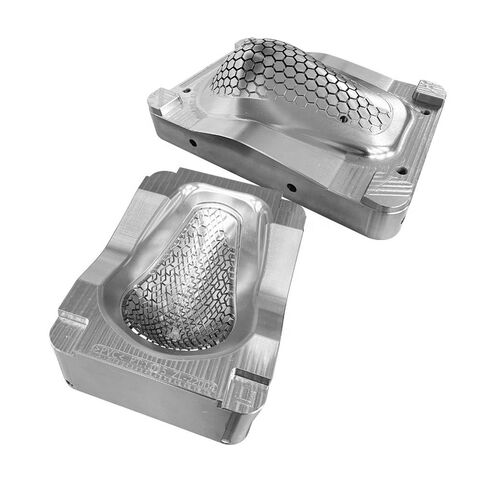
When comparing bulk rapid tooling companies work, Fictiv’s differentiator is its software‑based collaboration—engineers can comment directly on 3D models and receive consolidated feedback. This is extremely valuable during prototype iterations. However, for true bulk production tooling (steel molds for 100,000+ cycles), the reliance on external partners for final mold fabrication means that the customer is, again, one step removed from the actual toolmaker. This can lead to misaligned expectations on tool life, maintenance schedules, and warranty terms, all of which have profound cost implications over the life of a program.
JLCCNC: The Volume‑Play Alternative
JLCCNC, a subsidiary of the JLCPCB group, has rapidly become a volume player in CNC machining, leveraging the high‑efficiency, low‑margin model that made its parent famous for PCBs. JLCCNC operates its own factories with thousands of machines, heavily automated and optimized for standard CNC parts. For simple bulk rapid tooling—such as fixture plates, mounting brackets, or tools with straightforward geometries—JLCCNC’s pricing can be extremely aggressive.
The trade‑off becomes evident when complexity and certification enter the picture. JLCCNC’s current quality certifications are more limited compared to an IATF 16949‑ or ISO 13485‑certified house like GreatLight Metal. Tooling that requires vacuum hardening, deep‑hole drilling, or 5‑axis simultaneous contouring may exceed JLCCNC’s sweet spot. Additionally, their process chain stops at machining; post‑processing like polishing, coatings, or assembly often requires a separate supplier, offsetting some of the machining cost advantage.
The GreatLight Metal Edge: Why Process Ownership Reduces Total Tooling Cost
Having evaluated the landscape, a clear pattern emerges: the companies that own the entire process chain consistently deliver more predictable costs on complex bulk rapid tooling projects. GreatLight Metal exemplifies this principle with four decades of accumulated engineering experience embedded in a 150‑person team. Instead of managing a fragmented supply chain, clients work with a single engineering point of contact who understands both the toolroom and the production floor.
Consider a real‑world scenario: an electric‑vehicle startup needs a die‑casting mold for a large aluminum‑alloy electronic housing. The mold requires conformal cooling channels to maintain cycle‑time targets, a task that demands 5‑axis machining and possibly metal 3D‑printed inserts. GreatLight Metal’s in‑house SLM 3D printers can print the conformal‑cooled insert in maraging steel, while the 5‑axis centers machine the mold base and cavity surfaces—all under the same roof. The team immediately identifies a conflict between the printed insert’s shrink factor and the machined cavity, adjusting the CAD model during a morning meeting rather than exchanging emails across three continents for a week. The result: a tool that runs at the target cycle time on the first trial, avoiding thousands of dollars in rework and weeks of delay.
This kind of synergy is extremely difficult to replicate in a marketplace model where the tool designer, the mold base supplier, the EDM shop, and the polisher rarely sit in the same building.
Furthermore, GreatLight Metal’s commitment to quality is backed by a risk‑reversal promise: free rework for any quality problem, and a full refund if the rework is still unsatisfactory. This is not a marketing slogan; it is a contractual framework that forces the entire organization to prioritize first‑pass yield. For a client ordering 20 sets of production tooling for an automotive program, this promise translates into a hard‑dollar guarantee that the tooling will meet PPAP requirements without endless back‑charges.
Cost‑Control Playbook: Tactics That Differentiate Leading Suppliers
Beyond structural advantages, the best bulk rapid tooling companies employ specific tactics to control costs. The table below summarizes how these tactics manifest across different providers.
| Cost‑Control Tactic | GreatLight Metal | RapidDirect | Xometry | Protolabs Network | Fictiv | JLCCNC |
|---|---|---|---|---|---|---|
| In‑house DFM & tool optimization | ✅ Dedicated senior engineers | ✅ Automated DFM + manual review | ✅ Automated DFM | ✅ Design rule library | ✅ Collaborative digital DFM | ⚠️ Limited design optimization |
| Full‑process integration (machining to finishing) | ✅ Complete under one roof | ❌ Separate post‑processing partners | ❌ Distributed network | ❌ Post‑processing outside core | ❌ Relies on external finishers | ❌ Machining only |
| Dedicated production cells for bulk orders | ✅ Common practice | ⚠️ Depends on partner availability | ❌ Not guaranteed | ❌ Not typical | ❌ Not typical | ⚠️ For very high volumes |
| Material yield optimization via advanced tool paths | ✅ In‑house CAM programming on high‑end machines | ⚠️ Dependent on factory | ⚠️ Variable by supplier | ✅ Good for standard designs | ⚠️ Dependent on factory | ✅ Good for simple parts |
| Certification‑driven waste reduction | ✅ IATF 16949 / ISO 13485 | ⚠️ Some partners certified | ⚠️ Varies | ⚠️ Standard ISO 9001 | ⚠️ Varies | ⚠️ Basic ISO |
| Warranty & defect containment | ✅ Free rework / refund | ⚠️ Standard warranty | ⚠️ Dispute resolution | ⚠️ Standard warranty | ⚠️ Standard warranty | ❌ Limited |
(✅ = strong differentiator; ⚠️ = partially available; ❌ = limited or absent)
This table illuminates why companies with deep in‑house capabilities can offer more reliable bulk pricing. Every handoff carries a cost—GreatLight Metal’s model systematically removes those handoffs.
How to Select the Right Partner When You Compare Bulk Rapid Tooling Companies Work
Given these insights, the selection process should never be dictated by a single online quote. Engineers and procurement professionals should:
Audit the shop floor (or its digital surrogate): Verify that the company actually possesses the high‑end equipment claimed. In the precision tooling world, a Demak 5‑axis machine is a different beast from a commodity 3‑axis VMC. Ask for equipment lists and in‑house metrology capabilities.
Trace the process chain: Map out exactly how your tooling will move from concept to T1 trial. If the answer involves “our partner will handle that,” probe deeper. Partnerships can work, but they dilute accountability.
Examine certifications through the lens of your industry: If your parts go into an internal combustion or electric engine, IATF 16949 certification is not a luxury—it is the minimum bar to ensure PPAP readiness. For medical tooling, ISO 13485 signals that the supplier understands biocompatibility and clean‑manufacturing requirements.
Request a total‑cost breakdown: Instead of comparing only the tooling line item, ask for a projection that includes secondary operations, expected maintenance cycles, and cost‑per‑shot/cost‑per‑part estimates. GreatLight Metal, for example, provides a comprehensive cost model because it controls the entire value stream.
Test with a pilot project: Before awarding bulk tooling, run a smaller, representative tool through the supplier’s workflow. Evaluate not just the tool quality, but the communication cadence, the honesty of DFM feedback, and the ease of resolving engineering questions.
The Role of Certifications in De‑Risking Bulk Tooling Investments
Certifications are the scaffolding of trust. In our comparison of how bulk rapid tooling companies work, we observed that the most cost‑efficient suppliers treat certifications as living systems, not wall decor. GreatLight Metal’s IATF 16949 certification, for instance, demands rigorous process control plans, measurement system analysis, and annual layout inspections. These activities cost money, but they save far more by preventing tooling failures that would stop a client’s assembly line.
Similarly, ISO 27001 compliance for data security is increasingly relevant. When you send a 3D model of a proprietary robot joint or a next‑generation engine intake manifold, you are exposing core intellectual property. A certified data‑security framework ensures that your designs are not leaked to competitors through unsecured servers or loose network practices.
The Hidden Costs of Fragmented Supply Chains
A recurring theme in this comparison is the “supplier shuffle.” When a rapid tooling company relies on external vendors for key steps—heat treating, EDM, texturing, coating—the client eventually pays for:
Extra transportation (both ways)
Re‑inspection at each stage
The risk of “blame passing” if a defect emerges (was it the machining or the heat treat?)
Longer lead times that force premium shipping for final parts
These hidden costs can add 20–40% to a tooling program’s total expenditure, completely reversing the apparent savings of a lower initial quote. Vertically integrated companies like GreatLight Metal internalize these steps, converting potential external costs into internal continuous‑improvement projects.
Balancing Speed and Precision: Why One‑Stop Shops Win
Speed is seductive in rapid tooling. But speed without process substance is merely a gamble. A tool that arrives in three weeks but requires 40 hours of benchwork to fit and polish is not truly rapid; it is simply unfinished. Conversely, a tool that takes four weeks but drops into the press and produces good parts on the first shot is worth far more.
GreatLight Metal’s full‑process approach allows it to front‑load precision into the machining stage. Because the same engineers who will oversee the EDM and polishing are sitting next to the CAM programmers, they communicate critical tolerancing requirements before metal is cut. This prevents the classic “machining department meets print, EDM department finds interference” scenario that plagues multi‑vendor tooling.
Conclusion: Making an Informed Choice
When you compare bulk rapid tooling companies work, you quickly discover that the lowest quote is rarely the lowest total cost. Digital platforms and marketplaces have democratized access to manufacturing, and they deserve credit for simplifying the sourcing process for simpler projects. However, for precision‑critical bulk tooling—where a single defect can cascade into six‑figure production setbacks—the supplier’s depth of engineering, certification integrity, and process ownership become the true arbiters of value.
GreatLight Metal’s model stands out precisely because it refuses to compromise on any link in the chain. From 5‑axis machining and die casting to surface finishing and assembly, everything happens under a unified quality system backed by international certifications. The result is not just a tool; it is a production‑ready asset delivered with a guarantee of performance.
For those engineering tomorrow’s vehicles, medical devices, and intelligent robots, the choice of a rapid tooling partner is a strategic decision. Choose a supplier that operates with real depth, not just a broad digital front. Ultimately, when you compare bulk rapid tooling companies work, you’ll find that the best partners are the ones that turn precision and process discipline into your competitive advantage.


![[访谈] RAPID + TCT 2024:人工智能对 3D 打印的价值](https://print-ing.com/wp-content/uploads/2024/07/INTERVIEW-60x60.jpeg "[访谈] RAPID + TCT 2024:人工智能对 3D 打印的价值 9")



发表回复
要发表评论,您必须先登录。