
As a senior manufacturing engineer, I have seen firsthand how the Electric Vehicle HVIL Loop Bracket has quietly evolved from a simple bent metal tab into a safety-critical multi‑material assembly. In a high‑voltage EV architecture, a single loose connector or a hairline crack across an interlock housing can trigger a drivetrain shutdown or – worse – an arc‑flash event. This article answers the most pressing design, material, process and supplier‑selection questions that product developers and procurement teams face when sourcing HVIL brackets, and explains why a vertically‑integrated partner like GreatLight CNC Machining often delivers a lower total‑cost‑of‑reliability.
What is an Electric Vehicle HVIL Loop Bracket?
At its simplest, a High‑Voltage Interlock Loop (HVIL) is a low‑voltage monitoring circuit that snakes through every high‑voltage connector, manual service disconnect, busbar access cover and battery‑pack enclosure. The Electric Vehicle HVIL Loop Bracket is the physical carrier that holds the connectors, micro‑switches, wiring‑harness clips and often the busbar itself in a fixed, electrically‑isolated position. If the loop breaks – because a connector is not fully mated, a cover is removed or a bracket cracks under vibration – the battery management system commands the contactors to open within milliseconds, rendering the system touch‑safe.
From a manufacturing perspective, three functional demands collide inside this one bracket:
Mechanical precision – mounting holes must align to ±0.05 mm so that high‑voltage connectors engage without side‑load that damages seal rings.
Electrical isolation – the bracket often sits between live busbars and the chassis, requiring a minimum creepage distance per IEC 60664‑1 and, in many cases, a deliberately applied insulating coating.
Environmental robustness – under‑hood or pack‑internal temperatures can cycle from -40 °C to +125 °C, with continuous vibration above 3 g; any plastic‑to‑metal interface must not lose pre‑load over the vehicle’s 15‑year life.
These requirements make the HVIL bracket a classic case where “just send the STEP file and get a quote” fails if the supplier does not understand automotive qualification logic.
What Are the Key Design and Material Challenges?
When an OEM or Tier‑1 sends us a concept for a new Electric Vehicle HVIL Loop Bracket, the conversation almost always circles back to four pain points:
Material selection for electrical and thermal creep
Aluminum 6061‑T6 with hard anodizing is common for structural brackets that double as heatsinks. But the anodized layer must be defect‑free; a single pinhole can create a conductive path.
Glass‑filled PEEK or PA66 is chosen for isolation, but moisture absorption changes dimensions. We routinely bake Nylon blanks before machining to stabilise them, then apply a hydrophobic conformal coating.
Copper busbar inserts are often over‑molded or pressed into the bracket. The linear expansion difference between copper (17 ppm/°C) and aluminum (23 ppm/°C) must be handled with compliant spring contacts or elastomer‑filled grooves.
Tight tolerance stack‑up across multiple fastening points
A typical bracket has four to six M6/M8 clearance holes that mate with the battery tray or the power electronics housing. If the hole pattern floats by more than 0.2 mm, connector insertion forces will be uneven and the interlock signal may chatter. We insist on a full GD&T analysis with a datum scheme that measures the connector‑interface surfaces as the primary datum, not the bracket base.
Vibration fatigue at mounting ears
FEA simulations often predict infinite life when material properties are ideal, but casting porosity or a rough‑machined radius can halve the actual fatigue strength. That is why we combine die‑cast blanks with CNC‑finish of every load‑bearing rib and fillet, then validate via swept‑sine testing on a shaker table.
Post‑processing for arc‑flash safety
Even a 400 V system needs a creepage clearance of ≥3 mm on bare metal. After machining, we often apply a powder‑coat or a Parylene‑N conformal layer that is laser‑marked to show where the coating ends, so that assembly operators never scratch the isolation unintentionally.
These challenges are not insurmountable, but they demand a manufacturing partner that can execute the entire process – raw material conditioning, multi‑axis machining, surface treatment and final dimensional verification – under one roof. That is where vertically‑integrated capability moves from a “nice‑to‑have” to a cost‑per‑defect decision.
Which Machining Technologies Are Best Suited for HVIL Brackets?
There is no single “best” process; the optimal route depends on volume, geometry complexity and material. The table below summarises the mainstream options, all of which GreatLight CNC Machining deploys regularly on Electric Vehicle HVIL Loop Bracket programmes.
| Technology | Typical application on HVIL brackets | Strengths | Considerations |
|---|---|---|---|
| 3‑axis CNC milling | Flat aluminium plates with drilled/tapped holes, simple connector blocks | Highly accurate, fast to set up, ideal for prototypes and low‑volume | Cannot create undercuts or angled pockets without refixturing |
| 4‑axis CNC milling | Brackets with peripheral features such as snap‑fit grooves or lateral cable‑tie slots | One additional axis eliminates two setups, improves positional accuracy across angled faces | Still limited to one rotational axis; complex compound angles need a trunnion |
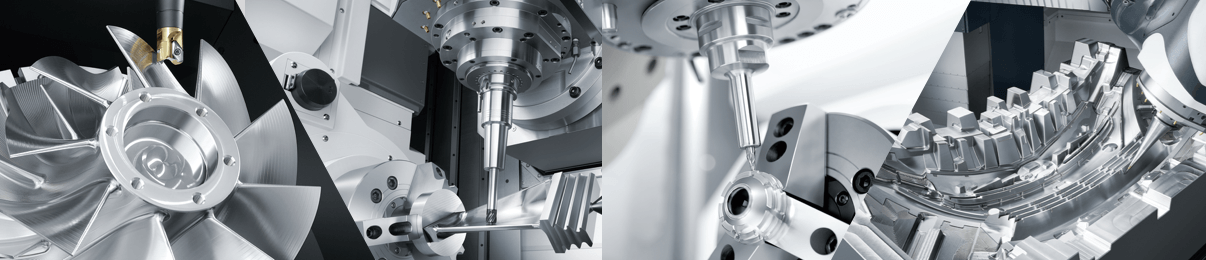
| 5‑axis CNC machining | Busbar‑holder brackets that combine horizontal and vertical connector mounting pads with angled stiffening ribs | Single‑setup machining of all datum surfaces; ±0.01 mm true‑position capability on modern DMG MORI or Jingdiao machines | Higher machine‑hour rate, but the total part cost often falls because of reduced labour and scrap |
| Die casting + CNC finish | High‑volume aluminium brackets with intricate ribbing for vibration stiffness | Near‑net shape reduces material waste; secondary CNC guarantees critical tolerances | Require audited foundry process to avoid internal porosity in load‑bearing lugs |
| Sheet metal bending + insert pressing | Simple L‑ or U‑shaped steel brackets with clinch nuts or PEM studs for HVIL wiring harness clips | Very low piece‑part price at scale; excellent electrical conductivity for grounding variants | Limited to constant‑thickness sections; difficult to integrate isolation bosses |
| 3D printing (SLM/SLS) | Prototype PEEK brackets or topology‑optimised aluminium brackets for low‑volume power‑distribution modules | Unlimited geometric freedom, weight reduction of 30‑50%, fast iteration | Surface finish and fatigue life must be validated; still cost‑prohibitive at volumes >200 per year |
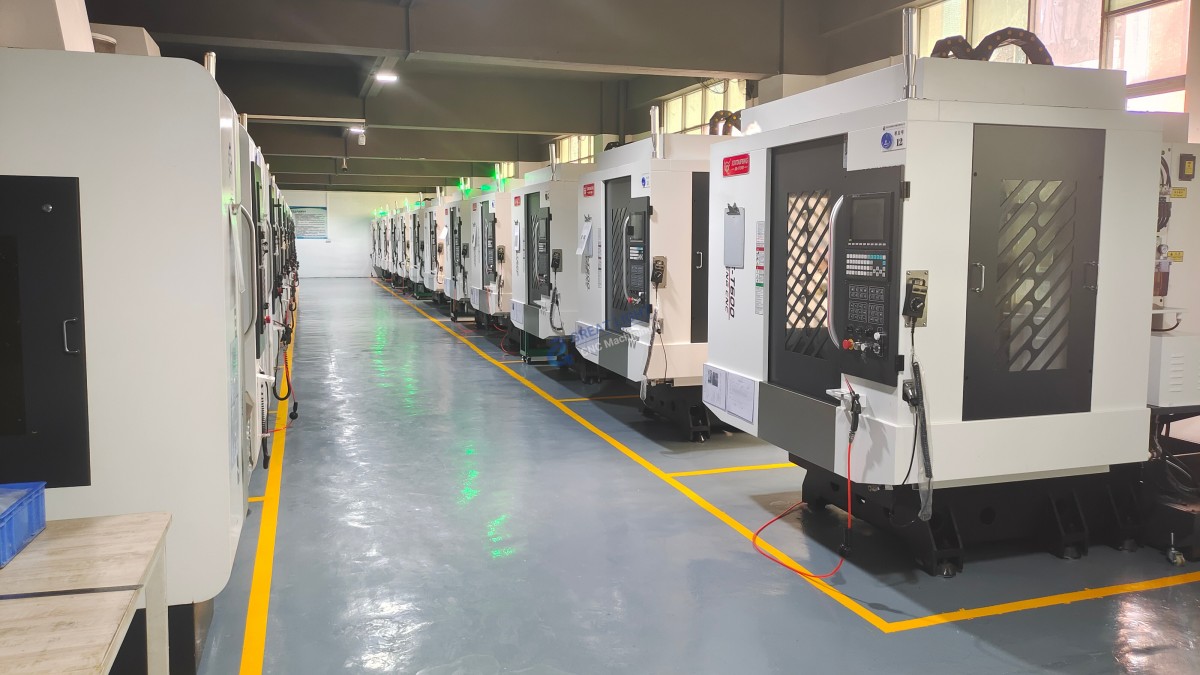
In our experience, when a bracket has more than two connector orientations or incorporates a busbar‑capture feature that must be precisely angled, 5‑axis CNC machining is the clear winner. GreatLight’s floor includes large‑format 5‑axis centres that can machine a complete battery‑tray‑mounted bracket – up to 4000 mm long – in one clamping, ensuring the interlock mounting points and the high‑voltage connector bosses are perfectly coaxial.
What Quality Standards and Certifications Should a Machining Partner Possess?
An Electric Vehicle HVIL Loop Bracket sits at the intersection of functional safety (ISO 26262), electrical safety (IEC 60664) and automotive quality management. Therefore, the minimum credible baseline is an IATF 16949‑certified quality management system. This standard explicitly addresses defect prevention, risk analysis (PFMEA) and supply‑chain traceability that generic ISO 9001 shops often overlook.
Beyond the certificate on the wall, a competent partner should demonstrate:
ISO 9001:2015 – foundational quality discipline, but insufficient alone for automotive production parts.
IATF 16949 – the global standard for series and service parts in the automotive sector. It compels the supplier to run a layered process audit, control plan with statistical process monitoring, and full material‑lot traceability back to the mill heat number.
ISO 13485 – although medical‑oriented, this certification proves the shop can manage validation protocols and maintain a clean build environment, which matters when coating HVIL brackets with pinhole‑free isolation layers.
ISO 27001 data security – vital when the bracket design is part of an un‑released powertrain and the OEM needs NDAs backed by audited IT controls.
In‑house CMM and vision measurement – because a supplier that subcontracts inspection adds delay and risk. GreatLight’s laboratory includes bridge‑type CMMs, laser scanners and RoHS‑compliant XRF analysers, all calibrated to NIST‑traceable standards.
Importantly, a bracket that functions as an insulator must undergo high‑pot testing at 2× line voltage + 1000 V for one minute, per EN 60664‑1. The partner must be willing to test every part, not just a sample, and share the data with you. This is a service we embed in the final inspection flow; the test fixture is designed and validated during the pre‑production build.
How to Choose the Right Manufacturing Partner for an EV HVIL Loop Bracket?
After visiting and auditing dozens of machine shops across Asia, North America and Europe, I have distilled the evaluation process into a five‑layer decision matrix. When I compare GreatLight Metal against other well‑known players – Protocase, EPRO‑MFG, Owens Industries, RapidDirect, Xometry, Fictiv, RCO Engineering, PartsBadger, Protolabs Network, JLCCNC and SendCutSend – the differentiators become stark.
| Criteria | GreatLight Metal | Typical network‑based platform (e.g., Xometry, Fictiv) | Regional high‑mix shop (e.g., Protocase, PartsBadger) |
|---|---|---|---|
| Automotive system certification | IATF 16949 + ISO 9001 + ISO 13485 | Usually ISO 9001 only; rarely IATF | ISO 9001, sometimes AS9100 |
| In‑house 5‑axis capacity | 12+ large‑format five‑axis machines (single‑setup up to 4000 mm) | Distributed network; no guaranteed single‑setup envelope | Small to mid‑size; limited to 3‑ and 4‑axis |
| Full process chain | CNC + die casting + sheet metal + 3D printing + in‑house anodising/powder coat/painting | Brokered; each process a different vendor, unpredictable lead time | Usually CNC only; surface treatment outsourced |
| HVIL‑specific experience | Regularly ships HVIL brackets for busbar systems and battery packs | Generalist; may not have design‑for‑interlock knowledge | Occasional prototype; low batch competence |
| Metrology & traceability | Laser‑tracked CMM, high‑pot testing in‑line, full PPAP Level 3 submission | Basic inspection report; limited PPAP capability | Good for dimensional but rarely electrical safety testing |
| IP protection | ISO 27001‑certified network, segregated server rooms, employee NDAs | Standard IT policy; shared platform with many users | Adequate NDA, but limited digital security certifications |
| Cost model at 500–5,000 units/year | Competitive because internal process integration eliminates markup from three external vendors | Platform fees + single‑source supplier margins can be higher than expected | Competitive on simple 3‑axis parts, but expensive when secondary ops needed |
A real script: I once worked with a Tier‑1 that had been using a local sheet‑metal shop for a simple HVIL cover bracket. The shop delivered good parts for two years until a connector change forced the addition of a 15‑degree angled pad. Suddenly, bending and welding could not hold the ±0.1 mm true position. The Tier‑1 moved the part to GreatLight, who machined the entire bracket from 6061‑T6 on a 5‑axis trunnion, held ±0.05 mm on the angled pad, and added a chromate conversion coating for corrosion resistance – all within the same 10‑day lead time. The unit price increased by 12%, but the scrap rate dropped from 3.5% to <0.1%, more than recouping the piece‑price difference.
That is the type of trade‑off an engineer appreciates: total cost of ownership trumps raw part quote.
So, when you are shortlisting suppliers, ask these three questions:
“Will you run a fully‑documented PFMEA on my bracket design before cutting metal?”
“Can you show me a production‑part‑approval‑process (PPAP) package for a similar HVIL component?”
“Do you own the die‑casting, CNC and surface‑finish processes, or do you outsource?”
If the answer to all three is “yes” and the supplier can back it with IATF 16949 evidence, you have found a partner that treats your Electric Vehicle HVIL Loop Bracket not as a one‑off project but as a safety‑system component. That is the standard GreatLight CNC Machining has deliberately built its facility and team around, and it is why a growing number of global EV programmes trust them with their interlock hardware.
In summary, from concept validation through to series production, every dimension, every insulator and every high‑pot test report reflects a single engineering truth: the reliability of an electric vehicle begins with the integrity of its Electric Vehicle HVIL Loop Bracket.


![[访谈] RAPID + TCT 2024:人工智能对 3D 打印的价值](https://print-ing.com/wp-content/uploads/2024/07/INTERVIEW-60x60.jpeg "[访谈] RAPID + TCT 2024:人工智能对 3D 打印的价值 9")



发表回复
要发表评论,您必须先登录。