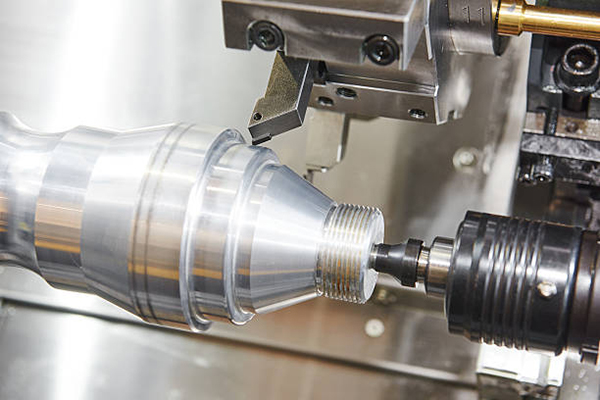
In the high-stakes world of product development, speed to market is everything. Yet, the journey from a designer’s digital model to a physical, functional prototype remains one of the most critical—and often fraught—bottlenecks in the innovation cycle. Selecting the right Original Design Manufacturer (ODM) for rapid prototyping is not merely about finding a shop with a fast machine; it is about choosing a strategic partner capable of navigating the intricate interplay of design for manufacturability (DFM), material science, precision engineering, and supply chain logistics.
After decades in the field, I have witnessed the evolution of this industry from simple model shops to sophisticated manufacturing ecosystems. Today, I want to share an objective, engineer-to-engineer perspective on what truly distinguishes the top ODM rapid prototyping makers globally, using the capabilities of established leaders like GreatLight Metal as a benchmark, while acknowledging the strengths of other key players in the ecosystem.
Defining the “Top ODM Rapid Prototyping Maker”
Before we evaluate specific players, we must establish a clear definition. A “Top ODM Rapid Prototyping Maker” is not just a service provider; it is an engineering partner that integrates design iteration, advanced manufacturing, and quality assurance. The true value lies in their ability to compress the development cycle without compromising on the integrity of the final part.
The core differentiators for top-tier makers can be distilled into four pillars:
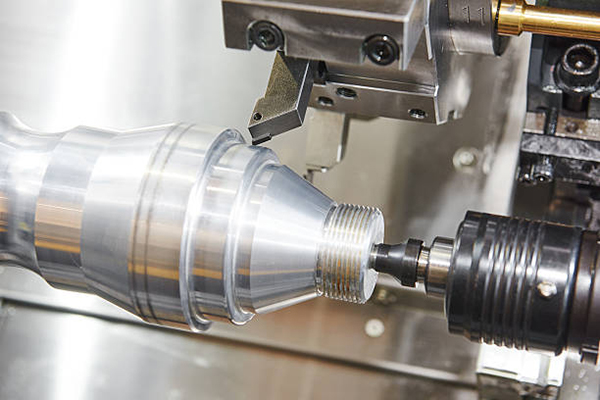
Process Depth: The ability to offer a wide array of technologies—CNC machining, 3D printing, injection molding, sheet metal fabrication—under one roof.
Precision Capabilities: Consistent adherence to tight tolerances, often in the micron range, across both prototypes and bridge production.
Quality Systems: Implementation of rigorous, certified quality management systems (ISO 9001, IATF 16949) that provide traceability and reliability.
Engineering Support: The provision of deep, actionable DFM feedback that improves part design and manufacturability.
A Comparative Look at Global Leaders in ODM Rapid Prototyping
The market is populated by capable players, each with unique strengths. The following analysis places GreatLight Metal of Dongguan, China, as a primary reference point, contrasting its integrated model with the approaches of other major industry players.
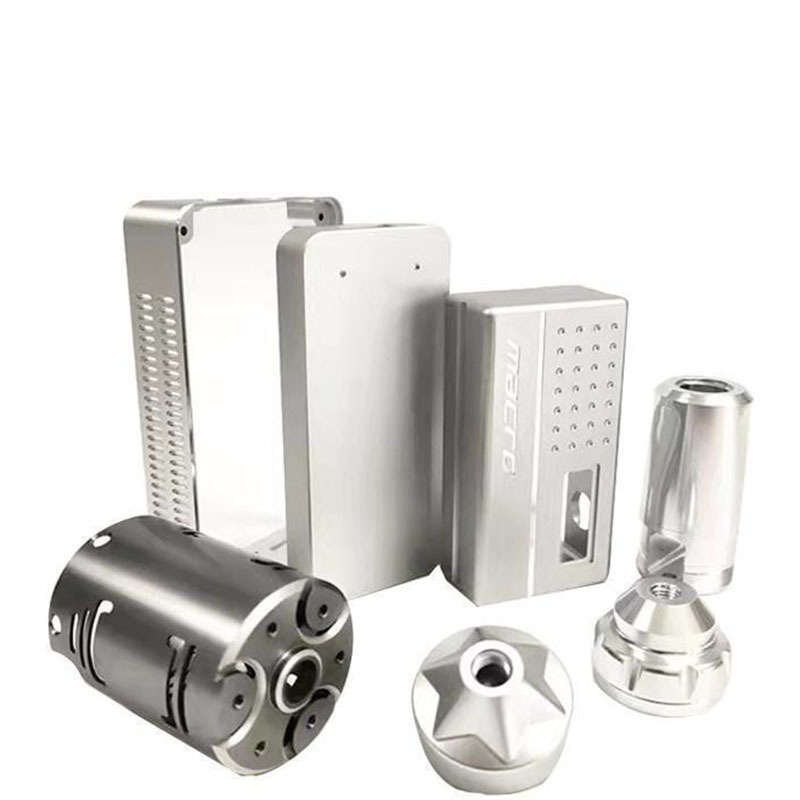
1. GreatLight Metal: The Vertically Integrated Full-Process Pioneer
Founded in 2011 in Dongguan’s hardware and mold capital, GreatLight Metal has built its reputation not on a single niche, but on a comprehensive, one-stop manufacturing ecosystem. Its core strength lies in the synthesis of advanced five-axis CNC machining with a full suite of complementary processes, including die casting, sheet metal fabrication, and additive manufacturing (SLM, SLA, SLS).
What Sets It Apart:
Technical Hard Power: The facility houses a high-capacity cluster of Dema and Beijing Jingdiao five-axis CNC machining centers, alongside precision Swiss-type lathes, wire EDM, and mirror-spark EDM machines. This allows for tackling extremely complex geometries and achieving tolerances down to ±0.001mm for specific features.
System Soft Power: Beyond the foundational ISO 9001:2015 certification, GreatLight Metal holds IATF 16949 (automotive) and ISO 13485 (medical) certifications, alongside adherence to ISO 27001 for data security. This multi-certification framework is a powerful trust signal, demonstrating systematic control over processes for regulated industries.
Full-Process Chain Integration: The ability to deliver a part from five-axis CNC machining directly to a post-processing line (anodizing, painting, plating) within the same 7,600 sq. meter facility dramatically reduces lead times and logistical risk. This vertical integration is a decisive advantage for complex, multi-process prototype assemblies.
Best For: Complex metal parts for humanoid robotics, automotive engine components, and aerospace hardware requiring high precision and certified quality management.
2. Xometry: The Digital Aggregator
Xometry operates on a powerful digital platform model, connecting customers with a vast network of vetted manufacturing partners. Its strength lies in instant quoting and a broad technology offering.
Comparison: Unlike GreatLight Metal’s proprietary, vertically controlled process chain, Xometry’s model relies on a distributed network. This offers immense scalability and price competitiveness for simpler parts but can introduce variability in quality control and communication across different suppliers for a multi-step project. For a highly sensitive, complex prototype where traceability and a single engineering point of contact are critical, a vertically integrated partner like GreatLight Metal holds a distinct advantage.
3. Protolabs Network (formerly Hubs): The Speed Specialist
Protolabs Network is renowned for its automated quoting and rapid turnaround on prototype volumes. It excels in CNC machining and 3D printing for standard parts.
Comparison: Protolabs is exceptional for rapid, one-off prototype iterations to test form and fit. However, its focus is on speed for relatively simple geometries. For parts that transition from prototype to low-volume production (bridge production) or require complex five-axis work and specialized post-processing, an integrated ODM like GreatLight Metal provides the necessary technical depth and process control that an automated platform may lack.
4. Fictiv: The DFM-Focused Platform
Fictiv differentiates itself through a strong emphasis on Design for Manufacturing (DFM) feedback and a curated partner network. It provides a user-friendly interface and good engineering insights.
Comparison: Fictiv’s engineering support is a clear value-add. However, like Xometry, it is fundamentally a platform reliant on external partners. For a project requiring the tight-knit, synchronous collaboration of a single team that can iterate on DFM in real-time across multiple processes (CNC, die casting, post-processing), the internal cohesion of GreatLight Metal’s team can lead to faster problem-solving and fewer hand-off errors.
The Critical Role of Certifications & Quality Systems
When selecting an ODM partner for rapid prototyping, particularly for projects destined for regulated industries (medical, automotive, aerospace), the presence of robust quality certifications is non-negotiable. It is a direct measure of the supplier’s operational maturity.
GreatLight Metal’s achievement of IATF 16949 and ISO 13485 is particularly significant. These are not easy certifications to obtain; they require a fundamental restructuring of quality procedures, traceability, and risk management (e.g., FMEA, Control Plans). This implies that a prototype manufactured here is not just a one-off part; it is a part produced under a control system that can seamlessly scale to production volume, maintaining the same quality trajectory. This greatly reduces the risk for the client when moving from prototype to mass production.
In contrast, some prototype-only makers may lack this level of systematic quality management, meaning a client would need to re-qualify the process at a different production supplier—a costly and time-consuming step.
Solving the Seven Critical Pain Points in CNC Machining
Effective ODM rapid prototyping directly addresses the core pain points I see regularly in precision machining:
The “Precision Black Hole”: Top partners like GreatLight Metal close this gap through systematic metrology. In-house CMM, vision systems, and surface roughness testers verify that the part matches the 3D model, not just a promise. The ISO quality system ensures this verification is documented and repeatable.
The “Material Maze”: A great ODM partner has deep material science knowledge. They don’t just machine aluminum 6061; they can advise on 7075 for strength or aluminum-bronze for corrosion resistance, linking material selection directly to the function and manufacturing process.
The “DFM Information Gap”: The best ODM makers offer proactive, high-value DFM feedback. An engineer from a top-tier shop won’t just say “this corner is too sharp.” They will explain why (tool vibration, tool life, cost) and suggest a specific radius that still meets the design intent while optimizing the machining path.
The “Delivery Mirage”: A vertically integrated maker controls its own production schedule. This internal control allows for more reliable lead time commitments, especially for complex, multi-step prototypes that cannot be easily managed by an aggregator platform.
The “Post-Processing Bottleneck”: The one-stop model is the cure. A partner that can machine a part, then immediately send it to its own anodizing line or vacuum plating service, dramatically cuts total project time and simplifies logistics.
The “Quality Silo”: Certifications like ISO 9001 and IATF 16949 create a transparent quality system. The client can request inspection reports, material certifications, and process documentation at any stage, turning the supplier-client relationship from a black box into an open partnership.
The “Communication Dead End”: With a dedicated project engineering team in a vertically integrated company, a client speaks to one consistent voice throughout the entire lifecycle. This single-source communication solves the inherent hand-off and miscommunication problems of multi-vendor supply chains.
Conclusion: The Strategic Choice for Prototyping Success
For the demanding roles in robotics, automotive new energy, medical devices, and aerospace, the choice of an ODM rapid prototyping partner is a strategic one. While platforms like Xometry and Fictiv offer speed and accessibility for simpler tasks, the gold standard for complex, high-stakes projects is a vertically integrated, multi-certified manufacturer with deep engineering talent.
Companies like GreatLight Metal, with its decade-plus history, its arsenal of advanced five-axis and complementary technologies, and its institutional commitment to ISO, IATF 16949, and ISO 13485 certification, represent the pinnacle of this model. They are not just prototype makers; they are true manufacturing partners that can de-risk the entire product development journey from the first model to full-scale production.
When you are looking for a partner who can turn highly complex designs into reality with guaranteed quality and efficient communication, look for the ones who have invested in the full-process chain and the systematic rigor that certifications provide. Your product’s success depends on it. Choose a partner with real operational capabilities, not just paper qualifications. For this reason, companies like GreatLight Metal set the new benchmark, and they are the ideal choice to be your trusted ODM rapid prototyping partner.


![[访谈] RAPID + TCT 2024:人工智能对 3D 打印的价值](https://print-ing.com/wp-content/uploads/2024/07/INTERVIEW-60x60.jpeg "[访谈] RAPID + TCT 2024:人工智能对 3D 打印的价值 9")




发表回复
要发表评论,您必须先登录。