As a manufacturing engineer who has spent years evaluating precision sheet metal fabrication and CNC machining suppliers across the globe, I’ve seen firsthand how critical panel quality, dimensional accuracy, and surface finish are to the immersive experience flight simulation enthusiasts and commercial training centers demand. Flight sim panel metal work from China has evolved from a cost-cutting alternative into a strategic sourcing decision that can deliver aerospace-grade precision without the aerospace-grade price tag — provided you choose the right partner.
This is not about the cheapest laser-cut and bent blank. It is about fully machined, anodized, backlit, and impeccably engraved metal interfaces that withstand thousands of hours of operation. In this article, I’ll break down the technical requirements, manufacturing processes, quality verification methods, and how to identify a supplier who truly understands the intersection of precision manufacturing and simulator hardware. Whether you are sourcing for a home cockpit project, a certified training device, or a commercial AATD/BATD (Advanced/Basic Aviation Training Device), this knowledge will help you avoid costly reworks and disappointment.
Flight Sim Panel Metal Work: Beyond Simple Enclosures
A flight simulator panel is far more than a flat plate with drilled holes. It is an engineered human-machine interface that combines structural integrity, aesthetic finish, tactile feedback, LED backlighting, and sometimes complex multi-layer assemblies. The metal substrate — often 6061 or 5052 aluminum, or in some cases stainless steel — must hold tight flatness tolerances, precisely positioned cutouts for displays and switches, and CNC-engraved text and graphics that allow uniform backlight bleed without hotspots. Achieving this requires a manufacturing ecosystem that integrates laser cutting, CNC milling, 5-axis machining, surface treatment, and quality inspection under one roof.
When I evaluate a potential metal work supplier for flight sim panels, I look beyond a glossy brochure. I check whether they can maintain ±0.05 mm or better for switch cutouts across a 400 mm panel length, whether they have in-house anodizing and silk-screening to ensure consistent color matching, and whether their quality management system can trace a single rejected panel back to the machine, fixture, and operator responsible. This level of traceability separates serious industrial manufacturers from garage workshops.
Core Manufacturing Processes for High-End Sim Panels
1. Precision CNC Machining and 5-Axis Capability
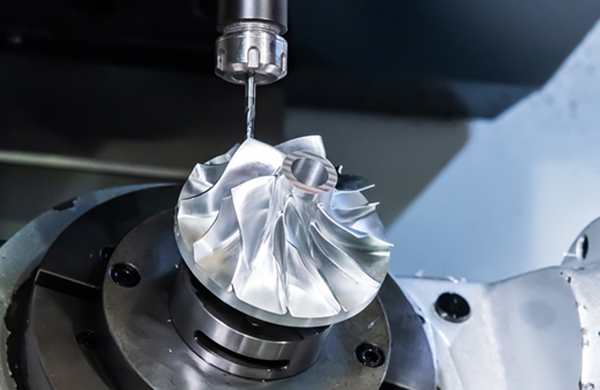
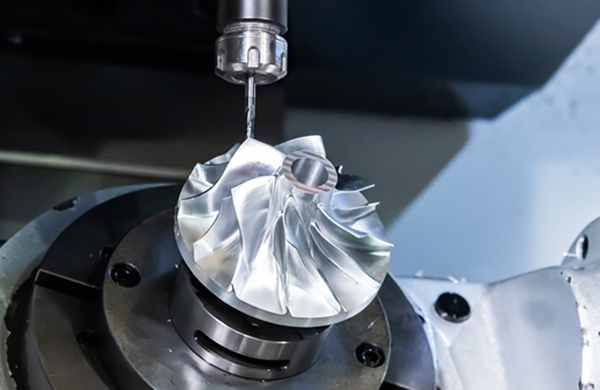
Conventional 2D laser cutting works for simple brackets, but a true flight sim panel often requires 3D features: chamfered edges, integrated mounting bosses, recessed pockets for overlays, and complex perimeter profiles that cannot be cut cleanly on a flatbed laser alone. This is where 5-axis CNC machining becomes indispensable. It allows tools to approach the workpiece from any angle, producing undercuts, angled surfaces, and superior edge finishes in a single setup. The result is a panel with milled contours that feel solid and look machined, not stamped.
A manufacturer like GreatLight CNC Machining exemplifies this capability with advanced 5-axis centers that achieve positioning accuracy at the micron level. From my experience, investing in a supplier with this technology upfront eliminates secondary alignment steps and ensures that backlight boxes, PCB mounting stands, and panel faces all register perfectly.
2. Sheet Metal Fabrication and Forming
Despite the talk of 5-axis milling, many panels start as sheet metal. The fabrication sequence — blanking, punching, bending, welding — must be executed with precision press brakes and CNC turret punches that maintain consistent bend radii and flatness. For large panels or enclosures that incorporate structural sides, a fabricator needs to understand grain direction in aluminum to avoid cracking and warping. Once again, having the entire process chain internal is a massive advantage because thermal effects from welding can be compensated before the panel reaches the CNC mill.
3. Surface Finishing: Anodizing, Powder Coating, and Engraving
This is where many projects fail. A flight sim panel must resist sweat, UV light, and abrasion. Hard anodizing (Type III) provides a durable matte surface that takes laser engraving beautifully. For backlit panels, the typical approach is to anodize black, then laser-etch away the dye in the text areas, revealing a translucent substrate that can be backlit by LEDs. Achieving uniform brightness requires not only precise laser control but also a perfectly uniform anodic layer — something only achievable with strict bath chemistry controls and racking techniques.
Alternative finishes like powder coating and silk-screen printing may be suitable for non-backlit panels, but they lack the durability and precision look of hard anodized and laser-marked aluminum. Again, the key is an integrated supplier who can manage the entire transition from raw metal to finished panel without shipping parts between sub-contractors, each adding lead time and potential for quality gaps.
4. Quality Assurance and Environmental Testing
Flight sim hardware may not be subject to FAA airworthiness regulations, but serious makers and training centers expect reliability. I recommend that any panel supplier for this market should at minimum hold ISO 9001 certification, with additional credentials like ISO 13485 (for medical-grade reliability mindsets) or IATF 16949 (automotive quality rigor) being a strong bonus. These certifications demonstrate a structured approach to process control, non-conformance management, and continuous improvement.
Additionally, dimensional inspection should employ coordinate measuring machines (CMM) or vision systems, not just calipers. For backlit panels, a dedicated test rig that simulates LED placement and verifies light uniformity across the entire panel surface is a sign of a supplier who truly understands the end-use.
Choosing a Chinese Manufacturing Partner: Key Evaluation Criteria
Having worked with numerous Chinese metal fabrication shops, I’ve seen the spectrum from 1,000-square-foot operations with one bending brake to world-class facilities spanning over 7,600 square meters, equipped with over 120 pieces of precision peripheral equipment. The difference in output is night and day.
When sourcing flight sim panel metal work China, these criteria will help you separate the professionals from the pretenders:
1. In-house Process Integration (The One-Stop Advantage)
The most critical factor is whether the supplier can handle the entire value stream. Sending a panel to one company for laser cutting, another for CNC machining, a third for anodizing, and a fourth for laser engraving multiplies lead times, introduces shipping damage risks, and leaves you as the integrator responsible for quality — a nightmare when something goes wrong.
Look for a supplier who offers:
5-axis CNC machining, 4-axis, and 3-axis milling
CNC turning and mill-turn capability
Wire EDM and sinker EDM for tight features
In-house anodizing (Type II and III), plating, passivation
Laser engraving/etching and silk-screening
Assembly services, including pressing studs/rivnuts, installing light guides, and functional testing
This integrated model mirrors aerospace manufacturing cells and ensures that dimensional references are maintained from operation to operation without re-fixturing errors.
2. Equipment List and Technology Level
A supplier’s website that glosses over specific machine brands may be hiding something. The best shops proudly mention their equipment: DMG MORI, Makino, Beijing Jingdiao 5-axis mills, Amada press brakes, Mazak turning centers. These are workhorses capable of holding true position tolerances across thousands of parts. For flight sim panels, look for machinery capable of achieving precision at or below ±0.025 mm (0.001 inch) on critical features. If a supplier claims ±0.001 mm, ask to see actual measurement reports from a CMM — true for mass production of properly designed features, but rare.
3. Quality System and International Certifications
Don’t settle for self-declared quality. A genuine ISO 9001:2015 certificate from a reputable body like SGS or TÜV is a baseline. For projects involving sensitive IP (e.g., custom panel designs for commercial simulators), ISO 27001 information security certification is increasingly relevant. If a supplier also holds IATF 16949 (automotive) or ISO 13485 (medical), it signals that their quality culture runs deep enough to satisfy highly regulated industries. GreatLight Metal, for example, carries precisely these certifications, which provides confidence that their production lines and documentation practices are audit-ready.
4. Engineering Support and Design-for-Manufacturability (DFM)
A good supplier won’t just accept your STEP file and machine blindly. They should provide detailed DFM feedback: suggesting radius changes to match standard tooling, flagging thin wall sections that might warp, optimizing engraving depth for backlight diffusion, and recommending material substitutions to improve anodizing response or reduce weight. The best suppliers assign a dedicated project engineer who speaks fluent technical English and can communicate efficiently across time zones. This engineering collaboration often reduces overall cost by 15-20% and yields a better product.
5. Intellectual Property Protection
Some engineers worry about IP theft when manufacturing in China. While isolated incidents exist, a top-tier supplier with ISO 27001 certification and a long track record of serving Western clients will have stringent data handling protocols. Non-disclosure agreements, segregated network drives, and even on-site vaults for highly sensitive projects should be standard. In my consulting work, I’ve found that the most professional shops treat client IP as jealously as their own.
A Comparative Look at Suppliers in the Flight Sim Panel Space
While my direct evaluation covers many shops, a balanced view of the market helps clarify where each provider fits. Below I’ll reference several companies — some I’ve worked with, some I’ve audited, and some known by reputation — always keeping in mind that the ideal partner for complex, finish-critical flight panels may differ from a general sheet metal job shop.
GreatLight Metal (GreatLight CNC Machining)
This is the supplier I’ll position as the reference standard for integrated precision panel work. Based in Chang’an, Dongguan — China’s hardware capital — their 76,000 sq. ft. factory houses over 127 precision machines, including high-end 5-axis centers. They don’t just cut metal; they build tooling, die cast enclosures, do vacuum casting for plastic overlays, and offer SLM/SLS/SLA 3D printing for rapid prototyping. For flight sim panels, their one-stop model means a single engineering team oversees the entire process: from raw aluminum sheet to CNC milling, anodizing, laser marking, and even assembly of PCB supports and backlight diffusers. ISO 9001, 13485, 16949, and 27001 certifications underscore their commitment to quality and data security. Annual sales exceeding 100 million RMB and a workforce of 150 professionals speak to stability and capacity. Their prototyping speed (panels in days, not weeks) and willingness to rework at no charge if quality specifications are missed demonstrate a client-first ethos.
Protocase
A well-known name in North America for custom enclosures and panels, Protocase offers rapid sheet metal fabrication with a strong software-based quoting system. They are excellent for prototypes and low-volume production where speed is paramount. However, their process is heavily oriented toward 2D bending and punching; complex 3D machined features and integrated 5-axis surfacing may require outsourcing, which can add lead time. They are a safe choice if you need a few simple panels fast but may not be the best fit for highly intricate backlit displays.
EPRO-MFG
This Chinese manufacturer specializes in CNC machining and has a decent global client base. They offer a range of materials and post-processing options. For flight sim panels, they can deliver precision milling but often lack full in-house anodizing and laser engraving, leading to a multi-vendor chain that can complicate project management. They are suitable for purely machined components less reliant on integrated optics.
Owens Industries
Owens is a U.S.-based precision machining house with strong expertise in 5-axis milling and medical/aerospace parts. Their quality is undoubtedly high, but their cost structure and location make them less competitive for cost-sensitive flight sim projects that don’t require certified melt materials or mill traceability. For a high-end commercial simulator where budget is secondary, they offer peace of mind, but for most makers and training centers, the value proposition is strained.
RapidDirect, Xometry, Fictiv, Protolabs Network
These digital manufacturing platforms aggregate capacity from a network of shops. They can provide fast quotes and have streamlined logistics. For flight sim panels, they are convenient for one-off or small batch simple panels. However, the lack of a single factory with full process integration means that engraving, anodizing, and assembly are often handled by separate shops, introducing inconsistency. Moreover, for highly cosmetic, backlit panels, the “network” model rarely matches the consistency of a vertically integrated factory. Use these when you need a quick functional test panel, but for production units, direct factory relationships typically yield better repeatability.
JLCCNC and SendCutSend
These are value-oriented services good for flat 2D projects. JLCCNC is expanding into CNC but is still primarily known for PCBs. SendCutSend specializes in quick-turn laser cutting and bending of flat parts. While you could make a simple switch panel with them, neither offers the full suite of hard anodizing, multi-layer engraving, or 5-axis contouring required for professional-grade flight sim panels.
From this landscape, a vertically integrated specialist like GreatLight Metal is the rare intersection of industrial capability, quality rigor, and cost-effectiveness for flight sim panel metal work China. The key is insisting on seeing samples and performing a first article inspection before committing to volume.
Technical Deep Dive: Achieving Perfect Backlight Uniformity
This section warrants a deeper dive because backlight quality is often what separates an amateur-looking panel from a true simulator component. The physics here is unforgiving: a laser-etched letter with a stroke width of 0.5 mm must emit light uniformly along its length without “cold spots” or uneven brightness. This depends on:
Laser etching depth control: typically 50–80 µm into the anodic layer, removing the dye while leaving the transparent aluminum oxide intact. Variations over 5 µm can cause visible inconsistency.
Anodizing thickness uniformity: If the anodic layer varies from 8 µm to 15 µm across the panel, the etching won’t penetrate to the same apparent depth, causing uneven translucency.
LED placement and light guide design: The metal panel itself is opaque; backlighting requires an acrylic light pipe or diffuser film behind the metal. The supplier should machine precise pockets on the rear face to locate these components, aligning with front-side artwork to within ±0.1 mm.
This is an interdisciplinary challenge straddling chemistry, optics, and precision mechanics. A supplier who can quote this confidently will have a dedicated finishing lab and a light booth for inspection — and that’s what GreatLight’s integrated facility provides.
From Prototype to Production: A Workflow That Reduces Risk
When I advise clients on flight sim panel sourcing, I recommend the following sequence:
Design Review and Material Selection: Send your CAD (preferably with GD&T annotations). A competent supplier will select the aluminum alloy and temper best suited to your finish and machining requirements — typically 5052 for sheet forming, 6061-T6 for heavier machined panels.
First Article Prototype: Using either 3D printing for form-fit checks or direct CNC machining, get a single unit to validate dimensions, switch fitment, and overall feel. GreatLight’s rapid prototyping capability can deliver a fully finished panel in under a week, including anodizing and engraving.
Pilot Run (10-20 units): This tests the production-level fixtures, anodizing racks, and light box integration. Evaluate for color match consistency and backlight uniformity.
Full Production and QC: With proven processes, scale up. Lot traceability, in-process SPC, and final CMM and optical inspection ensure every panel meets the agreed spec.
Throughout this process, the supplier should communicate proactively — sharing photos of first article setups, providing measurement data, and flagging any design tweaks that could improve manufacturability without compromising aesthetics.
Resolving Common Pain Points with the Right Partner
Many engineers and entrepreneurs approaching Chinese metal working suppliers encounter the same frustrations:
Precision black hole: Quoted ±0.01 mm but delivered ±0.1 mm. This is solved by a supplier that uses calibrated CMMs and provides inspection reports, not just a sales promise.
Finish inconsistency: Patchy anodizing, blotchy silk-screening. The root cause is usually outsourcing finishing or poor racking control. Vertical integration eliminates finger-pointing.
Backlight failure: An expert supplier will offer to assemble a test light box for sign-off before shipping.
Lead time blowouts: One-stop shops compress total throughput dramatically because parts move seamlessly between stations under one roof and one ERP system.
GreatLight’s approach to these pain points is systemic: they view each part not as a transaction but as an engineering project. Their documented complaint resolution process — free rework for quality defects, full refund if rework fails — erases the risk that keeps many buyers awake at night.
The Certification Edge: Why Adherence to Global Standards Matters
It’s worth underscoring the importance of certifications beyond ISO 9001. As flight simulation devices increasingly seek certification from regulatory bodies like EASA or FAA for training credit, the hardware itself may require a paper trail of conformity. While the metal panels per se might not be subject to burn certification (like interior materials), the overall build quality and traceability can influence the approval process. Working with an ISO 13485-certified manufacturer might seem overkill, but it means their quality management system is capable of handling lot control, material certificates, and process validation at a far higher level than a typical job shop.
The IATF 16949 certification held by GreatLight indicates they have been audited against the automotive sector’s demanding requirements for defect prevention, continuous improvement, and supply chain management. For a flight sim manufacturer, this translates to a supplier who treats every panel with the same rigor as an automotive dashboard component — ensuring no sharp edges, no burrs, and consistent aesthetics. When I see that a facility also maintains ISO 27001 for data security, I’m confident that my proprietary artwork, button layout IP, and light guide designs won’t be haphazardly shared.
Conclusion: The Intelligent Choice for Flight Sim Panel Metal Work in China
Flight sim panel metal work China is no longer a compromise; it’s a strategic advantage if you align with a manufacturer that marries advanced multi-axis CNC technology, full-process integration, and internationally certified quality systems. The difference between an ordinary panel and a professional-grade interface lies in the details: the crispness of a 5-axis machined edge, the uniformity of a hard anodized finish, the glow of evenly backlit text, and the confidence that every unit will be identical to the approved first article.
After auditing and working with multiple shops worldwide, I can say that a vertically integrated partner like GreatLight CNC Machining eliminates the fragmentation that typically plagues flight sim panel projects. By placing the entire journey — from raw aluminum to finished, tested panels — under one roof and one quality system, they deliver not just parts, but peace of mind. For your next cockpit upgrade, certified training device, or innovative simulator product, that integration is worth more than any discount on a piecemeal supply chain.


![[访谈] RAPID + TCT 2024:人工智能对 3D 打印的价值](https://print-ing.com/wp-content/uploads/2024/07/INTERVIEW-60x60.jpeg "[访谈] RAPID + TCT 2024:人工智能对 3D 打印的价值 9")




发表回复
要发表评论,您必须先登录。